

Membrane Filter Press for low-moisture sludge dewatering
A diaphragm (membrane) filter press squeezes the filter cake after the filtration step, removing additional water to reach noticeably drier solids than a conventional recessed-chamber press. Cake target depends on the slurry — confirm with a bench test on your sample.
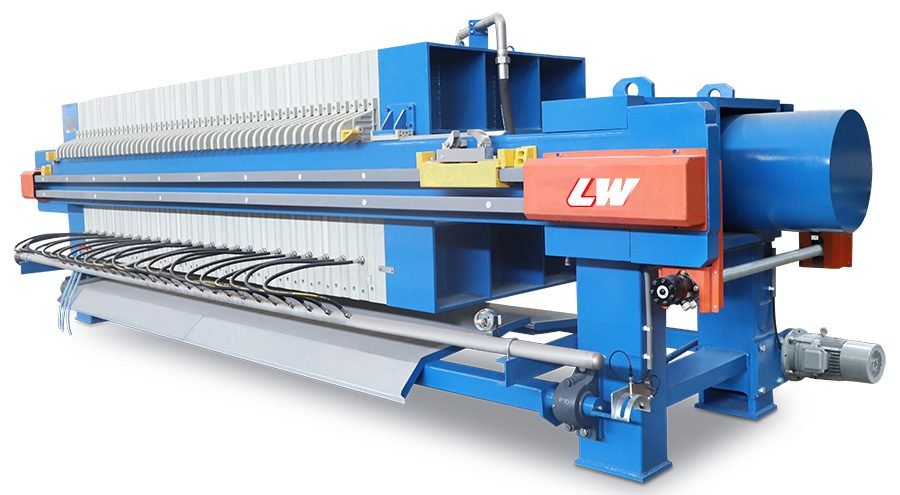
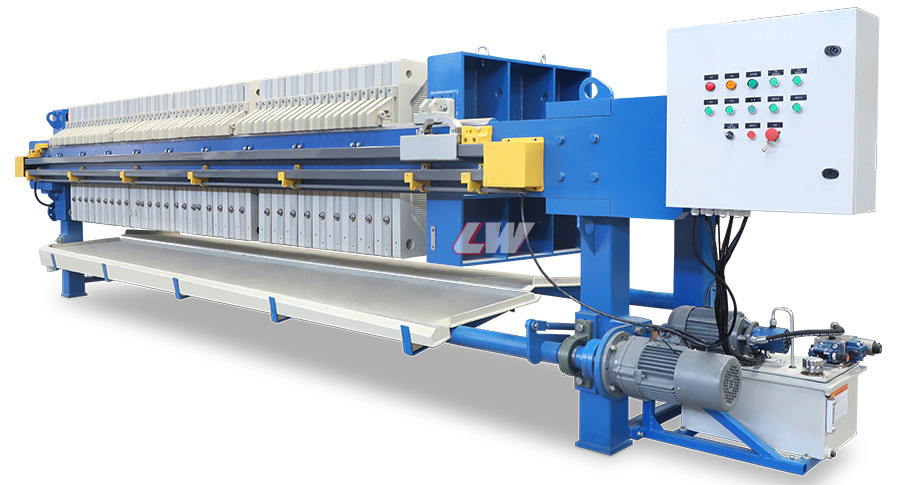
Membrane press vs. recessed-chamber pressA practical comparison — exact numbers depend on your slurry.
Both machines share the same filtration principle; the difference is the secondary squeeze stage after filtration. The table below summarises what the squeeze stage changes in normal operation. Verify your target cake moisture with a bench test on your sample before sizing.
| Item | Recessed-chamber press | Membrane (diaphragm) press |
|---|---|---|
| Filtration step | Slurry pumped into chambers at 0.6–0.8 MPa; cake forms against filter cloth. | Same as chamber press. |
| Secondary squeeze | None. | Membrane inflated with water or air at 1.0 MPa (standard) / up to 1.6 MPa (high-pressure option). |
| Cake moisture — typical | Mining 25–35%; municipal sludge 55–65%. | Mining 18–25%; municipal sludge 45–55%. Range is slurry-dependent. |
| Cake wash effectiveness | Limited; wash fluid follows the path of least resistance through the cake. | Squeeze step displaces wash fluid more uniformly; better wash ratio for chemical and pigment slurries. |
| Cycle time — same dryness target | Filtration alone, typically 60–180 minutes depending on cake thickness. | Squeeze adds 5–15 minutes but reaches target dryness faster; net cycle 30–50% shorter in most slurries. |
| Plate life | Polypropylene plates: 3,000–8,000 cycles typical. | Reinforced PP membrane plates: 2,000–5,000 cycles typical. Diaphragm (rubber element) is replaceable separately from the plate body. |
| Suitable applications | General dewatering, waste volume reduction. | Low target moisture, cake washing, dry-stacking tailings, chemical / pigment recovery. |
| Cost vs. chamber press | Baseline. | Higher unit cost; offset by lower disposal cost, higher wash yield, and lower transportation weight. |
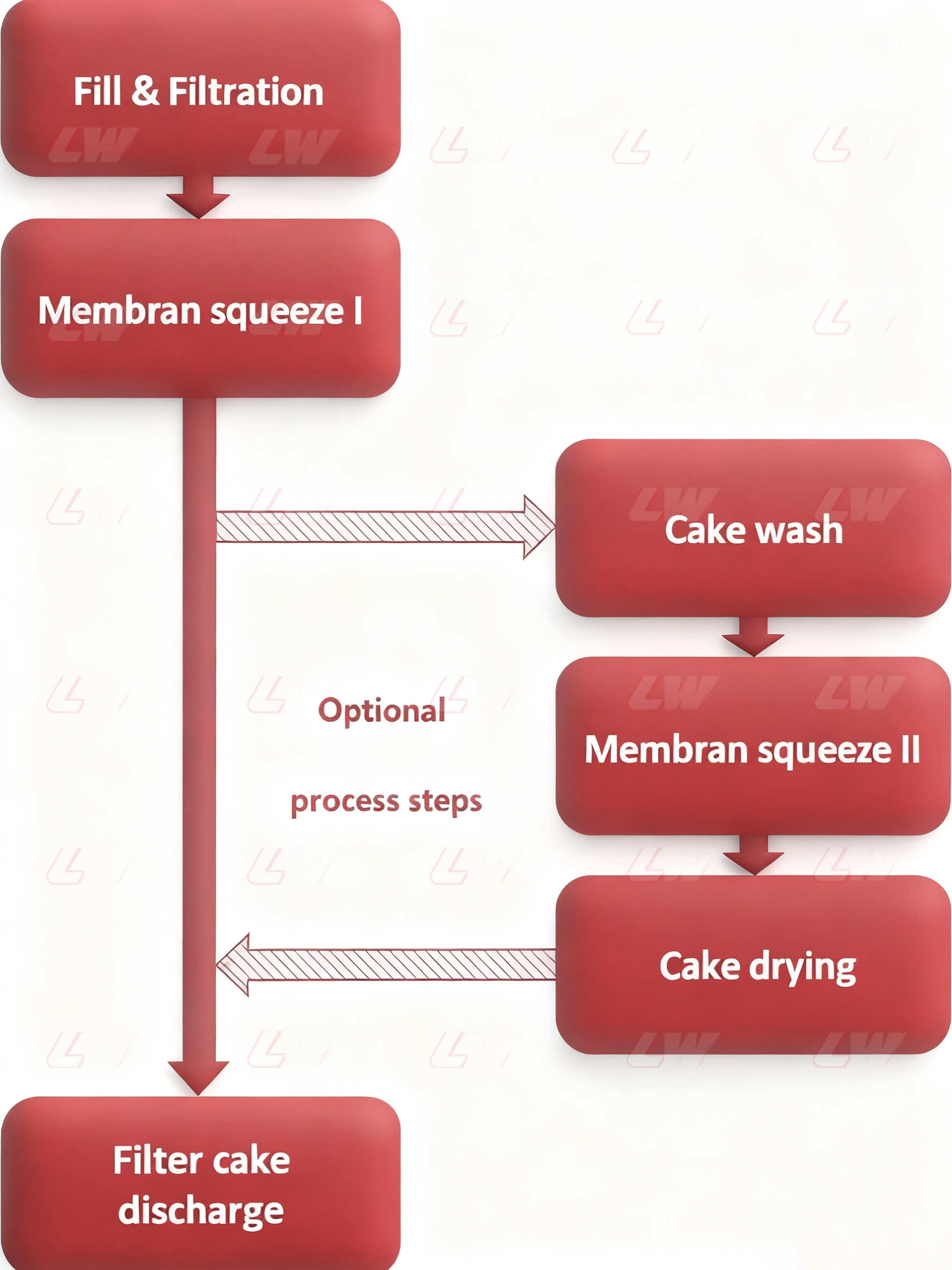
How the membrane squeeze stage worksA 5-step cycle with an optional wash & second squeeze.
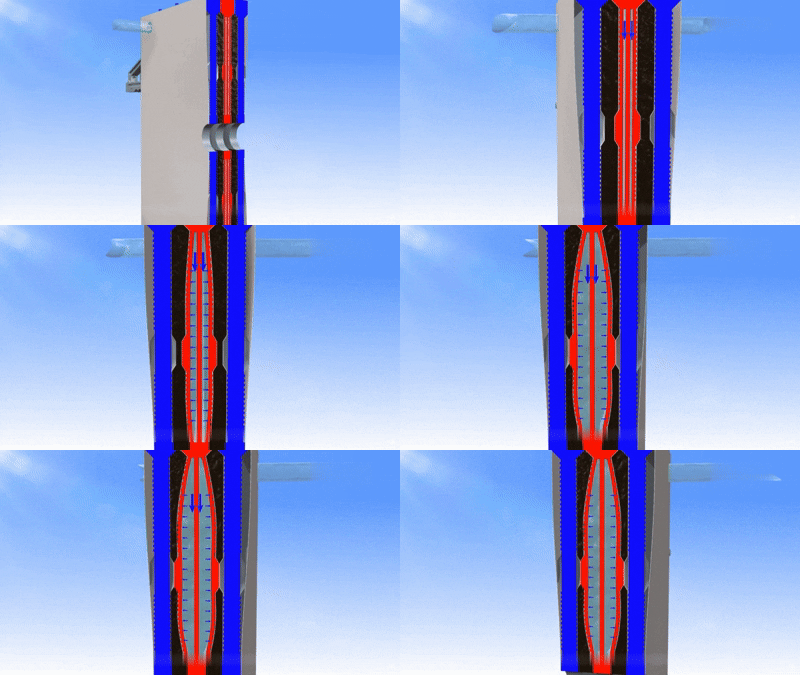
The filtration phase is identical to a chamber press. After the cake is formed, a flexible membrane behind each plate is inflated with water (default) or compressed air to mechanically squeeze the cake. The diagram below shows the optional wash and second-squeeze path.
-
Fill & filtration
Slurry is pumped into the chambers at 0.6–1.0 MPa. Solids build against the filter cloth; filtrate exits through the cloth drainage system.
-
Membrane squeeze I
The feed pump stops. A squeezing medium (water or air) is fed behind each diaphragm at up to 1.6 MPa, compressing the cake and displacing additional moisture through the cloth.
-
Cake wash (optional)
For chemical or pigment applications, wash water is forced through the compressed cake. The pre-formed cake channels give a more uniform wash than a chamber press.
-
Membrane squeeze II (optional)
A second squeeze after wash reduces residual moisture in the wash-diluted cake and recovers more wash liquid in the filtrate.
-
Air blow & discharge
Compressed air (optional) blows residual surface moisture from the cake. The hydraulic pack opens the plate stack and the dried cake is discharged for collection.
Technical specificationsStandard 800, 1000, 1250, and 1500 mm plate series.
The tables below show the standard filtration area, plate count, cake thickness, chamber volume, foundation footprint, machine weight, and overall dimensions for our four standard plate series — 800 mm, 1000 mm, 1250 mm, and 1500 mm. Model code: X(AMYZ)G<area>/<plate size>-U(BK) — X = filter press; (AMYZ) = automatic membrane press with underflow; G = improved series; U(BK) = open discharge. Final dimensions and weights are confirmed with the GA drawing at the order stage.
800 mm plate series (X(AMYZ)G20-80/800-U(BK))
| Model | Filtration area (m²) | Plate quantity (pcs) | Cake thickness (mm) | Chamber volume (L) | Foundation L (mm) | Weight (Kg) | Dimensions L×W×H (mm) | |||
|---|---|---|---|---|---|---|---|---|---|---|
| Diaphragm | Filter | Length | Width | Height | ||||||
| X(AMYZ)G20/800-U(BK) | 20 | 10 | 11 | 30 | 320 | 2380 | 2280 | 3080 | 1200 | 1150 |
| X(AMYZ)G30/800-U(BK) | 30 | 15 | 16 | 480 | 3000 | 2830 | 3700 | |||
| X(AMYZ)G40/800-U(BK) | 40 | 20 | 21 | 640 | 3620 | 3380 | 4330 | |||
| X(AMYZ)G50/800-U(BK) | 50 | 25 | 26 | 800 | 4250 | 3930 | 4950 | |||
| X(AMYZ)G60/800-U(BK) | 60 | 30 | 31 | 960 | 4880 | 4480 | 5580 | |||
| X(AMYZ)G70/800-U(BK) | 70 | 35 | 36 | 1120 | 5500 | 5030 | 6200 | |||
| X(AMYZ)G80/800-U(BK) | 80 | 40 | 41 | 1280 | 6130 | 5580 | 6830 | |||
1000 mm plate series (X(AMYZ)G40-120/1000-U(BK))
| Model | Filtration area (m²) | Plate quantity (pcs) | Cake thickness (mm) | Chamber volume (L) | Foundation L (mm) | Weight (Kg) | Dimensions L×W×H (mm) | |||
|---|---|---|---|---|---|---|---|---|---|---|
| Diaphragm | Filter | Length | Width | Height | ||||||
| X(AMYZ)G40/1000-U(BK) | 40 | 12 | 13 | 30 | 600 | 2829 | 4300 | 3630 | 1520 | 1400 |
| X(AMYZ)G50/1000-U(BK) | 50 | 15 | 16 | 750 | 3255 | 4700 | 4050 | |||
| X(AMYZ)G60/1000-U(BK) | 60 | 18 | 19 | 900 | 3681 | 5100 | 4480 | |||
| X(AMYZ)G70/1000-U(BK) | 70 | 21 | 22 | 1050 | 4107 | 5500 | 4900 | |||
| X(AMYZ)G80/1000-U(BK) | 80 | 24 | 25 | 1200 | 4513 | 5800 | 5330 | |||
| X(AMYZ)G90/1000-U(BK) | 90 | 27 | 28 | 1350 | 4959 | 6250 | 5750 | |||
| X(AMYZ)G100/1000-U(BK) | 100 | 30 | 31 | 1500 | 5385 | 6650 | 6180 | |||
| X(AMYZ)G110/1000-U(BK) | 110 | 33 | 34 | 1650 | 5811 | 7050 | 6610 | |||
| X(AMYZ)G120/1000-U(BK) | 120 | 36 | 37 | 1800 | 6237 | 7500 | 7030 | |||
1250 mm plate series (X(AMYZ)G100-300/1250-U(BK))
| Model | Filtration area (m²) | Plate quantity (pcs) | Cake thickness (mm) | Chamber volume (L) | Foundation L (mm) | Weight (Kg) | Dimensions L×W×H (mm) | |||
|---|---|---|---|---|---|---|---|---|---|---|
| Diaphragm | Filter | Length | Width | Height | ||||||
| X(AMYZ)G100/1250-U(BK) | 100 | 19 | 20 | 30 | 1500 | 4534 | 8800 | 5764 | 1600 | 1550 |
| X(AMYZ)G110/1250-U(BK) | 110 | 21 | 22 | 1650 | 4846 | 9500 | 6074 | |||
| X(AMYZ)G125/1250-U(BK) | 125 | 24 | 29 | 1875 | 5314 | 10200 | 6430 | |||
| X(AMYZ)G140/1250-U(BK) | 140 | 27 | 28 | 2100 | 5782 | 11500 | 6835 | |||
| X(AMYZ)G160/1250-U(BK) | 160 | 31 | 32 | 2400 | 6404 | 12500 | 7424 | |||
| X(AMYZ)G180/1250-U(BK) | 180 | 34 | 35 | 2700 | 6874 | 13800 | 8104 | |||
| X(AMYZ)G200/1250-U(BK) | 200 | 38 | 39 | 3000 | 7498 | 14500 | 8728 | |||
| X(AMYZ)G225/1250-U(BK) | 225 | 43 | 44 | 3375 | 8220 | 15300 | 9228 | |||
| X(AMYZ)G250/1250-U(BK) | 250 | 48 | 49 | 3750 | 9056 | 16700 | 10280 | |||
| X(AMYZ)G300/1250-U(BK) | 300 | 57 | 58 | 4500 | 10614 | 18500 | 12010 | |||
1500 mm plate series (X(AMYZ)G200-500/1500-U(BK))
| Model | Filtration area (m²) | Plate quantity (pcs) | Cake thickness (mm) | Chamber volume (L) | Foundation L (mm) | L2 (mm) | Weight (Kgs) | Dimensions L×W×H (mm) | |||
|---|---|---|---|---|---|---|---|---|---|---|---|
| Diaphragm | Filter | Length | Width | Height | |||||||
| X(AMYZ)G200/1500-U(BK) | 200 | 25 | 26 | 30 | 3000 | 6225 | 18500 | 7450 | 2080 | 1960 | |
| X(AMYZ)G224/1500-U(BK) | 224 | 27 | 28 | 3360 | 6720 | 19500 | 7945 | ||||
| X(AMYZ)G250/1500-U(BK) | 250 | 30 | 31 | 3750 | 7256 | 21000 | 8481 | ||||
| X(AMYZ)G280/1500-U(BK) | 280 | 34 | 35 | 4200 | 7875 | 22500 | 9183 | ||||
| X(AMYZ)G315/1500-U(BK) | 315 | 39 | 40 | 4725 | 8650 | 23500 | 9895 | ||||
| X(AMYZ)G340/1500-U(BK) | 340 | 42 | 43 | 5100 | 9195 | 5000 | 25100 | 10420 | |||
| X(AMYZ)G400/1500-U(BK) | 400 | 50 | 51 | 6000 | 10510 | 5500 | 28300 | 11740 | |||
| X(AMYZ)G450/1500-U(BK) | 450 | 55 | 56 | 6750 | 11500 | 6000 | 30400 | 12730 | |||
| X(AMYZ)G500/1500-U(BK) | 500 | 62 | 53 | 7500 | 12600 | 6500 | 32800 | 13885 | |||
Common operating parameters across all four series: plate material reinforced PP; diaphragm rubber EPDM (standard) / NBR or FKM (optional for oils and solvents); squeeze medium water (default) or compressed air; control system Siemens or Schneider PLC with automatic plate-shifting, drip-tray integration, and cloth-wash interface.
Key components and quality assuranceWhat we build into each machine.
Three components determine most of the machine’s operating life and performance — the membrane plates, the hydraulic system, and the frame. We document the brand and grade of each so your local team can re-source spare parts easily.
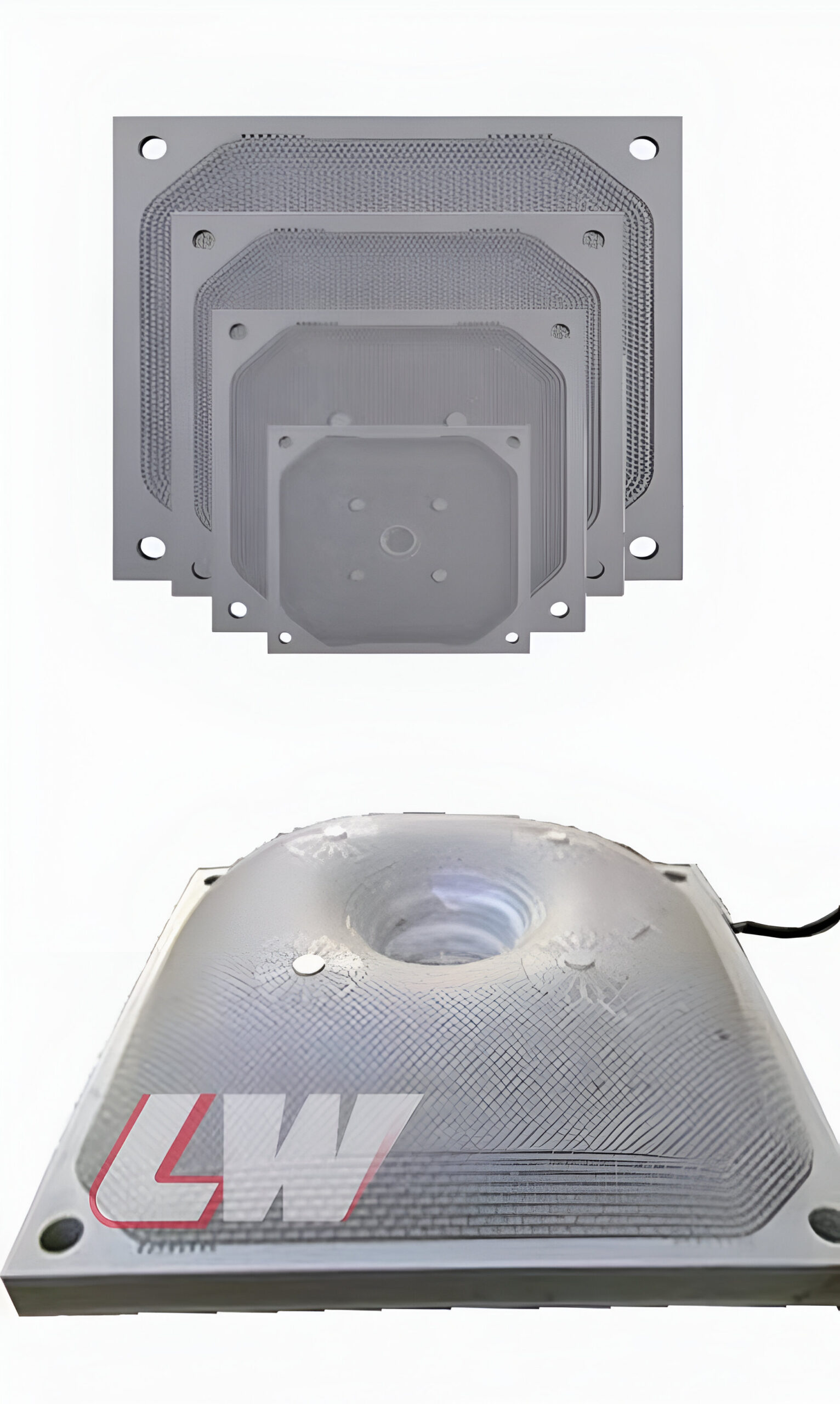
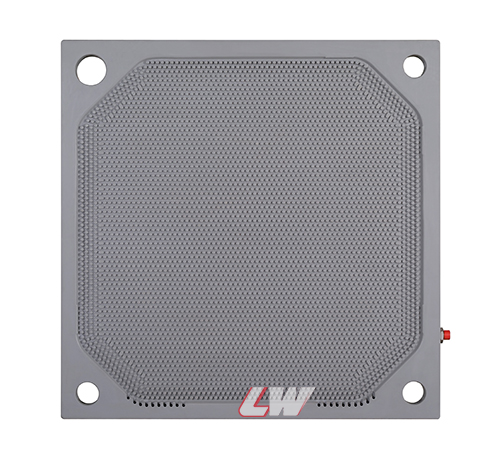
Membrane plates & diaphragm
Reinforced polypropylene plate body with a flexible diaphragm welded to the back of each chamber.
- Plate body: reinforced PP (standard) or cast iron with PP coating (for abrasive slurries).
- Diaphragm rubber: EPDM (standard), NBR (oils), FKM (solvents, high temperature).
- Diaphragm is replaceable as a separate spare part — no need to scrap the whole plate.
- CNC-machined drainage channel for fast filtrate removal.
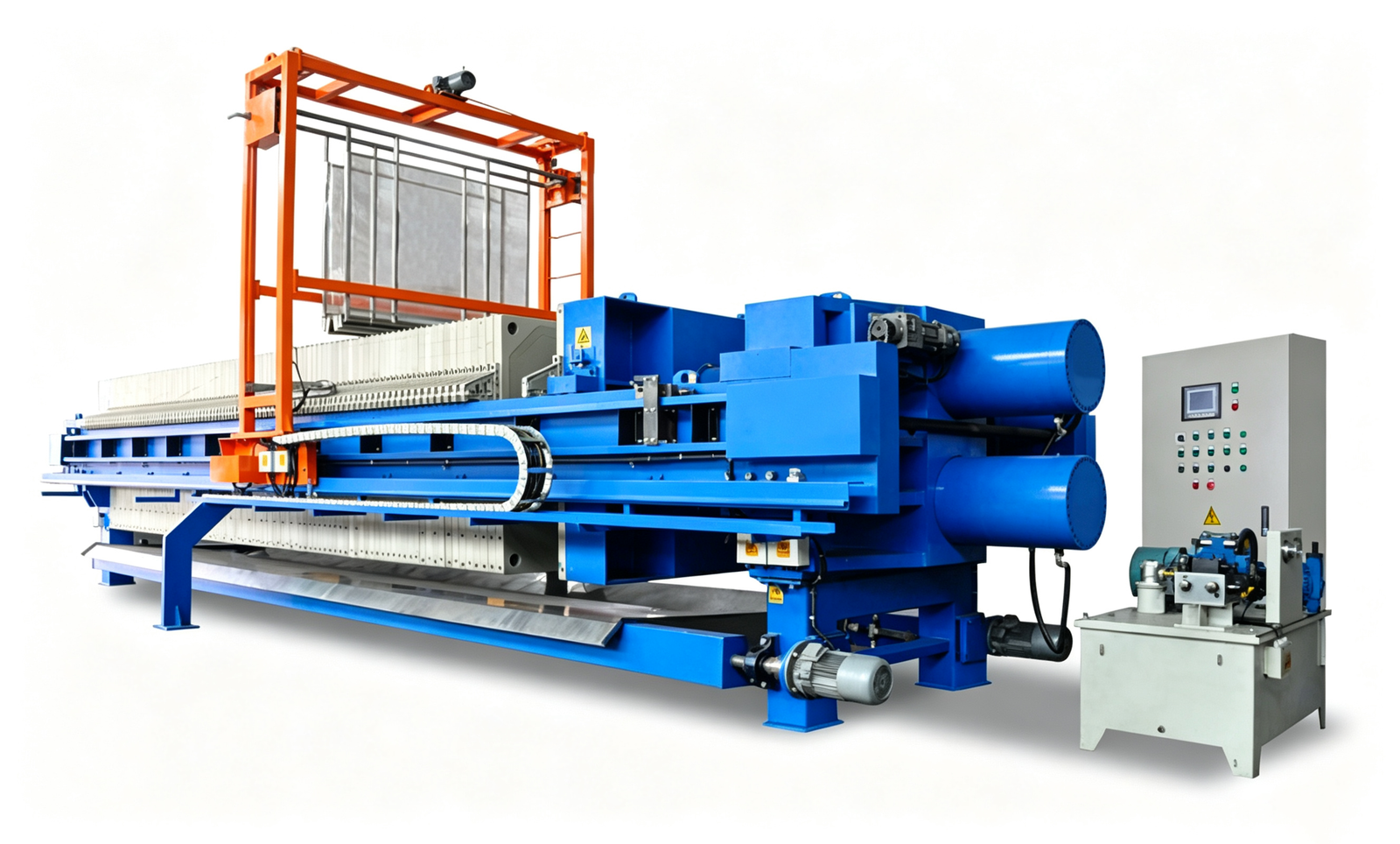
Hydraulic closing & control system
Hydraulic pack holds the plate pack closed under working pressure and shifts the plates automatically on discharge.
- Closing force: 150–350 bar (sized to plate area).
- PLC: Siemens S7-1200 or Schneider M221/M241 (configurable).
- Pressure sensors and safety interlocks on the closing cylinder.
- Hydraulic oil tank, gauges, and hose brand documented in the spare-parts list.
Frame & structural integrity
Welded carbon-steel frame with stress-relief treatment and anti-corrosion coating; optional SS304 / SS316 wetted parts for food, beverage, and pharmaceutical slurries. Footprint is optimised for the rated plate area; skid-mounted mobile frames are available for temporary or pilot installations.
- Frame material: Q235 carbon steel (standard) / SS304 / SS316 (optional).
- Surface treatment: sand-blast + epoxy primer + polyurethane top-coat.
- Optional mobile / skid-mounted frames for rental or seasonal duty.
- All frames are stress-relieved after welding to limit long-term distortion.
Typical applicationsWhere membrane presses earn their extra cost over a chamber press.
The membrane squeeze stage pays off most when (a) the target cake moisture is below what a chamber press can reach, or (b) the process needs effective cake washing. Below are the most common duty cases from our quotation history.
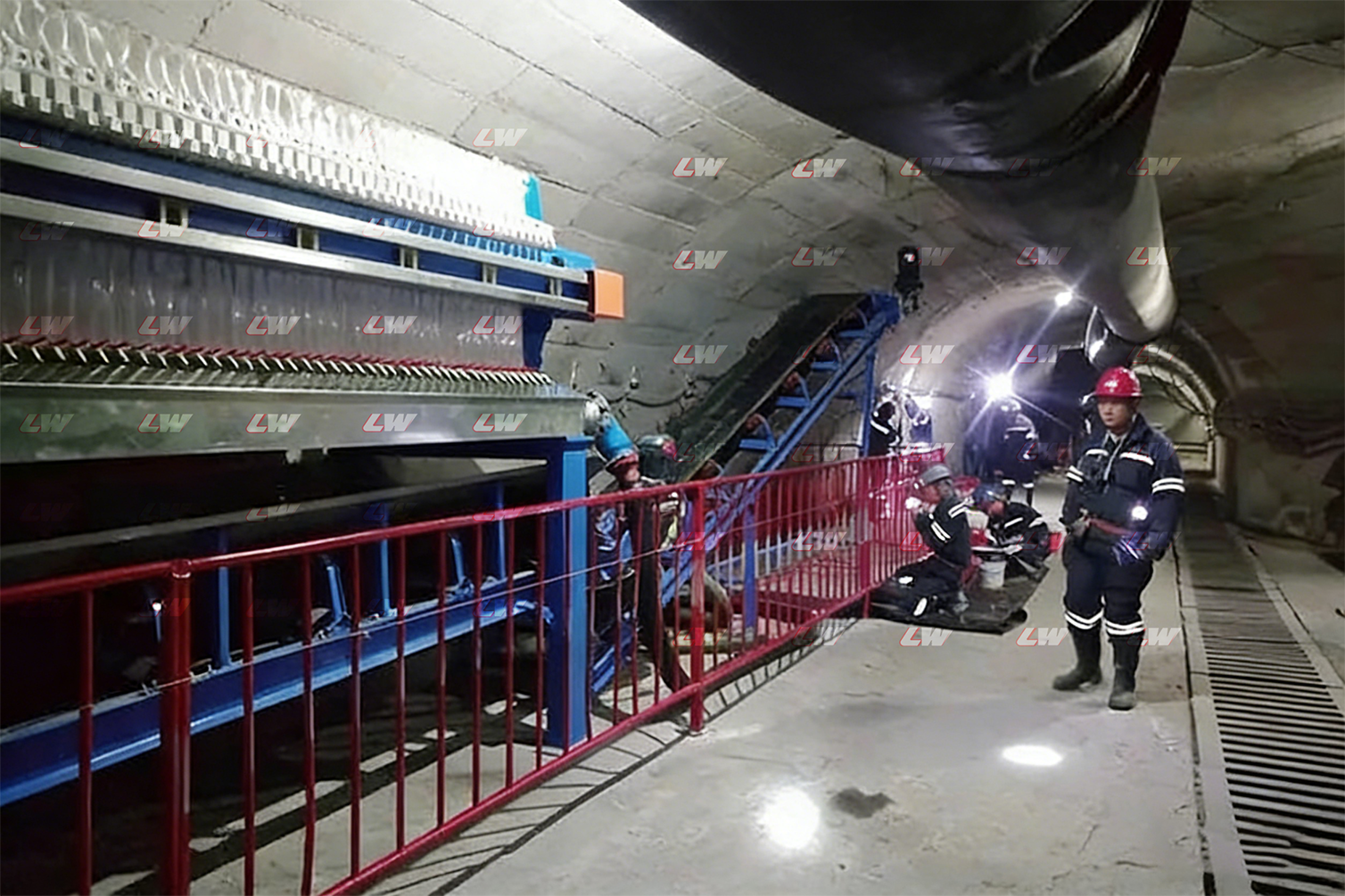
Mining & minerals
Concentrate and tailings dewatering where low moisture is required for dry stacking, transport, or downstream processing.
- Copper, gold, iron-ore tailings
- Target moisture 18–25% typical
- Abrasive slurries — cast-iron with PP coating available
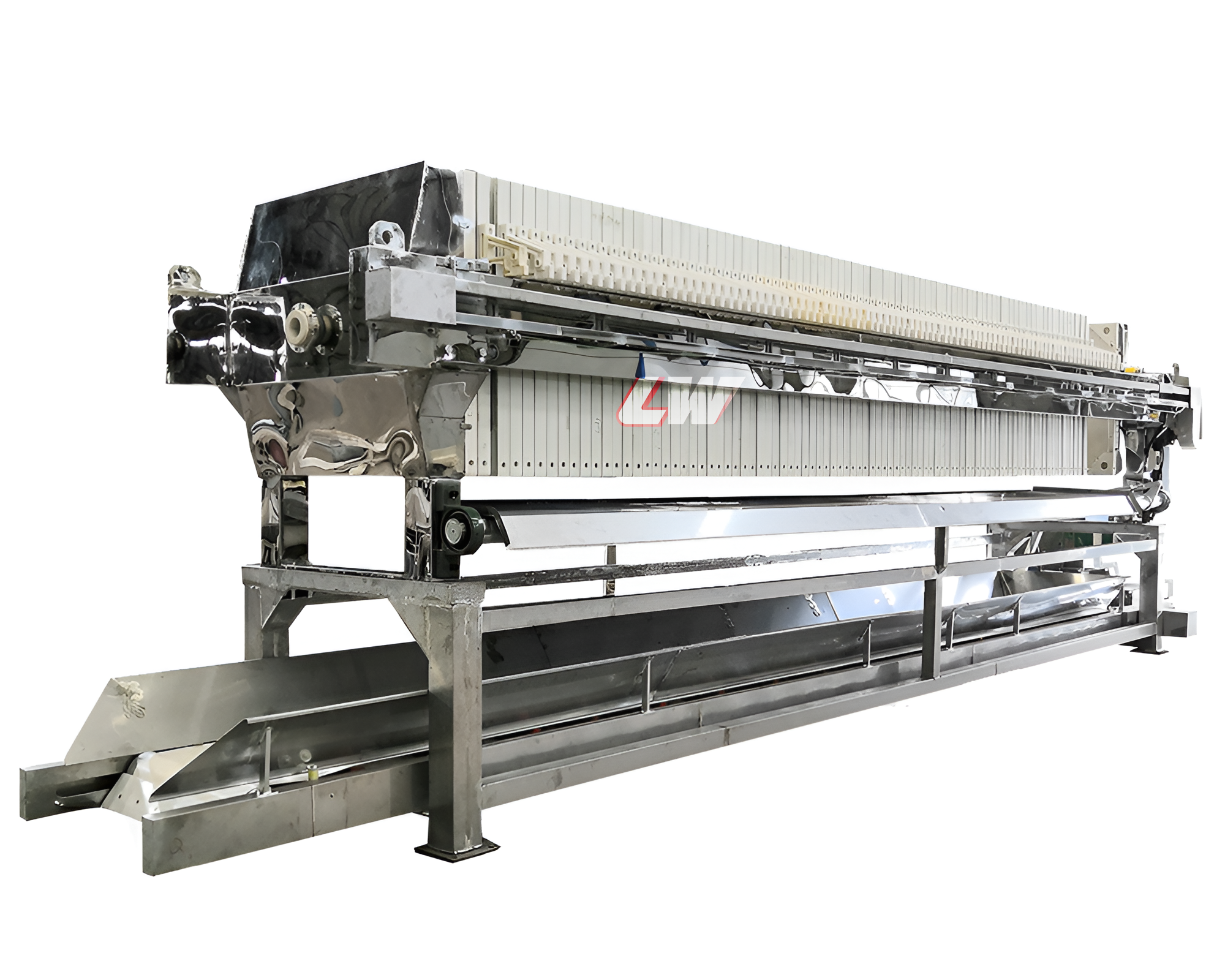
Food & beverage
Stainless wetted parts for breweries, distilleries, edible-oil refining, fruit-juice clarification, and starch recovery.
- SS304 / SS316 wetted surfaces
- Hygienic piping and drip-tray integration
- EPDM or food-grade NBR diaphragm
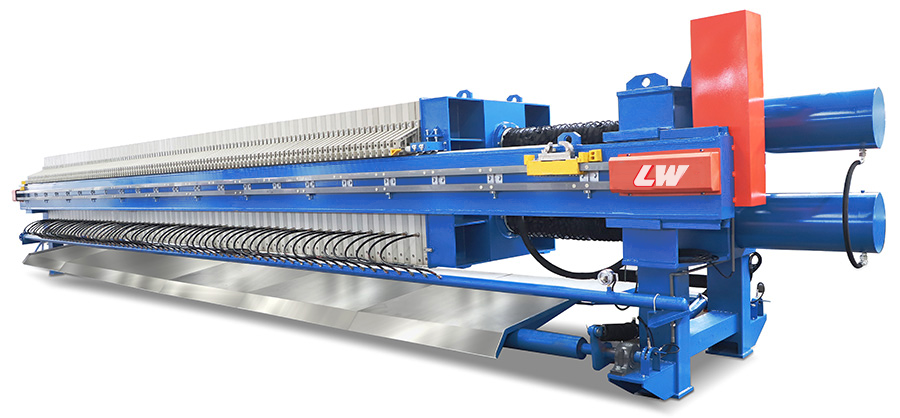
Chemicals & pigments
Catalyst recovery, pigment and dye filtration, fine-chemical purification — cake wash effectiveness is the main reason to specify a membrane press here.
- Optional wash stage + second squeeze
- FKM diaphragm for solvents
- Higher wash-yield recovery vs chamber press
Municipal & industrial sludge
Municipal WWTP biosolids and industrial effluent — squeezing cuts cake volume and disposal cost.
- Cake moisture 45–55% typical vs 55–65% chamber
- Reduced transport weight and landfill levy
- Pairs with sludge testing for sizing — see bench test programme
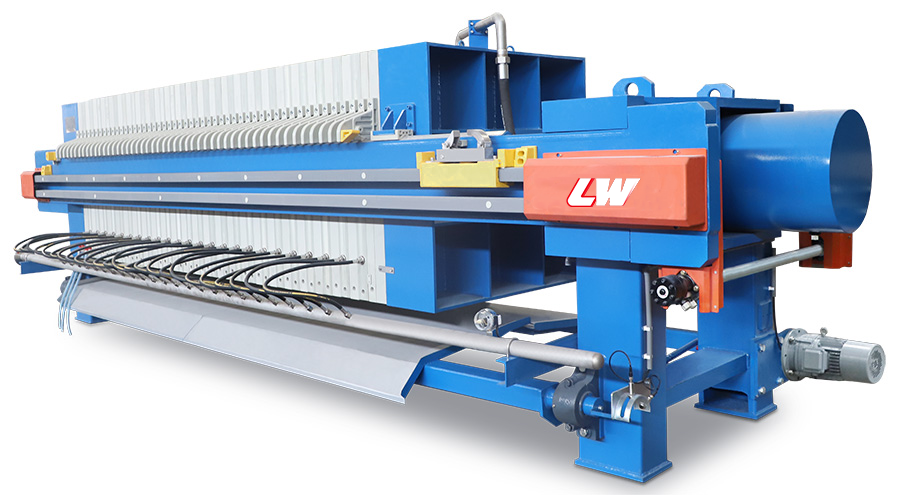
Pulp, paper & ceramics
Fibre recovery, clay dewatering, and pigment-grade material where the squeeze stage improves both dryness and wash quality.
- Variable squeeze pressure to match slurry compressibility
- Optional PP / PET / PA cloth grade
- Plate pack sized to daily throughput

Specialty & fine materials
Fine-sand dewatering for construction materials, metal-finishing wastewater, and other slurries where target moisture is the bottleneck.
- Air-blow option for extra dryness on fine materials
- Custom wetted materials for corrosive feeds
- Engineered for low operator attendance
Design considerationsWhat we ask before we size a membrane press for you.
Slurry characteristics
- Particle size distribution
- Solid concentration range
- pH, temperature, corrosivity
- Compressibility and settling rate
Performance requirements
- Target cake moisture
- Daily / hourly throughput
- Cycle-time constraints
- Cake handling downstream
Operating environment
- Floor space and headroom
- Power supply and grounding
- Compressed air / hydraulic supply
- Indoor vs. outdoor installation
Automation level
- Manual / semi-auto / fully-automatic
- Shift pattern and operator availability
- Integration with plant SCADA / DCS
- Maintenance capability on site
Frequently asked questionsEight questions we hear most often from engineers and procurement.
If your question is not covered below, send us a slurry sample or analysis report and we will respond with a sized recommendation.
Q1. What cake moisture can a membrane filter press achieve for mining tailings and municipal sludge?
For mining tailings, membrane presses typically reach 18–25% moisture, suitable for dry stacking. For municipal biosolids, 45–55% versus 55–65% from a recessed-chamber press. Actual results depend on your slurry — send us a sample or analysis report and we will state the expected moisture in our proposal.
Q2. How long do membrane plates last, and what does replacement cost?
Reinforced polypropylene membrane plates typically last 2,000–5,000 cycles depending on slurry abrasiveness, squeeze pressure, and cloth condition. The diaphragm rubber element is replaceable separately from the plate body, so you do not scrap the whole plate when the rubber wears out. We include a spare-parts price list with every quotation.
Q3. Can I retrofit my existing chamber filter press with membrane plates?
Often yes, if the frame, hydraulic closing force, and plate size are compatible. Send us photos of your existing press with the plate size and model name and we will assess retrofit feasibility and the cost difference versus a new machine.
Q4. What squeeze pressure and medium do you use?
Standard squeeze pressure is 1.0 MPa (10 bar); the high-pressure option goes up to 1.6 MPa (16 bar). Water is the default squeeze medium — stable, incompressible, and safer. Compressed air is available for sites without a water supply or for slurries where air blow also helps final dryness.
Q5. What maintenance does a membrane filter press require?
Routine checks: hydraulic oil level and temperature, filter cloth condition, diaphragm integrity (look for tears or pressure loss). Cloths are replaced when filtrate clarity drops; diaphragms are replaced when squeeze pressure cannot be held. We supply a maintenance schedule and a spare-parts list with each machine.
Q6. How do I choose the right filter cloth for my slurry?
Cloth selection depends on particle size, pH, temperature, and chemical compatibility. We match cloth material (PP, PET, PA) and weave to your slurry. For abrasive or corrosive feeds, we recommend specific weaves — share your sludge analysis and we will recommend the cloth grade.
Q7. How does cycle time compare to a conventional chamber press?
The squeeze step adds 5–15 minutes but reaches the target dryness faster than extended filtration alone. Net cycle time is typically 30–50% shorter than a chamber press running to the same dryness target — meaning more cycles per day from the same plate area.
Q8. What does a membrane filter press cost, and what affects the price?
Main cost drivers: plate size (800–2000 mm), number of chambers, automation level (manual / semi-automatic / fully-automatic PLC), squeeze medium, and material of construction (316L wetted parts for corrosive slurries). Send us your daily volume and target dryness and we will return a sized quotation within 48 hours.
Get your sized membrane filter press proposalTwo things we need to start: a slurry sample (or analysis report) and your daily volume.
Send your slurry data, get a sized quotation
Send your bench-test report, plant layout sketch, or a 2–5 kg sample to our team in Loway. We return a sized recommendation (plate count, plate size, squeeze pressure, automation level) within 48 hours, with a fixed quotation for the equipment and an indicative freight and installation plan.
Related equipment and services
A membrane press is usually one element of a complete dewatering line. Below are the equipment categories and services engineers pair with it.
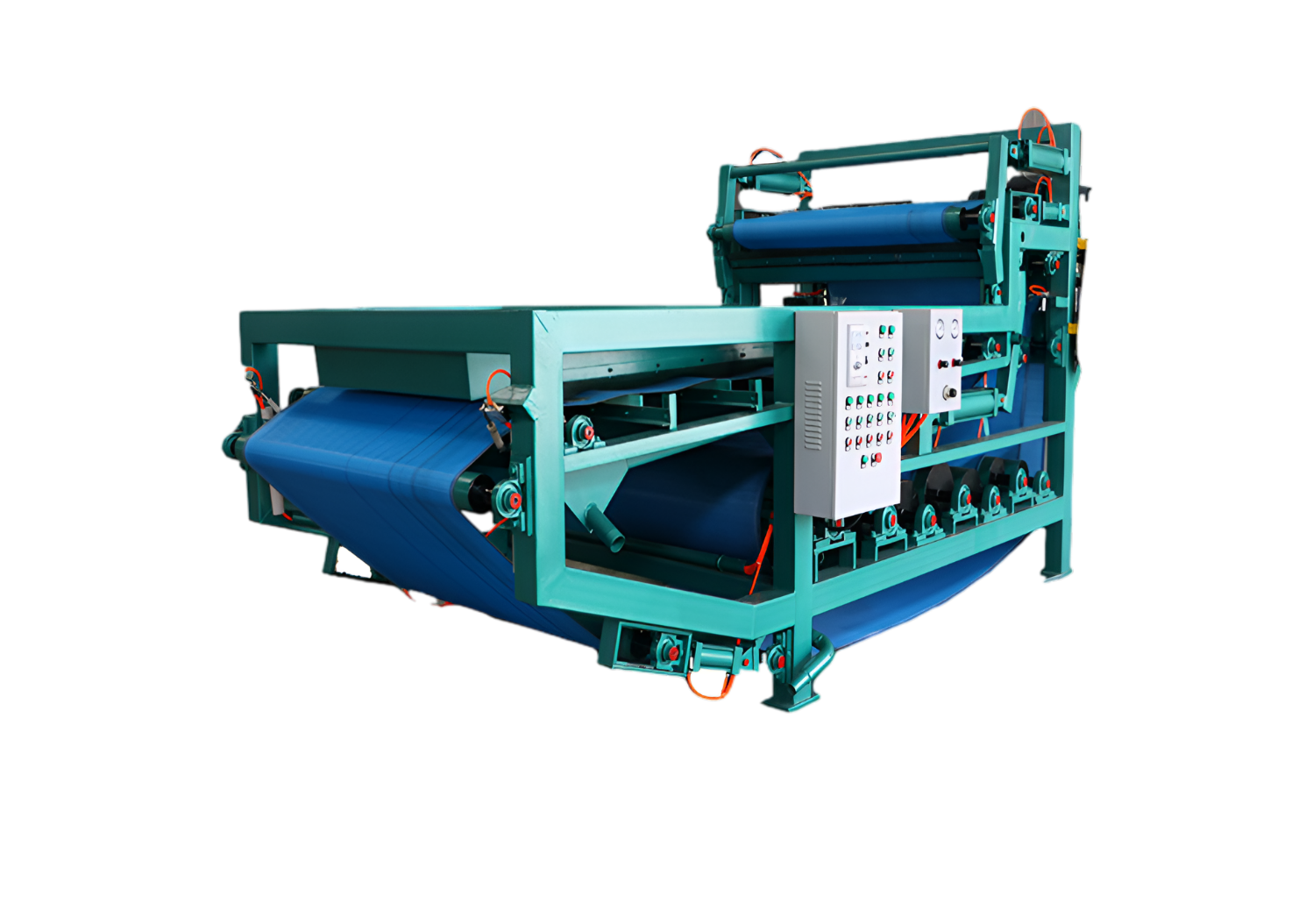
Belt filter press
Continuous-operation alternative for large-throughput, lower-dryness duty. Useful as a pre-thickener upstream of a membrane press.
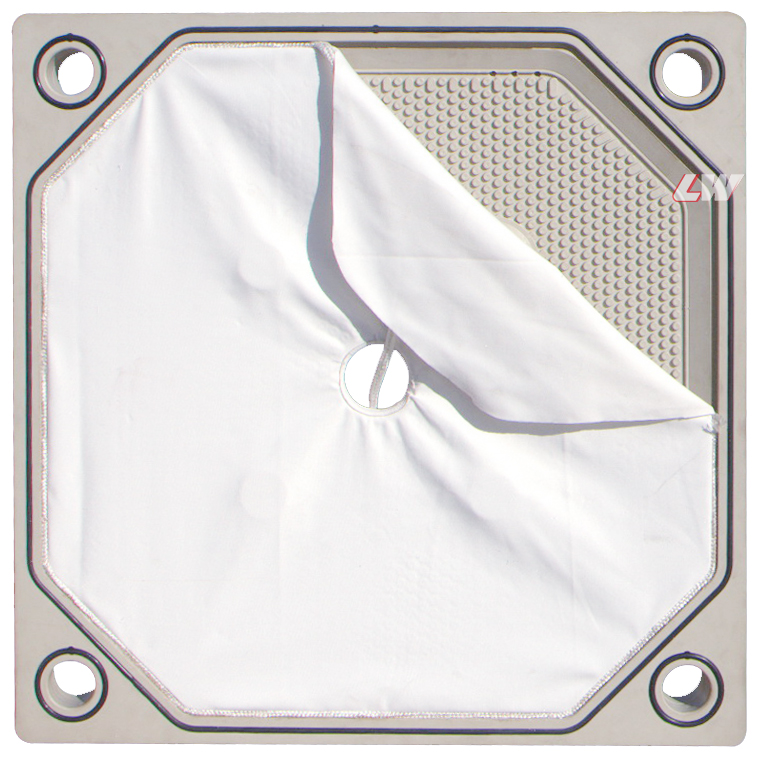
Filter plates & cloths
Replacement plates (recessed-chamber, membrane, CGR) and cloth grades (PP / PET / PA). OEM-sourced cloths supplied with the press; Loway supplies plate bodies.
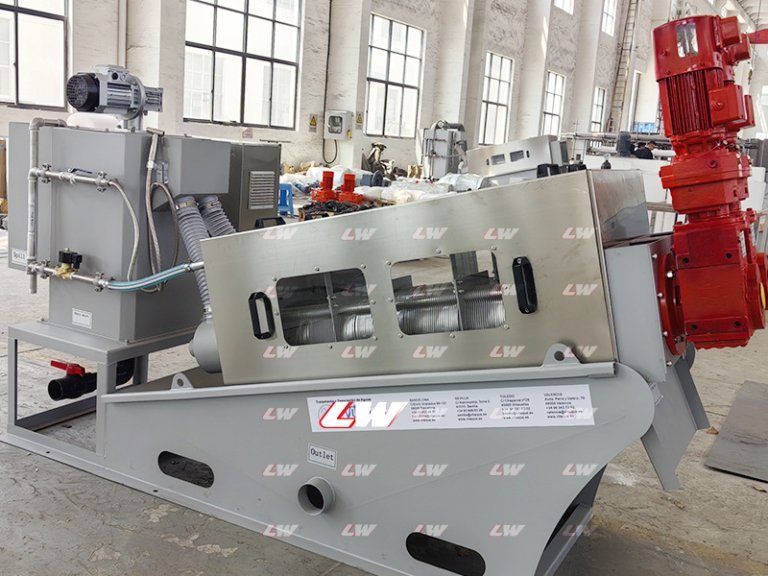
Dewatering screw press
Low-speed, continuous dewatering for fibrous or high-solids slurries. Often paired with a filter press for the second-stage polishing step.
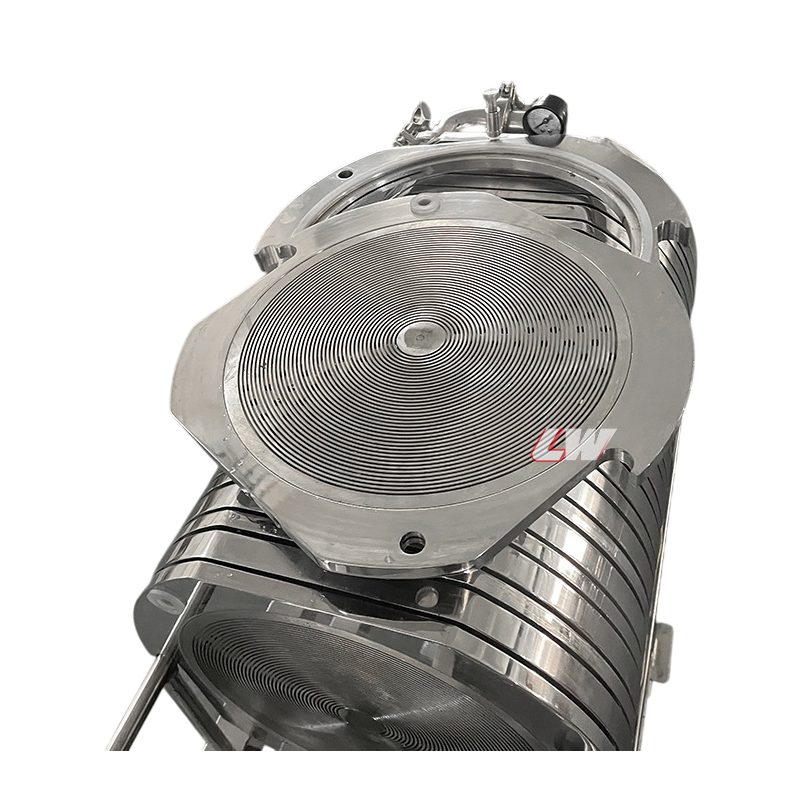
Spare parts & service
Diaphragm kits, plate bodies, cloth rolls, hydraulic seals, and PLC spares — with installation supervision and 24×7 technical support.