

About · Quality Control
Quality engineering
How Loway Quality Engineering Works — On Filter Presses, Belt Presses, Screw Presses and Beyond
A factory page tells you what is built; this page tells you what the quality engineer is doing while it is being built. The same engineer checks the drawing, signs the pressure test, hosts the third-party inspector and answers your QA team’s email — on filter presses, belt presses, screw presses, rotary drum filters, screens and grinders, every time.
What stays the same across product lines
Quality control is an engineering job, not a paperwork job
Anyone can stamp a machine “passed”. The harder job is to be the person who decides what to inspect, in what order, and what counts as a fail on a 60-chamber membrane press versus a 5 m² chamber press versus a multi-disc screw press. The same quality engineer follows every Loway machine from drawing review to dispatch, and the records travel with the serial number. What follows is the actual scope of that job — what we do, what we do not do, and what you receive in the document pack.
system covering drawing review, incoming checks, in-process control and pre-shipment inspection
every machine — chamber, membrane, belt press frame, screw press body — before wooden-crate packing
pre-shipment inspection hosted on request; SGS, BV, TÜV, Intertek or a customer-appointed inspector
and technical file provided on request for machines shipped into CE-marked jurisdictions

Before the build starts
The engineer’s first job is reading the drawing — and your spec
Most of the QC work that matters happens before any steel is cut. The quality engineer reads the approved 3D model, checks that the BOM matches the chamber count / plate area / pressure rating your project actually needs, and ties every batch of incoming steel, plates and hydraulic components to that build record. If the spec is wrong here, no amount of pressure testing will save the machine later.
- Spec against duty. Chamber count, plate area, filter cloth spec and PLC cycle are checked against your sludge and capacity data — not a catalogue.
- Mill certificates. Steel plate and structural profiles arrive with the mill certificate; batch numbers are recorded against the machine serial number.
- Component traceability. Hydraulic cylinders, power packs, motors, plate sets and cloths are checked for model and pressure-rating match against the approved BOM.
- One file per serial. All certificates and drawings live in one build record under the machine serial number — the same file the engineer hands to you on shipment.
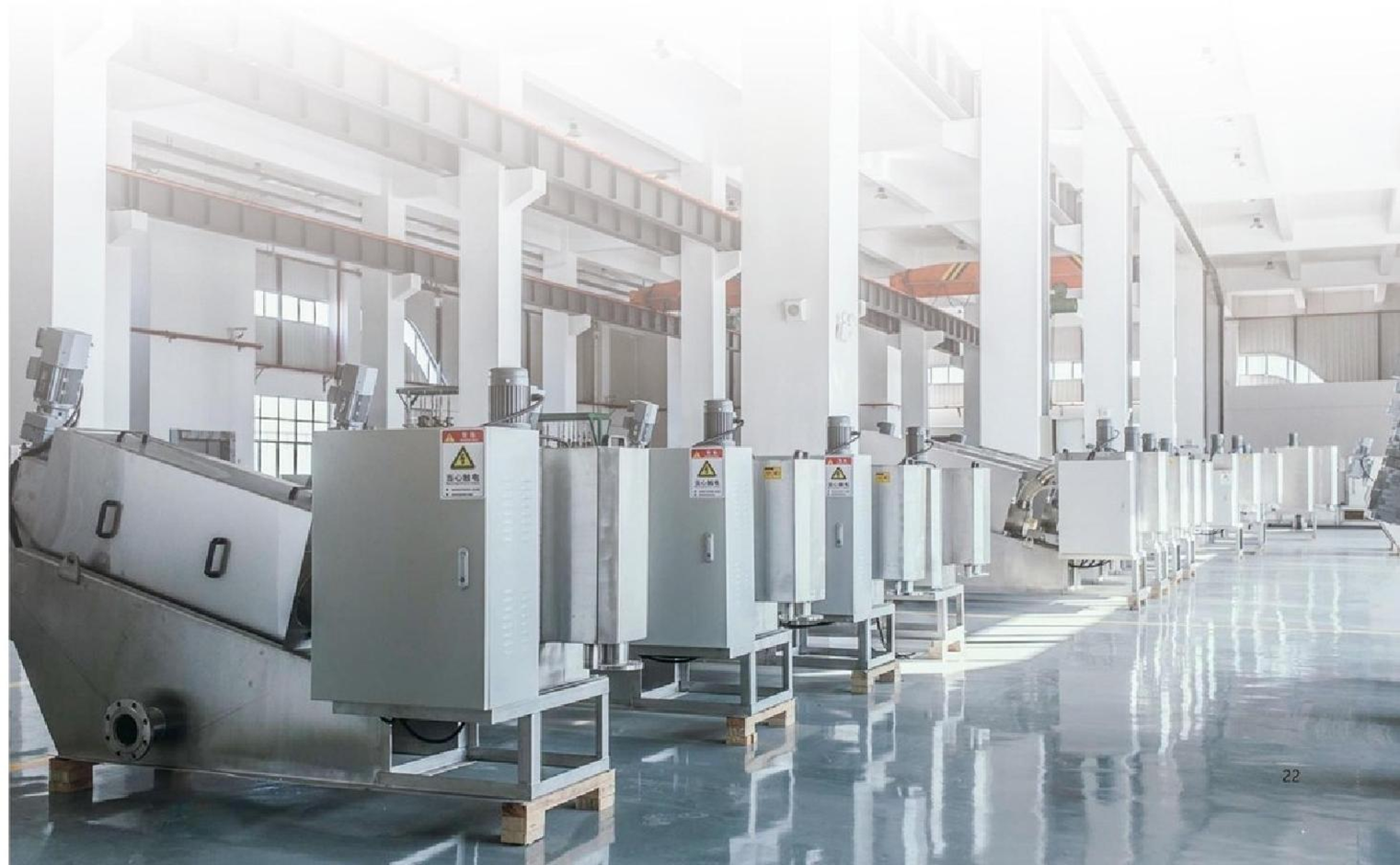
During the build
What gets tested depends on the product — not on a generic checklist
A 100% pressure test makes sense for a filter press; it makes no sense for a rotary drum filter, where the test is vacuum-hold and cake-discharge rate. The quality engineer’s job is to know which test goes with which product line, run that test, and write the number down. Below is the test plan by product type, not by department.
-
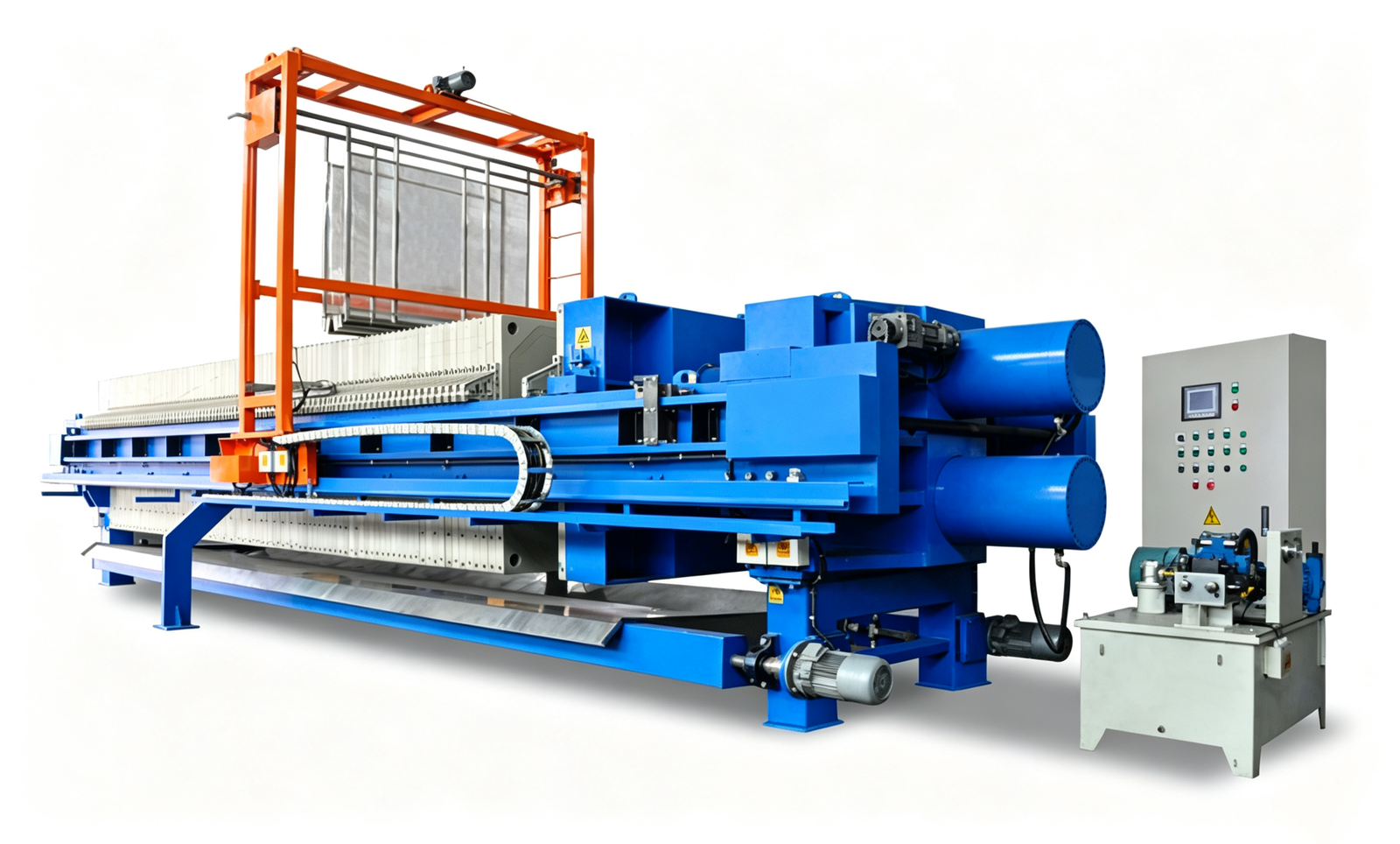
01Filter pressHydraulic run-test on the closing ram (full pressure, hold, emergency release) and a water leak test on the plate pack at operating pressure, plate by plate.
-
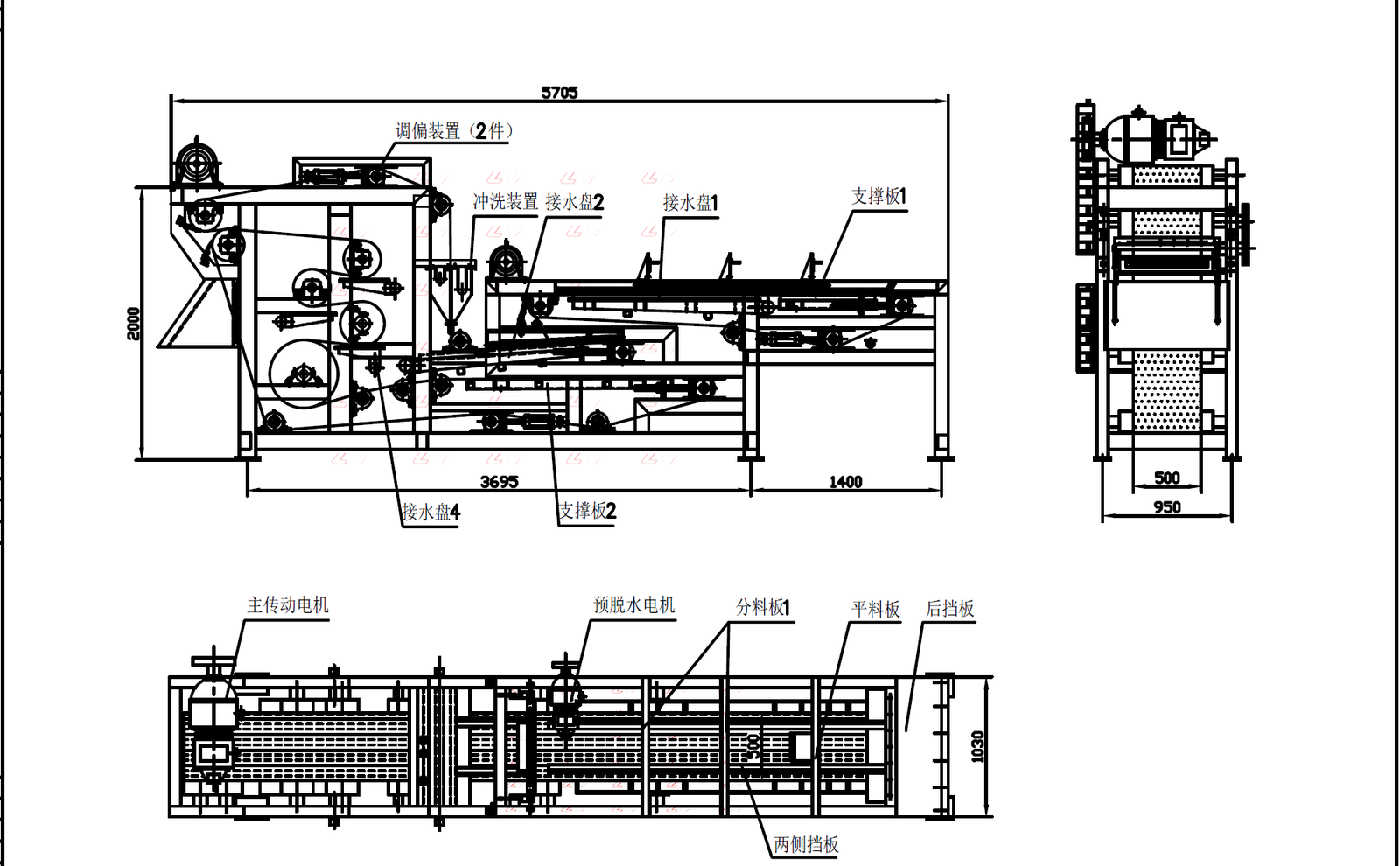
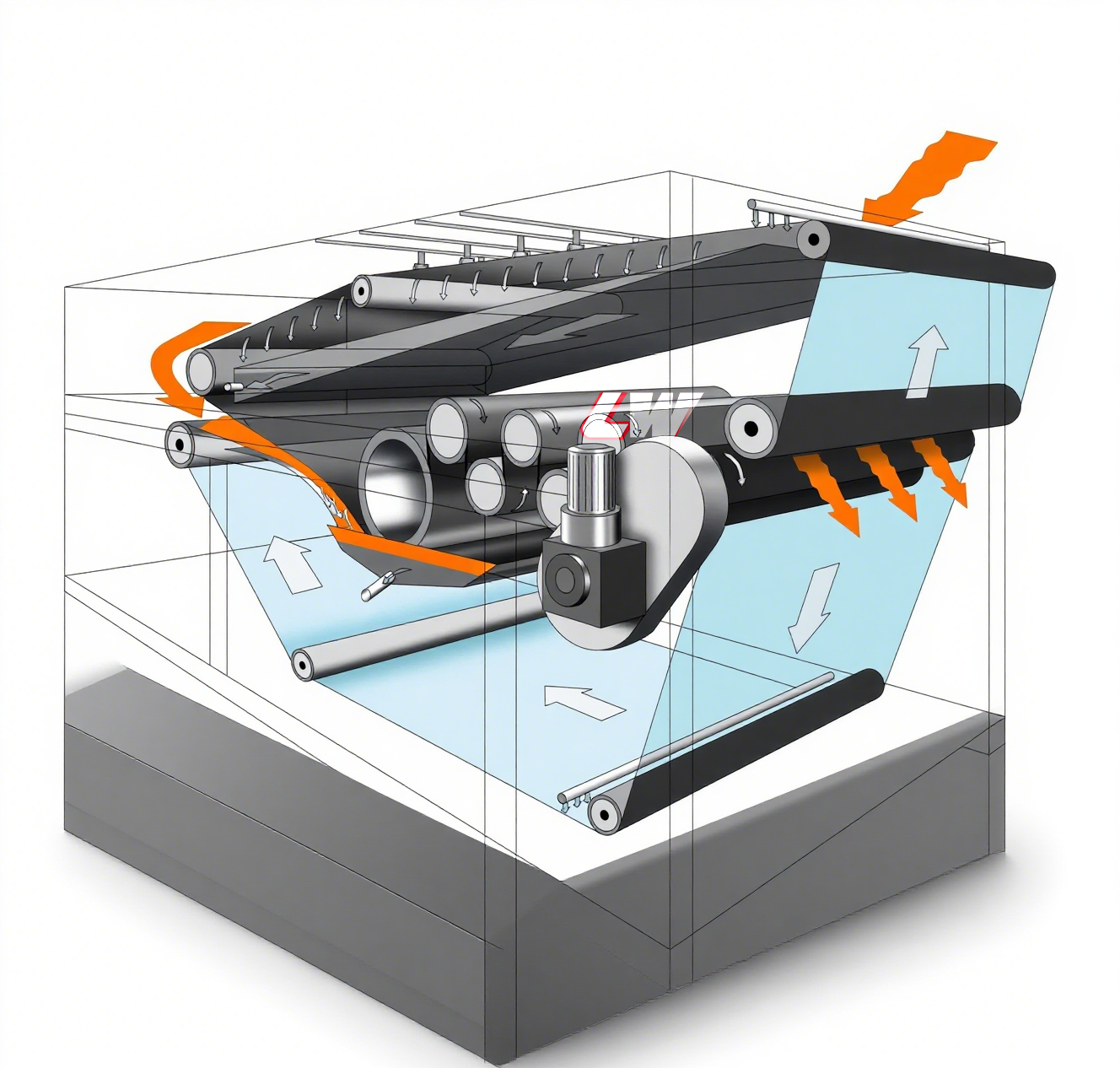
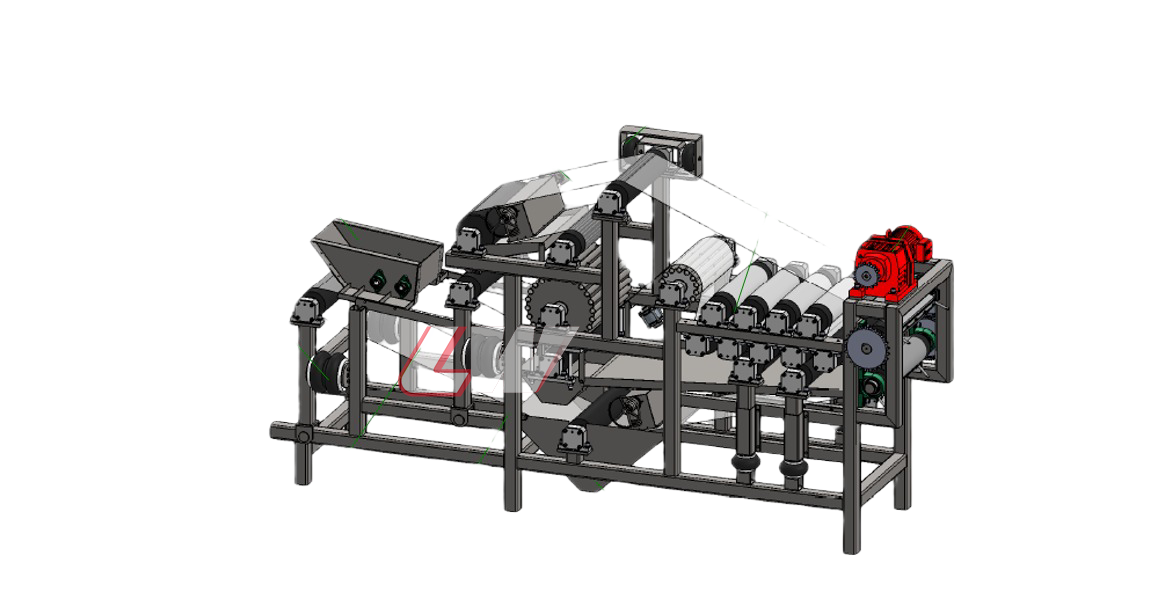
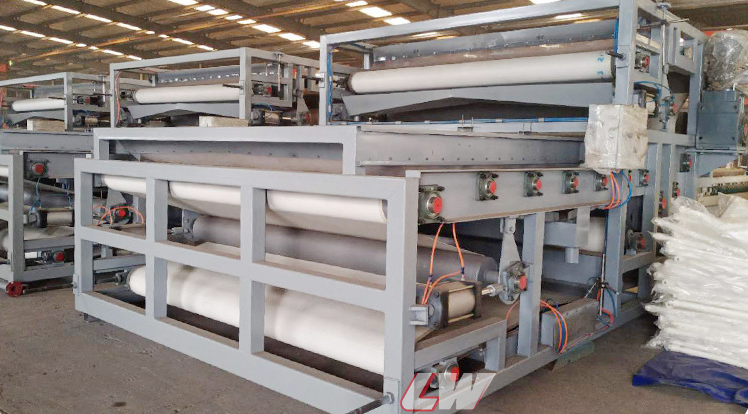
02Belt pressFrame deflection check, belt-tension calibration, gravity-thickening and pressure-zone running under no-load and loaded water to confirm cycle times against design.
-
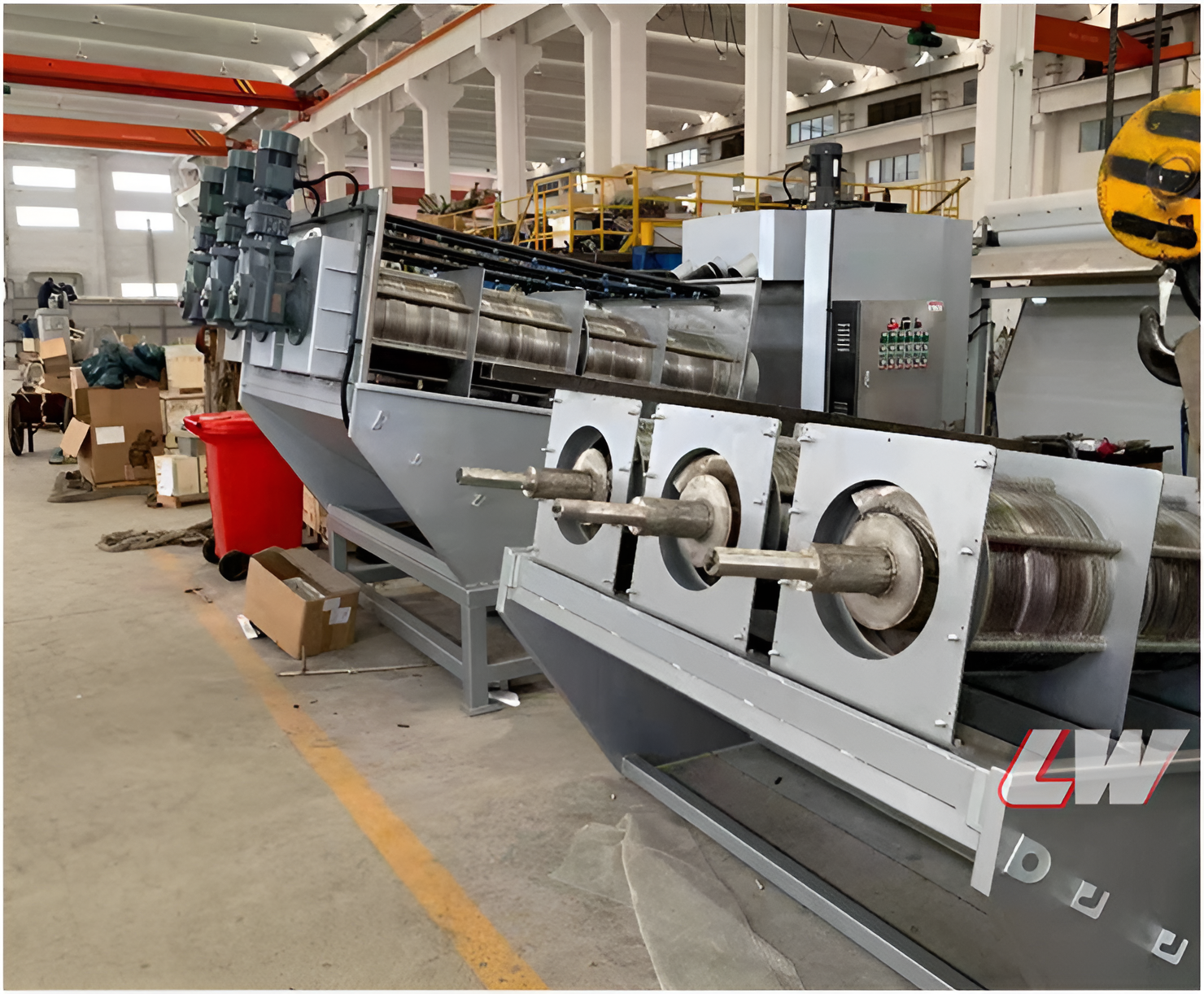
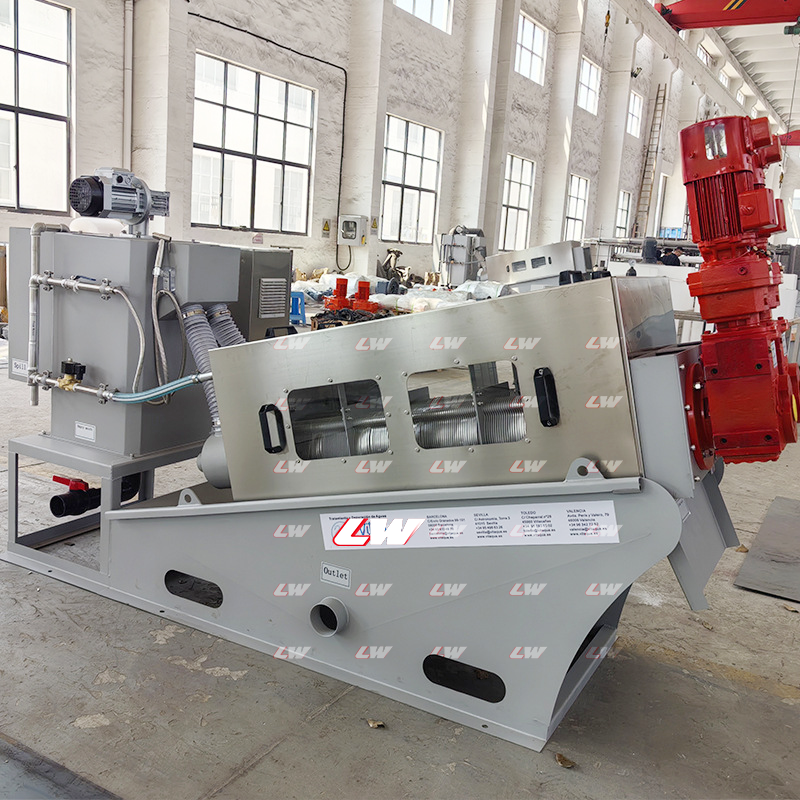
03Screw pressTorque and back-pressure test on the main drive, ring-segment gap check, and a full dewatered-cake run with water to confirm cake-dryness trend.
-
04Rotary drum filterVacuum-hold test on the drum, drum-speed calibration against design RPM, and cake-discharge knife clearance check before sign-off.
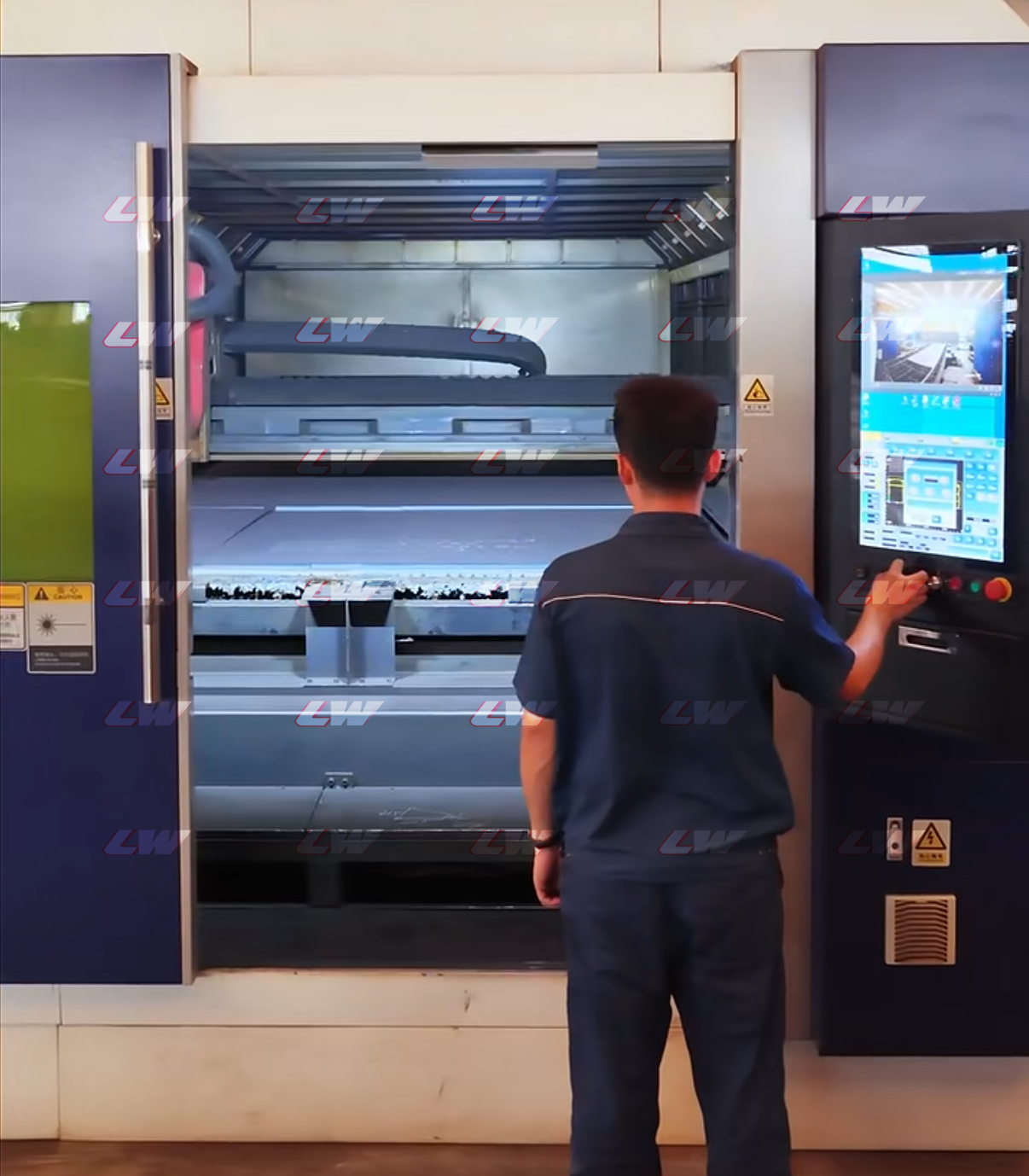
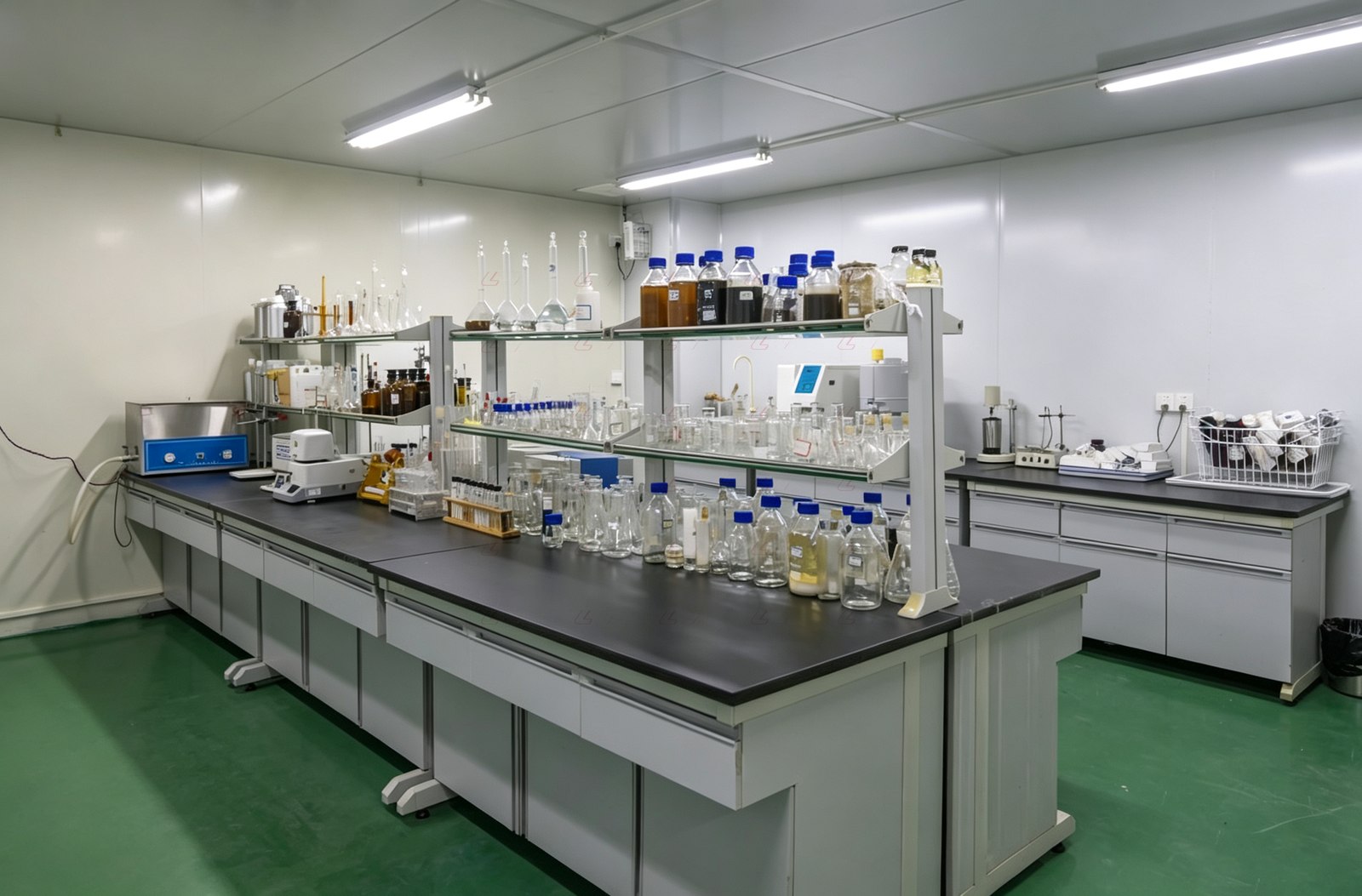
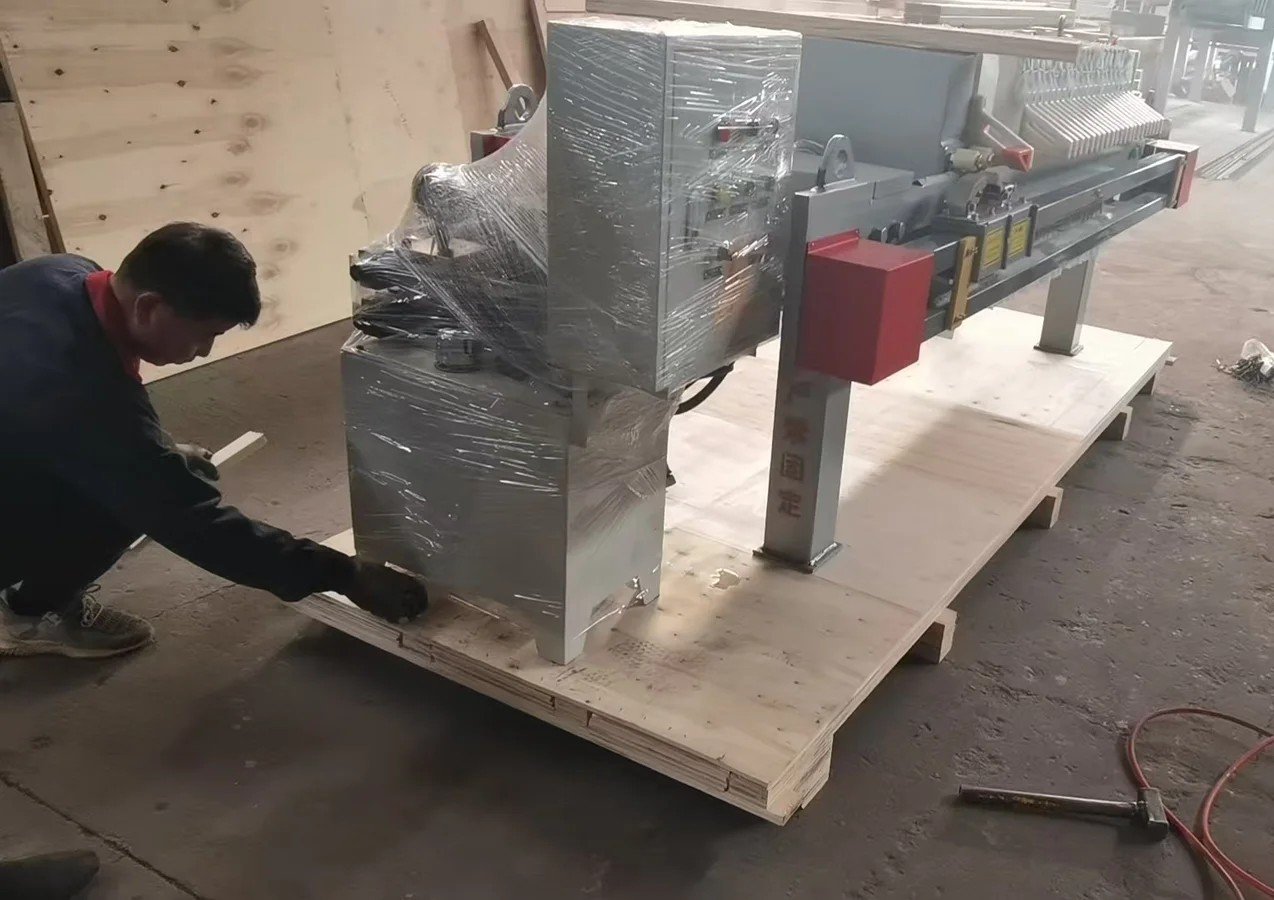
Four scenes from the dispatch bay. The engineer sees each one — a full PLC dry-run on a finished machine, the bench-test numbers from the lab, the wrapping before the crate closes, and the product-specific sign-off on the build itself.
Before the crate closes
The engineer is also the person who answers your QA team’s email
Most QC failures in the field are not test failures — they are paperwork failures, where the right document was not in the right hands at the right time. The quality engineer is the named contact for the buyer, the EPC, the inspector and the freight forwarder from FAT to delivery. If a hold-point or a witness point is added late, it goes into the build calendar, not into the shipping folder.
- Remote FAT. If you cannot travel for the factory acceptance test, the engineer hosts a live video walk-through of the pressure test and PLC dry-run, with the test plan emailed to you the day before.
- Third-party PSI. SGS, BV, TÜV, Intertek or your own inspector — the engineer schedules the PSI against the build calendar and joins the walk-through.
- Customer hold-points. Common hold-points (weld inspection before paint, FAT before packing, documentation review) are folded into the schedule before cutting starts.
- CE on request. For CE-marked destinations, the Declaration of Conformity and the relevant sections of the technical file are added to the QC pack on the order, not after.
What the engineer looks at on each product line
One QC system, four product lines on the bench
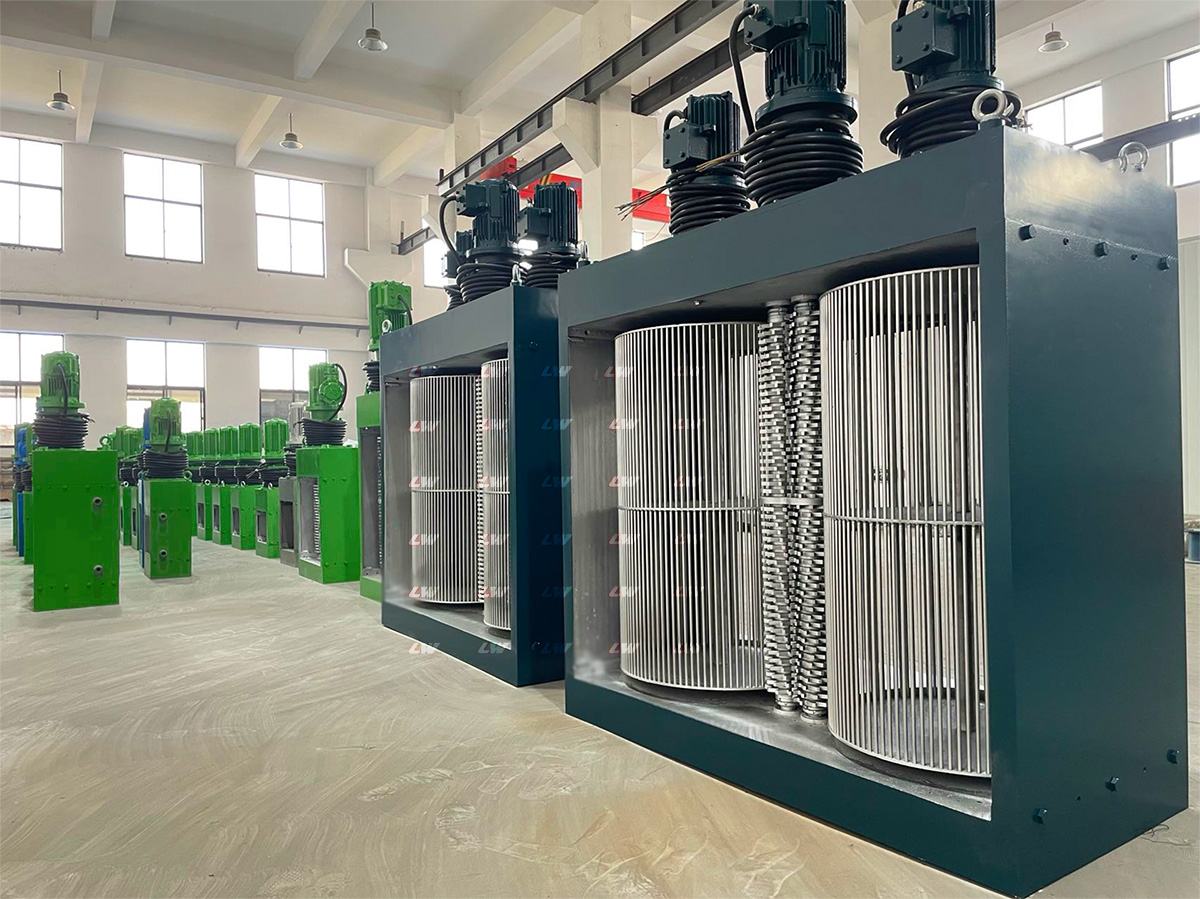
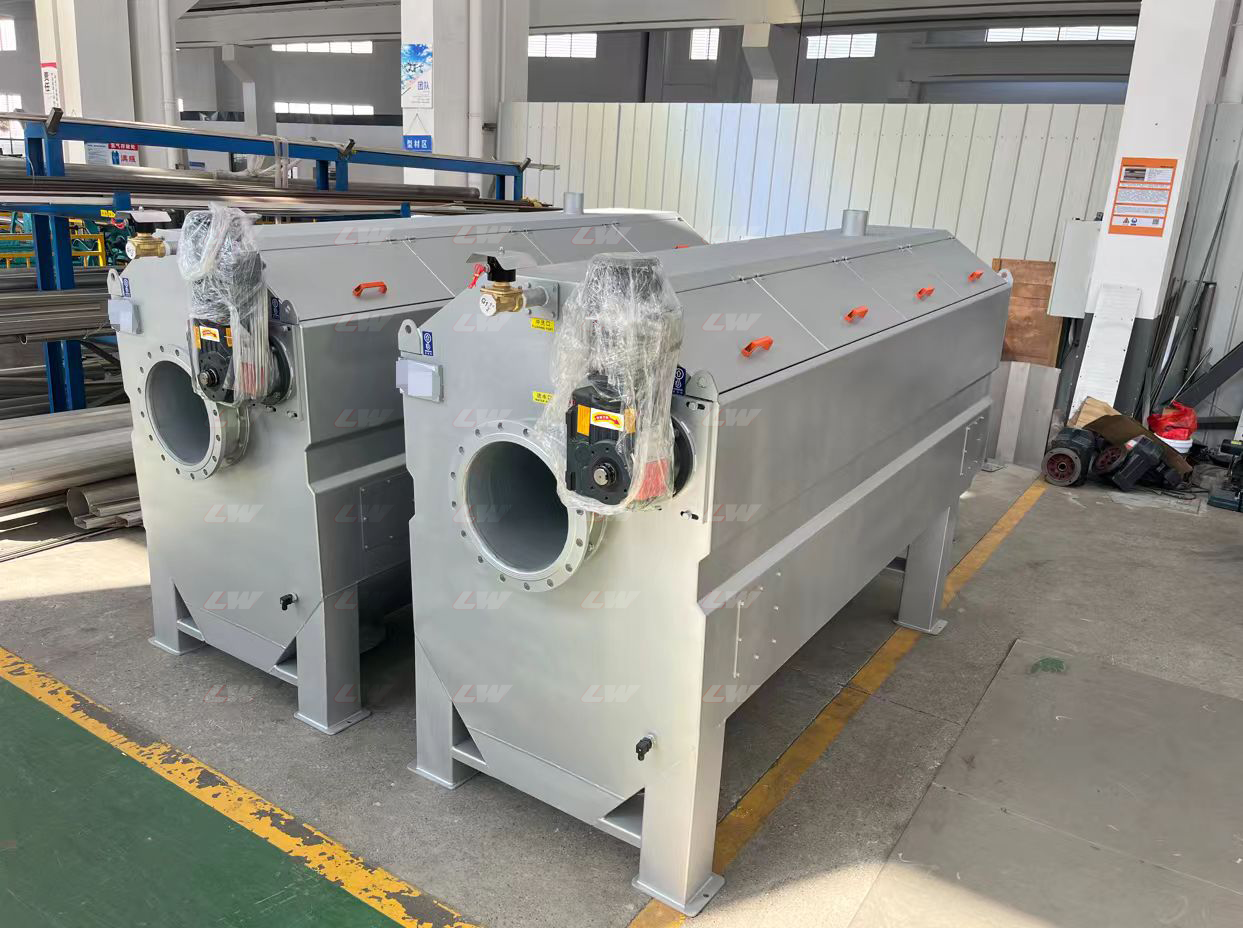
Filter press, belt press, screw press and rotary drum fine screen — each line has its own QC check the engineer signs off on before the machine is allowed into the crate.
What you receive with each machine
The QC document pack travels with every Loway machine
When a machine leaves the dispatch bay, it carries more than wooden crate and a packing list. The QC document pack is filed under the machine serial number and a copy goes to the buyer so procurement, QA and EPC teams have the same paper trail. The contents vary by destination and product line — what is below is the standard pack.
Need a specific test plan, witness point or hold point that is not on the standard pack? Tell us when you contact us — the engineer folds it into the build schedule before cutting starts.
FAQ
Quality engineering questions buyers ask us most often
The same questions come up from procurement, QA and EPC teams before they sign a PO. Answers are written by the engineer who runs the work — not by marketing.
Who actually does the QC on my machine?
A named Loway quality engineer owns the build record for your machine from drawing review to dispatch. The same engineer signs the pressure test report, joins the third-party pre-shipment inspection and answers your QA team’s email. If you want a specific person named in your order folder, tell us when you contact us.
Can we witness the factory acceptance test (FAT) remotely?
Yes. A typical remote FAT is a live video walk-through of the hydraulic run-test, the product-specific test (water leak, vacuum-hold, torque or belt-tension) and the PLC dry-run, with the test plan emailed to you the day before. Customer on-site visits are also scheduled against the build calendar so nothing slips.
Do you accept third-party pre-shipment inspection (PSI)?
Yes. We regularly host SGS, BV, TÜV, Intertek and customer-appointed inspectors. Send the test plan when you contact us and the engineer will schedule it against the build calendar; the PSI report joins the QC document pack on dispatch.
What CE documentation do you provide?
For machines shipped into CE-marked jurisdictions, we provide a Declaration of Conformity and the relevant sections of the technical file (Machinery Directive, low-voltage and EMC where applicable). Documentation scope is confirmed per order based on destination and machine configuration.
Can we add our own inspection hold-points?
Yes. Customer hold-points are common at three stages — weld inspection before paint, FAT before packing, and a documentation review. Tell us your hold-points and timing when you contact us and the engineer folds them into the build schedule before cutting starts.
Do you provide material certificates and NDT reports?
Yes. Mill certificates for steel plate and profiles, batch numbers for filter plates and cloths, and (where specified) Magnetic-Particle or Ultrasonic NDT reports on critical welds are filed by machine serial and go out with the QC document pack on shipment.
What happens if a machine fails its test?
The machine is held on the floor, the failure mode is recorded on the build record, and the engineer decides whether it is a repair, a rework or a replacement part. The buyer is informed by email before the machine is back on the schedule — not after. Failed machines do not leave the factory under a passed stamp.
Plan your quality gate before the build starts
Want a test plan, witness points or CE file?
Tell us your sludge, capacity and destination market — the quality engineer will come back with a sizing recommendation, a quotation and the QC document pack that matches the standards your procurement and QA teams need. Within 24 hours, in your language.