Weaving looms in a textile mill

Industry Applications · Printing & Dyeing

Filtration for Printing, Dyeing and Textile Wastewater

A dye house sends its wastewater plant two kinds of work. At the headworks, lint and fibers have to leave the stream before they wrap a pump. At the sludge yard, coagulated color and activated sludge both need dewatering, and a filter press for textile wastewater is judged on how dry the cake leaves. This page keeps the two jobs apart, the way the plant does.

01Headworks fiber screening
02Dye-house chemical sludge
03Activated sludge, continuous
04Recovered PTA · grease · PVA

The split

Two ends of the plant, two different machines

The headworks protects everything downstream from fibers. The sludge yard turns two very different sludges into cakes you can haul. Equipment picked for one job rarely suits the other, which is why the split comes before any machine talk.
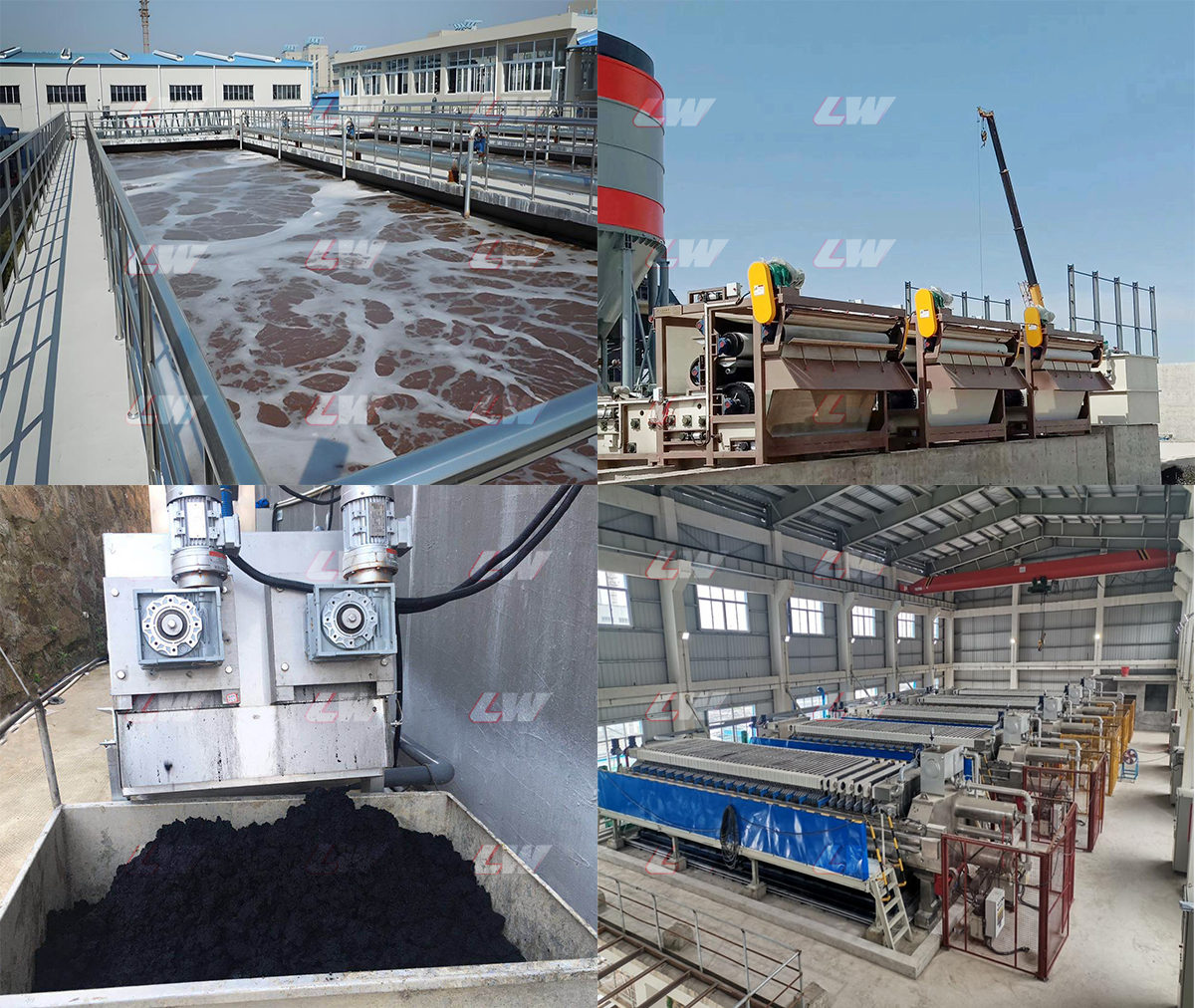
Screens, belt presses, sludge discharge and filter presses at textile effluent plants
Screens, presses and sludge discharge at dye-house effluent plants

At the headworks

Cotton lint, wool fibers and sizing residues arrive with the water. Left alone they rope around shafts, blind cloths and stop pumps. Screening here is cheap insurance for everything after it, and no filter press for textile wastewater should be sized until it is in place.

Lint · Fibers · Sizing residues

At the sludge yard

Color removal throws a dense inorganic sludge; the aeration tank throws a sticky biological one. They bill differently, dewater differently, and a filter press for textile wastewater is usually the answer for the first of them.

Coagulated color · Activated sludge · Mixed sludge

Same water, two ends of the plant. The machines share a building, not a duty.

The headworks · fiber screening

Stop the fibers before they cost you a shift

Fibers are the one contaminant every textile mill shares. A screen at the front of the plant catches them while they are a nuisance instead of a failure.

Rotary drum screen

Fine screening for lint and fibers, with the spray bar keeping the mesh open. Sized against your flow, it feeds the rest of the plant — and any filter press for textile wastewater downstream — a stream a pump can live with.

Rotary drum screen

Rotary bar screen

Where the load is heavier or the channel already exists, a bar screen takes the coarse cut first and keeps the fine screen from doing all the work.
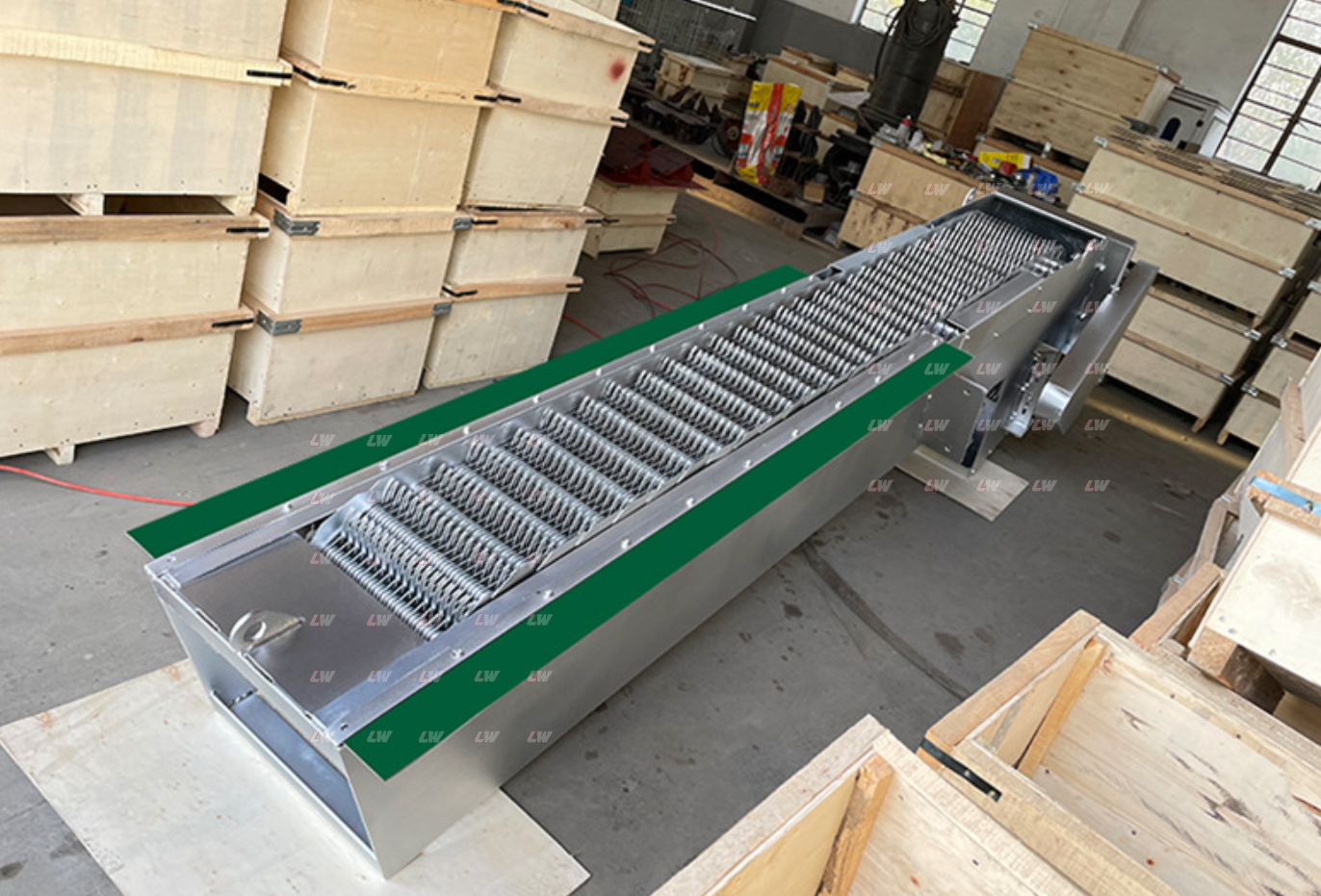
Rotary bar screen

Multi-rake bar screen in the Loway workshop
Bar screen assembly at Loway

Fibers that reach the sludge yard blind cloths and wrap screws. The screen that stops them pays for itself the first time a filter press for textile wastewater runs without a shutdown behind it.

The sludge yard · chemical sludge

Coagulated color: dense, inorganic, billed by the tonne

Decolorizing throws ferric or aluminium salts at the dye, and the floc that settles out is dense and inorganic. This is the sludge that decides the disposal bill, and it is where a filter press for textile wastewater earns its place.
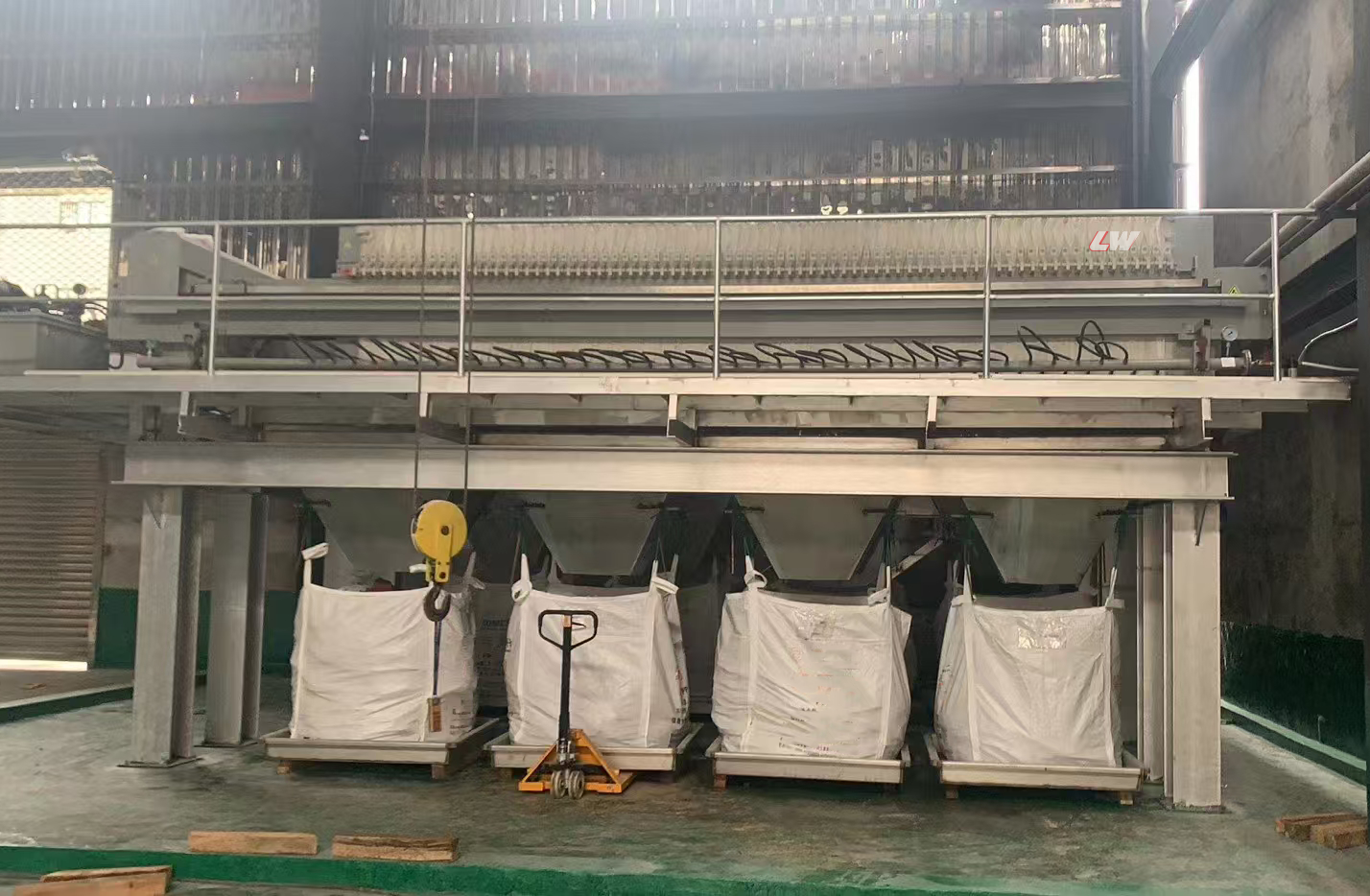
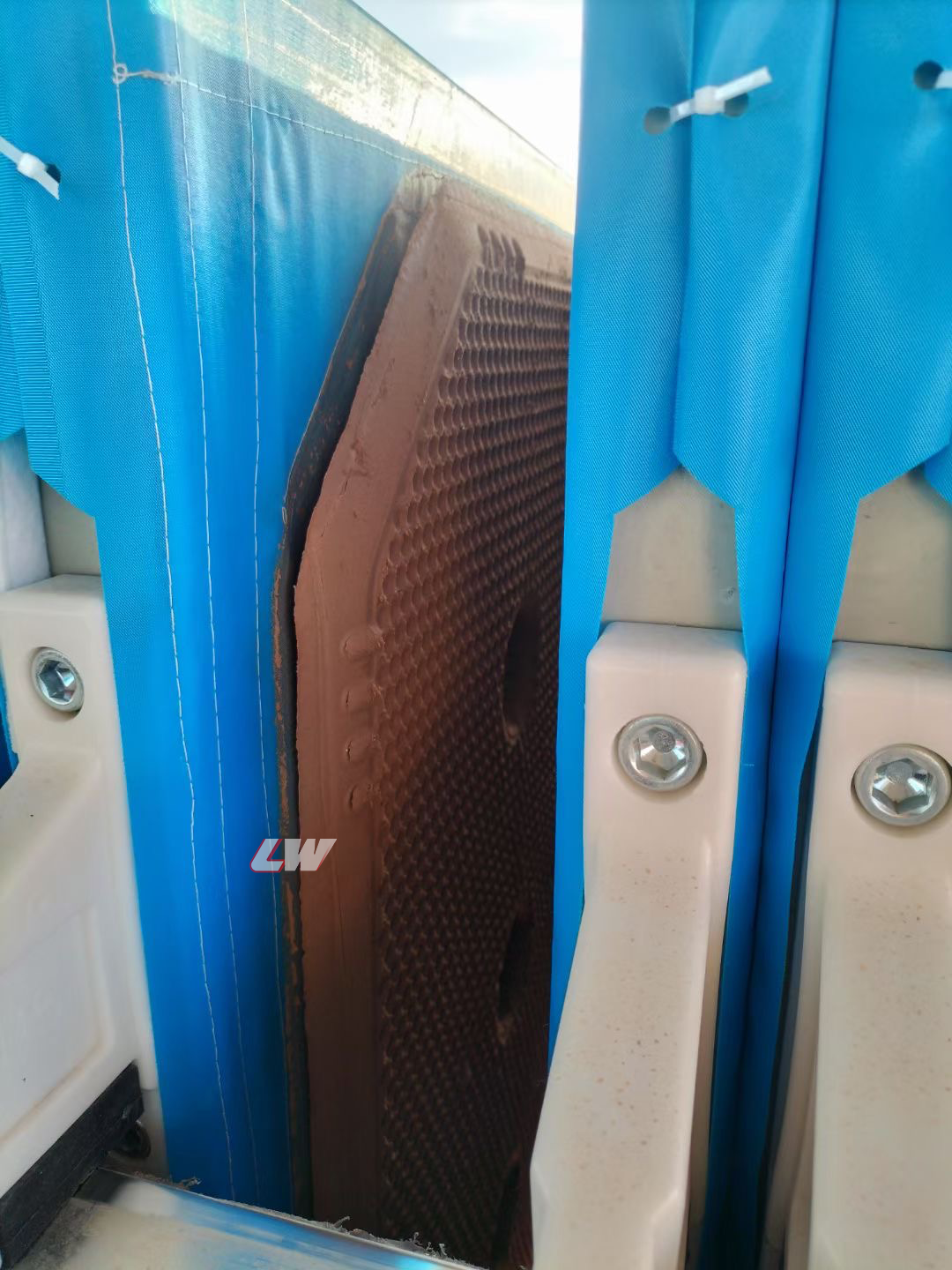
Filter press on an elevated platform discharging into bulk bags
Press on a mezzanine, discharging to bulk bags
Filter cloth with a discharged cake
Cake on the cloth, ready to drop

Where it comes from

Coagulation and flocculation for color removal. The floc carries the dye, the salts and a fair share of the COD, and it settles into a sludge with almost no organic content.

Why the bill follows it

Disposal is priced by the tonne, and this sludge is mostly water when it leaves the clarifier. Every point of moisture a filter press for textile wastewater presses out is volume you stop paying to move.

What the press does

A membrane filter press squeezes the cake at the end of each cycle, so it leaves as a spadeable solid. On dyeing sludge dewatering this squeeze is the difference between a wet cake and a load you can stack. Discharge, cloth choice and wash design are set against your floc, from the pilot run.

The floc is already formed by the coagulant, so this sludge often filters with little or no added polymer — the pilot run tells you before you budget for dosing.

The sludge yard · biological sludge

Activated sludge: sticky, continuous, never alone

Waste activated sludge is organic, hydrophilic and sticky, and it keeps arriving on nights and weekends. It is conditioned with polymer before any machine touches it, and a filter press for textile wastewater on this stream is quoted only after a jar test says what the dose is.

Stickiness

Biological sludge clings. Screens and cloth choices are picked for release as much as capture, because a cake that will not drop stops the cycle dead.

Continuous duty

It arrives around the clock. A belt filter press or a multi-disc screw press keeps running unattended, which matters more here than squeezing out the last point of moisture.

Fibers upstream

Any continuous machine on this sludge needs the headworks doing its job first. Lint that gets past the screen ends up wrapped on the screw or blinding the belt mesh.

Mixed sludge — chemical and biological together — is the common case in a mill ETP, and it is the stream most dyeing sludge dewatering questions are really about. It dewateres like a heavier version of whichever sludge dominates it, and the pilot says which one.

The sludge yard · what can be recovered

Some dye-house streams are worth more than disposal

Three residues in this industry can be turned back into something salable, and each has one machine that owns the step.

Terephthalic acid from alkali reduction

Polyester alkali reduction liquor carries terephthalate that regulations expect you to recover. Acid cracking drops it out as a white precipitate, and a plate-and-frame filter press dewaters and washes the cake so the recovered acid can go back into polyester production.

Wool grease from scouring

Centrifuges take most of the grease out of scouring liquor first — that is their step. What falls out with acid cracking is a grease-bearing sludge, and a filter press dewaters it so the low-grade grease can be boiled off and the cake hauled dry.

Desizing liquor and PVA

Polyvinyl alcohol recovery is a membrane job: ultrafiltration concentrates the size and salt-out throws it down as a gel. A filter press finishes the gel into a handleable cake and protects the membrane plant with prefiltration — it is the last step of that line, not the main tool.

Where a centrifuge or a membrane plant is the right main machine, we would rather say so and quote the step that is ours than sell you a filter press for textile wastewater you do not need.

Selection

Follow the sludge, not the catalogue

Read down the first column. Picking a filter press for textile wastewater follows from what the stream is, how it is billed, and what has already been screened out of it.

MaterialMachineWhy
Dye-house chemical sludgeMembrane filter pressDense and inorganic, billed by the tonne. Squeeze pressure turns disposal volume into the smallest number you can buy.
Mixed sludge, large ETPChamber filter pressChemical and biological sludge blended; a straightforward batch cycle that holds up across shifts.
Biological sludge, small to mid flowMulti-disc screw pressskid-mounted, smallest footprintSticky activated sludge on a continuous duty, running unattended with the fibers screened upstream.
Biological sludge, large volumeBelt filter pressthe continuous duty hereDilute and continuous: the plant pays to move it, so unattended hours matter more than the last point of dryness.
Alkali reduction liquor, terephthalic acidPlate-and-frame filter pressacid precipitation recoveryThe precipitated acid is washed and dewatered on plate-and-frame presses so it can re-enter polyester production.
Desizing liquor, PVA gel after salt-outChamber filter pressafter the membrane plantUltrafiltration and salt-out do the recovery; the press turns the gel into a cake and prefilters the feed.
Wool scouring acid-crack sludgePlate-and-frame filter pressAcid cracking drops grease-bearing solids out of the liquor; the press dewaters them for grease recovery and disposal.
Fiber-laden effluent, headworksRotary drum screen / bar screenLint and fibers leave here or they cost you pumps, cloths and screws everywhere else.
Batch duties, operator-lightAutomated filter pressPlate shifting and cloth washing run themselves, so the night shift does not hand-crank a press.

Three of these rows really belong to another machine — a centrifuge for wool grease, a membrane plant for PVA. We would rather draw that line than quote a press into a job it does not own.

Whether a dye-house sludge counts as hazardous is decided by the characterization tests and your local rules, not by us. Either way disposal is priced by the tonne, and moisture is the part of that bill you can actually control.

Build & materials

What we specify, in plain terms

Dye houses are hard on equipment: alkali, acid, salt and sticky cakes. A filter press for textile wastewater is a set of choices against that chemistry, and here is what we actually choose.

01

Plates

Polypropylene as standard, which is at home in the alkali and the acid a dye house alternates through. Where the chemistry goes past what standard PP accepts, the plate is quoted against that duty rather than assumed.

02

Cloths

Dye sludge cakes are sticky. Monofilament and satin weaves release them far better than felt, and the weave is confirmed on your sludge before it is ordered.

03

Contact parts

Feed ports, drip trays and wetted fittings in 304 or 316L stainless steel on request. The wetted-materials list is documented with the offer.

04

Frame & finish

Mill air carries acid and alkali vapor. Frames, coatings and gasket materials are quoted against the atmosphere in your room, because that is where they have to live.
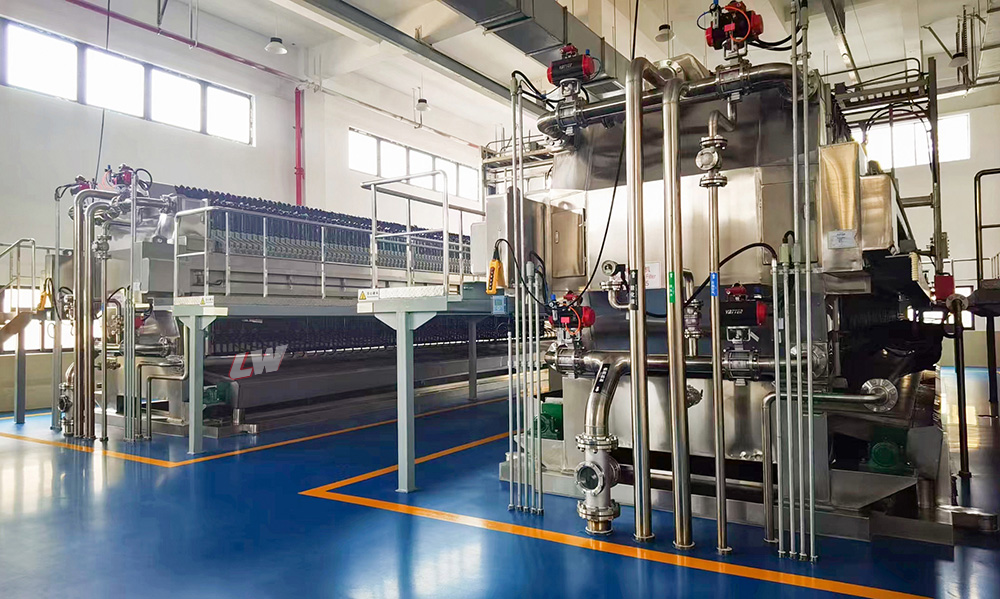
Stainless pipework and valves around a filter press
Stainless pipework on a Loway press
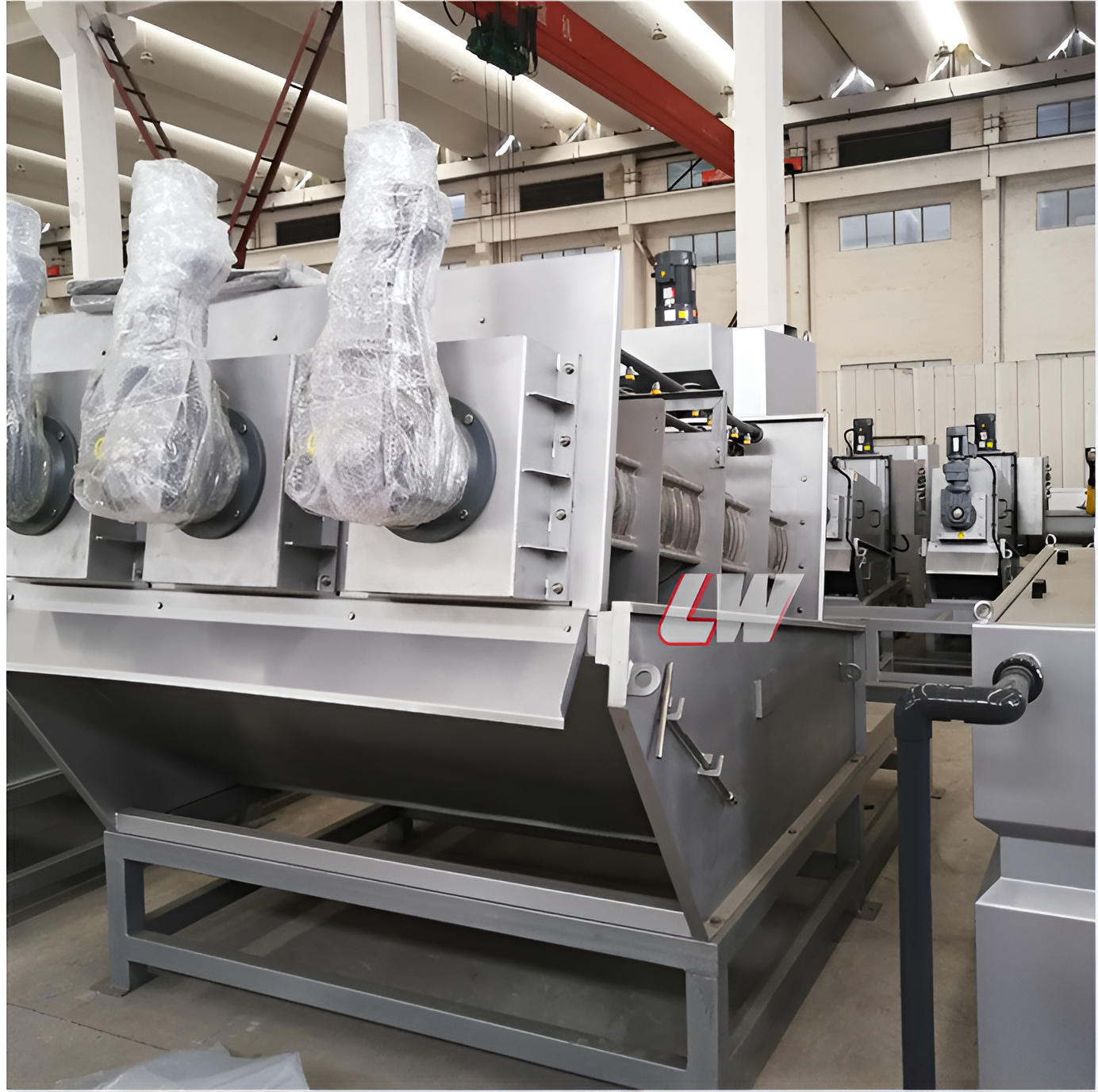
Multi-disc screw presses lined up in the Loway workshop
Multi-disc screw presses in the Loway workshop

Proof before purchase

Start with your sludge, not our catalogue

Dye-house sludges vary with the season and the colour card, which is why dyeing sludge dewatering is quoted from a test, not a table. We run your sample before proposing a filter press for textile wastewater, and the numbers come back with the proposal.
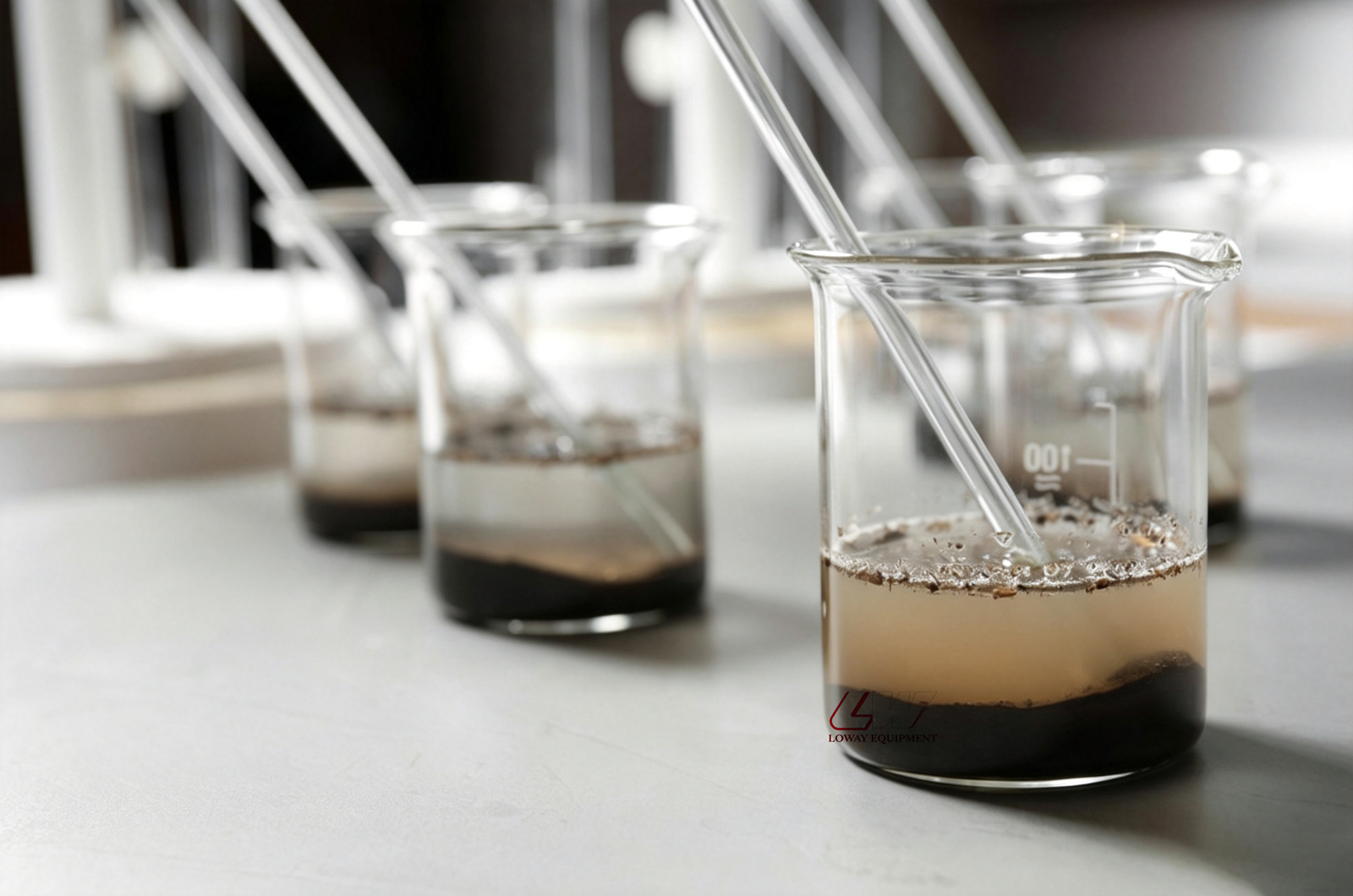
Jar tests for sludge conditioning
Jar tests on conditioning chemistry
01

Send a sample

A bucket of sludge from the stream that costs you most, and the target: moisture, clarity or tonnage.

02

Screen first

If fibers are in the sample we screen them out the same way the headworks will, then run the dewatering test.

03

Pilot run

We report cake moisture, filtrate quality, dose and cycle time, and size the machine to the tested duty.

04

Install & support

Commissioning with your operators, and cloths stocked against the schedule the pilot established.

FAQ

Questions from dye-house and finishing projects

Fibers keep clogging our belt press. What do we do?

That is a headworks problem wearing a sludge-yard costume. Install fine screening ahead of the sludge holding tank and the clogging stops at the source. A filter press for textile wastewater tolerates fibers far better than a belt does, but the screen is still the cheaper fix.

Can the press handle high-pH mercerizing streams?

Polypropylene plates are standard and are at home in strong alkali. Cloths and gaskets are quoted against the actual chemistry and temperature, and the pilot run settles the combination before you order a filter press for textile wastewater.

Does a filter press need more polymer than a belt press?

Usually less. A press builds the cake under pressure rather than relying on gravity drainage, and chemical sludges from coagulation often filter on their own floc with little added polymer. Biological sludge always needs conditioning, and the pilot sets the dose. For dyeing sludge dewatering as a whole, the filter press is usually the low-dose machine.

How long do cloths last with sticky dye sludge?

It depends on the dye, the temperature and the wash discipline, which is why we will not quote a number from a catalogue. What we can fix is the weave: monofilament and satin weaves release sticky cakes far better than felt, and automatic cloth washing keeps a filter press for textile wastewater running evenly between changes.

Our plant is short on space. What fits?

A multi-disc screw press has the smallest footprint and mounts on a skid. If cake dryness is the priority, a filter press for textile wastewater can stand on a mezzanine so bulk bags fill underneath and the floor plan stays free.

Is dye-house sludge hazardous waste?

Classification comes from the characterization tests and your local regulations, so we do not guess at it. What we can say is that either classification is billed by the tonne, and dyeing sludge dewatering on a filter press shrinks that bill no matter which column you fall into.

Send the sludge and the target

Tell us which stream costs you most and how dry the cake needs to be. An engineer comes back with a bench test plan and the filter press for textile wastewater sized to your sludge.

Request a quote

Need a Proposal for Your Dewatering Project?

Our engineers reply with a sizing recommendation and quotation within 24–48 hours.

Need detailed specs?