

Nylon Filter Cloth (Polyamide)
Nylon — polyamide — is the toughest cloth we weave against abrasion. Where a slurry carries sharp, angular particles, nylon keeps its structure while polypropylene slowly thins at the edges and around the feed hole. It costs more per square metre, and in the right duty it is the cheaper cloth per tonne processed.
- Pore size5–80 µm
- Temperature100 °C
- pH window4–14
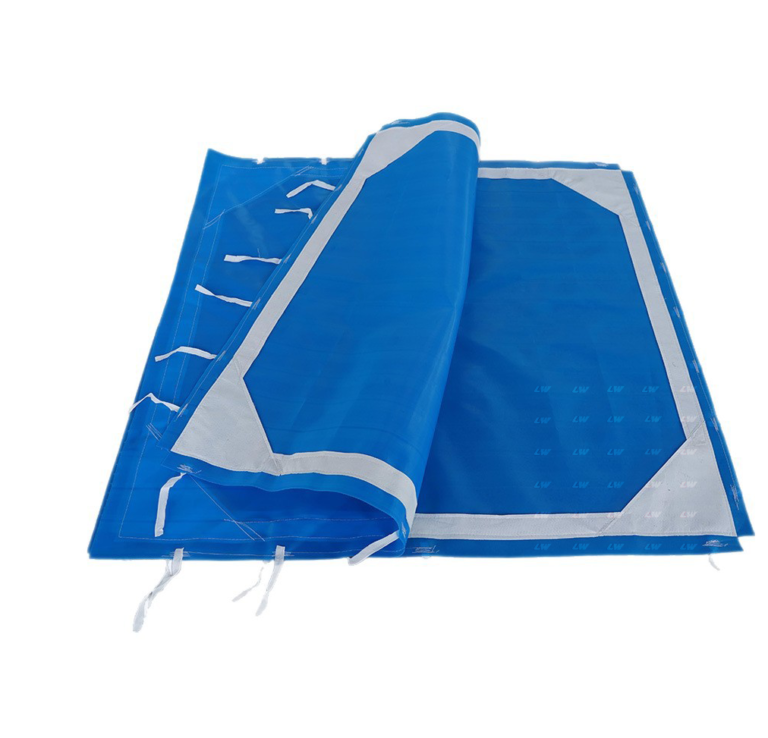
Why nylon survives abrasive duty
Polyamide fibres combine high tensile strength with elasticity. When a particle presses into the cloth, the fibre deforms and recovers instead of cutting. That resilience is why nylon is specified for stone, ceramics, coal washing and mineral concentrates, where the solids are hard and angular rather than round.
Nylon also resists alkalis well, which suits many mineral circuits. It does not resist strong acids, and it absorbs water — roughly 4–8% by weight — so the cloth swells slightly when wet. Both limits are manageable if the specification is set correctly from the start.
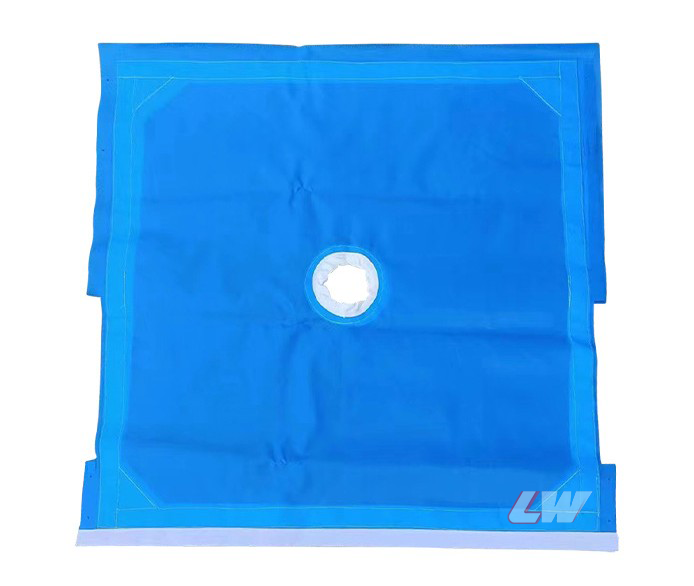
Monofilament or multifilament nylon
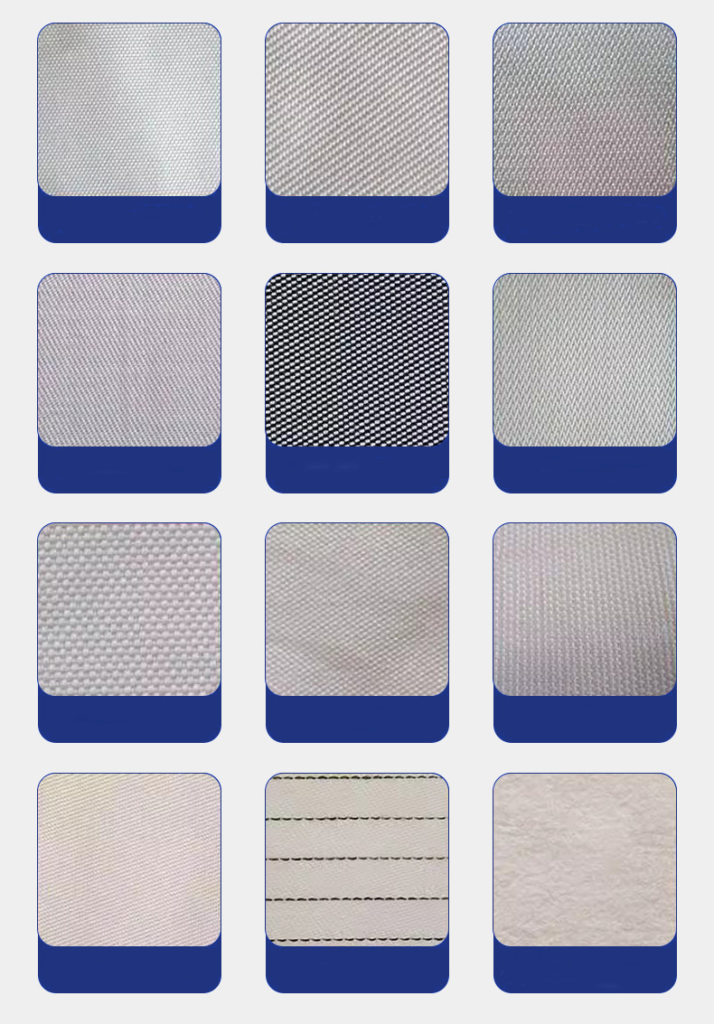
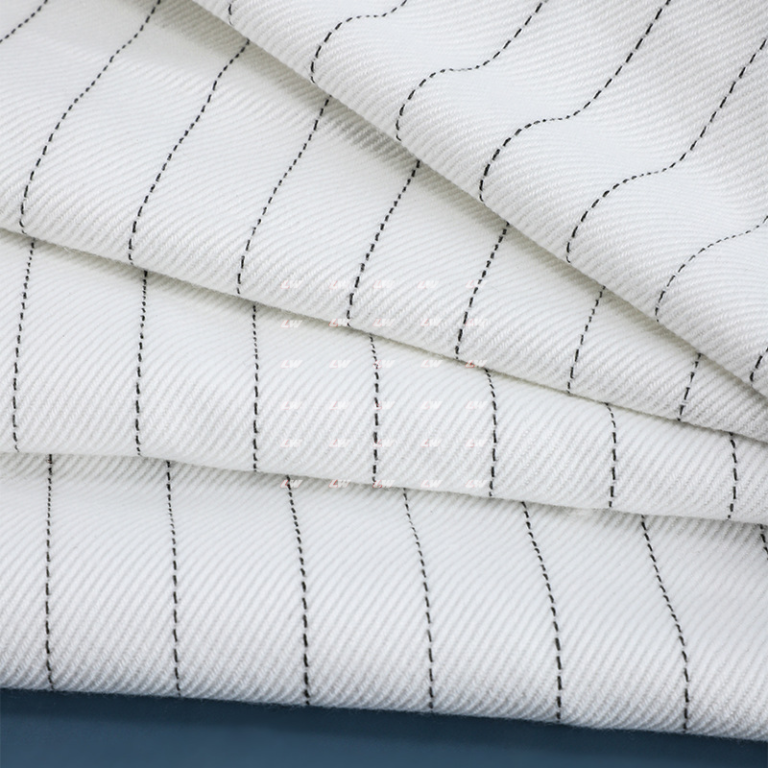
Nylon is woven both ways, and the choice follows the same logic as any other polymer. Monofilament nylon keeps the open, regular pore: fast drainage and clean cake release on abrasive, high-solids duty. Multifilament nylon packs fine fibres into the twist, captures finer particles and gives a clearer filtrate, at the cost of earlier blinding.
A practical middle path is the mono-multi construction: monofilament warp for strength and drainage, multifilament weft for retention. On mixed mineral circuits where particle size varies batch to batch, it tolerates the variation better than either pure structure.
Mesh, micron and what the numbers mean
Buyers often ask for nylon cloth by mesh count. Mesh describes the number of openings per inch of woven screen; micron describes the pore size of a filter cloth measured by bubble point. They are not interchangeable, and a cloth sold as “100 mesh” is not automatically a 150 µm filter cloth.
| Mesh (approx.) | Opening | Typical use |
|---|---|---|
| 60 mesh | ≈250 µm | Coarse pre-filtration, large crystal slurries |
| 100 mesh | ≈150 µm | General mineral and ceramic duty |
| 200 mesh | ≈75 µm | Finer concentrates, pigment pre-filtration |
| 500 mesh | ≈25 µm | Fine polishing where flow is not critical |
Mesh figures are nominal screen equivalents; the filter cloth itself is specified by measured pore size.
Where nylon fits
- Stone and granite cutting — abrasive fines, high solids, continuous cycles
- Coal washing — sharp particles with alkaline water
- Mineral concentrate — sulphide and oxide slurries where cloth life sets maintenance cost
- Ceramic slip — where a smooth cake release is also needed
Where it does not fit
Avoid nylon in strong acid, in oxidising duty, and where the cloth is exposed to continuous sunlight — polyamide degrades under UV. It is also a poor choice where dimensional stability matters more than wear resistance, because the cloth swells in water and relaxes under heat.
Fitting and care
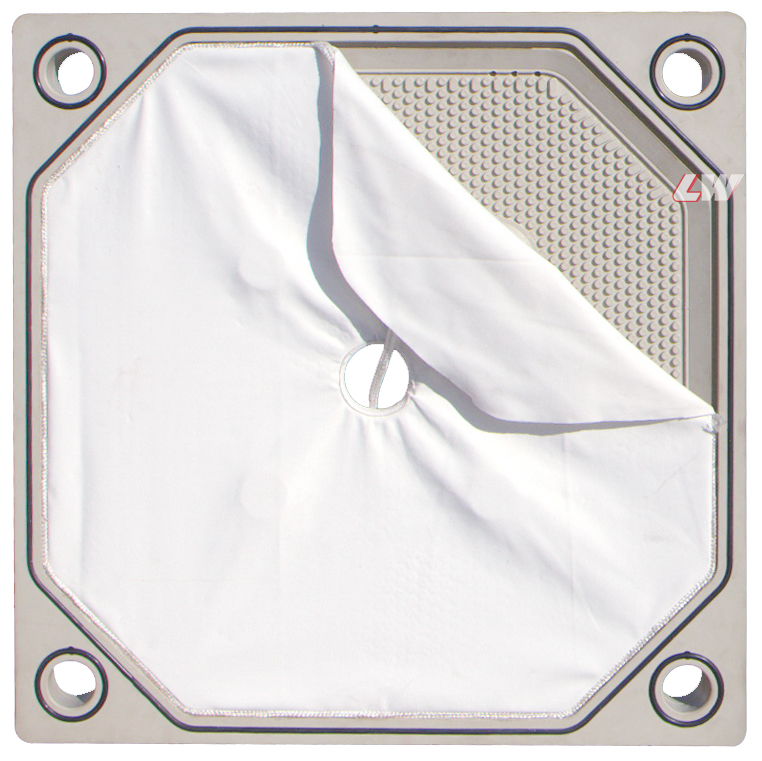
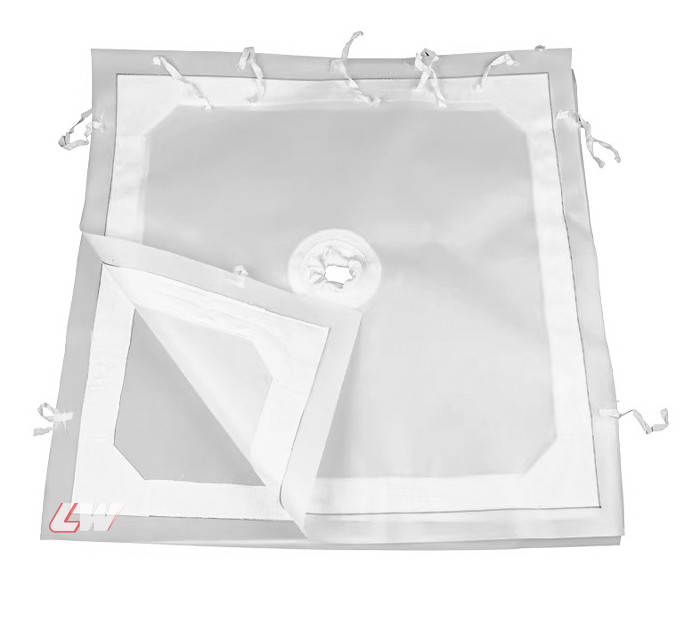
Nylon cloth is cut to the plate drawing with the neck or gasket your plates use. Because the cloth swells when wet, the cut size and overhang allowance differ slightly from polypropylene; tell us the duty so the allowance is set correctly. Wash with low-pressure water and avoid prolonged soaking between campaigns.
Two cleaning rules protect nylon specifically. First, never clean with acid or acid-based descalers — the same chemistry that limits the polymer in service attacks the cloth in the wash. Second, do not store a wet set folded: trapped moisture against the fibre, under pressure in a stack, is where nylon fatigues. Dry it flat before putting it away.
Specification Range
| Parameter | Range |
|---|---|
| Polymer | Polyamide 6 / 6.6 |
| Yarn | Monofilament or multifilament |
| Pore size | 5–80 µm |
| Weight | 350–700 g/m² |
| Thickness | 0.8–1.5 mm |
| Air permeability | 25–140 L/m²/s at 200 Pa |
| Continuous temperature | 100 °C (short-term peaks to 120 °C) |
| pH window | 4–14 |
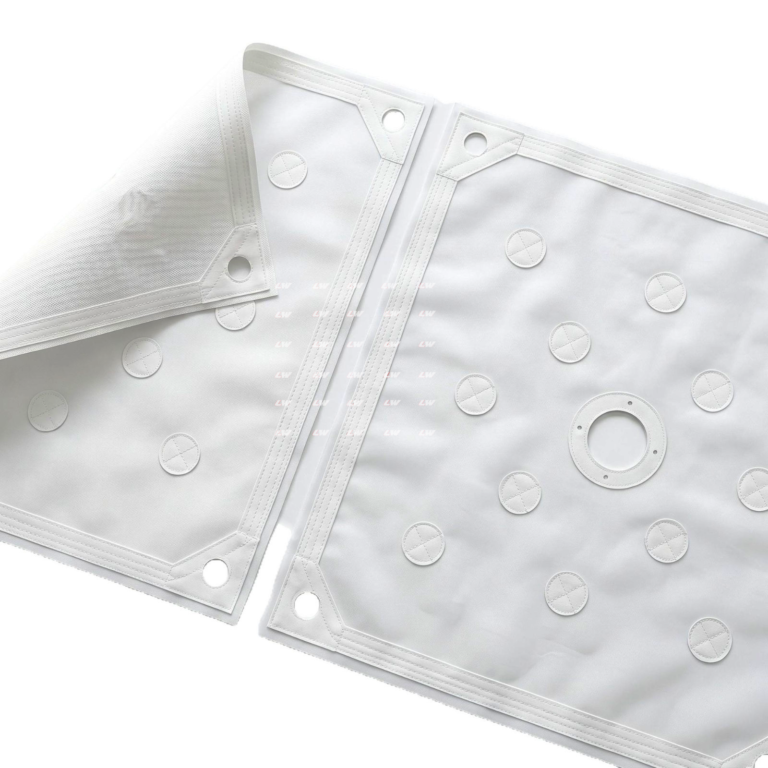
Ranges are common weaving ranges for this cloth family. The final specification is confirmed against your slurry data and plate drawing.
Cloth Finishing at Loway
Weaving, finishing and cutting are handled in our own workshop, so replacement cloth is cut to your plate drawing rather than to a catalogue size.
Request a Quote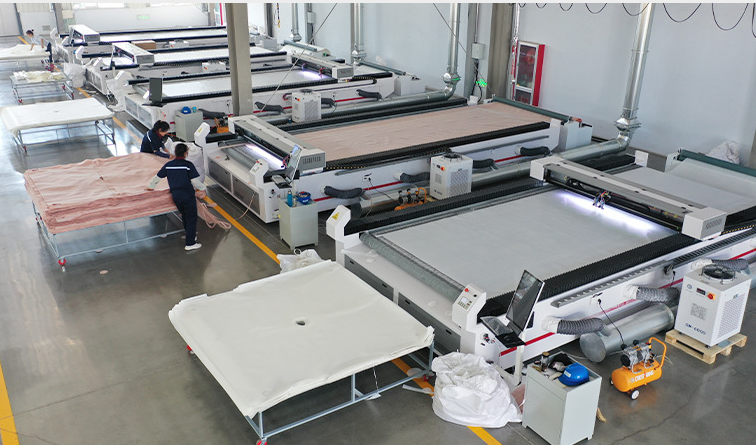
Frequently Asked Questions
Is nylon better than polypropylene for mining?
For abrasive, angular particles yes — nylon wears more slowly. For acidic circuits polypropylene is the safer choice, and for hot slurry neither works above their temperature limits.
Does nylon cloth shrink or stretch?
It absorbs water and swells, then relaxes under clamping pressure. A cloth cut to the dry plate dimensions with the right overhang keeps tension; a cloth copied from a used set usually comes up short.
Can nylon handle alkaline slurry?
Yes, polyamide resists alkali well, which is why it is common in mineral and coal circuits. Strong acid is the limit, not alkali.
What is the temperature limit?
100 °C in continuous duty, with short excursions to about 120 °C depending on grade. Above that the fibre loses strength and the cloth deforms.
Do you supply by mesh count or by micron?
Both, but we confirm in micron. Mesh is a screen convention; the cloth is specified by measured pore size so the number means the same thing whoever weaves it.
How should I clean nylon cloth between campaigns?
Low-pressure warm water, and a neutral detergent if the cake is oily. Keep acid descalers away from nylon even in dilute form, and dry the cloth flat before storage. If scale is the problem, the lasting fix is in the circuit chemistry, not a stronger cleaner on the cloth.
What wears nylon out in practice?
Not abrasion — that is what it resists. The usual causes are heat creep near the temperature limit, acid exposure in a nominally alkaline circuit, and repeated folding on the same crease line. A cloth that fails at a fold rather than at the feed eye is telling you how it was handled.

Get a Cloth Specification
Send your plate drawing and slurry data — pH, temperature and particle size — and we will confirm the structure and polymer.