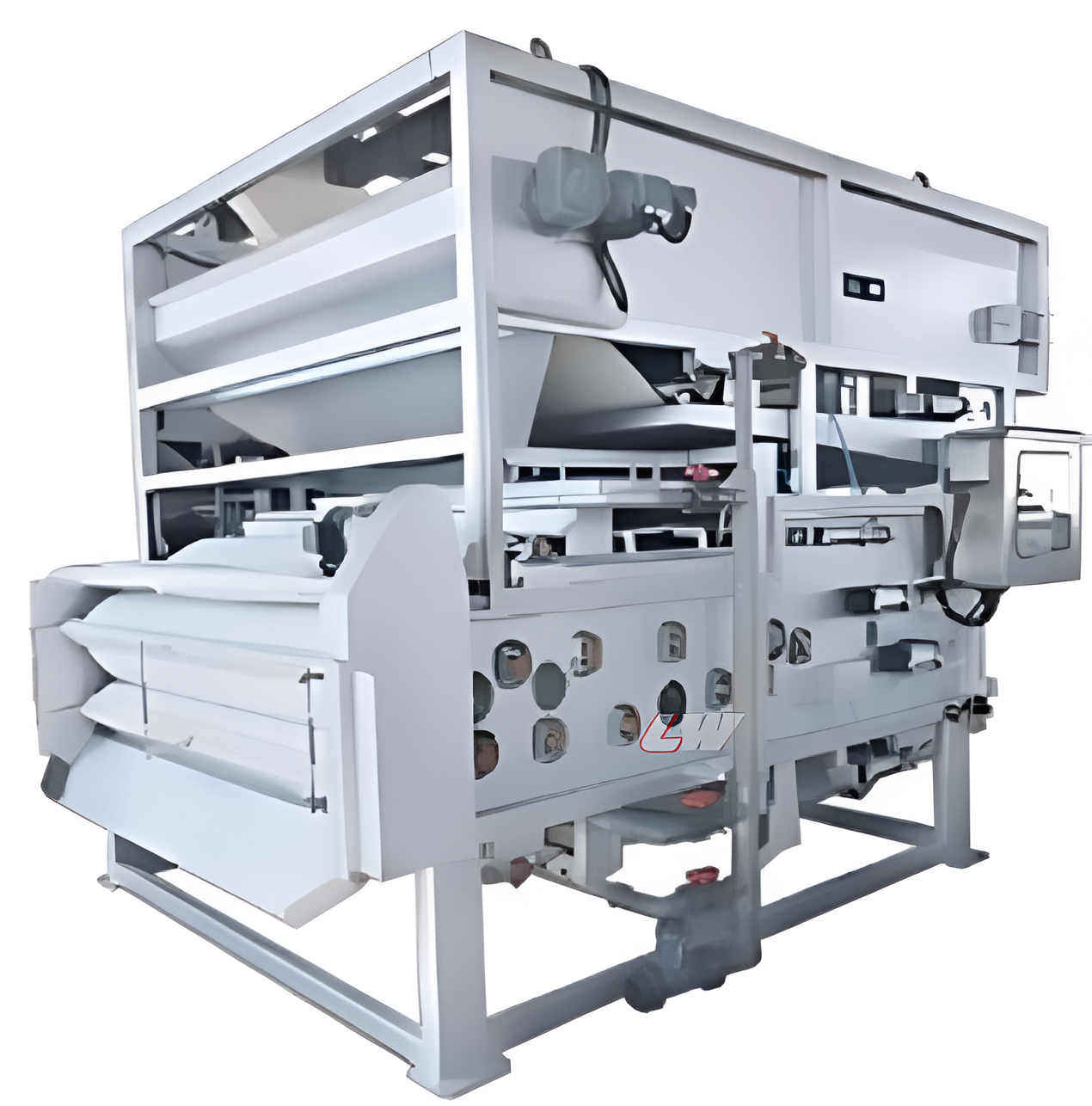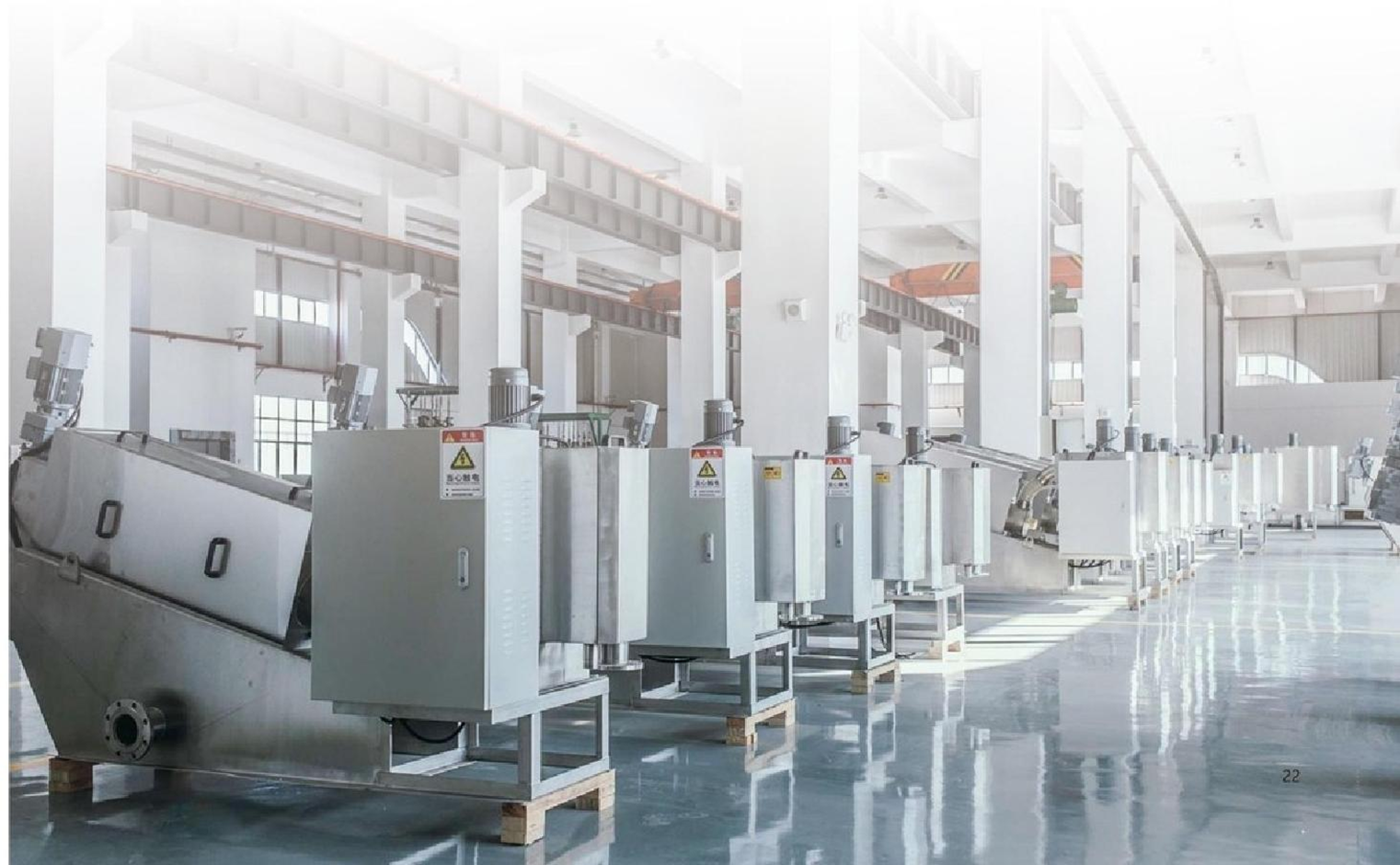
Loway screw press units on the factory floor before shipment
Screw press dewatering

Dewatering Screw Press for Municipal, Industrial and Oily Sludge

Loway builds the multi-disc screw press that thickens and dewaters in one enclosed unit. It runs 24/7 with no filter cloth to wash, no batch cycle to plan around, and one operator check per shift.

Where it fits

What a Screw Press Dewatering Line Solves

Four reasons plants choose a multi-disc screw press over a batch filter press or a decanter centrifuge — and what each one changes on site.

01

Continuous, not batch

Sludge in, cake out. There is no fill-and-squeeze cycle to schedule, so the press can run unattended overnight and on weekends.

02

No filter cloth

Fixed and moving rings do the filtering. Nothing to blind, wash or replace, and no high-pressure wash water system to maintain.

03

Low speed, low power

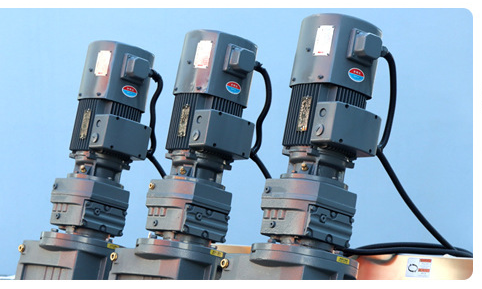
The shaft turns at 1–5 rpm. Installed power runs 0.75–7.5 kW by model, well under a centrifuge on the same duty.

04

Oily sludge included

The chamber is enclosed and the gaps self-clean. Oily sludge screw press duty is a routine application, not an exception.

Working principle

How Screw Press Dewatering Works, Zone by Zone

Sludge travels through one dewatering screw press drum and leaves as stackable cake. Six zones do the work, in this order.

1

Feed & conditioning

Sludge enters the flocculation tank, polymer is dosed inline, and flocs form before the drum.

2

Thickening

Free water drains through the ring gaps as the pitch spacing begins to close.

3

Compression

The tapered shaft and narrowing cage build pressure; moving rings shear the floc and release water.

4

High-pressure extrusion

At the discharge end the back-pressure cone sets final cake dryness against the torque limit.

5

Cake discharge & filtrate

Cake leaves at 18–28% DS, stackable and non-sticky. Filtrate returns to the head of the plant.

6

Automatic cleaning

Programmable nozzles wash the ring gaps on a timer, so hydraulic capacity stays where it started.
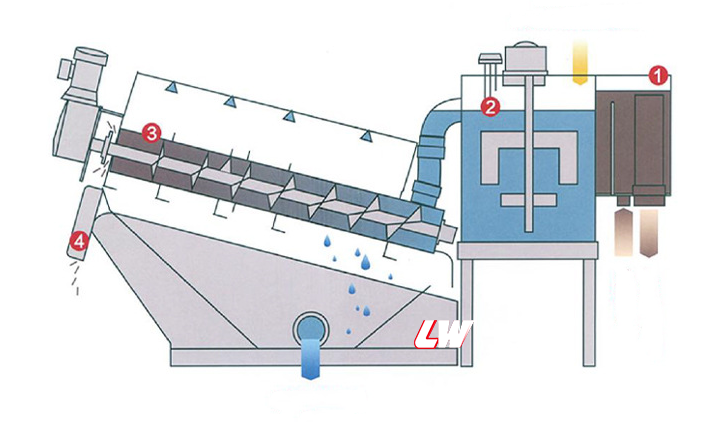
Cross-section of a Loway dewatering screw press showing the six dewatering zones

One drum, six zones: conditioning, thickening, compression, extrusion, discharge, cleaning.

The machine

Inside a Loway Multi-Disc Screw Press

Four assemblies decide how a dewatering screw press performs over a 15–20 year service life.
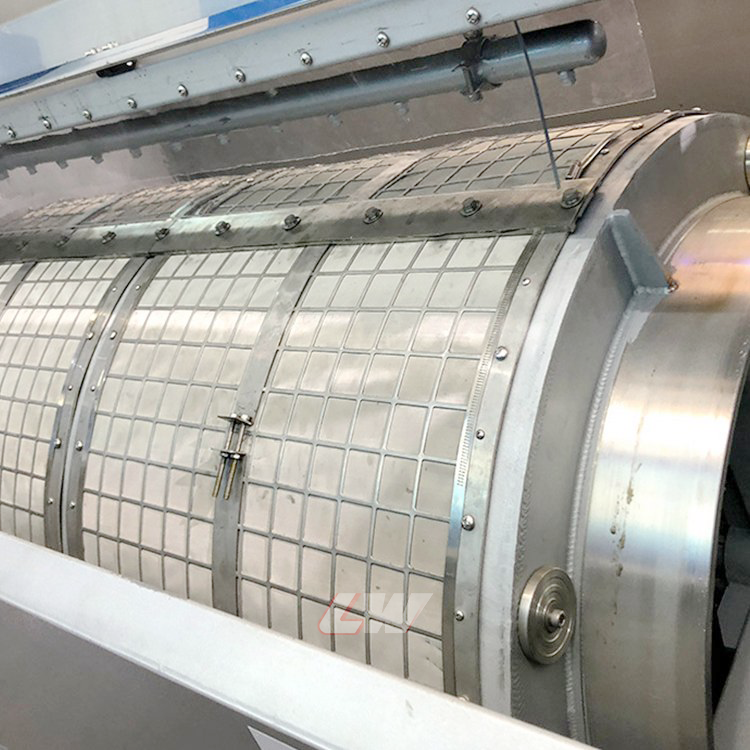
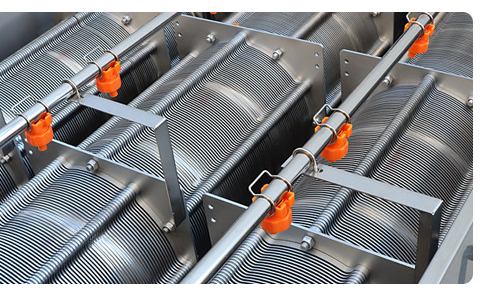
Fixed and moving rings of a Loway screw press dewatering drum

Dewatering drum

Fixed and moving rings alternate around the shaft. The moving rings oscillate and clean the filter gaps on every rotation, which is why oily sludge runs without blinding.
Variable pitch screw shaft of a Loway screw press

Screw shaft

CNC-machined flights with a pitch that narrows toward the outlet. Compression stays even along the drum instead of spiking at one point.
Back-pressure cone and discharge section of a Loway screw press

Back-pressure cone

The cone at the discharge sets final cake dryness. Operators trade a little dryness for torque headroom when the feed thickens.
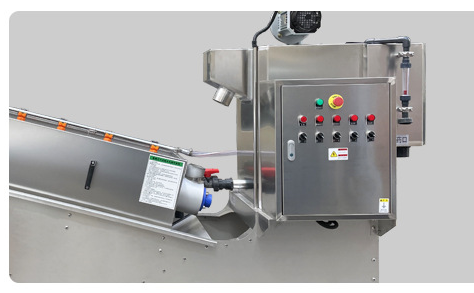
PLC control panel of an automatic Loway screw press

PLC control panel

Every automatic screw press leaves with screw speed, polymer dosing and wash cycles on one screen, plus torque and filtrate turbidity feedback. Recipes for several sludge types store separately.

Performance

Figures From Factory Tests and Commissioned Units

Ranges below come from Loway factory acceptance tests and commissioned installations. Treat them as a starting point and confirm against your own sludge in a bench or pilot test.

18–28%
Cake solids (DS), by sludge type and polymer dose
≥95%
Solids capture rate with correct conditioning
0.75–7.5 kW
Installed power across the model range
3–8 kg/t DS
Polymer dose, 40–60% below belt press dosing

Feed concentration, polymer choice and sludge age move these numbers more than the model number does.

Model range

Screw Press Dewatering Machine Range and Capacity

Capacity follows feed concentration, not model size alone. Read across the row: the same LWSP-302 that handles 16 t/h at 5,000 mg/L handles 2.4 t/h at 50,000 mg/L.

ModelDS capacitySludge treatment capacity (t/h) by feed concentration
5,000 mg/L10,000 mg/L20,000 mg/L30,000 mg/L40,000 mg/L50,000 mg/L
LWSP-1014 - 8 kg/h0.80.50.30.250.20.1
LWSP-1316 - 15 kg/h1.61.20.70.50.30.2
LWSP-13215 - 25 kg/h3.02.01.41.00.70.5
LWSP-20115 - 20 kg/h3.01.81.51.00.60.3
LWSP-20230 - 45 kg/h5.03.02.81.91.20.6
LWSP-20330 - 60 kg/h9.06.24.02.81.60.8
LWSP-30150 - 70 kg/h9.06.03.02.51.80.9
LWSP-302100 - 140 kg/h16.012.06.04.83.52.4
LWSP-303150 - 210 kg/h25.018.09.07.04.53.5
LWSP-304200 - 280 kg/h35.024.012.09.56.04.8
LWSP-401140 - 200 kg/h30.018.010.06.03.53.0
LWSP-402250 - 350 kg/h60.030.015.010.57.06.0
LWSP-403320 - 500 kg/h90.045.023.016.011.59.0
LWSP-404500 - 700 kg/h120.060.032.020.016.012.0

Guidance figures for steady feed at the stated concentration. Every dewatering screw press is finally sized from a sludge test — see how we select between technologies.

Specification

Operating Window and Built-to-Order Options

Every screw press dewatering machine leaves the factory set for a sludge. These are the boundaries we design inside.

Operating window

  • Feed concentration 0.3–5% DS (3,000–50,000 mg/L)
  • Screw speed 1–5 rpm on a variable frequency drive
  • Discharge pressure 0.3–0.8 MPa, self-generating
  • Filtrate TSS typically below 500 mg/L
  • Ambient range −10 °C to +45 °C

Built to order

  • SS304 standard; SS316L or duplex for chloride or solvent duty
  • Cold-climate package: insulated housing, heat tracing, antifreeze lines
  • Explosion-proof motors and controls for hazardous areas
  • Dual-train skids for plants with no dewatering standby
  • Trailer-mounted units for temporary or emergency duty
Applications

Sludge Screw Press Applications by Industry

The drum is the same in every industrial sludge screw press. What changes is the polymer, the ring gap and the materials of construction.

Municipal wastewater icon

Municipal wastewater

Waste-activated sludge, digested biosolids and septage. A municipal sludge screw press usually lands at 20–25% DS on activated sludge and 25–28% on digested.

Food and beverage processing icon

Food & beverage

A food waste screw press handles fruit and vegetable pulp, brewery spent grain, winery pomace and dairy processing sludge. Food-grade SS316 and CIP-friendly surfaces are common requests.

Pulp and paper icon

Pulp & paper

De-inking sludge, clarifier fibre recovery and biological sludge from the mill WWTP. Fibre recovery above 98% keeps raw material in the mill.

Chemical and petrochemical icon

Chemical & petrochemical

An oily sludge screw press takes API separator sludge, tank bottoms and catalyst fines. SS316L or duplex wetted parts, closed-loop wash water and safety interlocking come with the package.

Manufacturing

How a Loway Screw Press Is Built and Tested

Loway is a screw press manufacturer that keeps ring fabrication, shaft balancing and the factory acceptance test in one building. That is what keeps the ring gap uniform from unit to unit.
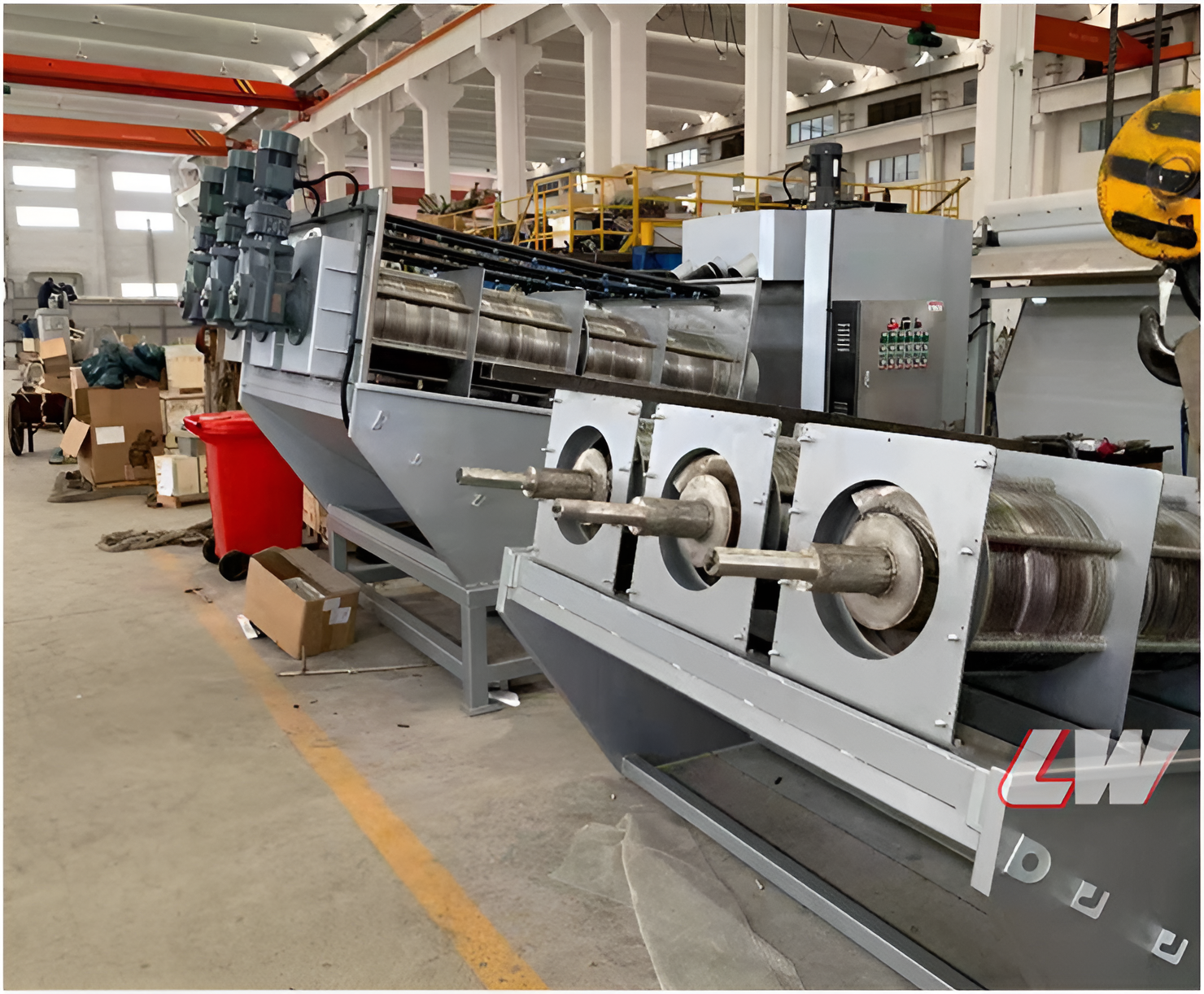
Loway screw press dewatering equipment on the factory floor

Rings and shafts for screw press dewatering equipment are cut and balanced in-house before assembly. See the factory and our quality control steps.

  1. Raw material verification — certified SS304 and SS316 plate and bar from approved suppliers.
  2. Precision fabrication — laser-cut rings and dynamically balanced screw shafts for even gaps and low vibration.
  3. Welding & assembly — frame and drum assembled by qualified welders to drawing tolerances.
  4. Factory acceptance testing — every unit runs a water test and a full motor and PLC functional check before crating.
  5. Packaging — crated for sea freight with the documentation pack and spare parts list.

Plant audits are welcome; drawings and FAT reports are released to the customer before shipment. Talk to the engineering team about tolerances for your sludge.

Configurations

Three Ways the Press Leaves the Factory

A screw press supplier is judged on more than the drum. These are the packages we ship most often.
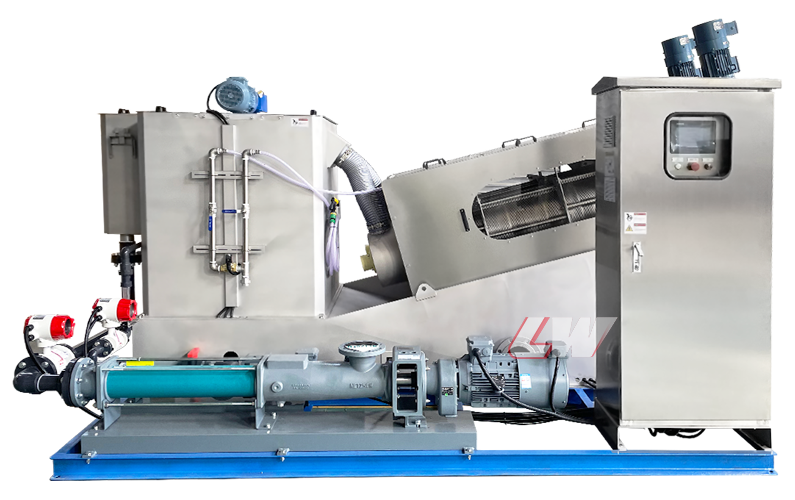
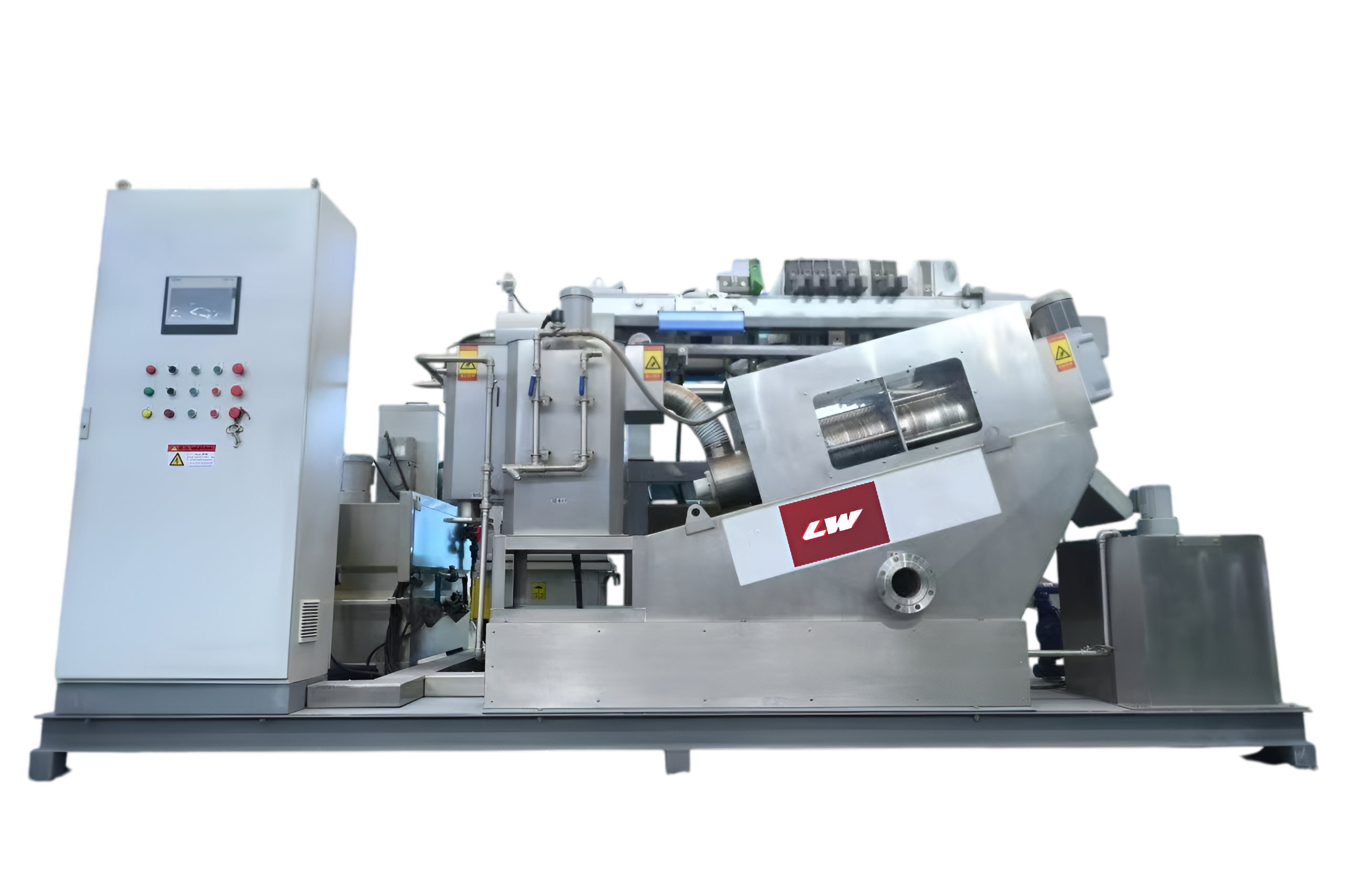
Skid-mounted Loway screw press sludge dewatering unit

Skid-mounted unit

Press, flocculation tank, polymer dosing and control panel on one skid. Piped and wired before it ships, so site work is connections and anchoring.
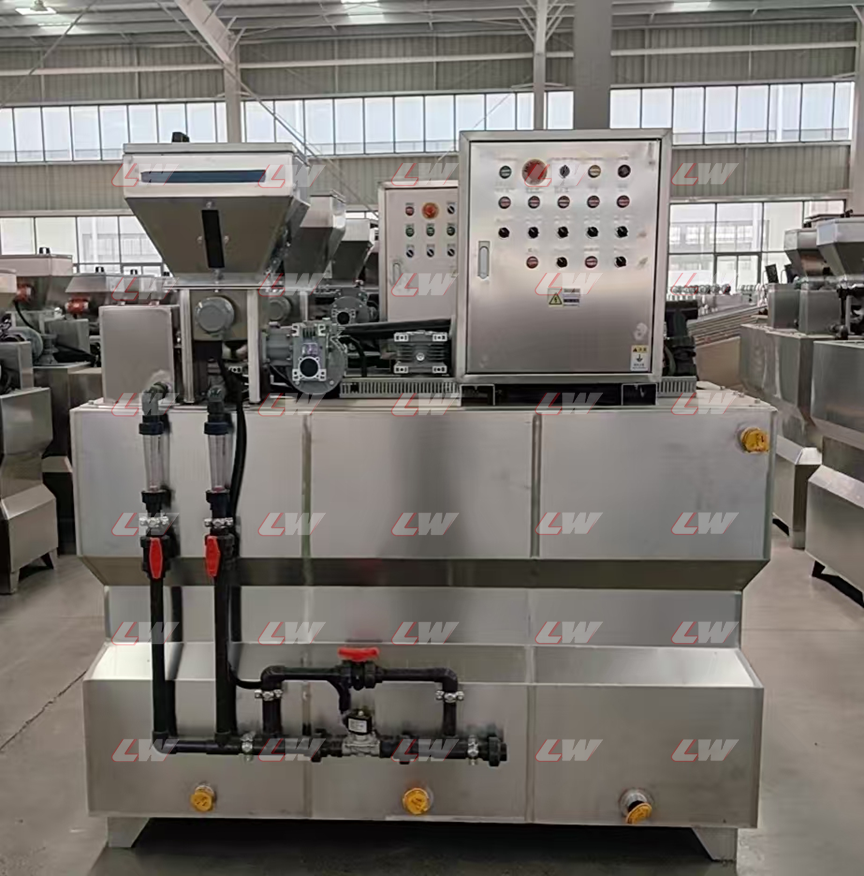
Loway PAM polymer dosing system for a screw press

Dosing and feed package

PAM make-up and dosing unit sized to the press, plus feed pump control. Dosing rate follows sludge flow rather than a fixed setpoint.
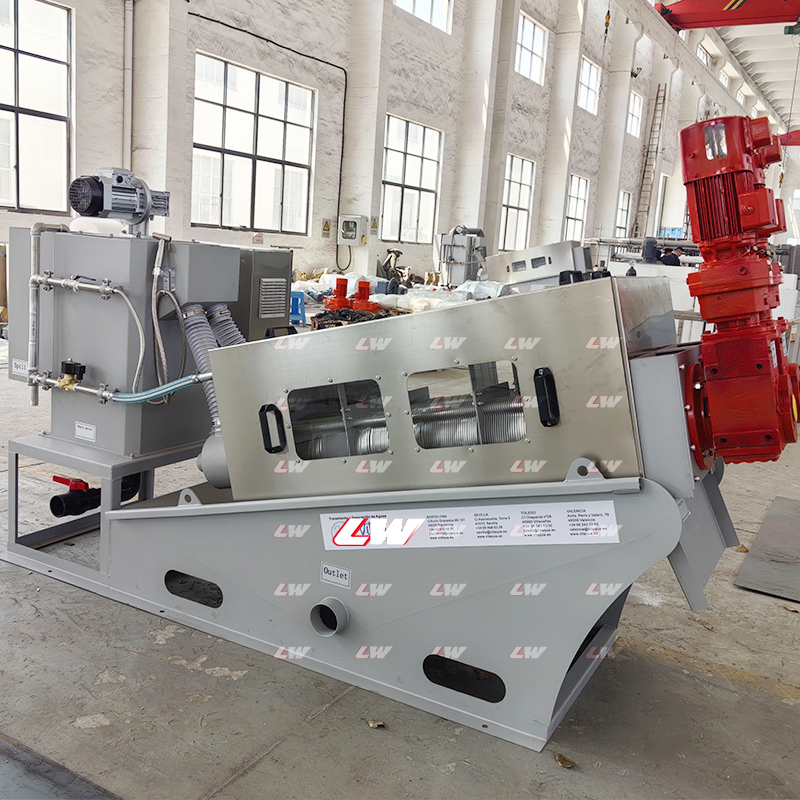
Customized multi-disc screw press built under an OEM brand

OEM-branded build

For distributors and EPC partners: your nameplate, your panel language, your documentation set. Ring and shaft geometry stay standard.

Questions

Frequently Asked Questions

Answered by the engineers who build the machines. Anything not covered here goes straight to them.

What pre-treatment or conditioning does a screw press dewatering machine need?

Most sludge needs chemical conditioning rather than pre-treatment. Anionic or cationic polymer is selected from sludge zeta potential and dosed at 3–8 kg active polymer per tonne of dry solids, mixed inline with 30–60 seconds of ageing before the drum. Coarse screening at 5–10 mm removes rags and debris. Digested biosolids and some high-fibre food wastes run without polymer. Our engineers confirm the dose with a jar test or a pilot trial on your sample.

Can the press run automatically without constant supervision?

Yes. The PLC holds start-up, normal run, cleaning and shutdown sequences, stores a recipe per sludge type, and adjusts screw speed from torque feedback. Filtrate turbidity signals a dosing problem, vibration sensors flag imbalance, and alarms go out over Modbus RTU/TCP, Profinet or OPC-UA. In practice an operator checks the panel once or twice per shift and does weekly lubrication and nozzle checks.

What maintenance does a dewatering screw press need, and what wears?

Weekly: visual check, spray nozzles, bearing grease, polymer stock and a filtrate TSS sample. Quarterly: belt tension, coupling alignment, gearbox oil, electrical terminations. Annually: measure ring clearances, inspect the cage, and replace bearings on hours (typically 8,000–15,000). The wearing parts are the rings, the bearings and the seals — there is no filter cloth in the machine.

How long does a screw press last?

Mechanical life runs 15–20 years with the maintenance schedule above. A major overhaul at 8–10 years covers bearings and screen refurbishment. Economic life before an upgrade is typically 10–15 years, depending on how much the sludge character has changed.

What warranty and after-sales support come with the equipment?

Equipment warranty is 18 months from commissioning or 24 months from shipment, whichever comes first, covering defects in materials and workmanship with free replacement parts. Remote technical support runs in English, Spanish and Chinese; spare parts ship from stock and field technicians are available for commissioning and training. Full terms are in the quotation.

What documentation is supplied?

Operation and maintenance manual with troubleshooting and parts lists, electrical single-line and panel drawings, mechanical assembly and foundation drawings, material test reports and welding procedure specifications, the FAT protocol and results, and a recommended spare parts list. Manuals are supplied in English, with other languages on request.

How do I size a screw press dewatering machine for my plant?

Three numbers start the selection: flow in m³/h, feed concentration in mg/L or % DS, and the operating hours per day. From those we get the dry solids load in kg/h and read the model table across your concentration column, then check cake dryness against your disposal route. Where the sludge is unusual — oily, fibrous, or high in grit — we size from a test run rather than from the table. Send the three numbers and we will come back with a model, a footprint and a power figure.

Next step

Get a Dewatering Screw Press Sizing for Your Sludge

Send flow, feed concentration and operating hours. You get back a model, a footprint, an installed power figure and a cake dryness estimate — or a note explaining why another technology fits your sludge better.

Need a Proposal for Your Dewatering Project?

Our engineers reply with a sizing recommendation and quotation within 24–48 hours.

Need detailed specs?