Industry Applications · New Energy
Filtration for Battery Materials, Recycling and Photovoltaics
A battery materials plant runs two separation duties. The product line washes and dewaters high-value slurries — cathode precursors, lithium salts, recovered silicon carbide — and a battery material filter press here is judged on purity and yield. The plant line keeps the factory’s own wastewater moving. The machines are different, and this page keeps them apart.
The split
The product line and the plant line
One duty is measured in purity and recovered yield. The other is measured in tonnes hauled and hours of unattended running. A filter press for battery materials picked for the first job is the wrong pick for the second, which is why the split comes before any equipment talk.
The product line
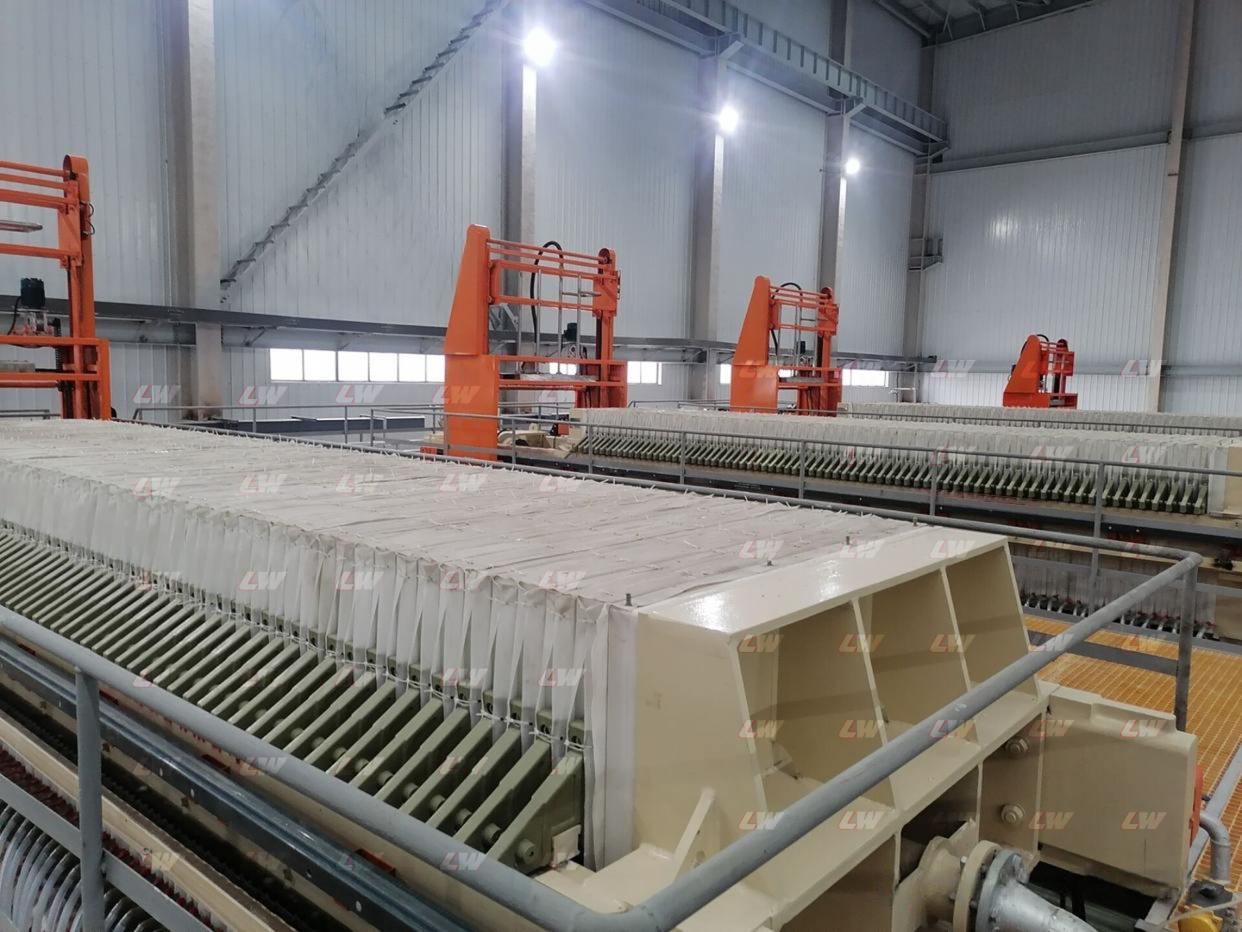
The cake or the filtrate is the product. A filter press for battery materials lives here, with wash built into the cycle, and contact parts can be supplied in 304 or 316L stainless steel on request, quoted against the duty.
Cathode precursor · Lithium salts · Black mass · SiC slurry
The plant line
The stream is on its way out. Etching and scrubber blowdown, fluoride and hydroxide sludges, general wash water. Flocculated, continuous, judged on cost per tonne. Belt presses and screw presses live here.
Fluoride sludge · Hydroxide sludge · Scrubber blowdown
The same plant often needs both. They share a building, not a duty.
The product line · purity
What battery-grade separation is judged on
Cathode plants reject batches over contamination measured in parts per million, and they pay dryers by the kilowatt. Three things decide whether a filter press for battery materials belongs on this line, and all three are measurable.
Metal contamination
Iron, copper and zinc at trace levels can scrap a batch. Wetted parts are specified to keep them out — stainless contact parts on request, and plate and cloth materials quoted against the chemistry.
Wash efficiency
The cake leaves the press carrying mother liquor. Washing displaces it with clean water, and even washing is the hard part: if a chamber fills unevenly, the water takes the thin path and misses the rest of the cake.
Cake moisture
On a battery material filter press, every point of moisture is dryer load. Membrane squeezing takes water out at the press, before the kiln has to pay for it.
The product line · cathode & lithium salts
Washing and dewatering precursor and lithium salt cakes
Co-precipitation turns metal sulfates into a fine cathode precursor slurry, and lithium salts crystallise out of solution as fine, washable cakes. The particles are fine and the slurries are alkaline, so the filter press for battery materials runs a full cycle: fill, filter, wash, squeeze, discharge.

Wash
Clean water follows filtration and displaces the mother liquor carrying sodium and sulfate. A battery material filter press is sized around this step: wash ratio and stage count come from the purity spec.
Squeeze
Membrane plates press the cake after filtration, so the dryer receives a drier feed. On lithium salts the difference shows up directly in the energy bill, which is why battery materials filtration is quoted with the squeeze, not after it.
Discharge
Fine cakes stick. Cloth weave and discharge design decide whether the cycle repeats cleanly or the operator spends the shift scraping plates.
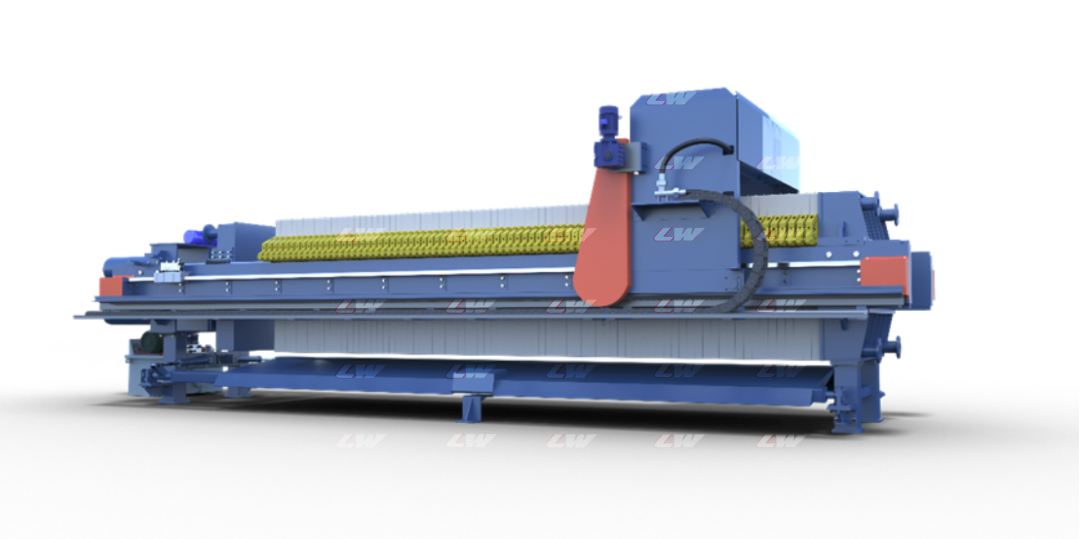
Where the cycle is long and the batch is large, an automated filter press shifts, washes and closes the plates on its own, which keeps operators away from hot alkaline slurries.
Uneven cake is the known weak point of chamber washing, and the answer is not more wash water. It is even chamber filling and a squeeze that closes the channels before the wash starts — which is why we test fill and squeeze on your slurry before sizing a filter press for battery materials.
The product line · battery recycling
Black mass leaves a residue worth separating carefully
Spent batteries are shredded into black mass and leached in acid. The undissolved part — graphite, foil fragments, binder — has to leave the liquor before purification can start, and later the precipitated salts are filtered and washed on the same battery material filter press family as precursor cakes.
Leach residue
The feed arrives thin and the solids are soft, so building a cake takes longer than filtering it. A chamber filter press with the right cloth takes the residue out and hands the liquor to purification as a clear filtrate.
Precipitated salts
Lithium carbonate and cobalt or nickel hydroxides precipitate fine. They are washed and dewatered on the same press family as the product line, because the purity logic is identical.
Feed variation
Recycling feed changes with every scrap mix. A filter press for battery materials recycling is sized for the worst stream you will run, not the average one — which is why we ask for your hardest sample first.
Upstream of recycling sits mining and metallurgy. Ore, concentrates and smelter streams are covered on the nonferrous metallurgy page.
The product line · photovoltaics
Recovering silicon carbide from wafer cutting slurry
Wire sawing keeps a silicon carbide slurry circulating, and the slurry loads up with silicon fines until the abrasive loses its cutting edge. Centrifuges take the coarse cut back out first. A filter press for battery materials works on what they leave behind — the fine powder and the clarity of the liquid — in a slurry that is abrasive to everything it touches.
Fines and clarity
Tight-woven cloth holds the fine silicon carbide and the silicon swarf left in suspension. Cloth selection is the whole game, and we test it on your slurry before quoting.
Abrasive duty
Slurry hardware sees wear. Feed ports, pipework and cloth edges are detailed for it, so the press keeps its cycle instead of fighting leaks.
Two outputs
The recovered silicon carbide powder can re-enter the process and the clarified liquid can be reused for slurry make-up. Both streams are worth money, which is why the filtrate side is designed, not inherited.
Selection
Follow the material, not the catalogue
Read down the first column. Choosing a filter press for battery materials follows from three things: what the stream is, whether the cake needs washing, and how fine the solids run.
Nine rows, four machine families, and the row order is the decision order for any filter press for battery materials enquiry. Two of these duties generally belong on a centrifuge, and we would rather say so than quote a press into them.
One line separates the two sludge rows. Sludge carrying nickel, cobalt, manganese or fluoride is inorganic, it blinds a belt, and every tonne of it is billed at disposal — so dryness pays and a press is the answer. A belt earns its place only on the biological sludge from the effluent plant.
Build & materials
What we specify, in plain terms
This section stays on structure and material. A filter press for battery materials is a set of choices against your chemistry, and here is what we actually choose.
Contact parts
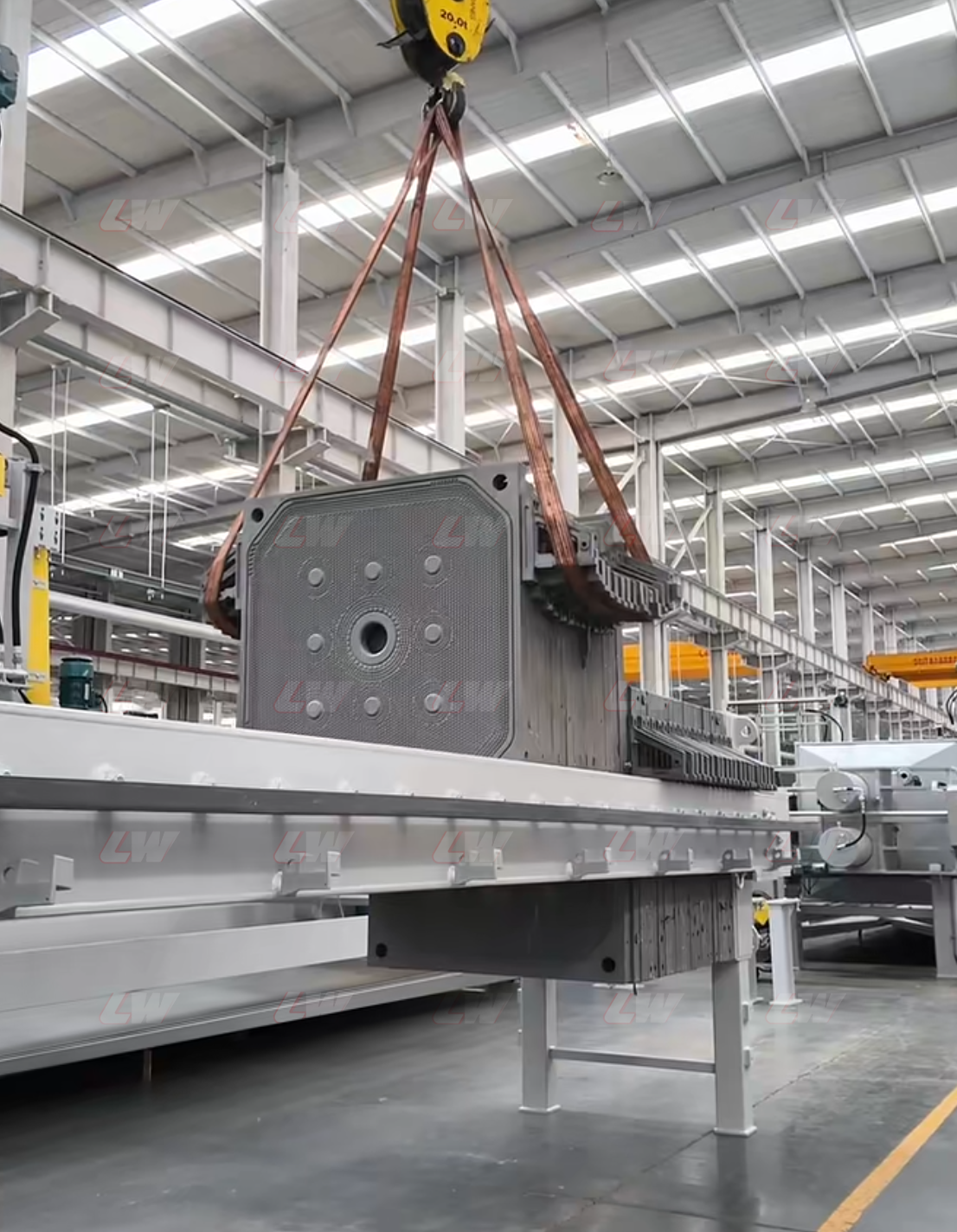
Feed ports, drip trays and wetted fittings in 304 or 316L stainless steel on request. The material list is documented with the offer, so you know what touches the product.
Plates
Polypropylene as standard. Where the chemistry or temperature goes past what standard PP accepts, the plate material for battery materials filtration is quoted against that duty rather than assumed.
Cloths
Woven to the particle size and the chemistry. Alkaline duties and acid duties get different weaves, and fine, sticky cakes get a weave chosen for discharge as much as for capture.
Automation
Plate shifting and cloth washing run automatically, so operators handle hot or corrosive slurries less often and cycle times stay even across shifts.
Proof before purchase
Start with your slurry, not our catalogue
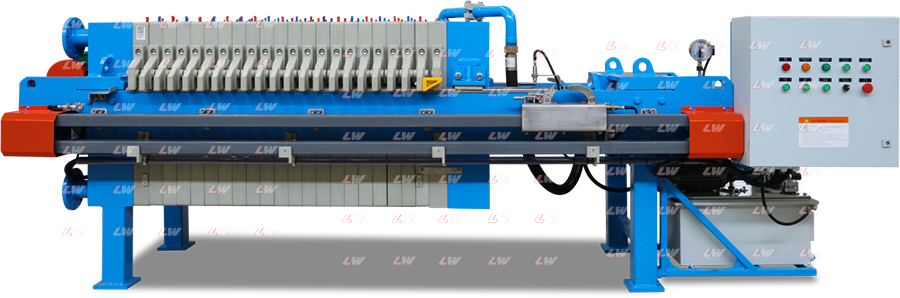
Battery material duties are too specific to quote from a data sheet. We run your slurry on a pilot before proposing a filter press for battery materials, and the numbers come back with the proposal.
Send a sample
A bucket of slurry and the target: moisture, clarity or throughput.
Pilot run
We run it on a pilot press and report cake moisture, filtrate quality and cycle time.
Proposal
A battery material filter press sized to the tested duty, with layout and a utility list.
Install & support
Commissioning with your team, and spares stocked against the cloth and plate schedule.
FAQ
Questions from battery material and recycling projects
How do you keep iron and other metals out of the product stream?
By material selection rather than by promise. In a filter press for battery materials, contact parts can be 304 or 316L stainless, plates are polypropylene unless the duty says otherwise, and cloths, pipework and fittings are chosen with the same logic. The wetted-materials list is documented with the offer.
Can the press run hot alkaline precursor slurries?
Battery materials filtration is quoted against the duty: tell us the temperature and the chemistry, and the plate and cloth specification follows from that. Hot alkaline duties are exactly the case we quote against rather than assume, and the pilot run settles it before you order.
How does cake washing work inside the cycle?
After filtration, wash water is pumped through the cake and displaces the mother liquor trapped between particles. The press holds the wash under pressure so it moves through the cake evenly, then the cycle continues to squeeze and discharge.
We recycle batteries and the feed changes weekly. What then?
Size the press for the worst stream you will run, not the average one. Send the hardest sample for the pilot, and set the cycle recipes per stream so the operators switch recipes instead of improvising.
Can you recover silicon carbide from cutting slurry?
That is a cloth question more than a press question. On a filter press for battery materials, tight-woven cloth holds the abrasive while the carrier liquid passes, and the pilot test on your slurry confirms the capture and the discharge behaviour before we quote.
What do you need to prepare a quote?
The stream: solids content, particle size, chemistry and temperature. The target: cake moisture or filtrate clarity. The volume: tonnes per day and hours of operation. With those three, the proposal is concrete.
Send the slurry and the target
For the product line, tell us the purity and moisture the battery material filter press has to hit. For the plant line, tell us the volume and the sludge. Either one starts the pilot.
Request a quote