

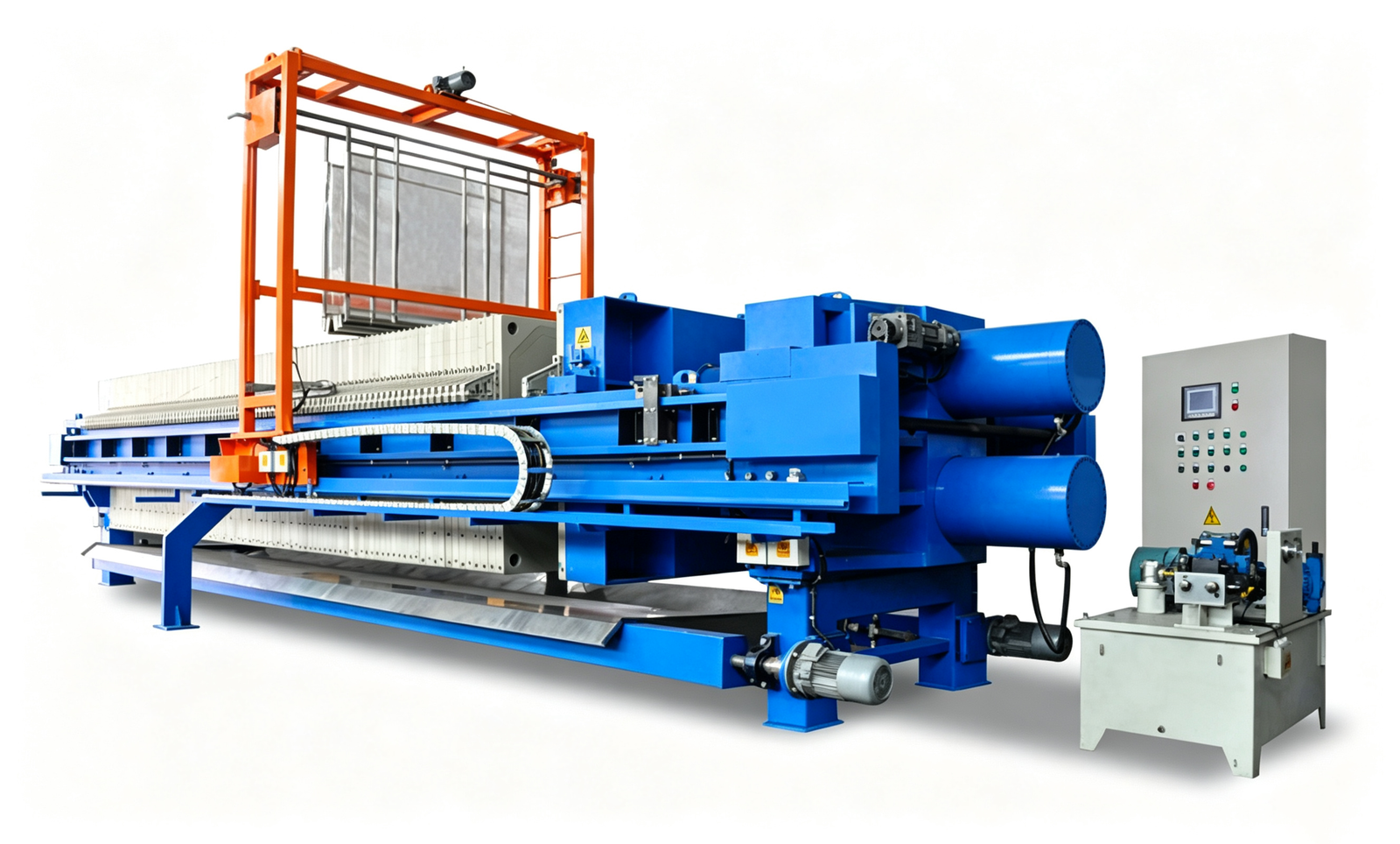
Automated filter press with PLC control for 24/7 unattended dewatering.
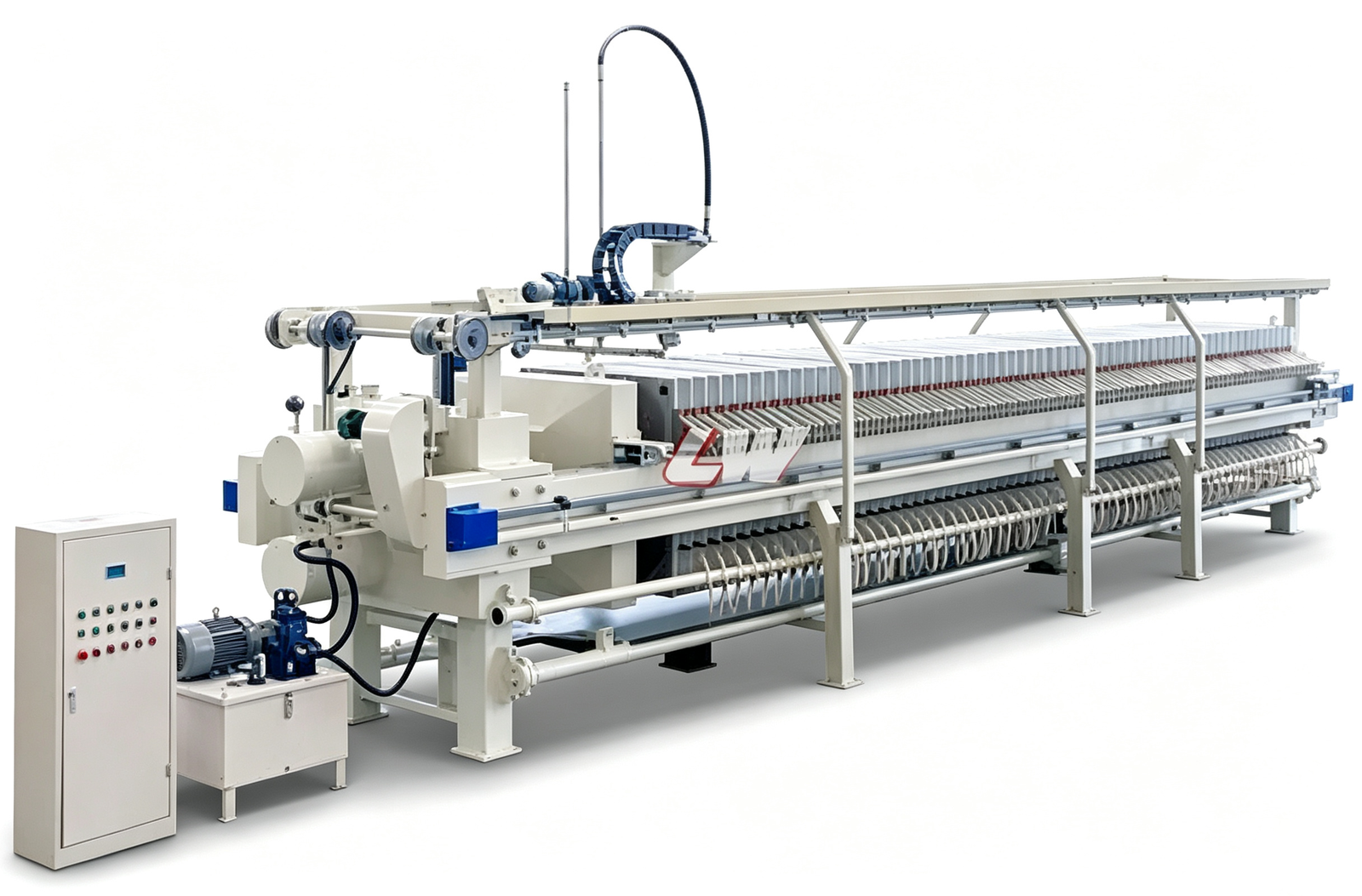
An automated filter press runs the cycle by itself. The PLC closes the plates, ramps the feed pump, holds pressure through the cycle, blows the cake dry, opens the pack, and discharges — then repeats. For plants that run two or three shifts and want consistent cycle times with one operator instead of three, automation is where the labor savings come back within the first 12 to 18 months. The page below walks through how Loway builds an automated filter press, how PLC control is matched to the cycle, and which options move a press from a semi-automatic machine into a fully unmanned line.
Automation levels: which one fits your plant.
A filter press is not either manual or fully automatic — it sits on a four-step ladder. Most plants with two or more shifts land at L2 or L3; the L4 unmanned line is a specific use case, not the default.
Manual
Plates opened by hand, no PLC. Hydraulics hold pressure during the cycle. One operator per shift, full attendance required. Best for very low throughput.
Semi-automatic
PLC runs the cycle, automatic plate shifter, manual cloth wash and manual cake drop. One operator per shift. Most single-shift and small two-shift plants start here.
Fully automatic
PLC + automatic plate shifter + automatic cloth washing + automatic cake discharge onto a conveyor or into a hopper. One operator supervises 2 to 4 presses per shift.
Unmanned
L3 hardware plus SCADA backhaul and remote alarm routing. The press runs through the night and weekend with no on-site operator. Demands a stable slurry and a plant network you already trust.
A typical two-shift municipal or industrial plant saves enough operator hours over a 12 to 18 month window to cover the L2 to L3 automation upgrade. The math for L4 is a separate conversation and usually turns on whether you already run a SCADA system. Most Loway automated filter press orders land somewhere in the L2 to L3 window; the L3 fully automatic setup is the version this page describes in detail.
How PLC control runs the cycle.
The cycle on a Loway automated filter press is not a fixed timer. Every step ends on feedback from a sensor, not on time, and every transition is logged. The diagram below is the closed loop the PLC actually reads from. Putting an automatic filter press on a feedback loop rather than a timer is the single most important difference between the manual and automated versions of the same hardware.
Four steps the loop actually runs.
- Feed The PLC ramps the feed pump to the line’s programmed flow. The pressure transmitter on the feed line is the cut-off; the step ends when the line reaches 0.4 to 0.6 MPa for a recessed-chamber press, or when filtrate flow crosses a programmed minimum.
- Press The hydraulic pack holds closing force at the operator-set value (typically 16 to 22 MPa hydraulic). The press step ends when the flow switch on the filtrate manifold drops below the programmed threshold — usually 1 to 2 L/min per plate — which is the signal that the cake has built up.
- Air blow Compressed air at 0.5 to 0.7 MPa passes through the same feed channel and pushes the residual filtrate out of the cake. The PLC ends this step on either a timer (typically 2 to 4 minutes) or a moisture sensor, if one is fitted at the discharge end.
- Open and discharge The plate shifter walks the pack open one plate at a time and the cake drops onto a conveyor, into a hopper, or onto a vibrating chute. The PLC closes the press again and starts the next cycle.
Typical I/O count on a Loway automated filter press
| Automation level | DI | DO | AI | Cabinet |
|---|---|---|---|---|
| L1 · manual | 8 to 16 | 4 to 8 | 0 to 2 | Simple relay panel |
| L2 · semi-automatic | 24 to 32 | 12 to 16 | 2 to 4 | S7-1200 + 7″ HMI |
| L3 · fully automatic | 40 to 56 | 16 to 24 | 4 to 6 | S7-1500 + 10″ HMI |
| L4 · unmanned | 48 to 64 | 20 to 28 | 6 to 8 | S7-1500 + redundant I/O |
Automatic plate shifter: how the cycle handles 80 plates in 90 seconds.
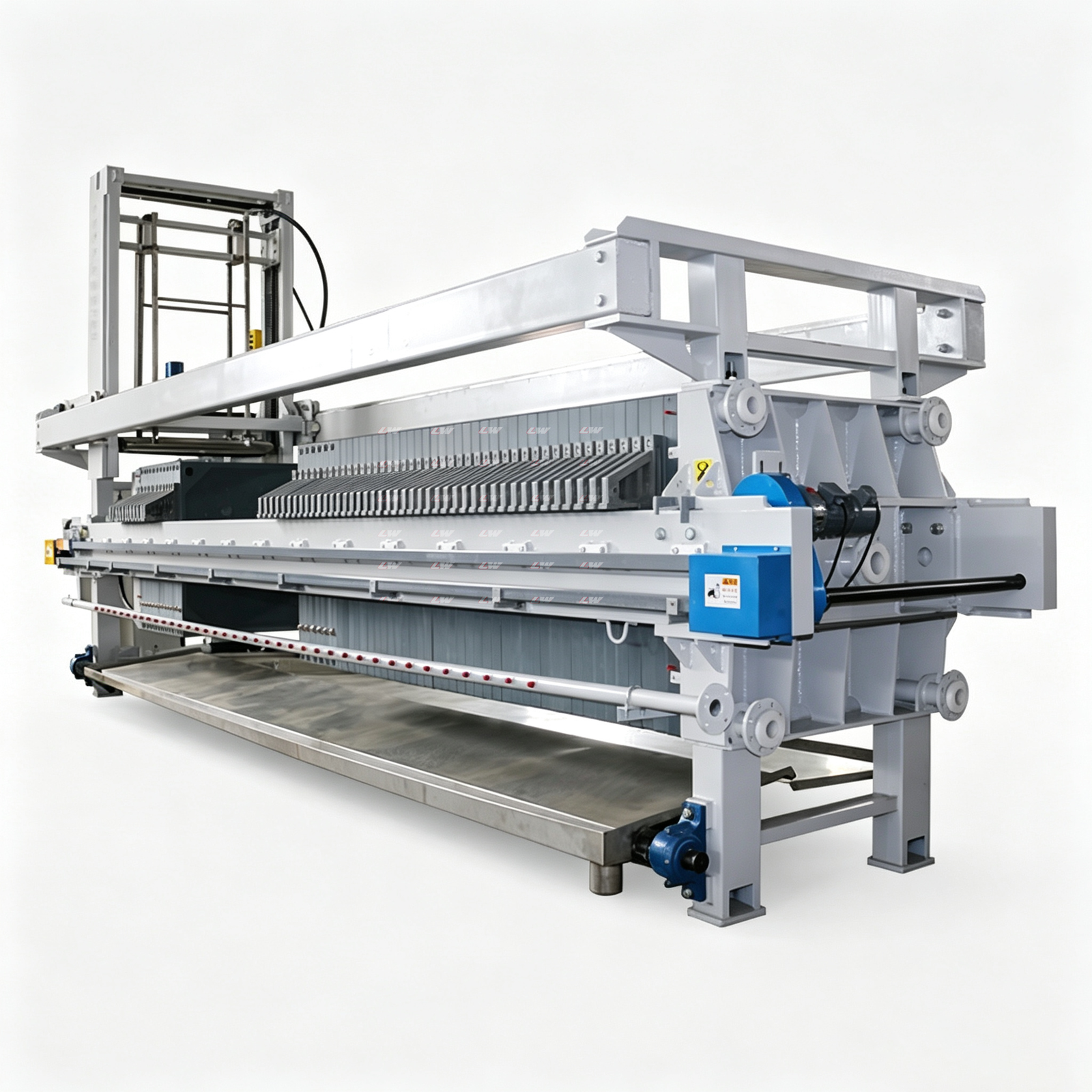
The plate shifter is the mechanism that opens the pack between cycles. It is the single biggest difference between a semi-automatic press and a fully automatic one, and it is the most expensive wear part you will carry in stock on an automatic filter press running two or three shifts.
Single-rail vs twin-rail
Single-rail is the common choice for chamber and membrane presses up to 1500 mm. Twin-rail is fitted on plates wider than 1500 mm where lateral force on a single rail becomes uneven.
Hydraulic pack sizing
Closing force is set between 16 and 22 MPa hydraulic; this translates to roughly 0.6 to 0.8 MPa on the cake for a 1500 mm plate. Holding power draw is 1.5 to 2 kW.
Walking time vs cycle time
Walking time scales with plate count, not plate size. 60 plates open in 60 to 80 seconds; 100 plates open in 110 to 140 seconds on the same rig.
Wear parts you keep on site
Slider pads, chain links, hydraulic seals, and the limit-switch bracket. On a two-shift plant the slider pads last 12 to 18 months before they need replacement; the chain and seals are usually replaced at the same visit.
What stops the cycle on fault
The PLC routes a fault signal out of the shifter controller and parks the pack at the last closed position. The HMI records which plate was being walked at the moment of the fault, which is enough to diagnose over the phone in most cases.
Specifications Two tables — the press itself, and the controls that move it.
Tables A and B below are the typical envelope on an L3 Loway automated filter press. Plate count, plate size, and filtration area are quoted against the slurry sample; everything in Table B (the controls BOM) is configurable to your plant’s existing PLC platform.
Table A · Press envelope (typical L3 chamber press, automated)
| Parameter | L3.80·800 | L3.100·1000 | L3.120·1250 | L3.150·1500 |
|---|---|---|---|---|
| Plate size (mm) | 800 × 800 | 1000 × 1000 | 1250 × 1250 | 1500 × 1500 |
| Number of plates | 50 to 80 | 60 to 100 | 60 to 120 | 70 to 150 |
| Filtration area (m²) | 31 to 50 | 60 to 100 | 94 to 188 | 158 to 338 |
| Cake capacity (L per chamber) | 12 to 16 | 21 to 28 | 35 to 45 | 50 to 65 |
| Closing force (MPa hydraulic) | 16 to 22 | 16 to 22 | 18 to 22 | 18 to 22 |
| Operating pressure on cake (MPa) | 0.4 to 0.6 | 0.4 to 0.6 | 0.4 to 0.6 | 0.4 to 0.6 |
| Plate shifter | Single-rail | Single-rail | Single-rail | Twin-rail (option) |
| Dry weight, no controls (kg, ±5%) | 5,800 | 9,400 | 14,600 | 22,400 |
| Footprint L × W × H (m) | 5.0 × 1.4 × 2.2 | 6.0 × 1.5 × 2.3 | 7.4 × 1.7 × 2.6 | 9.0 × 1.9 × 3.0 |
| Connected power (kW) | 9 to 12 | 13 to 16 | 17 to 22 | 24 to 30 |
Table B · Controls and automation BOM
| Component | L1 manual | L2 semi-automatic | L3 fully automatic | L4 unmanned |
|---|---|---|---|---|
| PLC platform (default) | None / relay panel | Siemens S7-1200 | Siemens S7-1500 | S7-1500 redundant |
| HMI | Push-button panel | 7″ color touch | 10″ color touch | 10″ + remote web |
| Pressure transmitter on feed | Gauge only | Yes (cut-off trigger) | Yes | Yes + redundant |
| Flow switch on filtrate | No | Yes | Yes | Yes + redundant |
| Position sensor on shifter | No | Yes | Yes | Yes + redundant |
| Cloth-wash bar | Hand hose | Optional | Yes, automatic | Yes, automatic |
| Cake discharge | Manual pull chute | Manual chute | Conveyor or hopper | Conveyor with level sensor |
| SCADA / remote | No | No | Optional Modbus/Profinet | Required |
| Alarm routing | Local buzzer | Local + SMS (opt.) | Local + remote | Remote + watchdog |
| Cabinet ingress | IP54 | IP54 | IP54 | IP54 + air-conditioned |
| E-stop category | Cat 0 | Cat 0 / 1 (opt.) | Cat 1 | Cat 1 + safety PLC |
| Approx. controls BOM (%) | 6 to 8% of press | 12 to 16% | 20 to 26% | 28 to 36% |
What does not change when you upgrade L2 to L3?
The frame, the hydraulic pack, the plate pack, and the cloth wash pump are unchanged from L2 to L3. What changes is the I/O count, the HMI size, and the BOM of the controls cabinet. That is why the upgrade is usually a 14 to 18 month payback on operator hours, not a 30 to 36 month capital recovery.
Other PLC brands we have shipped against
Siemens is our default. We have also shipped automatic filter presses with Mitsubishi MELSEC iQ-R, Allen-Bradley CompactLogix, and Schneider M580, when the customer site already runs that platform on its plant network. The cycle logic is portable; the I/O terminal naming and Profinet / EtherNet/IP device descriptions are the parts that change.
What our quotation includes
Press, hydraulic pack, PLC cabinet, HMI, plate shifter, cloth wash bar, conveyor (L3 and above), I/O list with terminal mapping, ladder / function block diagram, and a commissioning checklist. Site installation, cabling to your plant network, and PLC integration with your existing historian or SCADA are quoted separately if you want Loway to do them.
Cloth washing and cake discharge: where the day’s water goes.
Two automated sub-systems quietly take most of the operator time on a manual press — the cloth wash, and the cake discharge. Both run automatically from L3 upward.
Cloth washing: pressurized nozzles, cycle on the clock
The cloth-wash bar is fitted across the top of the plate pack and pumps high-pressure water (50 to 80 bar) through nozzles at the leading edge of each plate. A complete wash cycle takes 90 to 180 seconds per plate depending on the cake build-up. The PLC triggers a wash after every 2 to 4 cycles during normal operation, and a deeper wash after every 20 to 30 cycles.
Filter cloth life is the next thing the wash bar affects. We see cloth life of 800 to 1200 cycles on an L3 press versus 400 to 600 cycles on a manual press where the wash interval is operator-dependent. The cloth is an OEM-consumable, not Loway-supplied, so it is a part of your operating cost you control.
Materials of construction: nozzles are stainless 304 by default, with 316L optional for chemical wash. Wash pump skid is on a separate VFD for pressure control and to keep the wash cycle from dipping the rest of the plant’s water pressure.
On an automated filter press the cloth-wash cycle is the silent labor saving nobody mentions. An L1 press with manual cloth wash loses 8 to 15 minutes per cycle to that one task; on a 28 minute cycle, that is the operator’s whole shift.
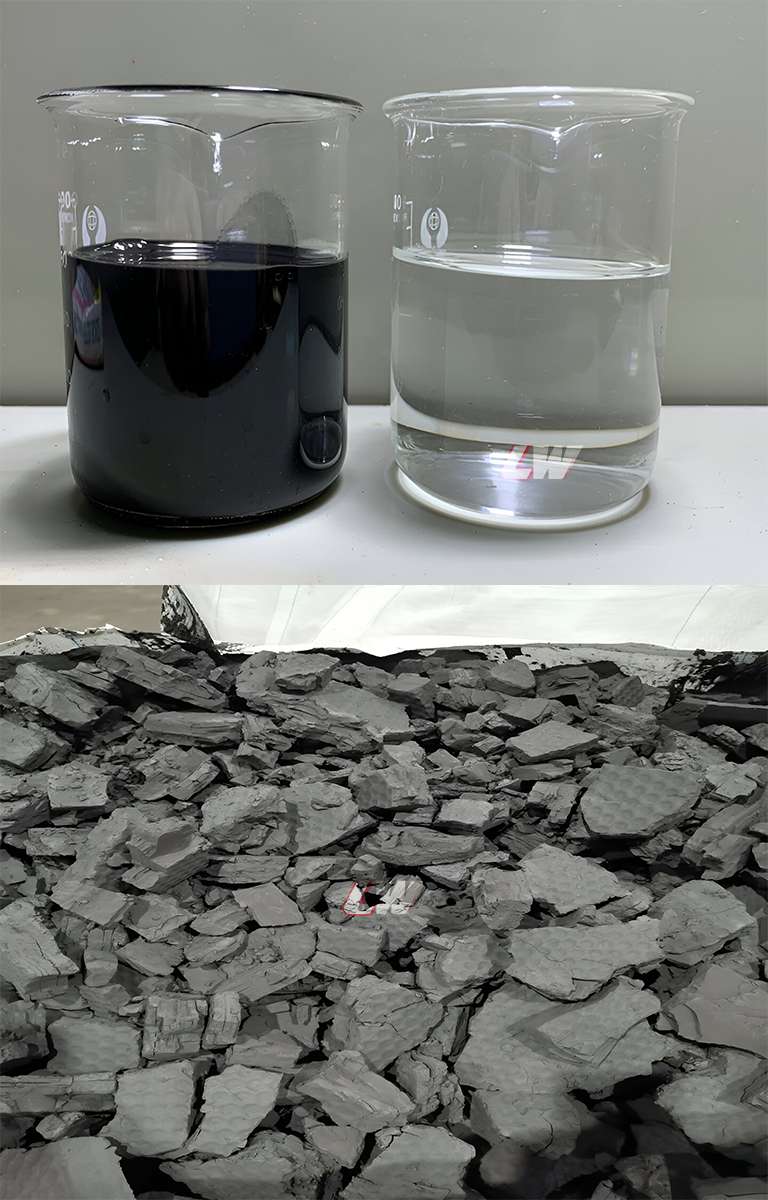
HMI, SCADA, and remote monitoring.
On L3 and above the press moves data out two ways — to the HMI beside the press, and to whatever plant historian or SCADA system is already on your network. The HMI is what your operator reads; the SCADA feed is what your control room reads.
The HMI is the operator’s view.
The 10-inch HMI carries four pages the operator uses by default: a live cycle readout (current step, time in step, set point vs measured), a fault log (last 200 events with timestamps), a parameter editor (locked behind a login), and a trend chart (filter pressure, filtrate flow, hydraulic pressure over the last 24 hours). It is the same content the SCADA system reads, surfaced locally so the operator does not need to walk to a control room.
Login roles are configured at commissioning. The default is two roles: Operator (read-only on parameters, full control on cycle commands) and Maintenance (full parameter edit). If your plant has a third role like Process Engineer, we wire that in on request.
What gets pushed to SCADA.
Cycle time, energy, and the numbers to put in your business case.
Below are the cycle and energy numbers from a 1000 mm, 80-plate, L3 chamber press running a typical industrial slurry. The numbers are ranges, not promises: an actual cycle on your specific slurry can shift any of them by ±15%. We put ranges on every cell rather than single points for that reason.
| Step | What happens | Typical duration | Power drawn |
|---|---|---|---|
| 1. Plate close | Hydraulic pack drives plates to set closing force | 30 to 50 s | 7.5 to 11 kW (peak) |
| 2. Feed | Feed pump ramps to flow set point; pressure cut-off 0.4 to 0.6 MPa | 3 to 6 min | 15 to 22 kWh / cycle |
| 3. Press (filtration) | Hydraulic holds force; PLC waits for flow switch threshold | 14 to 18 min | 1.5 to 2 kW holding |
| 4. Air blow | Compressed air at 0.5 to 0.7 MPa pushes filtrate out | 3 to 4 min | 5 to 8 kW (compressor) |
| 5. Open and discharge | Plate shifter walks pack; cake drops to conveyor / hopper | 90 to 140 s | 2.2 to 3.0 kW |
| 6. Cloth wash (every 2 to 4 cycles) | Wash bar at 50 to 80 bar through each plate | 120 to 180 s per wash | 0.8 to 1.2 kWh per wash |
| Total cycle | From fill start to discharge complete, at L3 | 22 to 28 min | 22 to 32 kWh / cycle |
| Energy per tonne dry cake | Across three shifts, slurry-dependent | — | 90 to 130 kWh / tonne |
The feed pump is the variable worth measuring on your specific slurry. If your slurry runs at 1 to 5% dry solids, the feed-energy share drops to 60 to 70% of the cycle; if it runs 8 to 15% dry solids, it climbs to 75 to 85%. Bench test on your sample is how we put real numbers in your quotation — not estimates.
Maintenance: what wears, when, and how often.
The list below is what we see on our own automated filter press deliveries. It is not a worst-case catalog. Most of the wear parts are stocked on a single shelf and cost less than 2% of press price over a year of two-shift duty.
15-minute end-of-shift check
- Hose fittings for oil or water weep
- Cloth on each visible plate
- Cleanliness of cloth-wash nozzles
- Hydraulic oil level sight glass
- Cycle log entries today’s shift
1-hour visual round
- Plate shifter chain tension
- Lubrication of shifter rails
- Limit-switch bracket alignment
- Filter cloth tears / blind spots
- HMI fault log review
4-hour scheduled task
- Hydraulic oil sample, moisture check
- Sensor calibration check
- Shifter slider pad wear
- Cabinet fan filters
- PLC backup battery check
1 to 2 day shutdown
- Chain and slider-pad replacement
- Hydraulic seal replacement
- Plate pack re-shim if needed
- Pressure transmitter re-cal
- Firmware / HMI project refresh
On a two-shift press the chain and slider-pad replacement is a one-day job every 12 to 18 months. The PLC firmware and HMI project file are version-controlled by Loway, and we ship any updates you need without a site visit.
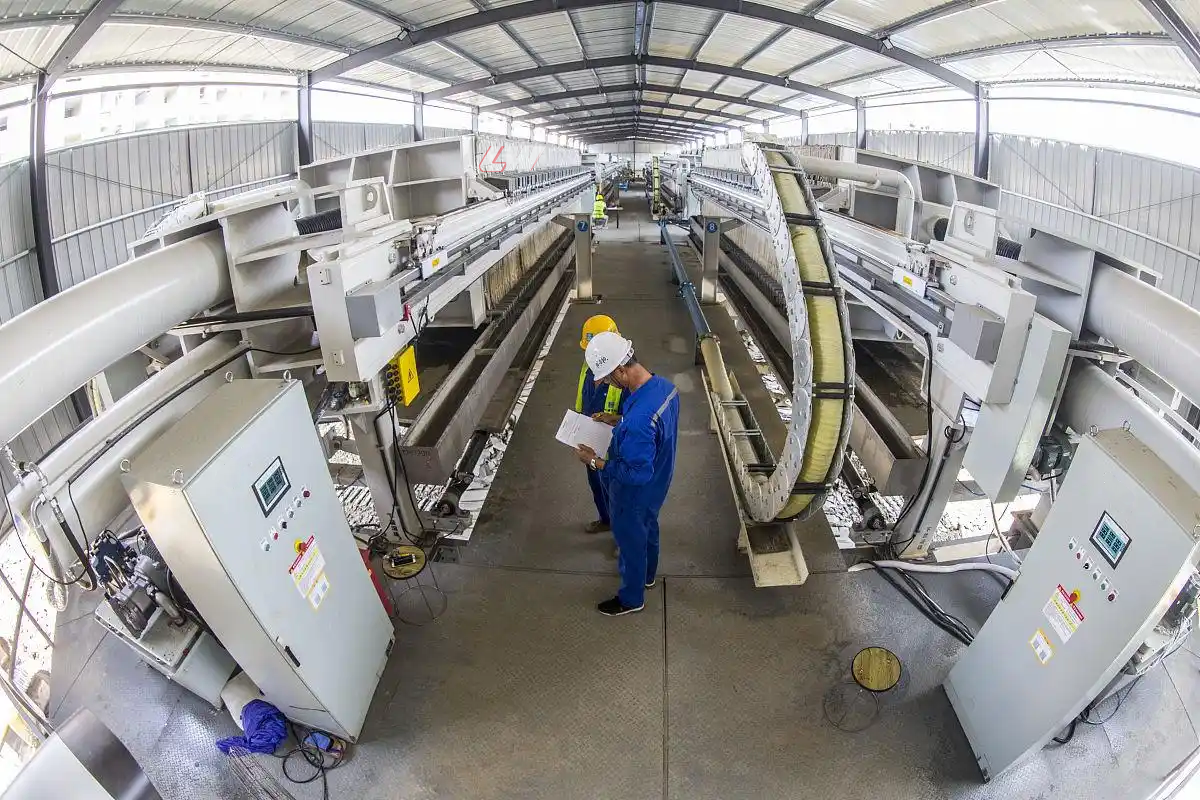
Two L3 automated filter presses on a mining tailings duty, mid-commissioning. The PLC cabinet at the operator-side end of each press carries the HMI, the I/O terminals, and the alarm bus; both presses are feeding into a single conveyor to the cake bin.
Where an automated filter press pays back.
The four industries below are where we ship the most automated filter presses. The right level for each is — in our experience — close to a fixed range, not a guess.
Municipal wastewater
Tertiary sludge dewatering, 2 to 3 shifts a day, 5 to 7 days a week. Drives the L2 to L3 upgrade on operator hours alone. SCADA usually already in place.
Mining and mineral processing
Tailings, concentrate dewatering, clay washing residue. Heavy duty, often 24/7. L4 rare here because remote sites usually lack the SCADA backbone — L3 is the standard.
Chemical and pharma
Brines, catalyst recovery, intermediate cake. Cycle consistency and full cycle logging matter for traceability — the SCADA feed is usually non-negotiable.
Food and beverage
Brewery spent grain, dairy effluent, palm oil EFB. Hygienic spec (316L wetted parts, CIP inlet on wash line). Automation pays back in labor saving and in stable moisture.
Which automation level should you be quoted for?
Three questions, branched. Most inquiries on an automated filter press land at L3.
One shift or less
Operator hours are not the bottleneck. Plate shift time, not labor, drives throughput. Start with L1 or L2 and revisit if shift count rises.
Two shifts, no SCADA
Labor saving is real but data infrastructure isn’t there. L2 semi-automatic + alarm SMS option is the right fit; upgrade path to L3 stays open when SCADA is built.
Two or three shifts + SCADA backbone
Default landing. L3 fully automatic, with cloth wash and cake discharge automated. The 14 to 18 month labor payback is the headline number.
Slurry wanders
PLC can read the variation and act on it, but the cycle time becomes variable. Stay at L3 or below; L4 needs predictable slurry to keep the night shift quiet.
Slurry holds steady
Push toward L4 if the site already runs SCADA you trust. If the plant is greenfield, build L3 now and add the SCADA / remote layer as a second stage.
Solids between 5 and 10%
A bench test is the only honest way to put a number on the cycle — we run an L3 cycle profile against your sample slurry in our test rig and report back.
Manual versus automated: what actually changes.
We are often asked whether installing an automatic filter press is worth it. Below is what the L2 to L3 upgrade actually changes on a two-shift plant. The numbers are typical, not absolute; what you save on labor depends on where you pay your operators.
| What changes | Manual (L1) | Fully automatic (L3) |
|---|---|---|
| Operators per shift for one press | 3 (one per task) | 1 (supervising 2 to 4 presses) |
| Cycle time consistency | Drifts with operator — typically ±15% | ±3% from cycle to cycle |
| Cloth replacement frequency | Every 400 to 600 cycles | Every 800 to 1200 cycles (auto cloth wash) |
| Data logging per cycle | Hand-written | Time-stamped, exported to CSV / OPC UA |
| Fault diagnosis | Operator intuition, then call Loway | PLC logs the step, the set point, the measured value |
| Capital cost (controls only) | 6 to 8% of press | 20 to 26% of press |
| Typical payback period on labor | — | 14 to 18 months on a two-shift plant |
Frequently asked questions.
Eight of the questions we get most often about our automated filter press line. If yours isn’t here, our PLC engineer can talk it through on a 30-minute call before you commit.
What PLC brand does Loway use by default?
Siemens S7-1200 for L2 and S7-1500 for L3. Mitsubishi MELSEC iQ-R, Allen-Bradley CompactLogix, and Schneider M580 are all available and we have shipped against them. The cleanest project is the one where the filter press PLC sits on the same network as the rest of your plant; tell us which platform you run, we will match it.
What actually breaks first on an automated filter press?
The cloth wash nozzles if your water supply carries fines — they plug within 60 to 90 days and you will see rising differential pressure on the next cycle before the operator notices. Second is the plate shifter slider pads at 12 to 18 months on a two-shift plant. The PLC, the HMI, and the pressure transmitters are typically 3 to 5 year items.
Can you add automation to a filter press we already own?
Yes, in most cases. The mechanical package — plate shifter rail, cloth wash bar, conveyor — can be retrofitted to a press we made within the last 8 to 10 years. Older presses we would need to inspect first; call us with the press serial number and we will tell you what is feasible.
What data does the automatic filter press send out?
Four channels: process values (live), cycle log (one record per cycle), faults and alarms (priority, message, step), and maintenance counters (runtime since last replacement). The wire is Profinet or Modbus TCP by default; OPC UA on request; Modbus RTU on legacy plant networks.
Do you ship the program source code?
Yes. The PLC project archive and the HMI project archive are part of the handover pack. You own the running press and you own the code; you are free to have your own integrator modify either with the documentation we provide. We can also offer a service contract for ongoing changes if you would rather Loway hold the code.
What is the lead time on an automatic filter press?
60 to 90 days from order to ex-works for L2 and L3, depending on plate count and whether the conveyor is in scope. L4 with the SCADA integration adds 30 to 45 days for the control engineering and the on-site commissioning. The bottleneck is almost always the controls cabinet — the mechanical press takes 30 to 40 days.
How loud is an automated filter press?
About 72 to 78 dB(A) at 1 m during the open and discharge step. Most of that is the plate shifter clicking plate-to-plate and the cake dropping on the conveyor. The hydraulic pack itself is 60 to 65 dB(A) and is the dominant noise during the press step. For indoor installations above 85 dB(A) occupational limits you will want either acoustic enclosure around the shifter or hearing protection for the operator.
Can the press call me when something goes wrong?
On L3 with the SMS / email option, yes: the alarm handler routes hard faults (E-stop, hydraulic over-pressure, cloth wash pump trip, shifter fault) out as SMS or email within 5 to 10 seconds. On L4 with the SCADA backbone, the alarm routes to your existing alarm-and-event system first and your plant’s on-call protocol decides who it pages. We do not provide a 24-hour control room service ourselves.
Get a real cycle time on your sample before you quote.
If you already know which automation level fits your plant, send us the slurry sample and we will run a bench test on the same PLC profile we use on the production press. If you are still weighing automatic versus manual, our PLC engineer can talk you through the trade-off on a 30-minute call before you commit.
Other Loway filter press platforms.
The automated controls described above apply to any of the three platforms below.
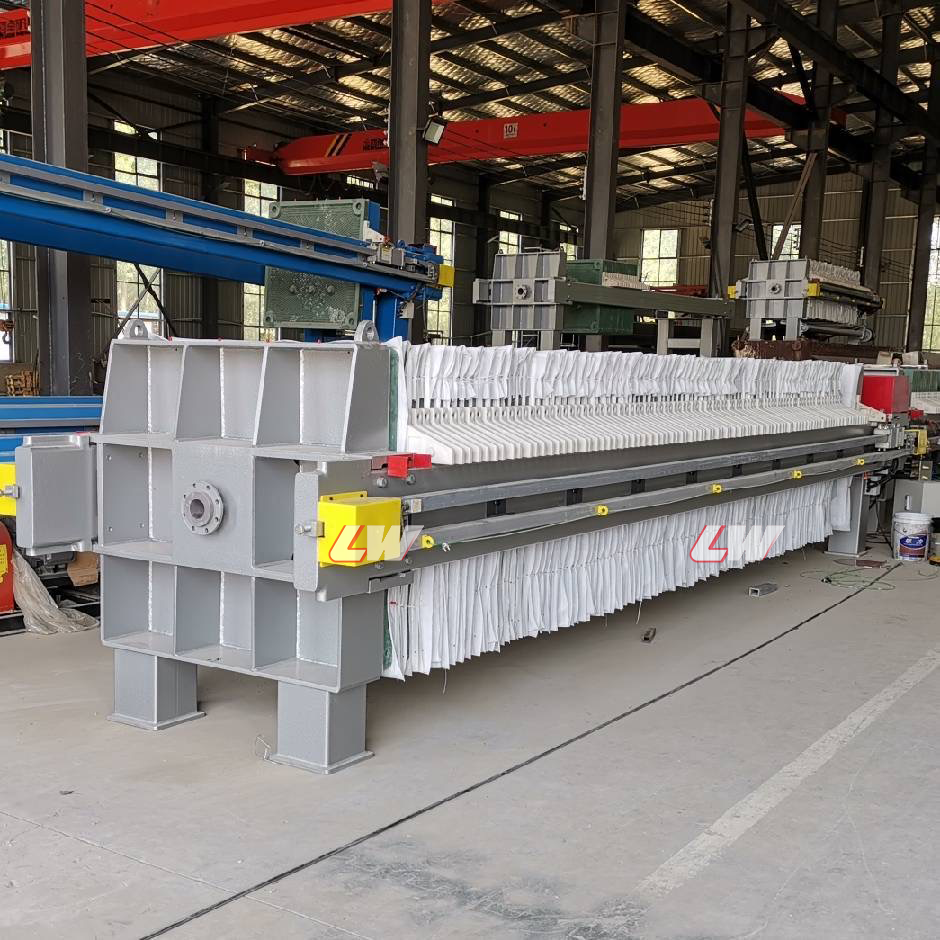
Recessed Chamber Filter Press
PP plates from 420 to 1500 mm; available with the same L1 to L4 controls BOM.
View platform →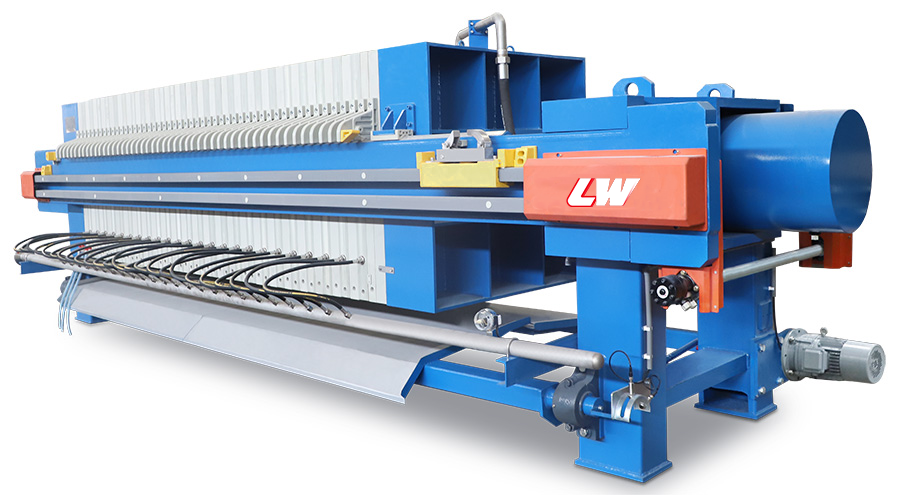
Membrane Filter Press
Membrane squeeze stage on top of the chamber cycle; PLC controls both.
View platform →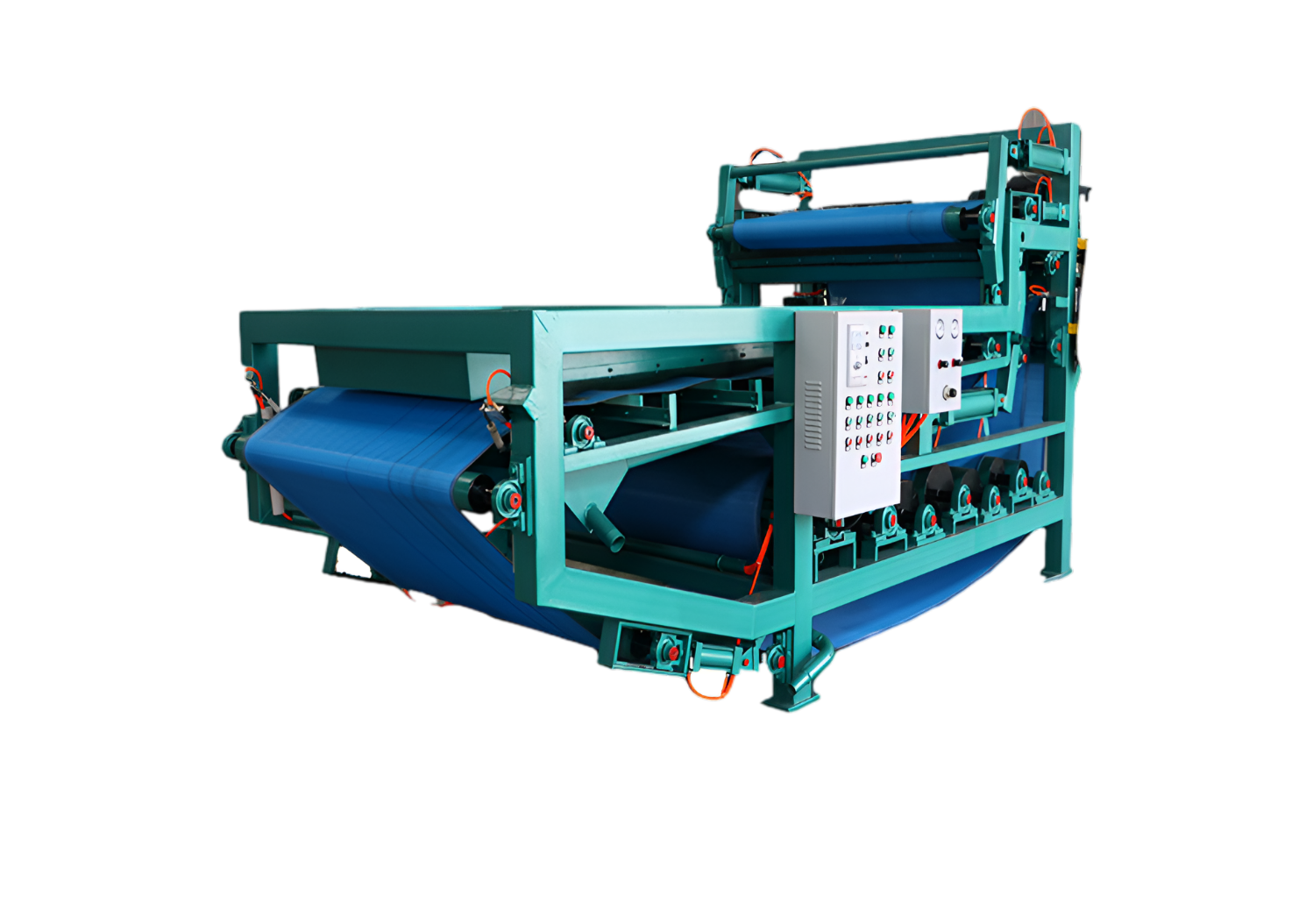
Belt Filter Press
Continuous dewatering alternative. Different operation philosophy.
View platform →