

Engineering Resources · Troubleshooting
When something is off
Filter Press Troubleshooting: Symptoms, Checks and the Fix That Usually Works
A filter press does not fail in mysterious ways — it fails in cloud filtrate, wet cake, long cycles, plate leaks and cloth blinding, and most of these have a short, common-sense cause you can check before you call anyone. This page is a working guide for the operator, the maintenance team and the engineer in a hurry.
Start here
Five Symptoms That Cover Most Calls We Get
A filter press has very few ways to tell you something is wrong. The five symptoms below cover most of the requests the Loway service team receives — and most have a check that takes under an hour, before the spare part is ever ordered.
Cloudy filtrate
Filtrate that should run clear comes out milky or carries fines. Most often a torn cloth, a mis-seated cloth or a blinding layer from the wrong polymer. Easy to confirm and easy to fix on site.
Wet cake / low dryness
Cake comes off wetter than it should, or dryness drifts down over a week. Most often a feed-solids change, a polymer-dosing drift, or an end-of-filtration setpoint that cuts the cycle short.
Long cycle time
Cycle stretches from 30 to 60+ minutes with no change in feed. Most often cloth blinding, pump wear, or an under-conditioned feed that the polymer system is not catching.
Plate leaks & drips
Sludge or filtrate leaking between plates, at the corners, or at the hydraulic ram. Most often a worn seal, a misaligned plate stack, or a pressure-relief set too high.
Cloth blinding
Cloth blocks within a few cycles and the differential pressure climbs. Most often a polymer overdose, a feed that is too fine, or a wash-water pressure that has dropped below design.
Triage flow
What to Check First, in What Order
Before changing a parameter, changing a cloth or calling the service team, walk through the same five checks. Most issues are caught at step 2 or 3.
Write down the symptom, the time it started and what changed that week. A one-line note now saves a guess later — feed, polymer, throughput, or shift.
Look at the last 50 cycles on the HMI: feed pressure profile, end-of-filtration, squeeze, air-blow, cloth ΔP. The curve tells you which phase is the problem.
Polymer concentration and dose, wash-water pressure, cloth-wash interval, seal condition. Half the time the fix is in this step alone.
One cycle at the original setpoints, one at adjusted setpoints. Compare dryness, cycle time and filtrate clarity. Now you have data, not impressions.
If the symptom persists, share the trend log and the cycle notes. Remote support can usually point to the part; the spare is shipped the same week.
The five checks above are the same workflow Loway service uses on a service call. The difference is you have already done the first three before we arrive — spare parts and parameter sheets are listed here.
Cloth-related symptoms
When the Cloth Is the Story
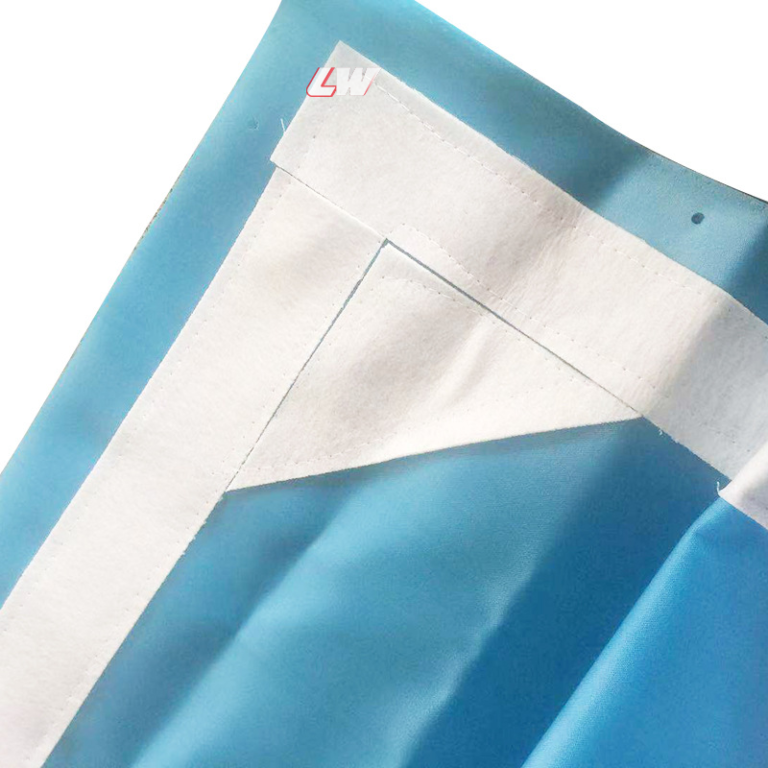
- TBL-3.1Cloudy filtrate — first inspect the cloth for tears, lifted seams and mis-seating around the feed port. A single torn corner will turn a clear filtrate cloudy in one cycle.
- TBL-3.2Rising differential pressure — the cloth is blinding, almost always from an over-dosed polymer or a feed that is finer than the cloth grade. Try a wash cycle first, then a polymer audit.
- TBL-3.3Cloth washing not effective — check wash-water pressure at the manifold (the design point is on the parameter sheet) and the wash-nozzle pattern; a single blocked nozzle blinds a column of plates.
- TBL-3.4Short cloth life — most cloth changeouts ahead of schedule trace back to feed pressure spikes or wash-water pressure too high. The cloth log and the trend log together tell the story.
- TBL-3.5Wrong cloth grade installed — switching suppliers or switching sludge without re-checking the cloth spec is a common cause of slow cycles and cloudy filtrate. Confirm the grade against the original parameter sheet.
- TBL-3.6Cloth-wash interval too long — the cycle counter in the PLC tracks cycles since last wash; if the interval drifted, the cloth will blind well before the next scheduled wash.
A blinded cloth is the single most common cause of long cycles and wet cake. The first action is always wash, then audit the polymer — and only then consider replacement. Cloth specs and replacement sets →
Plate & seal symptoms
When the Plates Are the Story
- Sludge leaking between plates — usually a worn seal or a plate that has shifted out of the stack. Open the press, find the wet plate face, and check the seal groove and the alignment of the plate behind.
- Filtrate leaking at the corner — the cloth is not seated at the corner, the corner seam is torn, or the corner port O-ring has failed. A localised drip is almost always a single plate.
- Hydraulic pressure creeping up to hold closing force — usually a seal on the ram or the cylinder; check the seal kit on the parameter sheet before ordering a new ram.
- Plate-shifter alarm at end of cycle — the shifter carriage is binding or a limit switch has drifted. Listen for a stalled motor; the limit-switch position is set against the parameter sheet, not by feel.
- Cake not dropping cleanly — cake stick is usually a dryness problem (the cake is too wet) or a cloth that has glazed over. Long-term fix: review the polymer, then re-check the cloth grade.
- Plate face wear or cracking — impact damage during a plate-shift fault, or running above the design pressure. Replace the plate; a worn plate damages the cloth on the next cycle.
A leaking plate and a tearing cloth can look similar at first glance. The fast way to tell is to open the press and look at the plate face and the cloth corner — the difference is obvious in two minutes, and saves replacing the wrong part. Re-read the operating parameters →
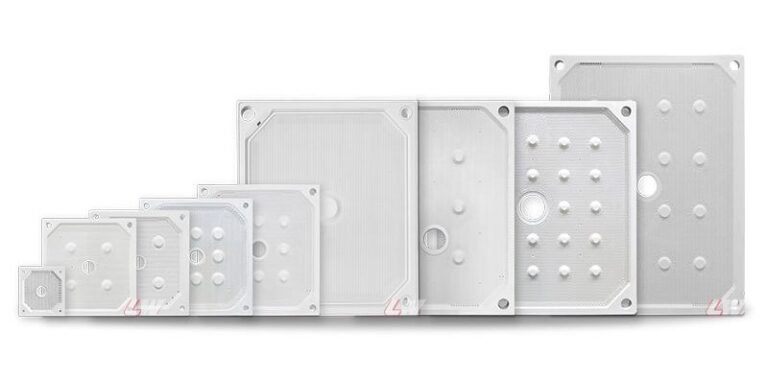
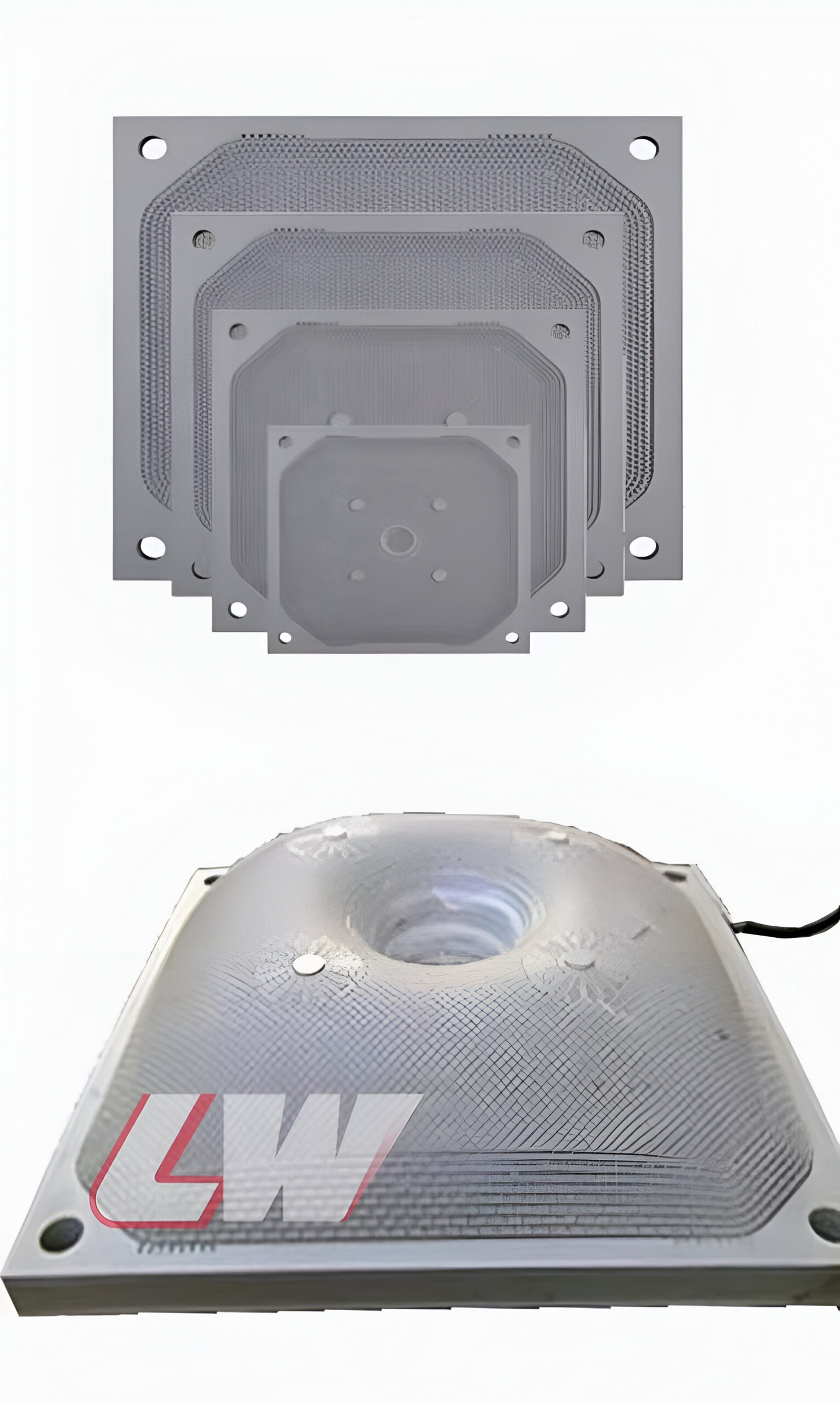
TBL-4.1Membrane & recessed plates
When sludge leaks between plates, open the stack and compare the membrane face with a recessed chamber. A wrinkled diaphragm squeezes unevenly and wets the cake on the cycle after.
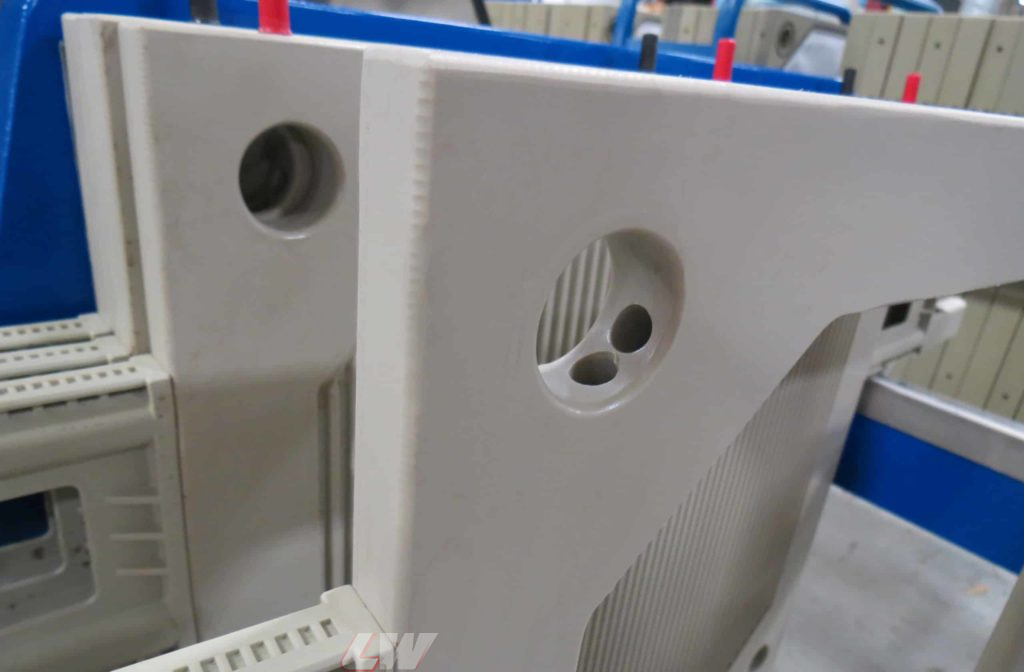
TBL-4.2Corner seal & feed port
A localised drip from the corner is almost always the seal groove or the corner O-ring. Run a finger around the rim — a hard, shiny groove means the seal has compressed and needs replacement.
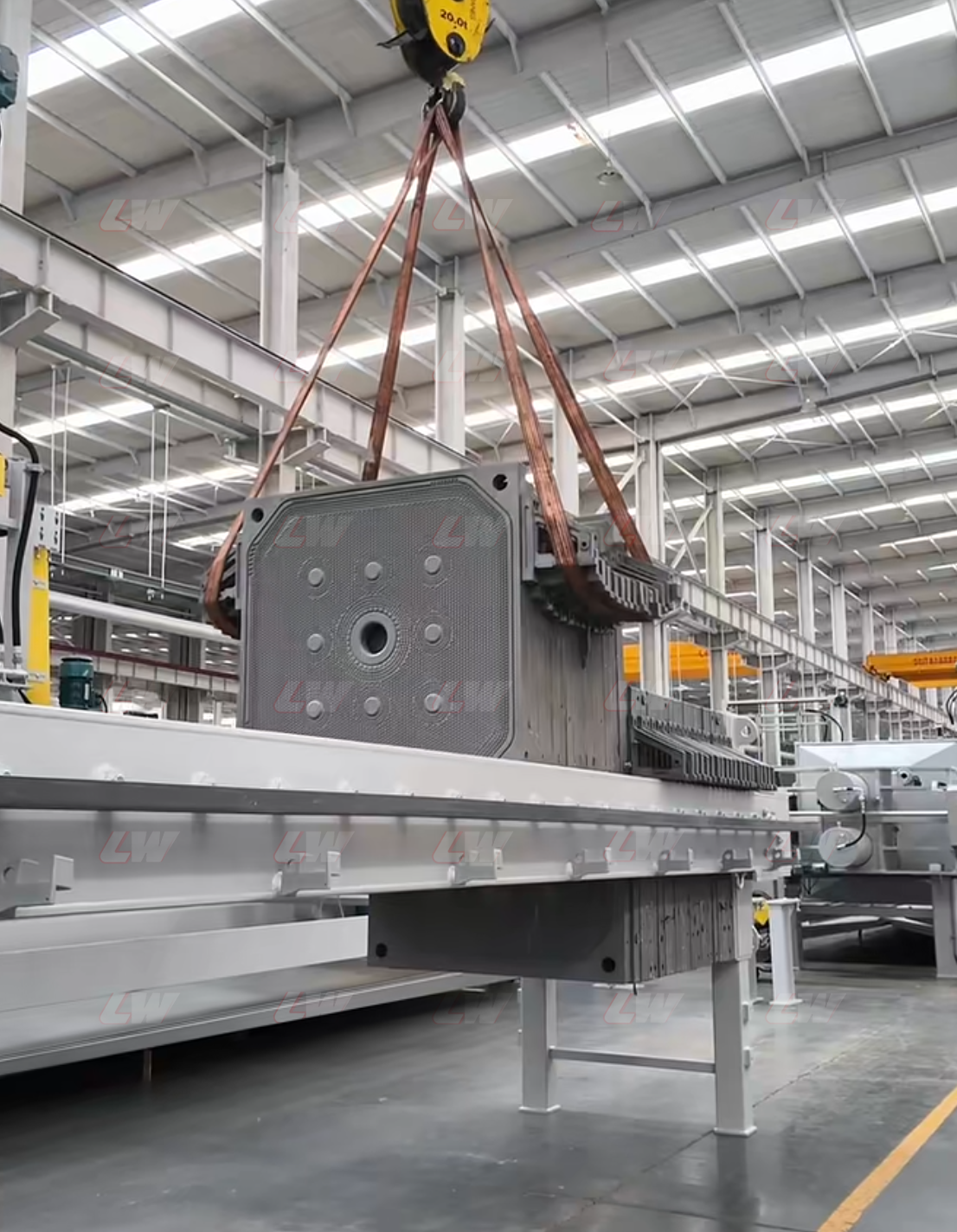
TBL-4.3Plate face & alignment
Plate-shifter alarms usually start with one plate drifting out of the stack. Lift the pack, re-seat the plate on the suspension lugs, and check the alignment pin before the next closing.
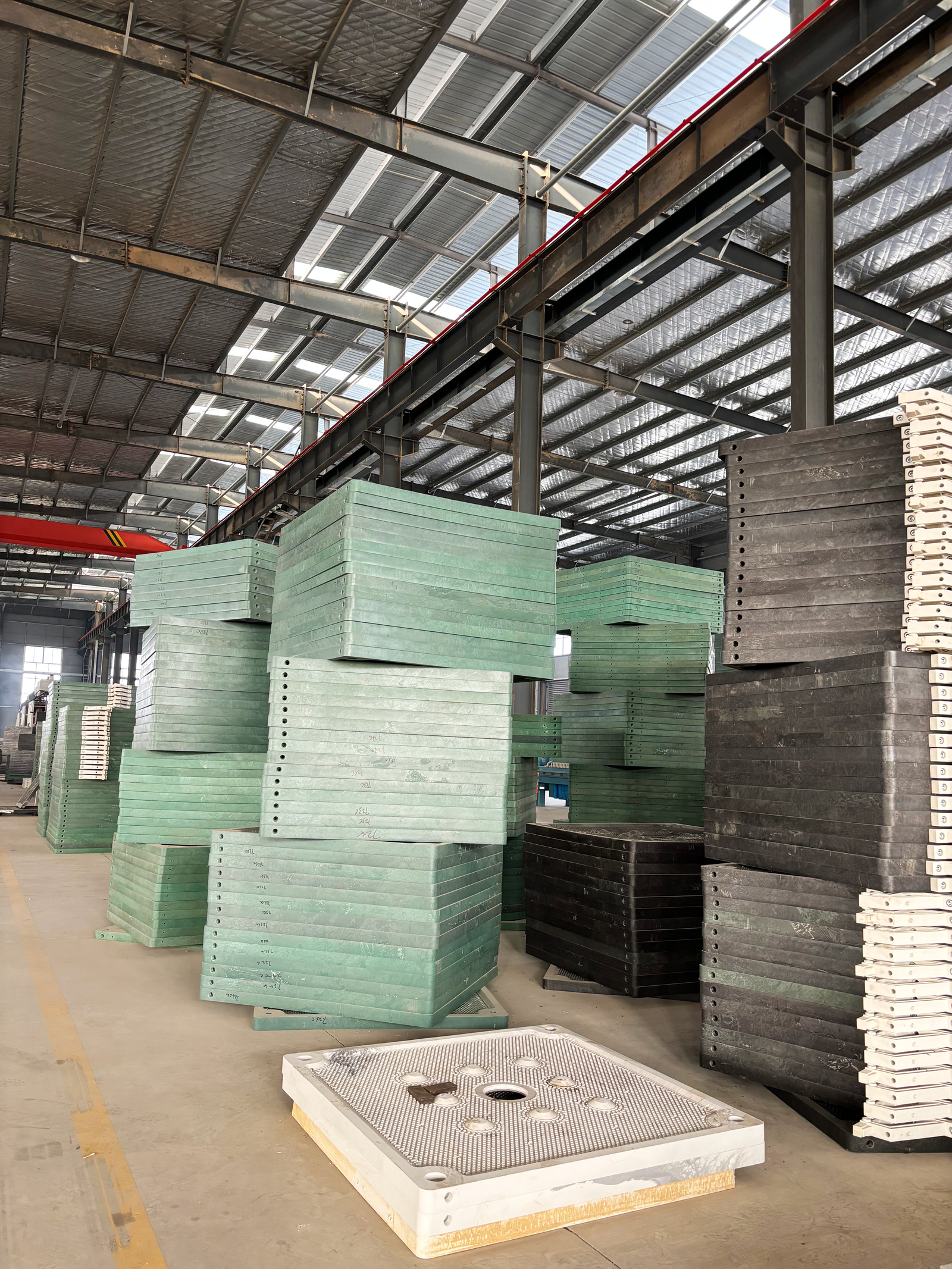
TBL-4.4Spare stock & replacement
Keep two spare plates per size on the shelf, with the seal kit pre-fitted. A worn face damages the cloth on the next cycle — the spare stops the cascade before it starts.
Four close-ups above — match the symptom to the surface, then check the parameter sheet before ordering. Spare plates and seal kits →
When to call the service team
Three Rules of Thumb Before You Call
Most calls are solved without a service visit. The three rules below are the ones Loway service uses to decide whether a remote fix, a site visit or a spare-part dispatch is the right answer. The same rules help you decide what to escalate.
Document first
Note the symptom, the time it started, the trend-log screenshot and the consumables log. A documented call is a short call — and a faster fix.
Check the consumables
Polymer concentration, polymer dose, wash-water pressure, cloth-wash interval. Half of all service calls end at this step, before the service team is mobilised.
Know the parameter sheet
Setpoints, seal kits, cloth grade, plate stack — the parameter sheet is the contract. Without it, a fix is a guess; with it, a fix is a five-minute job.
Troubleshooting FAQ
Troubleshooting, Answered
What is the most common filter press problem?
Why is my cycle time getting longer every shift?
My filtrate is cloudy but the cake looks fine. What gives?
The hydraulic pressure keeps climbing. Is that a problem?
How do I know whether to call service or replace the part myself?
Can I run the press at a higher pressure to push through a slow cycle?
Do these troubleshooting steps apply to belt and screw presses too?
Need a hand?
Send Us the Trend Log, Get a Fix
Share a screenshot of the trend log, the symptom and the consumables used this week. The Loway service team will come back with the most likely cause, the part to check and the spare to ship — usually within one business day.