

About · Engineering Team
Loway Engineering
The Engineers Behind Your Dewatering Line
The same engineers who design and build Loway filter presses, belt presses, screw presses and screening systems also answer your enquiry, run your bench test, draw your machine, debug your PLC and guide you through commissioning. This page is about them — what they do, how they work, and what you receive from the team on each project.
Four engineering roles on every project
One project, four engineers — each with a defined scope
Most projects touch all four engineering roles at Loway — a process engineer qualifies your sludge and the duty spec, a mechanical engineer lays the machine out in 3D, an automation engineer programmes the PLC, and a project engineer keeps the build, the documentation and the after-sales on the same page. Below is what each role does and what you receive from them.
Process & application engineer
Qualifies your sludge against the duty spec, sets the dewatering target, designs the bench test plan and turns the lab result into a sizing recommendation.
Mechanical & 3D design engineer
Builds the 3D model, runs the layout and clearance checks, signs off the GA assembly drawing and the OEM plate pack — the same engineer who drew it supervises the build.
Automation & PLC engineer
Programmes the squeeze / wash / air-blow sequence on the HMI, sets the safety logic, runs the bench FAT, and ships the PLC source with the machine so your team can edit it later.
Project & after-sales engineer
Holds the build calendar against the QC plan, runs the customer FAT, joins the commissioning video call, and stays on the line for spare parts and troubleshooting after handover.

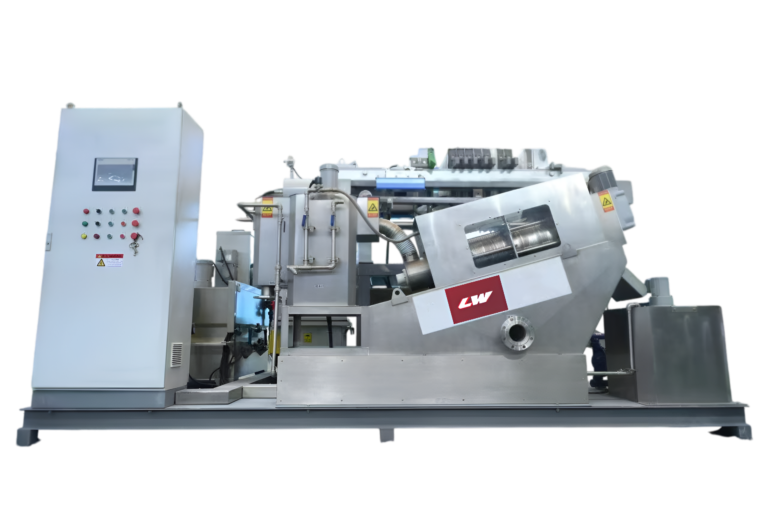
Mechanical & 3D design
Designed in 3D, approved on drawing, then built
A drawing on paper only catches the problems that were drawn. The Loway mechanical team works in 3D from the first sizing sheet, so clearance, pipe-routing, service access and OEM plate-pack fit are checked on the model long before a beam is cut — the same model goes to production, to the QC document pack and to your site team for installation.
- 3D layout & clearance. Beam lengths, plate-pack geometry and pipe-routing are worked out in the 3D model so the build and the site fit match.
- GA assembly drawing. You receive the approved GA drawing as part of the documentation pack — the same drawing the factory builds against.
- OEM plate pack fit. Replacement plate packs for non-Loway presses are reverse-engineered from drawings or samples so the fit is guaranteed before shipment.
- Drawing approval gate. The build does not start until the GA drawing is signed off by you — so the contract scope, the build scope and the site scope stay aligned.
Automation & controls
The PLC programme ships with the machine — editable on your side
A black-box PLC is the most common reason a filter press sits idle for a week waiting for a remote login. Loway ships the PLC programme, the HMI source and the wiring drawing with the machine — your maintenance team can edit setpoints, alarms and sequences themselves, and our automation engineer joins a video call when you need a hand.
- Sequence design. Squeeze / wash / air-blow timing, cloth-wash cycle and emergency-release logic are designed against the duty spec, not copied from a default.
- Bench FAT. The full PLC cycle is run on the bench before the machine is signed off — alarms, interlocks and the manual override path are tested.
- Editable source. The PLC programme and HMI source go with the machine on USB, with the password shared — your team owns the controller after handover.
- Remote support. The automation engineer joins a video call for troubleshooting, setpoint changes and parameter sheets — typical response on a same-day basis.
From enquiry to commissioning
Engineered to your duty — not to a catalogue
Two filter presses that look identical on paper can behave very differently on site. The Loway engineering team sets plate count, chamber depth, cloth spec, hydraulic pressure and the PLC sequence against your bench test result, your feed solids, your operating hours and the climate your site runs in — so the machine on the truck matches the duty you wrote down, not the closest catalogue entry.
- Sizing from bench test. Plate area and feed pressure are sized from your bench test (when available) rather than rule-of-thumb throughput numbers.
- Site-aware design. Container size, ambient temperature, humidity, explosive atmosphere and altitude are worked into the BOM and the electrical spec, not as footnotes.
- Consumables matched to plate. Cloth mesh, plate material and cloth-wash nozzles are specified together — so the cloth lasts, the plate seals and the wash actually cleans.
- Single point of contact. One project engineer carries the order from RFQ to commissioning, so the same person answers the questions on the second email and the third FAT call.
From first email to commissioning
Five milestones with the engineering team
What working with the Loway engineering team looks like in practice — from the first enquiry to the machine running on your site. The same project engineer carries all five.
Sludge type, capacity, site constraints, destination market — answered in the same engineering review that decides whether a bench test is needed.
If the duty is new, a bench test on your sample is recommended before sizing — a written test plan with goals, success criteria and a target cost.
The mechanical engineer walks you through the 3D model — clearance, pipe routing, plate-pack fit, OEM plate match where applicable.
GA drawing signed off; build starts against the schedule; your inspection hold-points are folded into the build calendar before cutting starts.
Customer FAT (in person or by video), then commissioning support by the same project engineer — with spare parts and PLC source on the machine.
Not sure whether you need a bench test or a sizing calculation first? Tell us your sludge, capacity and site constraints when you contact us and the engineering team will recommend the right starting point.
FAQ
Working with the Loway engineering team
The questions buyers ask before they pick up the phone to engineering.
How quickly do you respond to a technical enquiry?
Standard technical enquiries are answered within 24 hours in English and Chinese. For larger projects or new duty specs we will usually come back with a bench test plan or a sizing note rather than a price; if it is going to take longer than 24 hours we will tell you so and set a date.
Will a real engineer answer my questions, or sales?
An engineer. The first reply to a technical enquiry is from the same engineering team that designs and builds the machine; for a long project the project engineer becomes your single point of contact from RFQ to commissioning. We do not run a sales gate before engineering.
Can we talk to the engineer before we order?
Yes. We run video calls on WeChat, WhatsApp or Zoom with the project engineer at any stage of the enquiry, including before you commit to a bench test. A 30-minute call early on usually saves weeks of back-and-forth on the duty spec.
Do you do site visits for large projects?
Yes. For larger projects we will travel to site for surveys, layout review and commissioning; the typical lead time is 3–4 weeks for visa and travel. We will confirm scope, dates and cost when you contact us.
What languages do your engineers speak?
English and Chinese as working languages. For other languages we work with the customer’s interpreter or a third-party translator on a scheduled call; written documentation is shipped in English.
Can we keep working with the same engineer from RFQ to commissioning?
Yes. One project engineer carries the order from RFQ to commissioning so the same person answers the questions on the second email, the FAT call and the commissioning call. If you need a different specialist (e.g. a PLC engineer for an automation-heavy project), they are added to the team — they do not replace the project engineer.
Can you support us after commissioning?
Yes. The project engineer stays on the line for spare parts and troubleshooting after handover, and the automation engineer joins remote calls for PLC or HMI questions. Typical remote response is on a same-day basis; on-site support is quoted per project. See the spare parts & service page for the standard catalogue.
Start the conversation with engineering
Have an engineer look at your duty spec
Send us your sludge, your capacity and the constraints on site — the same engineering team that designs and builds the machine will come back with a sizing recommendation, a bench test plan (if needed) and a quotation. Within 24 hours, in your language.