

Pressure Bonded Filter Cloth
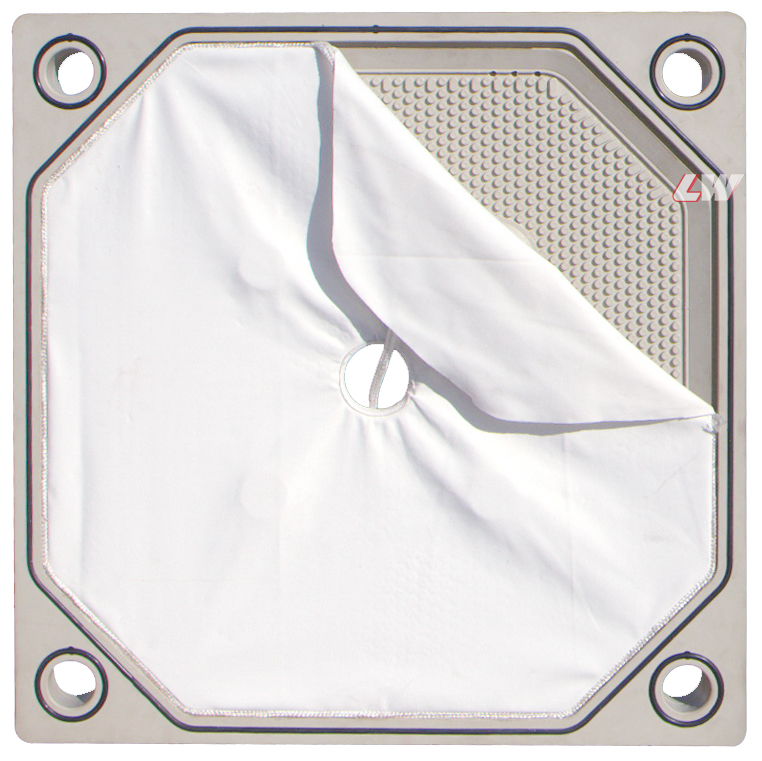
Bonding replaces the stitch line. Heat and pressure join the cloth to itself, so there are no needle holes along the seam or around the feed hole for fines to pass through. In fine-particle duty that is the difference between a cloth that holds its rating and one that slowly leaks solids into the filtrate.
- JointWelded edge · collar
- Base clothPP · PET · PA
- Thickness0.5–3.0 mm
Two ways bonding is used
Bonding is a construction method, not a single fabric. We use it in two places, and they solve different problems.
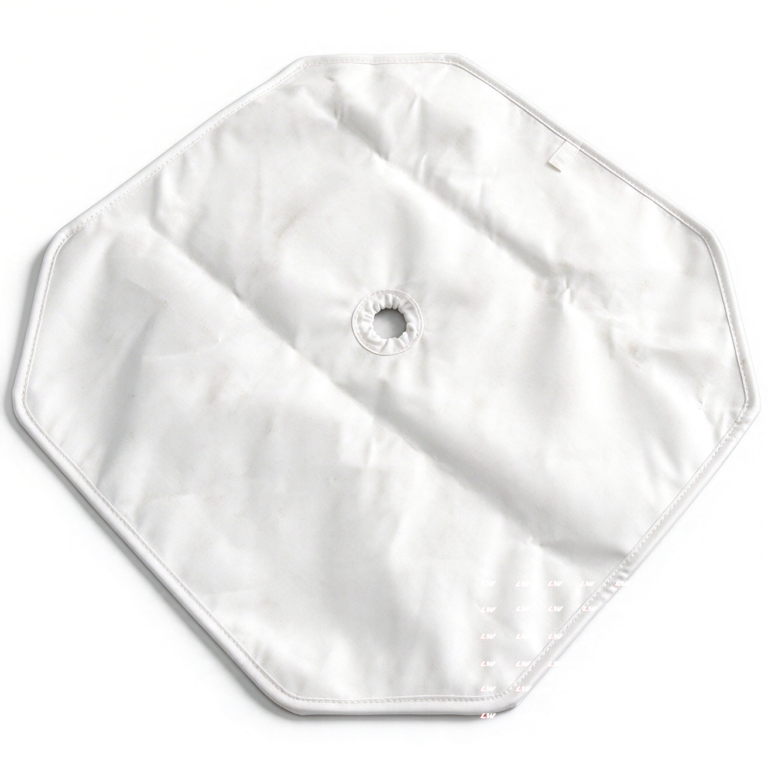
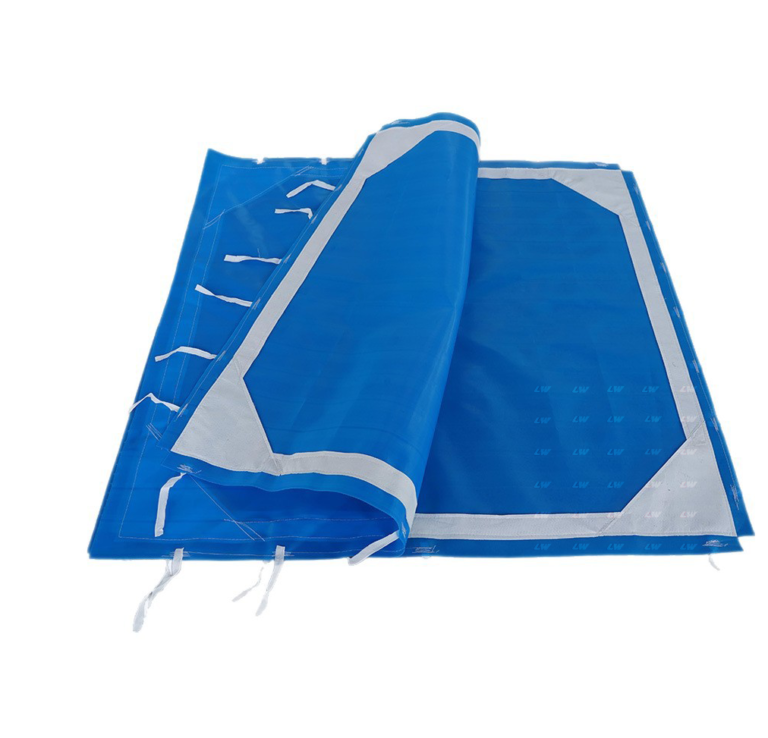
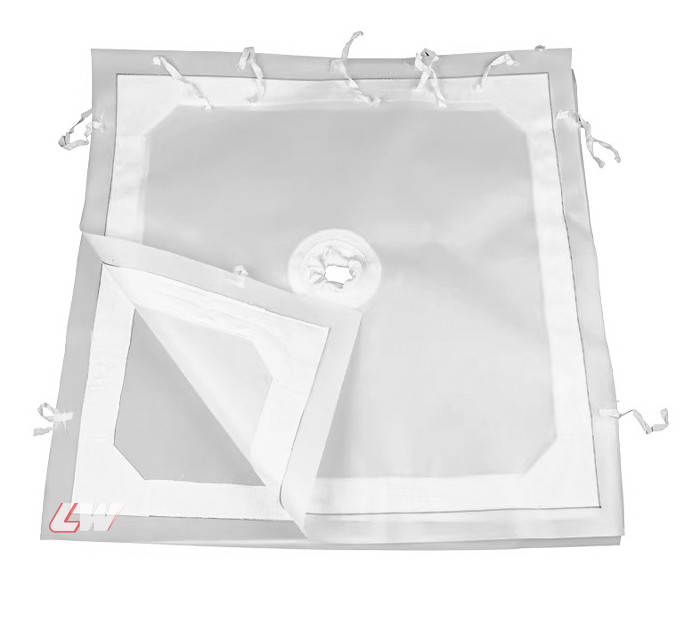
- Bonded edges and seams — the cloth edge and feed-hole collar are welded rather than sewn. The joint is continuous, so there is no stitch perforation to bypass and no thread to fray. This is the version specified for fine pigments, solvent duty and any application where a leaking seam shows up immediately in the filtrate.
- Bonded non-woven media — fibres are bonded into a sheet rather than woven, giving depth filtration down to about 1 µm. Where the medium itself is the bonded non-woven, we cover it on the non-woven filter cloth page; this page deals with the bonding work on woven cloth.
How the bond is made
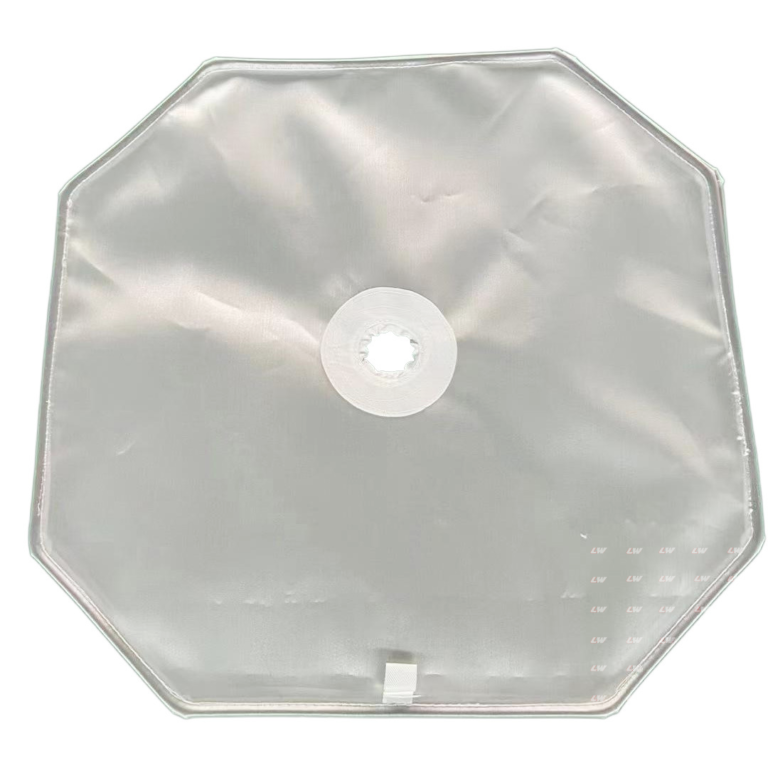
Bonding is thermal: the cloth edge is pressed between matched heated elements, the polymer at the surface melts, and the two faces fuse into one continuous piece as the joint cools. No adhesive is involved, so nothing can leach into the filtrate and nothing adds a chemical incompatibility the base cloth did not already have.
The joint is only as good as the temperature and pressure control behind it. Too little heat and the seam peels; too much and the bond line embrittles. This is workshop work on press-controlled equipment, which is why a bonded seam is not a field repair — it is a specification.
Why the seal matters more than the cloth
Most “cloth problems” in fine filtration are not the medium at all — they are bypass at the seam, the collar or the plate edge. A stitched seam has a row of holes; each one is a path for slurry to reach the filtrate side without passing through the cloth. Bonding closes that path. On a press running pigment or fine chemical slurry, the first sign of a failing seam is a filtrate that goes cloudy for a few seconds at the start of each fill.
Bonded edges also hold up better to repeated handling. There is no thread to abrade, so the failure mode is slower and more predictable.
Where bonded cloth fits
- Fine pigment and dye filtration — where any bypass shows in the product
- Solvent-bearing slurry — no thread to swell or degrade
- Valuable solids recovery — losses through a seam are product losses
- High-cycle presses — bonded joints tolerate repeated clamping better than stitched ones
Where it does not fit
Bonding adds cost and lead time, and it is not necessary where the slurry is coarse and a stitched seam is never the limiting factor. It also does not fix a cloth that is too open for the particle size — if the filtrate is cloudy across the whole cycle rather than at the start, the pore rating is the problem, not the seam.
Fitting
Send the plate drawing and tell us which edges need bonding. Feed-hole collars, plate-edge seams and gasket grooves are bonded in different ways, and the plate type decides which one applies.
A half-bonded construction is also available and often the sensible compromise: welded edges and collar, with the cloth body left as woven. It removes the bypass paths without the full bonding cost, and suits duty where only the start-of-cycle cloudiness is the complaint.
Specification Range
| Parameter | Range |
|---|---|
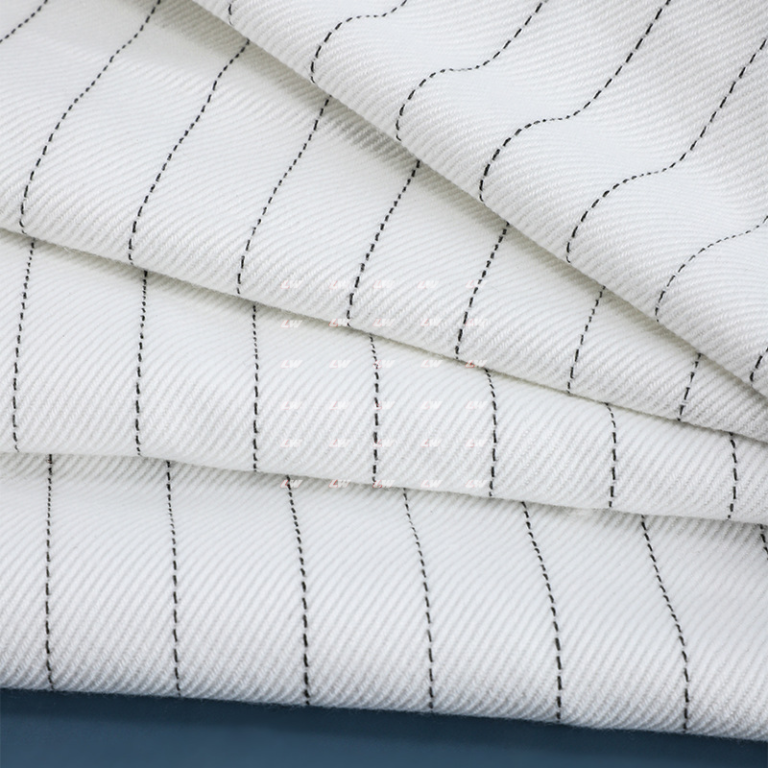
| Base cloth | PP, polyester, nylon, or a blend |
| Bonded joint | Welded edge, welded feed-hole collar, or both |
| Cloth thickness | 0.5–3.0 mm |
| Cloth weight | 250–800 g/m² |
| Pore size | 1–100 µm depending on base cloth |
| Air permeability | 10–100 L/m²/s at 200 Pa |
| Temperature | Set by the base polymer, not by the bond |
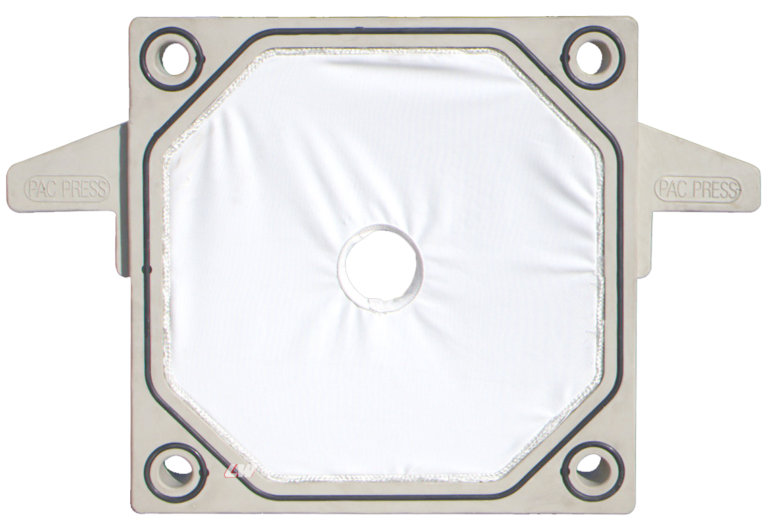
Ranges are common weaving ranges for this cloth family. The final specification is confirmed against your slurry data and plate drawing.
Cloth Finishing at Loway
Weaving, finishing and cutting are handled in our own workshop, so replacement cloth is cut to your plate drawing rather than to a catalogue size.
Request a Quote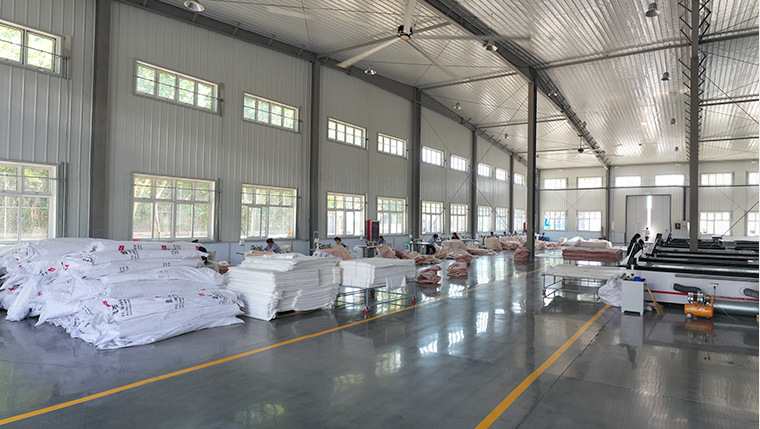
Frequently Asked Questions
Is bonded cloth the same as non-woven cloth?
No. Bonding is a way of joining; non-woven is a way of making the medium. We bond woven cloth at the seams and collars, and we also supply bonded non-woven media. They solve different problems.
Will a bonded seam last as long as a stitched one?
In repeated clamping duty it usually lasts longer, because there is no thread to wear through. The bond line is the part to inspect at each cloth change.
Can bonded cloth be repaired on site?
A bonded seam cannot be re-bonded without the press. Keep a spare set rather than attempting a field repair on a bonded joint.
Does bonding change the pore size?
Not in the body of the cloth. Bonding compresses the edge, so the sealing land becomes impermeable by design — that is the point.
Which polymers can be bonded?
Polypropylene and polyester bond cleanly. Nylon and blends depend on the construction; we confirm before quoting.
How do I inspect a bonded cloth at change-out?
Three checks. Flex the bond line between your fingers and look for whitening or stiffness, which precedes cracking. Run a thumb along the collar and feel for any step where the weld is thin. Then hold the cloth up to light at the feed eye: any pinhole in the collar shows as a bright point, and that pinhole is your next cloudy-filtrate complaint.

Get a Cloth Specification
Send your plate drawing and slurry data — pH, temperature and particle size — and we will confirm the structure and polymer.