Industry Applications · Coal
Coal Washing Wastewater Treatment for Coal Preparation Plants
A coal preparation plant moves tonnage and water in opposite directions: the coal is washed and sold, the water is cleaned and returned to the circuit. Coal washing wastewater treatment decides how much coal leaves as product and how much water goes back to the circuit. The same step turns coal slurry dewatering from a disposal cost into product weight you can bill.
Coal washing wastewater treatment equipment is sized from the washery's tonnage, the refuse share and the cake each stream has to become.
The streams
Three wet streams, three different jobs
Coal washing wastewater treatment starts by keeping the three streams apart, because fine coal is product, tailings are refuse, and pond slime is a cleanout job. Each one rewards a different press, and a washery that separates them early spends less on reagents and trucking.
-
01
Fine clean coal
Froth flotation leaves fine coal in a wet concentrate. Every point of moisture is paid for twice, once in heating value and once in freight, and a buyer discounts wet fines before negotiating on anything else. The cake has to leave the press ready to blend, sell or feed a dryer. In coal washing wastewater treatment this stream is the product line, so the press is chosen for cake quality first.
-
02
Tailings and thickener underflow
Tailings slurry arrives from the thickener at high volume and low value. A coal tailings filter press sized for that volume turns it into a stackable cake and sends the water back to the head of the washing circuit. Coal preparation plant water that recirculates is water you do not buy, pump or discharge, and volume is the sizing variable in this part of coal washing wastewater treatment.
-
03
Pond and sump slime
Slime settles in ponds, sumps and emergency basins until someone has to dig it out. Trucking it wet is the most expensive way to move it, and the pond keeps growing while you pay. A mobile press dewaters slime at the bank, which is coal washing wastewater treatment applied exactly where the slurry sits.
Keep the streams separate and each press runs against one duty. Coal washing wastewater treatment is easier to size, easier to automate and cheaper to run when the feed is one material rather than a blend.
The machines
The press at the centre of coal washing wastewater treatment
Membrane, chamber and automatic presses all run batch cycles: what separates them is the squeeze stage, the plate size and the degree of automation. The belt press runs continuously instead. All four are sized from the same coal washing wastewater treatment variables, the washery's tonnage and the cake each stream has to become.
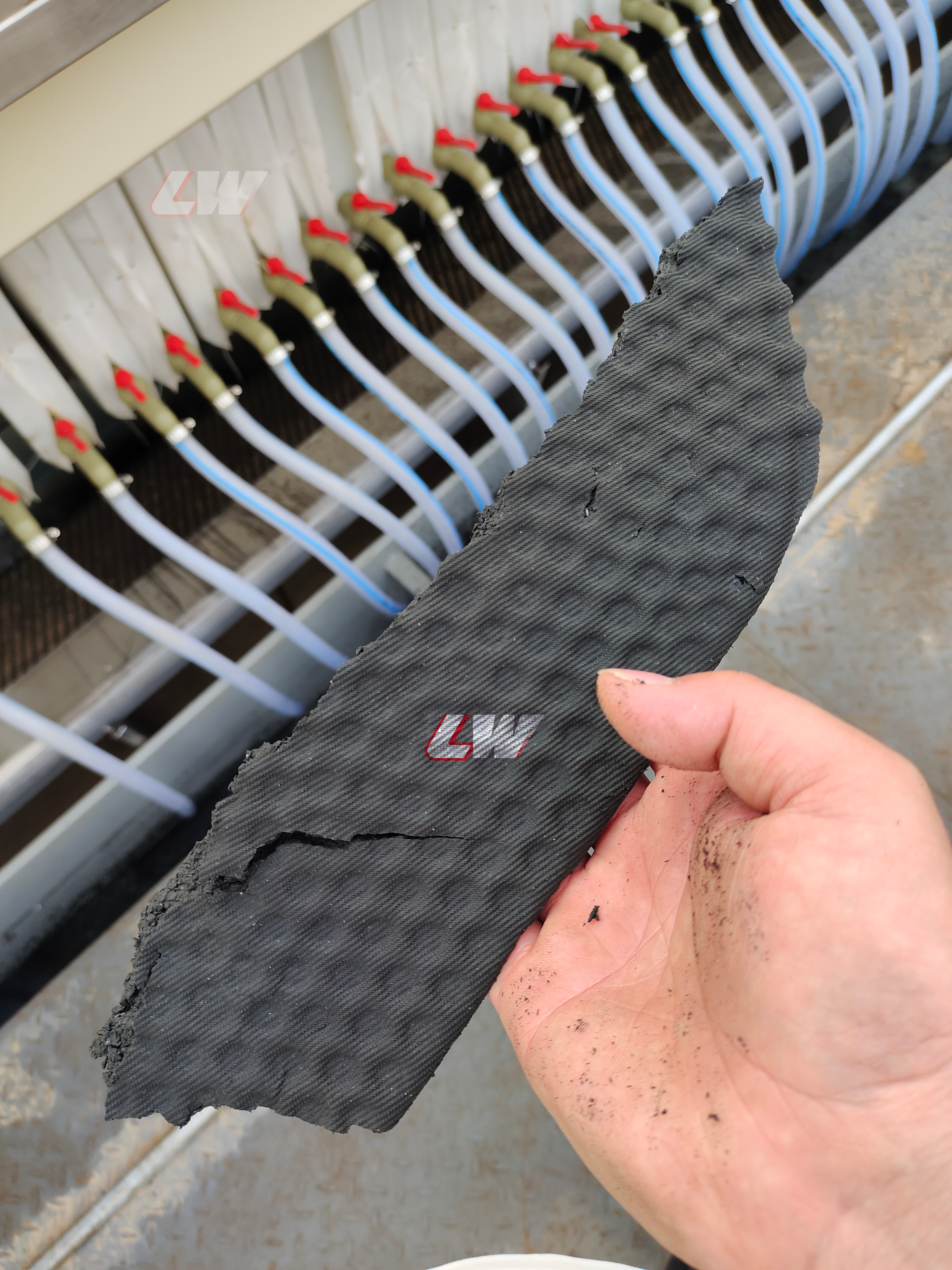
Membrane filter press
After the chambers fill, the membranes squeeze the cake a second time, pressing out water the feed pump leaves behind. On fine coal that second squeeze separates cake you can stack from cake you can sell.
It earns its place wherever moisture decides the price: clean coal bound for blending, export or a dryer downstream. Flotation reagents and coarse grit in the feed decide how often the cloths need washing, so the upstream circuit belongs in the press specification as much as the cake target does.
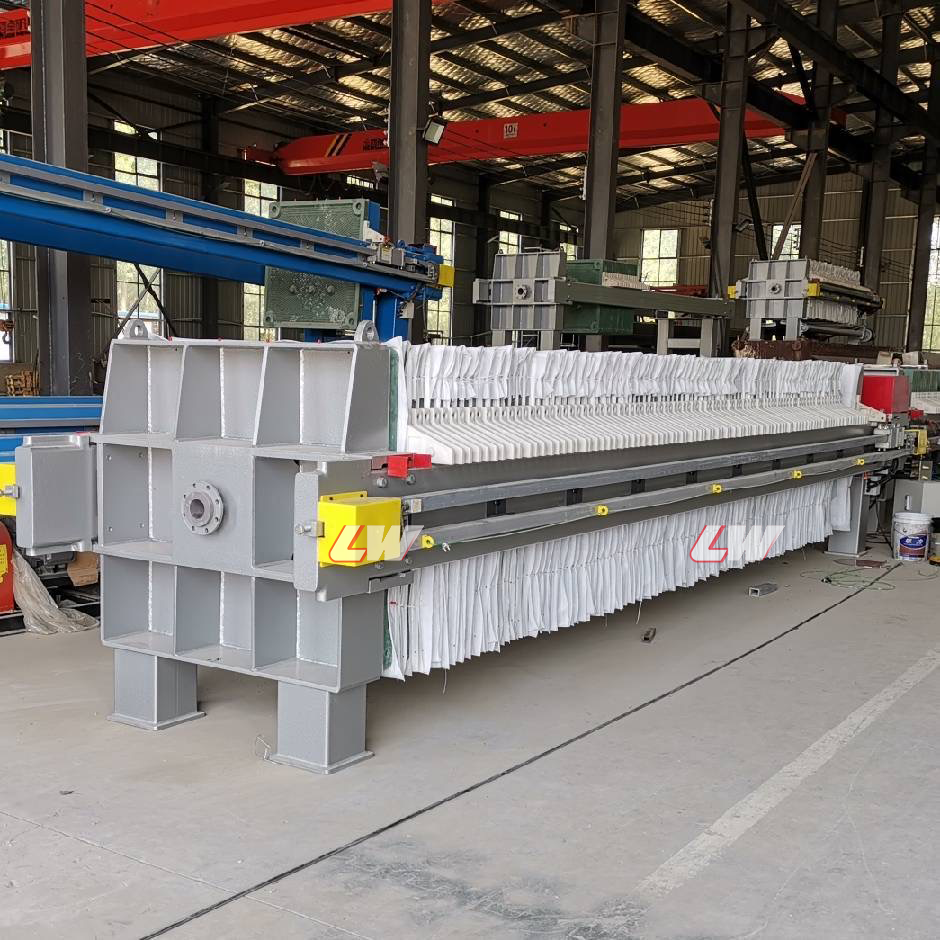
Recessed chamber filter press
A simpler cycle with no squeeze stage, in plate sizes that absorb tonnage. It is the workhorse for thickener underflow, where volume sets the economics and the cake only has to stack. Tailings slurry is where most of the plant's pumping hours go.
The filtrate leaves clean enough to rejoin the washing circuit, so the press doubles as the plant's water recovery step. Plate material and cloth specification are chosen for the grit that tailings slurry always carries.
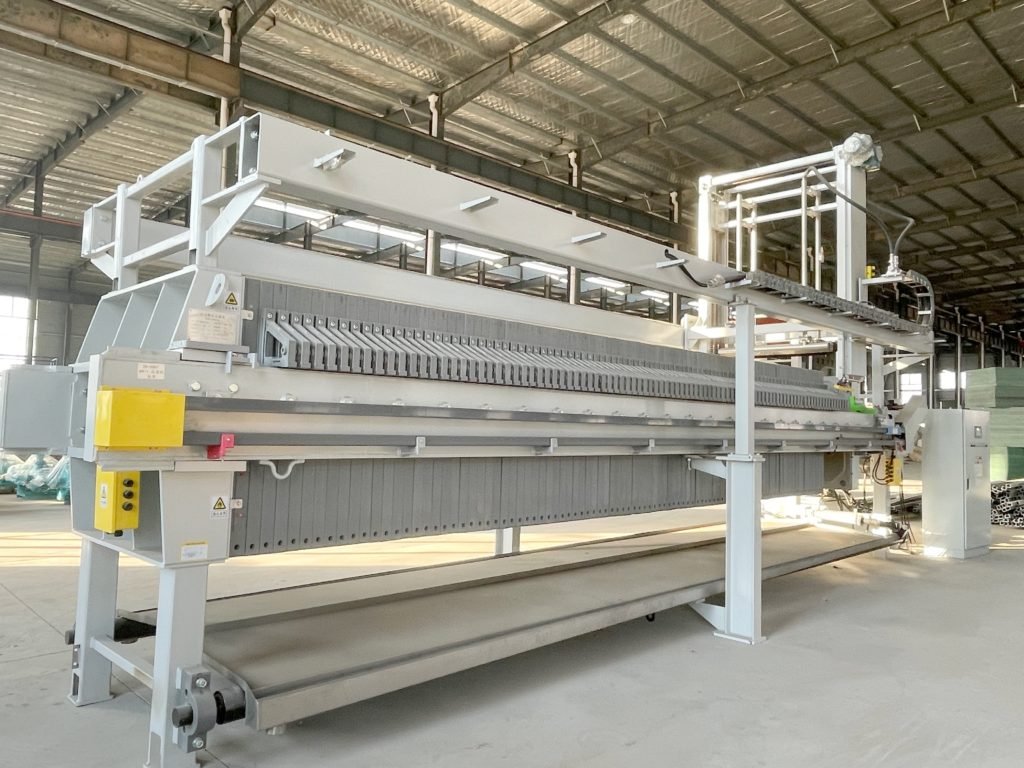
Automatic filter press
Plate shifting, cloth washing and discharge run on a programme instead of on whoever is free. Where a washery cycles the press many times a day, the programme matters as much as the plate pack.
It suits a washery running two or three shifts on one stream, where the press is the bottleneck between the thickener and the dispatch point. The cycle log doubles as a production record for the dewatering shift.
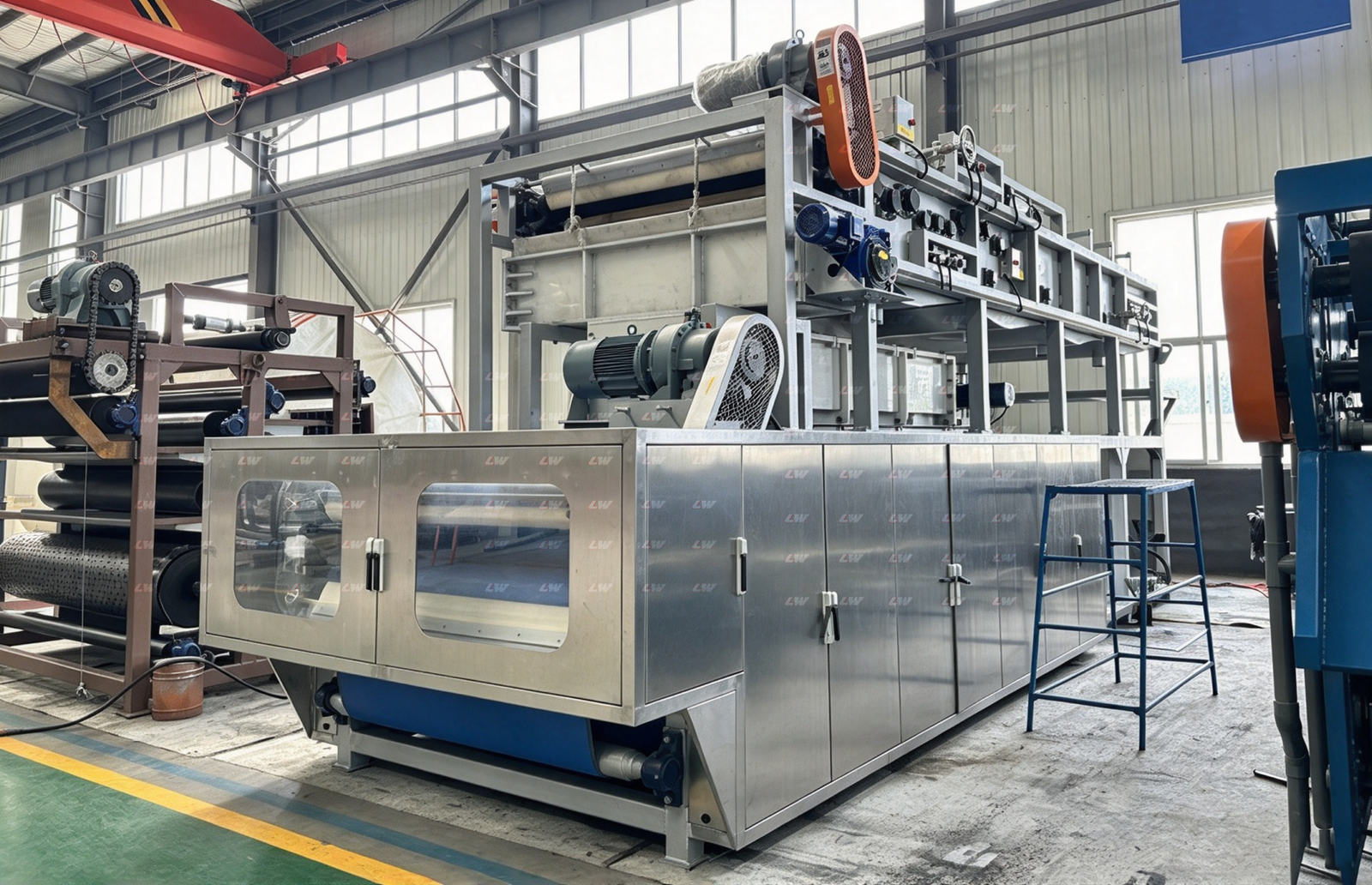
Belt filter press
A wedge zone, gravity drainage and a series of squeeze rollers run non-stop, so the belt press handles a steady washery stream without stopping to discharge. In coal washing wastewater treatment it is a long-serving answer to coal slurry dewatering on tailings and recirculation loops, where volume matters more than cake moisture.
The trade is cake dryness: where a membrane cake is sold on moisture, a belt cake is stacked and hauled. Polymer dosing flocculates the fines ahead of the belt, so conditioning quality decides how clean the return water runs.
Selection
Match the press to the duty
Six lines settle most coal washing wastewater treatment enquiries.
The clean coal cake has a moisture spec to meet
Membrane filter pressthe squeeze stage presses out what gravity and draining leave behind.
Tailings must stack for dry disposal
Coal tailings filter presslarge plates, simple cycles, built for volume.
Many cycles a day, a small crew
Automatic filter pressshifting and cloth washing run on a programme.
The slurry sits in ponds and sumps around the site
Mobile filter pressarrives piped and wired, moves to the next pond.
Coarse refuse, tonnage first, moisture second
Belt filter presscontinuous duty with a lighter capital line.
Feed solids swing from batch to batch
A buffer tank ahead of the pressthe press rewards a steady feed more than a bigger machine.
Abrasion
Abrasion is the design brief
Coal fines carry silica and pyrite, and both are harder than the parts they pass through. Feed entry points, cloths and discharge chutes wear first. Coal washing wastewater treatment equipment for this duty is therefore specified around replaceable wear parts, with the spares set agreed when the order is placed.
The feed pump lives in the same slurry and fails in the same way. We size it for the duty, put its wear parts on the same list, and downtime shrinks to a planned half shift instead of a surprise.
The same thinking sizes the frame itself: large enough for the tonnage, not so large that the machine idles between batches.
Project video
Coal application, on site
Project video: the presses installed in an enclosed plant building.
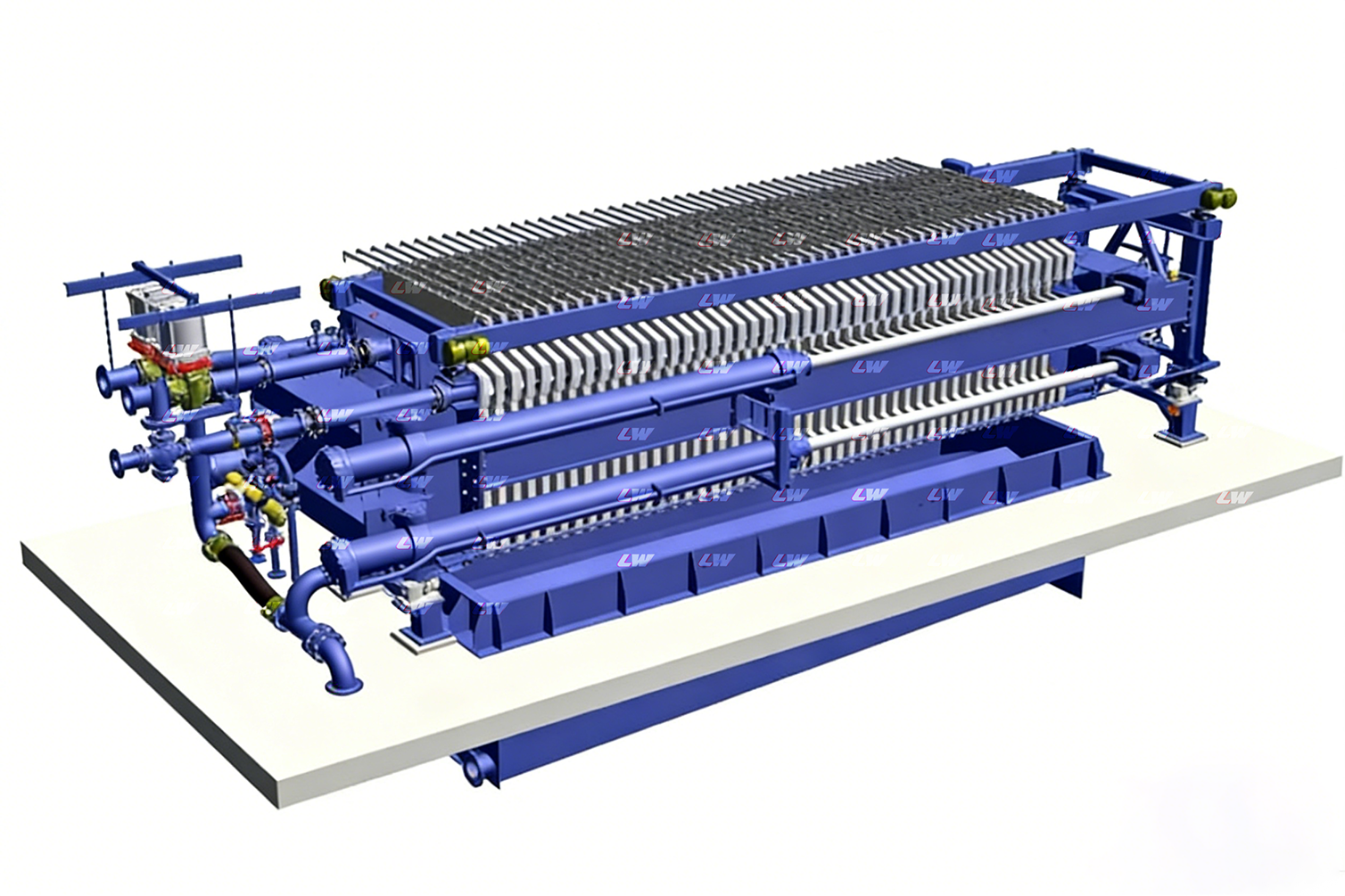
Coal washing wastewater treatment is easier to judge when you can see the installation: plate packs at full width, feed piping sized for the cycle, and room for the cake to leave.
Delivery & support
What arrives with the press
Four items, agreed before the order, decide how the coal washing wastewater treatment step runs once the press arrives.
Layout drawings
General arrangement and interface drawings come first, so civil and piping work starts while the press is still in our factory. Space in a coal preparation plant is tight, and early drawings are what keep the installation free of rework.
Spares set
Cloths, plates and feed pump wear parts are listed at order. The first shutdown is planned, not improvised.
Commissioning
Our engineers feed the press, run the squeeze and open the first cake together with your operators on the platform. The crew that starts the press with us runs it without us afterwards.
Cloth stock
For coal service we recommend a cloth stock from the first order. A blinded cloth costs minutes if a spare is on the shelf, and a shift if it is not.
FAQ
Coal washing wastewater treatment: common questions
Which press gives the driest fine coal cake?
A membrane filter press. The squeeze stage presses water out after the feed pump stops, which gravity draining on its own leaves behind on fine coal. It is the default choice wherever the cake is sold on moisture.
Can coal handling and preparation plant (CHPP) tailings be dry-stacked with a filter press?
Yes, once the press is sized on tailings tonnage and the cake target. A coal tailings filter press in large format turns thickener underflow into stackable cake, and the filtrate returns to the washing circuit. What matters at sizing is the tailings tonnage, not the size of the mine.
What about a screw press for coal slurry?
Screw presses are built for fibrous and biological sludges. Coal fines are hard, sharp and abrasive, and the wear parts sit directly in that stream. A plate-and-cloth press keeps its wearing parts flat, replaceable and out of the high-torque path.
How is abrasive slurry handled?
Wear points are named and made replaceable: feed entry, cloths and discharge. The feed pump is selected for the same slurry. The coal washing wastewater treatment schedule is built around planned cloth changes rather than emergency ones.
How many operators does a press cycle need?
With an automatic press, one operator supervises cycles that discharge, shift and wash on a programme. Manual presses need more hands at discharge, and that cost repeats every cycle. Crew size is part of the sizing conversation, not an afterthought.
What do you need to size a press?
Tonnes per hour of dry solids, feed solids, the cake target and where the cake has to go. Coal preparation plant water chemistry matters too, because it sets plate and cloth material. Where numbers are thin we size on stated assumptions and confirm at commissioning.
Send us the washery duty
Describe the stream, the tonnage and where the cake has to go. Coal washing wastewater treatment is sized from the duty, and the duty is something you already know. We answer with a proposal, not a brochure.