

Engineering Resources · Sludge Testing
Validate before you buy
Test Your Sludge — Get a Written Recommendation Before You Buy Equipment
A bench test on a small sample tells you more than any brochure. We ship you a sampling kit, run filtration and dewatering trials in our lab, and return a written report — dewatering behaviour, achievable cake dryness and the technology we recommend — before you commit a single dollar to equipment.
Why test at all
One Sample Answers the Four Questions That Decide the Machine
Sludge from two plants with the same name rarely behaves the same. The numbers below — measured on your feed — are the ones that size the machine, set the polymer budget and survive a capital-expenditure review.
Is my sludge dewaterable?
Filtration behaviour and conditioning response measured on your actual sample — not on “typical” data for your industry.
How dry can the cake get?
Achievable dryness under realistic pressure and cycle time — with and without membrane squeeze.
Which technology fits?
Filter press, belt, screw or rotary drum — shortlisted on your feed, your operating hours and your dryness target.
What will it cost to run?
Polymer type and dose, cycle time and throughput — the operating numbers that size the machine and the budget.
The process
From Sample to Shortlist in Five Steps
Tell us about your sludge — we confirm scope and ship a sampling kit with instructions.
Fill roughly one to two litres, label date and source, and ship — we guide the packing.
Filtration and dewatering trials in our lab: filterability, plate trials and polymer screening.
Dewatering behaviour, achievable dryness, polymer need and the recommended technology — board-ready.
Optional on-site or skid pilot at real throughput — then the machine is sized on data, not guesswork.
The bench test, in detail
What We Measure on Your Sample
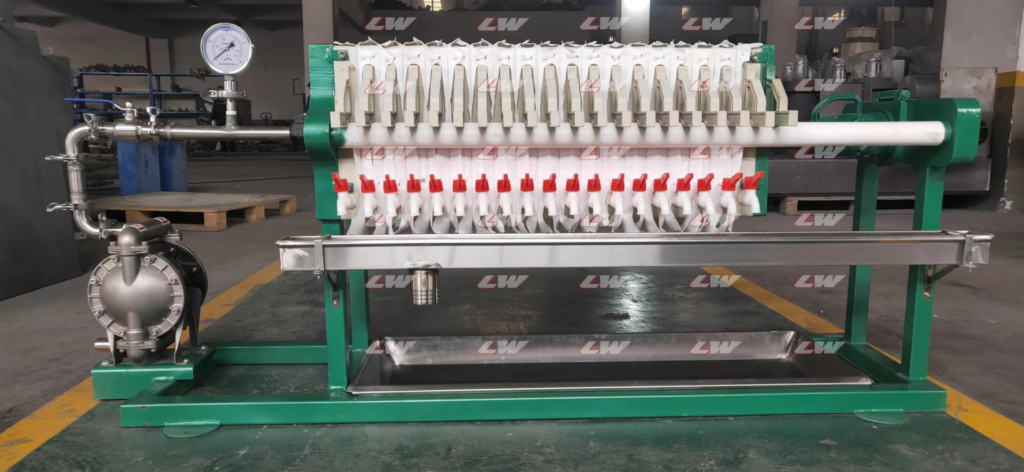
- Feed characterisation — dry solids content and the organic / inorganic mix of your sludge.
- Filterability — capillary suction time (CST) and specific resistance to filtration (SRF).
- Conditioning — the optimum polymer type and dose, or inorganic flocculant where it performs better.
- Cake dryness — against pressure and filtration time, including the membrane-squeeze option.
- Solids capture — and the clarity of the filtrate returned to your process.
- Chemistry for materials selection — pH, temperature, chemical compatibility and odour class.
Every result lands in the same written report as the machine recommendation — one document that can back your internal capex review. Not sure what the numbers mean? Read the selection guide first →
Packing & shipping
Taking and Sending a Sample
- Volume — about 1–2 litres of liquid sludge, or 1 kg of already-dewatered cake.
- Container — sealed and leak-proof, labelled with the date and the source point. The kit we send includes everything you need.
- Transit — keep it cool and ship it promptly; tell us if freezing is the real condition at your plant, and we will match it in the test.
- Special feeds — if your sludge is hazardous, corrosive, oily or hot, tell us before you ship. We confirm handling and packaging with you first.
Not ready to ship? Send the sludge data sheet instead — flow, solids and source are often enough for a first shortlist, and we can agree whether a physical test is worth it.
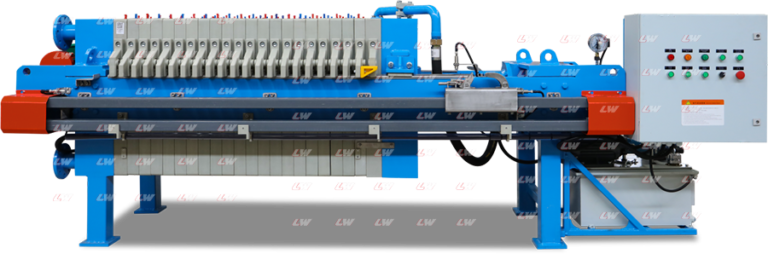
What you receive
A Written Report You Can Put in Front of Your Board
No oral “probably”, no brochure maths. You get the measurements, the reasoning and the recommendation in writing — and you keep the report whether or not you buy from us.
Sample & testing FAQ
Sludge Testing Questions, Answered
How much sludge do I need to send?
What does the test cost?
How long until I get the report?
Can you test hazardous, oily or chemical sludge?
Is a pilot trial better than a bench test?
Do I have to buy the machine from Loway afterwards?
Where is the test carried out?
Ready when you are
Send Your Sludge — We’ll Shortlist the Machine
One litre of sludge beats a month of brochure reading. Request the kit, or send your sludge data sheet and let an engineer start the shortlist today.