

Polyester Filter Cloth
Polyester filter cloth is the cloth we specify when the slurry is too hot for polypropylene. It holds its dimensions to 130 °C in continuous duty, resists most acids, and keeps a stable pore structure through repeated clamping. The limit is alkali: above about pH 12 the fibre hydrolyses and loses strength.
- Temperature130 °C
- pH window2–12
- Pore size5–50 µm
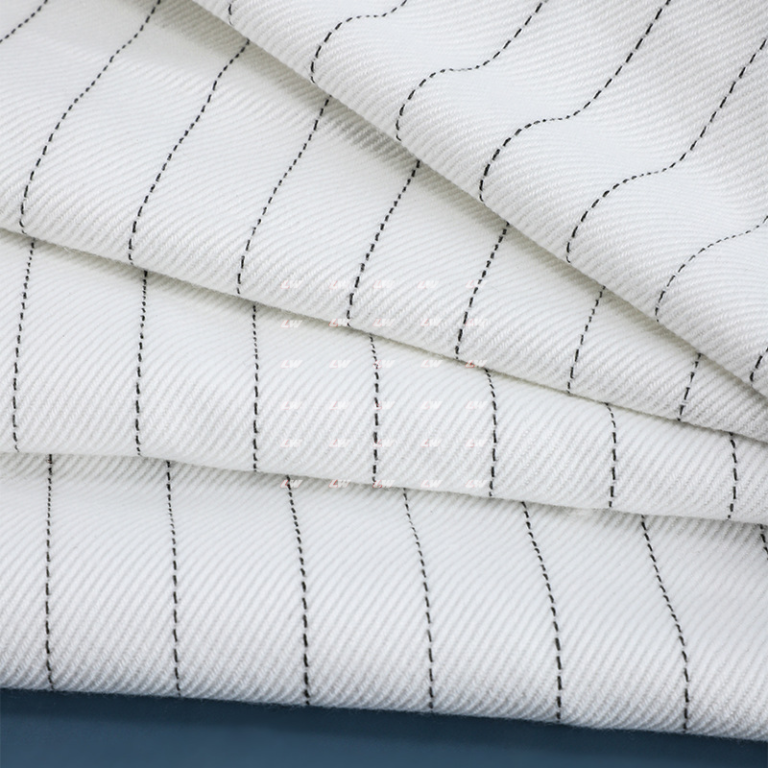
The temperature advantage
Polypropylene softens at 90 °C; polyester keeps working at 130 °C, with short excursions to about 150 °C. For press duty that difference decides the cloth: hot wash water, warm chemical slurry and metallurgical streams that would creep a PP cloth sit comfortably inside the polyester window.
Polyester is also dimensionally stable. It absorbs little water, so the cloth does not swell and relax the way nylon does, and tension stays consistent across the plate pack.
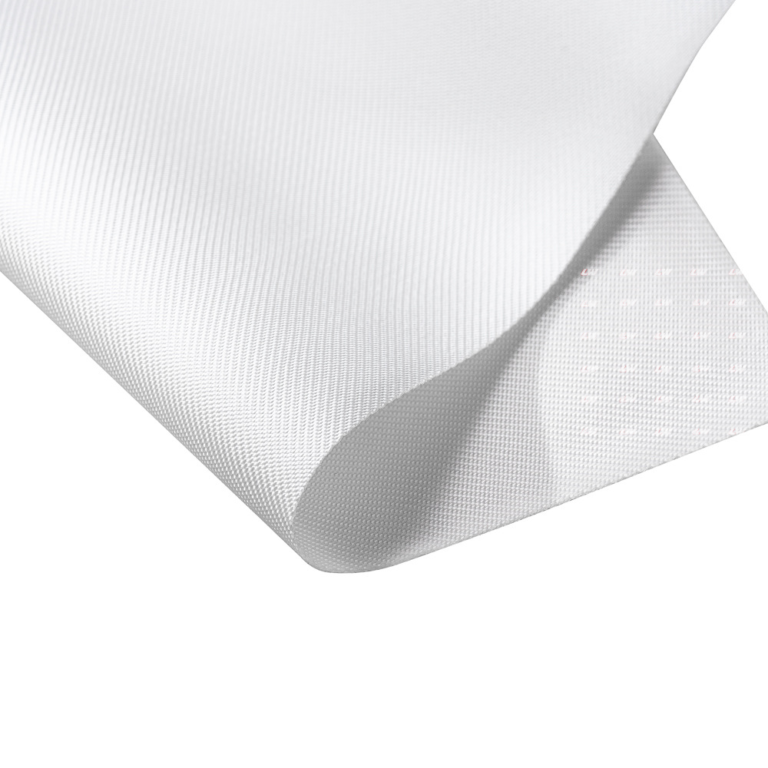
Hydrolysis — the failure mode to respect
Polyester does not wear out in alkaline duty; it hydrolyses. Water attacks the ester bond in the fibre chain, and heat and alkali accelerate the reaction. The cloth weakens from the inside long before anything shows on the surface — it goes brittle, loses tensile strength, and eventually tears along a fold line rather than at the feed eye.
That failure pattern is the diagnostic: abrasive wear concentrates at the feed hole and edges, hydrolysis breaks at folds and creases. If your last polyester set failed along a crease in a warm alkaline stream, the duty has moved outside the polymer window and the next set should be a different polymer, not a heavier cloth.
Yarn options in polyester
Polyester is available in monofilament, multifilament and staple yarns. Monofilament gives the drainage and release profile described on the monofilament page; multifilament buys filtrate clarity for tightness; staple fibre packs densest and gives the finest surface of the three, with the highest pressure drop.
Multifilament polyester is the common pick in sugar and edible oil duty, where the filtrate is the product. Monofilament polyester suits hot streams where the cake is the product and cycle time matters.
Where it stops
Strong alkali is the failure mode. Caustic slurry at temperature attacks the ester bond, and the cloth weakens before it visibly wears. If the duty is alkaline rather than acidic, polypropylene or vinylon is the right starting point — we will say so rather than sell polyester into a duty where it will fail early.
Where polyester fits
- Sugar and starch processing — warm, acidic process streams with a need for clean filtrate
- Edible oil and palm oil — hot oil-bearing slurry where PP would soften
- Metallurgy and metal finishing — hot acid leach and pickling liquors
- Chemical pigment — acidic pigment slurry at moderate temperature
Fitting and care
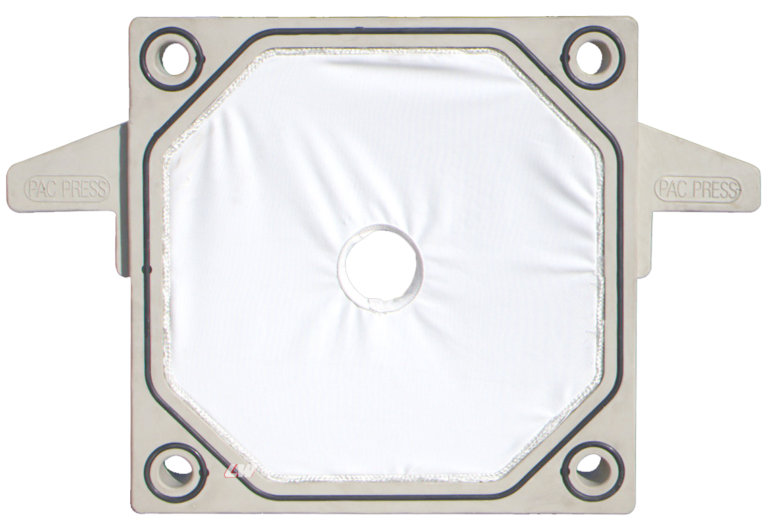
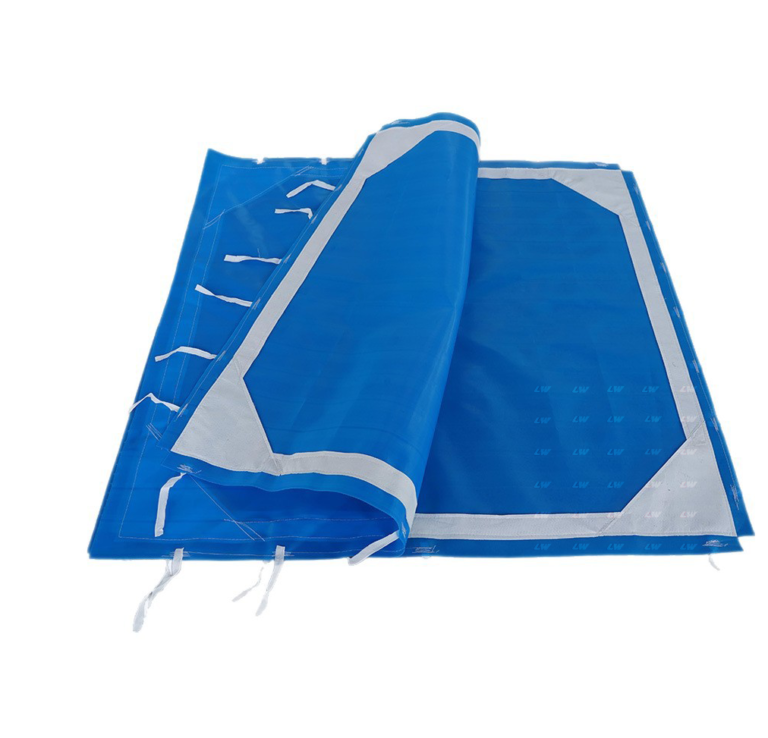
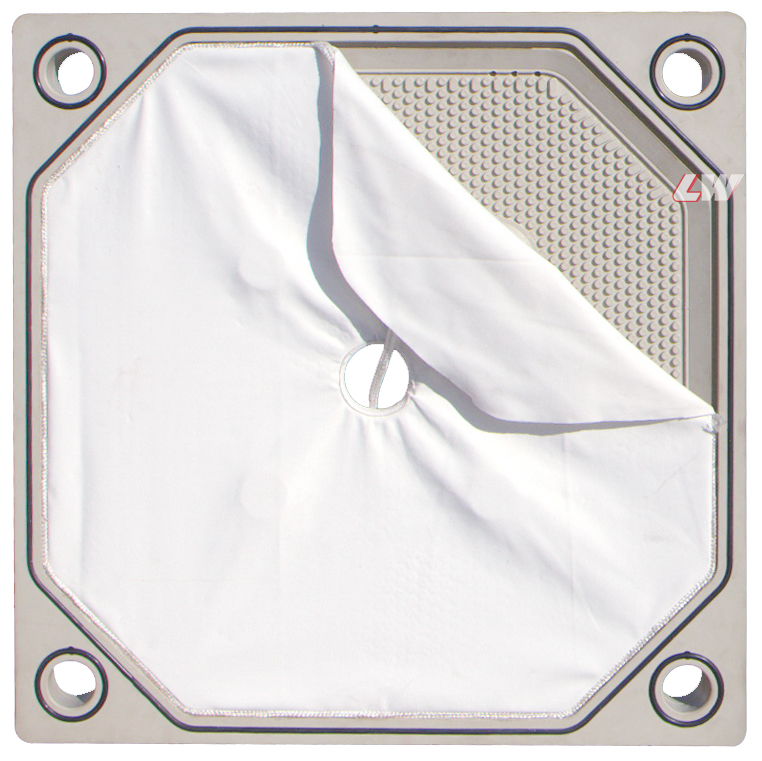
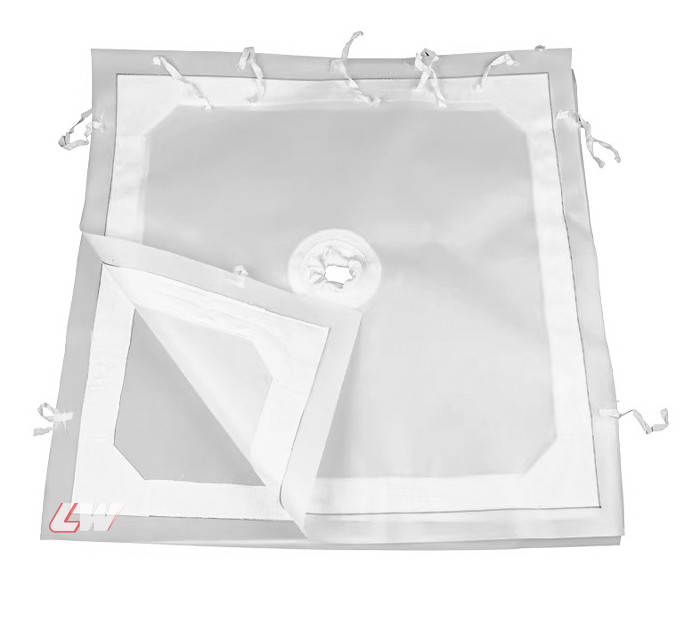
Cut to your plate drawing, with the neck or gasket style your plates use. Polyester tolerates warm wash water better than polypropylene, but avoid strong alkaline cleaning agents — they do the same damage as alkaline process slurry, attacking the ester bond in the fibre.
At change-out, flex a fold line between your fingers. A cloth that has begun to hydrolyse feels stiff or papery along the crease while the body of the cloth still feels sound — that is the early warning, and it appears several cycles before a tear. Rotate the set rather than running it to failure: a cloth that lets go mid-cycle dumps cake into the filtrate side and can mark the plate surface. Store dry, flat and out of sunlight.
Specification Range
| Parameter | Range |
|---|---|
| Polymer | Polyester (PET) |
| Yarn | Monofilament, multifilament or staple |
| Pore size | 5–50 µm |
| Weight | 300–700 g/m² |
| Thickness | 0.6–1.5 mm |
| Air permeability | 20–150 L/m²/s at 200 Pa |
| Continuous temperature | 130 °C (short-term 150 °C) |
| pH window | 2–12 |

Ranges are common weaving ranges for this cloth family. The final specification is confirmed against your slurry data and plate drawing.
Cloth Finishing at Loway
Weaving, finishing and cutting are handled in our own workshop, so replacement cloth is cut to your plate drawing rather than to a catalogue size.
Request a Quote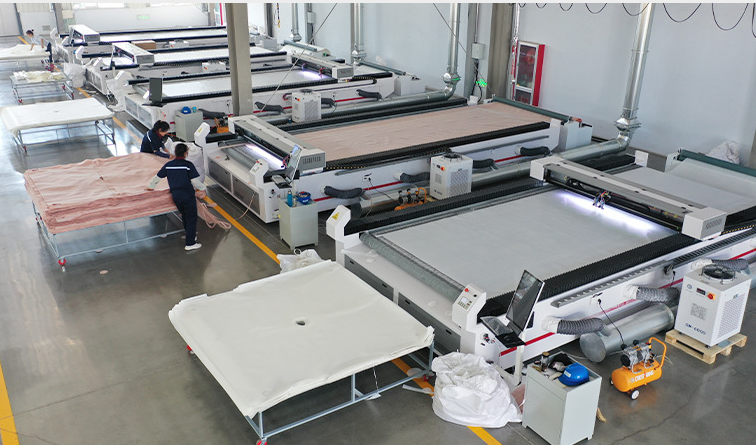
Frequently Asked Questions
Polyester or polypropylene — which comes first?
Choose by temperature and pH together. Above about 90 °C and acidic, polyester. At or below 90 °C across a wide pH range, polypropylene is cheaper and more tolerant.
Can polyester handle caustic soda?
No. Strong alkali at temperature hydrolyses polyester. For caustic duty, specify polypropylene or vinylon.
Does it work on a membrane press?
Yes, with the cloth cut for the membrane recess and an overhang that allows for plate movement during squeeze.
What micron rating suits sugar and edible oil?
Usually 10–50 µm, depending on the solids carried. Send a sample specification or the particle size range and we will narrow it.
Will the cloth shrink at 130 °C?
Polyester is heat-set during finishing, so it holds its dimensions far better than polypropylene in the same duty. Cut size still allows for normal relaxation.
How do I know a set is hydrolysing?
The cloth stiffens and goes brittle, and the failures arrive as tears along fold lines instead of wear at the feed eye. Strength loss shows up first as a cloth that no longer seats as tightly as it did. If that pattern matches, check the stream pH and temperature against the polyester window before ordering another set.
Is polyester safe with solvents?
It resists most hydrocarbon solvents well and is often used in solvent-bearing filtration where polypropylene would swell. Chlorinated solvents and strong oxidisers are the exceptions to confirm case by case.

Get a Cloth Specification
Send your plate drawing and slurry data — pH, temperature and particle size — and we will confirm the structure and polymer.