

Polypropylene (PP) Filter Cloth
Polypropylene is the default filter cloth for most chemical and wastewater duty. It resists acids and alkalis across pH 1–14, does not absorb water, and releases cake from a smooth surface. Its limit is temperature: above 90 °C the fibre softens, the cloth creeps, and the pore structure opens before the cloth visibly fails.
- pH window1–14
- Temperature90 °C
- Pore size1–30 µm
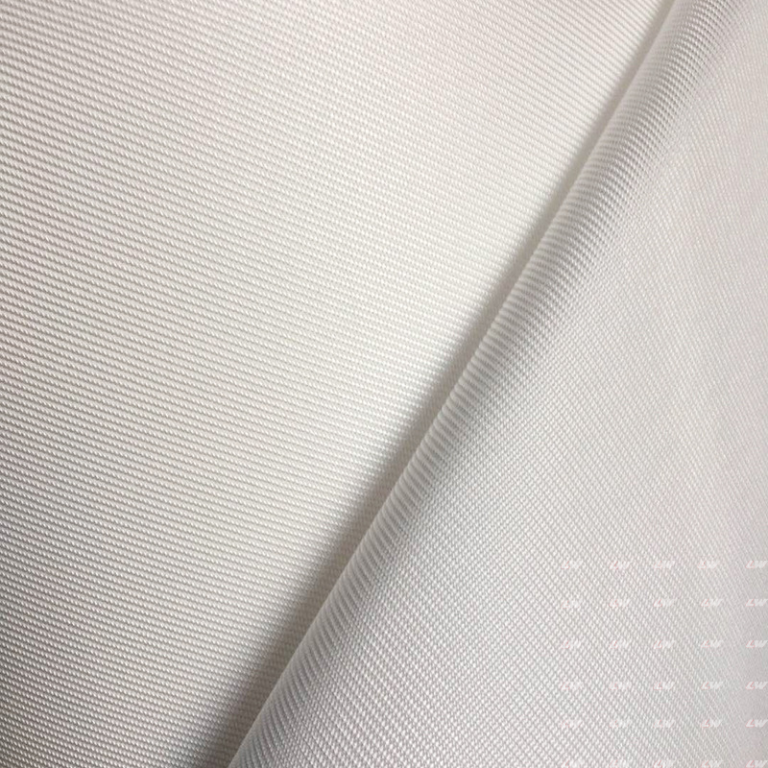
Why PP is the workhorse
Polypropylene is chemically inert against most process streams and is the lightest of the common filter polymers, which makes cloth handling easier during a change-out. It also sheds water rather than absorbing it, so the cloth does not swell or relax in wet duty — an advantage over nylon in presses that cycle many times a day.
Cost follows: PP is the least expensive of the polymers we weave, and in duty inside its window it is usually the cheapest cloth per year as well.
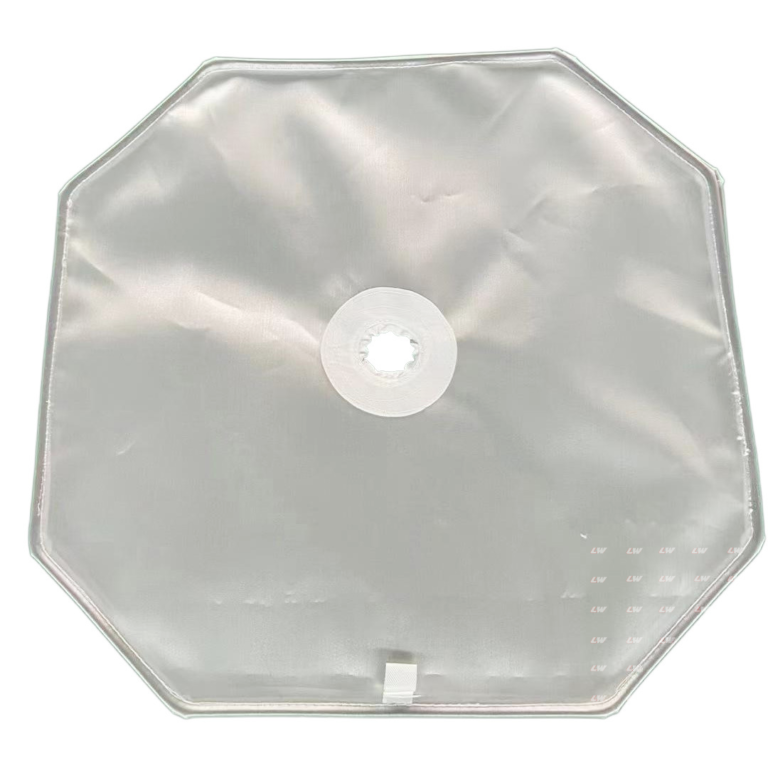
Monofilament, multifilament or staple
Within PP the yarn choice sets the operating character. Monofilament PP is the standard for sludge and ETP duty: open pores, clean release, slow blinding. Multifilament PP is the finer filter of the two and the route to the lowest ratings in the family, accepting earlier blinding.
Staple-fibre PP packs densest and holds the finest surface, but it also holds the cake — useful where the discharge is mechanical and aggressive, wrong where the cake must drop on its own. When buyers ask for “the fine PP cloth”, the answer is usually a tight multifilament, not a heavier monofilament.
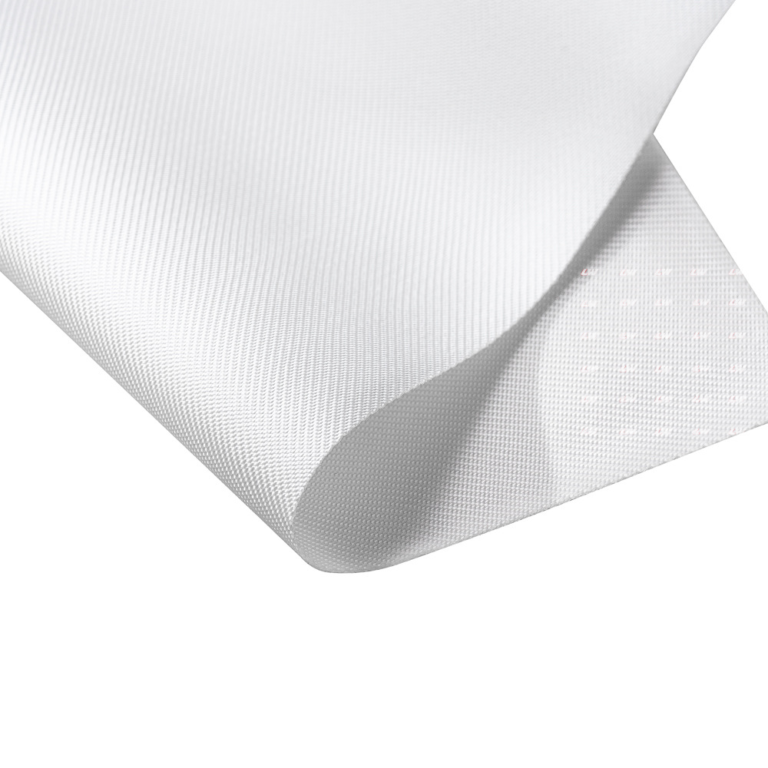
The temperature limit is real
Continuous duty to 90 °C; short peaks to about 100 °C. Beyond that, softening shows first as elongation across the plate, then as a cloth that no longer seals at the feed hole. If the slurry runs hot, step up to polyester rather than running PP closer to its limit — thermal creep does not recover.
Where PP fits
- Chemical and dye filtration — acid and alkaline streams at moderate temperature
- ETP and STP sludge dewatering — effluent treatment duty where the cloth sees a wide pH range
- Electroplating and metal finishing — rinse and plating bath slurry
- Mining and mineral slurry — where abrasion is moderate and the circuit is acidic
Where it does not fit
Avoid PP above 90 °C, in aromatic solvents that swell polyolefins, and where a very fine rating is needed — below about 1 µm, a multifilament or bonded structure holds the rating more reliably than an open PP weave.
Fitting and care
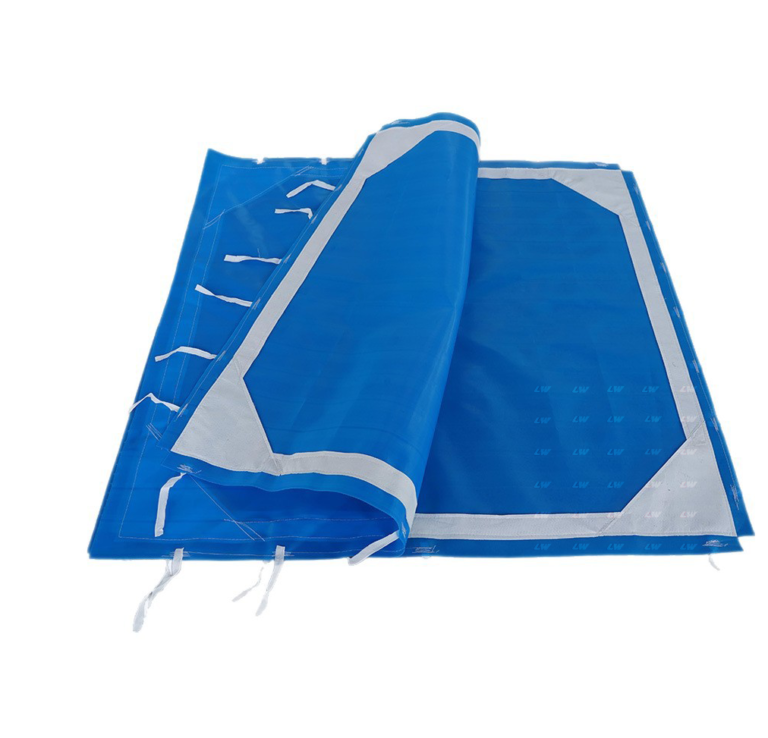
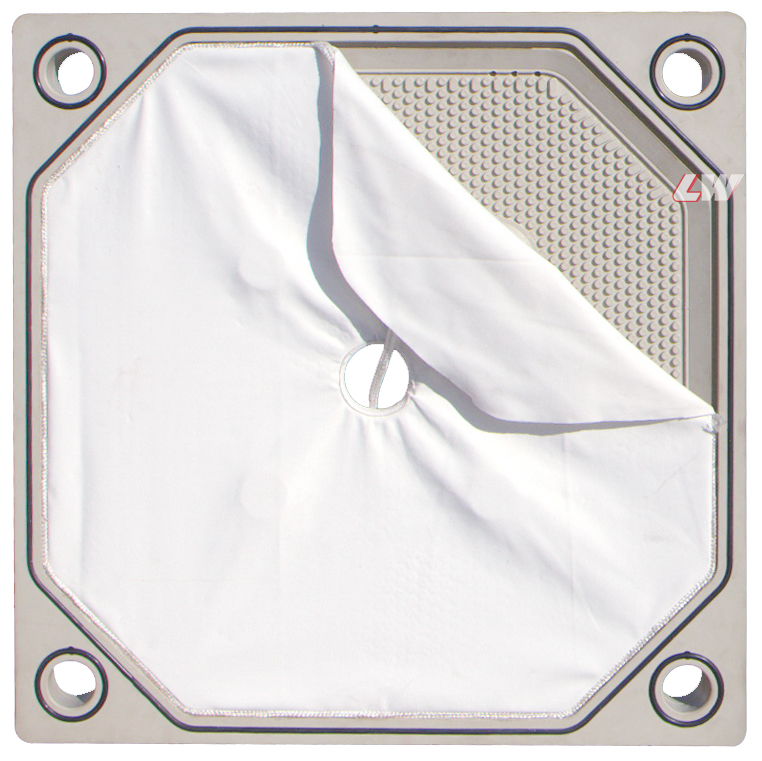
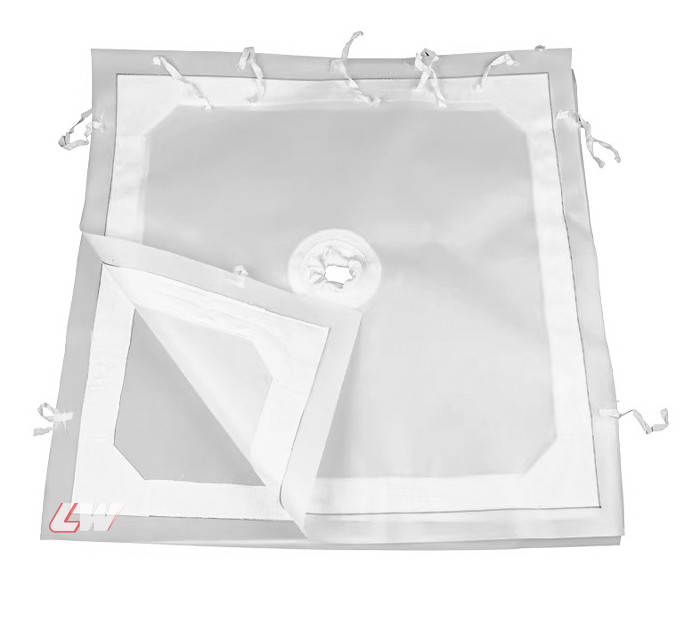
Cut to your plate drawing with barrel neck, CGR or overhang finish. PP tolerates most cleaning agents; warm water and a neutral detergent are enough. Avoid steam cleaning, which can distort the weave locally.
At change-out, check two places before the general wear shows: the feed-eye patches, where slurry velocity is highest, and the sealing land, where any stiffening means the cloth has been running warm. A PP cloth that has crept will feel slightly longer across the diagonal than when it was fitted — measure it once at installation so you have a reference. Keep the spare set stored flat; a PP set left folded in a hot workshop takes a set in the crease that never comes out.
Specification Range
| Parameter | Range |
|---|---|
| Polymer (MOC) | 100% polypropylene |
| Yarn | Monofilament, multifilament or staple |
| Pore size | 1–30 µm |
| Weight | 300–650 g/m² |
| Thickness | 0.8–1.5 mm |
| Air permeability | 20–150 L/m²/s at 200 Pa |
| Continuous temperature | 90 °C (peak 100 °C) |
| pH window | 1–14 |
MOC — material of construction — is stated as 100% polypropylene; blends are available only on request and are quoted separately.
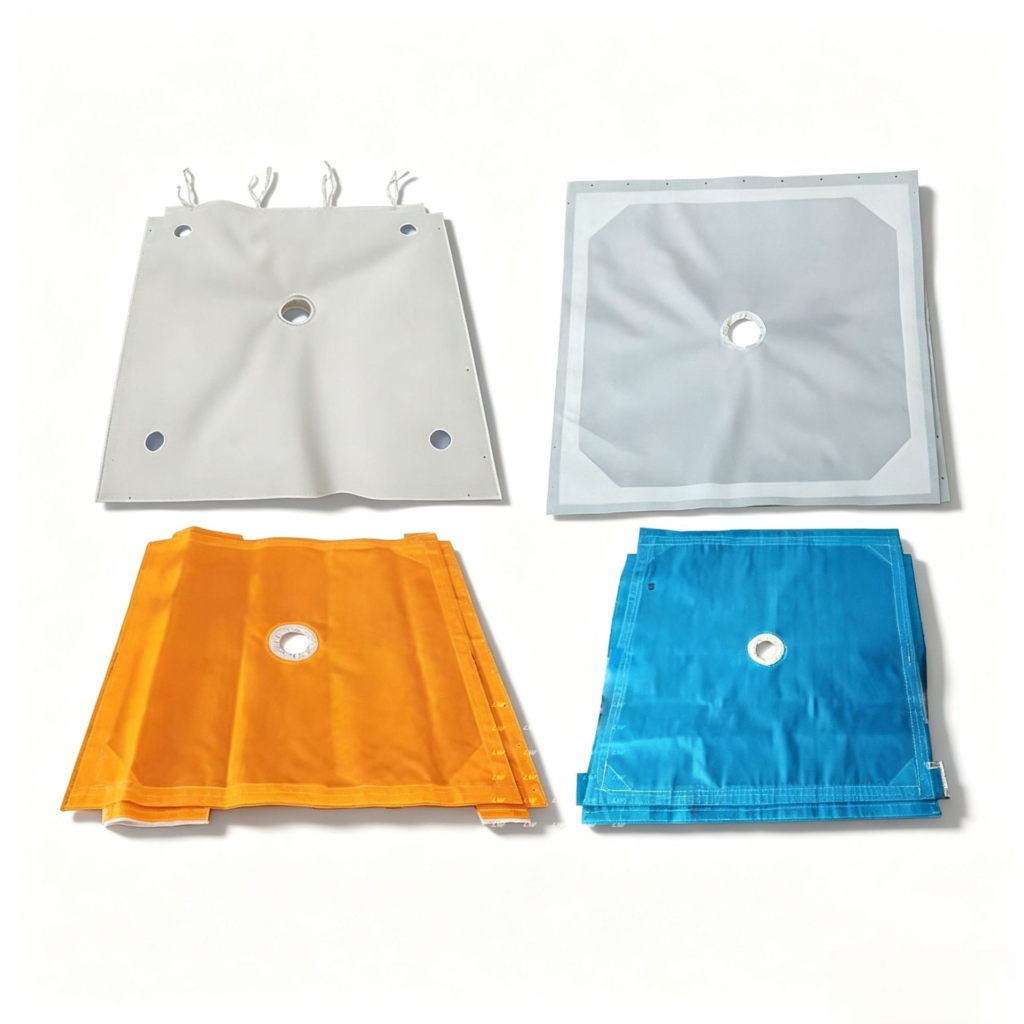
Ranges are common weaving ranges for this cloth family. The final specification is confirmed against your slurry data and plate drawing.
Cloth Finishing at Loway
Weaving, finishing and cutting are handled in our own workshop, so replacement cloth is cut to your plate drawing rather than to a catalogue size.
Request a Quote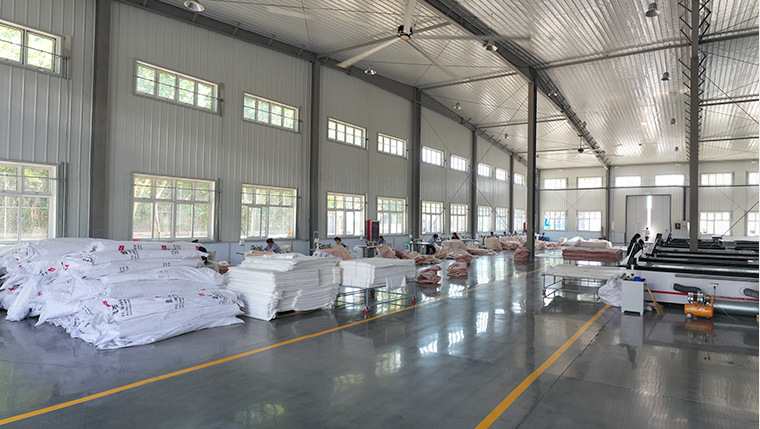
Frequently Asked Questions
What does “MOC” mean on a cloth specification?
Material of construction — the polymer the cloth is made from. For PP cloth it is stated as 100% polypropylene, which tells you what the fibre will and will not resist.
Can PP cloth handle 100 °C?
Only as a short peak. Continuous duty above 90 °C causes creep and loss of tension. For sustained high temperature, use polyester.
How fine can polypropylene go?
Around 1 µm with a tight multifilament or a bonded structure. An open monofilament PP cloth is typically 20 µm and coarser.
Is PP suitable for ETP sludge?
Yes — it is the usual choice for effluent treatment because the pH swings widely and the temperature stays moderate. A monofilament structure releases the sticky cake better than a tight weave.
Does PP resist solvents?
It resists most alcohols and many solvents but swells in aromatic hydrocarbons. Tell us the solvent before we confirm the polymer.
What wash water temperature is safe for PP?
Well below the 90 °C service limit — warm to the hand is a safe rule. Washing near the softening point does in the wash bay what hot slurry does in the press: it relaxes the weave. And skip steam cleaning entirely; localised steam distorts the weave faster than any wash water.
Why did my PP cloth stretch rather than tear?
Thermal creep. Polypropylene elongates under clamping force when it runs hot, and the elongation does not recover on cooling. A cloth that comes off the press longer than it went on, with no tear anywhere, has been running above its temperature window.

Get a Cloth Specification
Send your plate drawing and slurry data — pH, temperature and particle size — and we will confirm the structure and polymer.