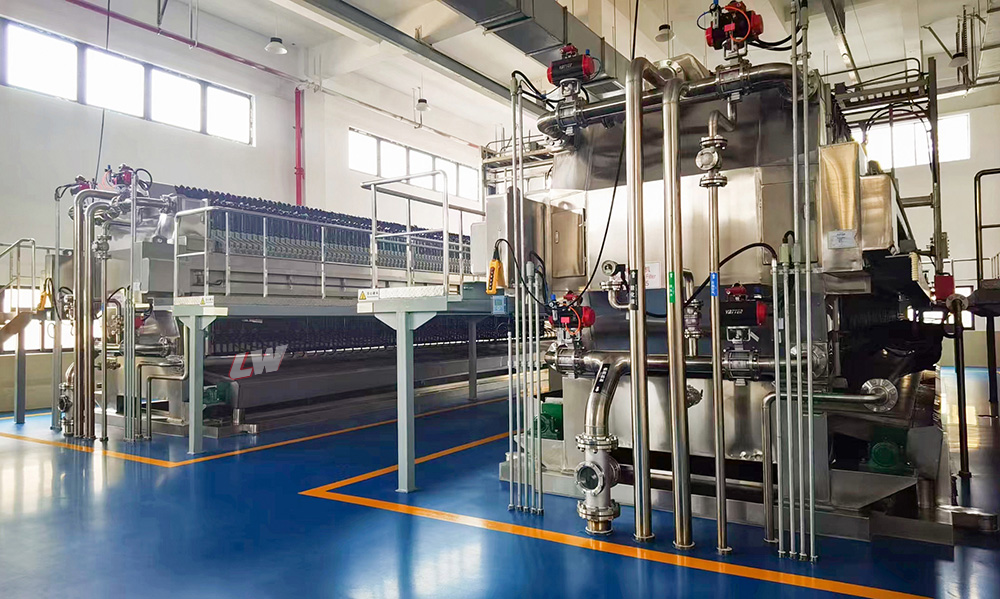
Industry Applications · Fine Chemicals
Chemical Sludge Dewatering for Fine Chemical and Specialty Plants
In a fine chemical plant part of the cake is product, part of it is salt from neutralisation, and part of it comes from treating fine chemical wastewater. Chemical sludge dewatering has to keep those streams apart, because each one asks for a different cloth, a different wash rate and a different place to go. Send us the stream and we come back with the press and the reasoning behind it.
The streams
Four streams, and only one of them is simple waste
A fine chemical site produces several wet solids at once, and they do not go to the same place. Chemical sludge dewatering starts by sorting the streams, because the press that recovers a catalyst is not the press that handles a neutralisation sludge.
01Product and catalyst slurries
Pigment filtration and catalyst recovery turn a slurry into saleable solids, which makes this the one stream where chemical sludge dewatering is judged as production, not as disposal. The cake has to wash clean of mother liquor and leave the press intact, because every gram lost is revenue and every point of salt content is a quality claim against you.
02Fine chemical wastewater sludge
After physicochemical and biological treatment, fine chemical wastewater leaves a sludge that carries salts, organics and whatever the last campaign left behind. Volumes are modest but they swing, and the mix changes from product to product. Chemical sludge dewatering sized on one campaign's sludge undershoots the next.
03Salt and hydroxide sludges
Neutralising spent acid produces metal hydroxides and salts in volume. These cakes are cheap but they are fine and gelatinous, they blind cloths fast, and the filtrate has to be clean enough to rejoin the treatment plant. On many sites this is the largest single duty in chemical sludge dewatering.
04Reactor and tank cleanout
Campaign residue sits in reactors, tanks and sumps until a shutdown clears it. It is mixed, it may carry solvent, and it appears on a schedule rather than continuously. For chemical sludge dewatering on cleanout streams the press travels to the sludge, not the other way round.
Keep the four streams apart and each press runs against one duty. Chemical sludge dewatering is easier to size, easier to document and cheaper to run when the feed is one material rather than a blend.
The machines
Which press does which job
Membrane, plate and frame, and chamber presses run batch cycles and cover most of the duties above; the belt press covers the continuous ones. What changes is the plate pack, the cloth, the wash arrangement and the degree of automation. Each one is a chemical sludge dewatering machine; the duty picks which one.
Membrane filter press
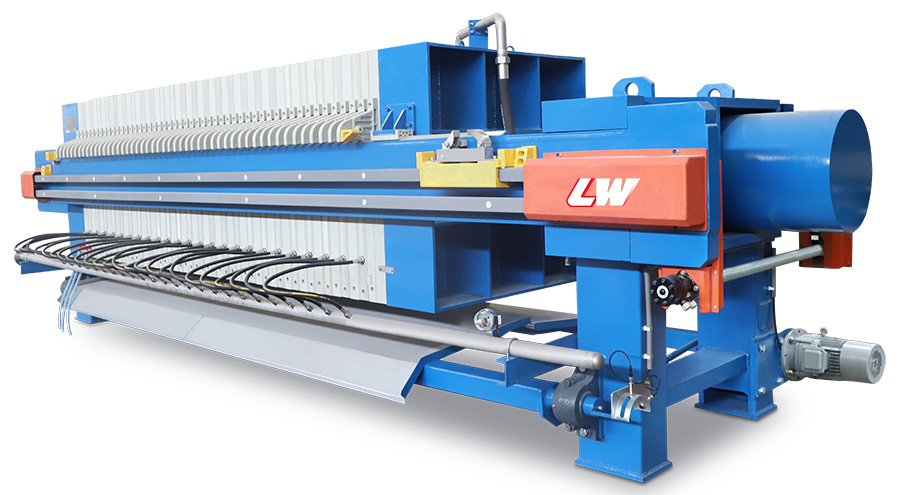
After the chambers fill, membranes squeeze the cake and wash liquid can be displaced through it before the squeeze. On pigment filtration and catalyst recovery that wash is the step that decides whether the cake meets spec.
It is the press for any stream where the cake is product, and for chemical sludge dewatering where the filtrate has to run clean. A tighter cake carries fewer fines back to the treatment plant.
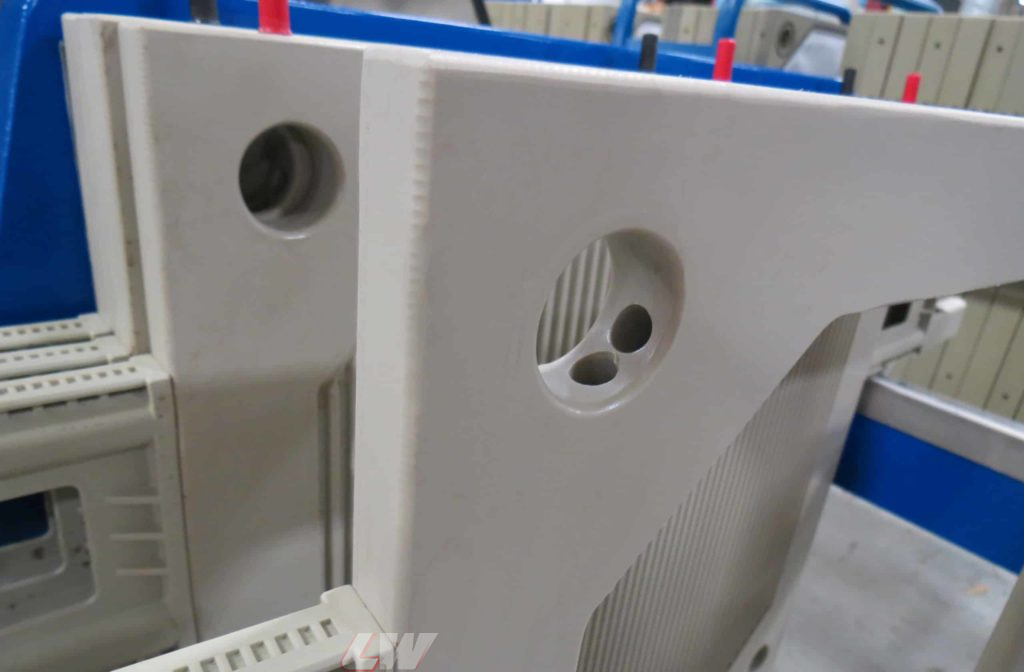
Plate and frame filter press
Where the product changes from campaign to campaign, the plate and frame filter press is the traditional fine chemical answer: frame depth sets the cake thickness, the pack re-configures between products, and the open layout strips down fast for cleaning.
It also suits small batches, because a short pack does the same job as a long one and the spare frames cost less than a second machine.

Recessed chamber filter press
A simpler cycle with no squeeze stage, in plate materials chosen for the chemistry. Polypropylene plates shrug off the acids and alkalis that salt and hydroxide sludges carry, and the cake only has to stack for disposal.
Where volume sets the economics and purity does not, this is the workhorse of chemical sludge dewatering — and the easiest one to keep running with a modest spares set. The split from the plate and frame above is simple: one sludge at volume goes to the chamber pack, a changing product goes to frames.
The same pack runs from manual to fully automatic: on the automated filter press, plate shifting, cloth washing and discharge run on a programme, and the cycle log doubles as a batch record where campaigns repeat.
Belt filter press
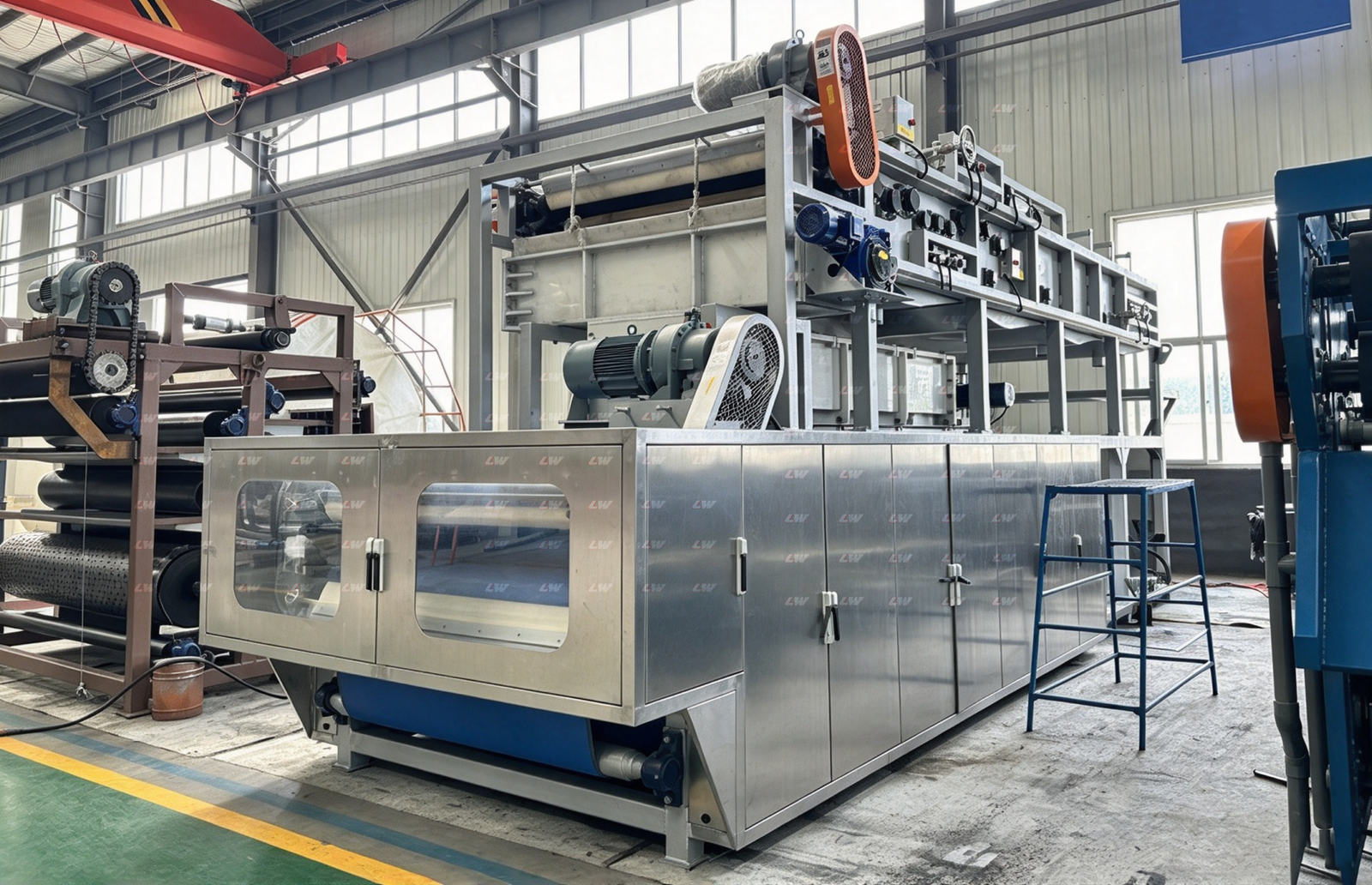
The biological end of a fine chemical wastewater plant produces a sludge that behaves like municipal activated sludge once the solvents are gone. A belt filter press runs that stream continuously on polymer conditioning.
The trade is cake dryness and openness: solvent-wet cakes, high-value cakes and anything that needs washing stay with a plate press.
Washing & materials
Wash the cake, then choose what it touches
Dewatering is only half of what a fine chemical press does. The other half is washing the mother liquor out and surviving the chemistry while it happens. In chemical sludge dewatering for fine chemicals the wash is a specification, not an extra.
Wash displacement
Clean wash liquid follows the mother liquor through the cake, so the sequence of fill, wash and squeeze matters as much as the pressure. The wash curve is read on the pilot press, not assumed from a datasheet.
Cloth choice
Fine, gelatinous solids blind a cloth in a cycle or two. Cloth weave, coating and the wash recipe are chosen together for pigment filtration duty, and a cloth stock from the first order keeps a blinded cloth a five-minute change.
Plate material
Polypropylene covers most acid and alkali duty. Where temperature or solvent exposure goes beyond what polypropylene accepts, the plate pack and the feed arrangement are specified for that stream instead.
Chemical sludge dewatering in a fine chemical plant is a materials question as much as a sizing question. The stream names the wetted parts, and those parts are on the spares list from day one.
Selection
Match the press to the stream
Six lines settle most chemical sludge dewatering enquiries.
The cake is product — pigment, catalyst, intermediate
Membrane filter presswash displacement plus a squeeze stage.
The product changes from campaign to campaign
Plate and frame filter pressframe depth sets the cake, the pack strips down fast.
Bulk salt or hydroxide sludge, cake only has to stack
Recessed chamber filter presssimple cycle, polypropylene plates.
Campaigns repeat, the crew is small
Automated chamber filter pressthe chamber pack with shifting and washing on a programme.
Residue sits in reactors and sumps until a shutdown
Mobile filter pressarrives piped and wired, moves on.
Biological sludge from the wastewater plant, solvent-free
Belt filter presscontinuous duty on polymer conditioning.
Feed solids swing from campaign to campaign
A buffer tank ahead of the pressthe press rewards a steady feed more than a bigger machine.
Testing
Run the stream on a pilot press first
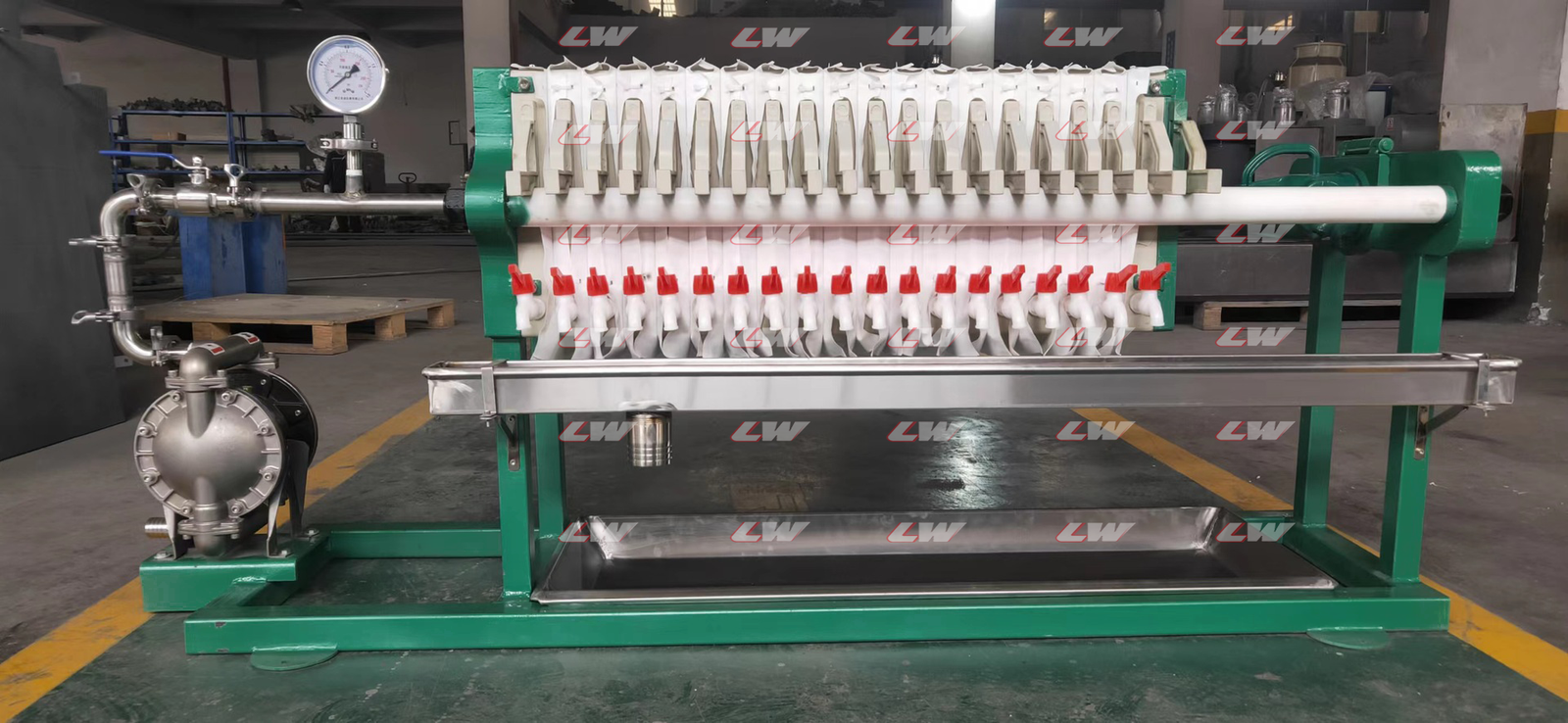
A pilot press, not a datasheet
A few litres of the actual slurry answer what a datasheet leaves out: how the cake forms, how the wash curve runs, how fast the cloth blinds. Small-batch and pilot presses exist for exactly this, and they run the same cloths and plates as the full-size machine. It is where chemical sludge dewatering proposals earn their numbers.
For pigment filtration and catalyst recovery the pilot run also settles the wash recipe — how much wash liquid reaches the purity target, and where the point of diminishing returns sits.
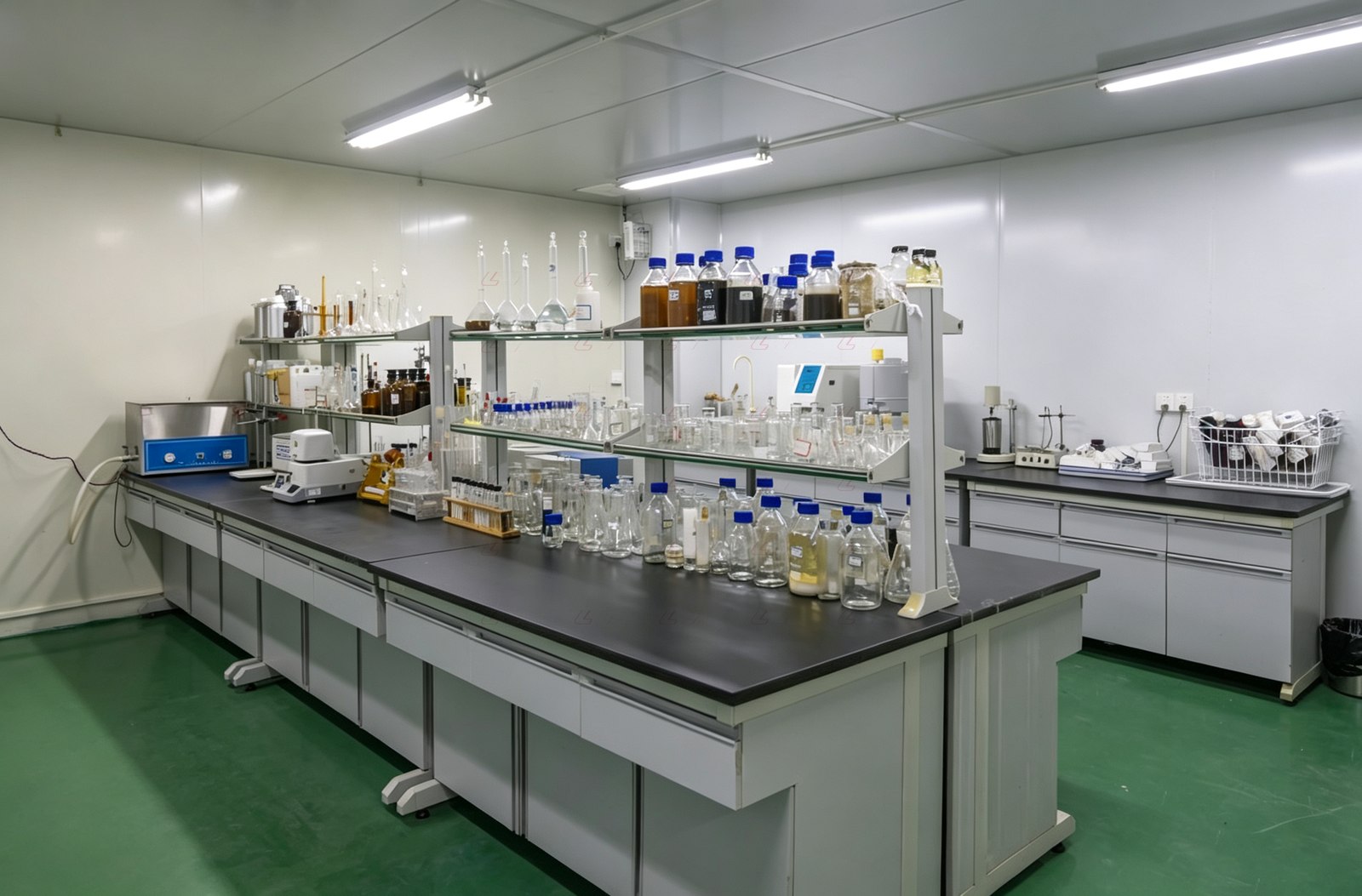
The lab work behind the proposal
Solids content, pH, solvent share and settling behaviour are read in the lab before anything is sized. Chemical sludge dewatering proposals built on tested numbers hold up at commissioning; the ones built on assumptions do not.
Where numbers are thin we size on stated assumptions and say so, then confirm on the pilot press or at commissioning.
Delivery & support
What arrives with the press
Four items, agreed before the order, decide how the chemical sludge dewatering step runs once the press arrives.
Layout drawings
General arrangement and interface drawings come first, so civil and piping work starts while the press is still in our factory. Fine chemical plants are tight, and early drawings are what keep the installation free of rework.
Spares set
Cloths, plates and feed pump wear parts are listed at order. The first shutdown is planned, not improvised.
Commissioning
Our engineers feed the press, run the wash and open the first cake together with your operators. The crew that starts the press with us runs it without us afterwards.
Cloth stock
Fine solids blind cloths. A blinded cloth costs minutes if a spare is on the shelf, and a shift if it is not.
FAQ
Chemical sludge dewatering: common questions
Which press suits pigment filtration?
A membrane filter press with a wash arrangement. The wash displaces mother liquor from the cake and the squeeze stage dries it, so the pigment leaves the press at the purity and moisture the spec asks for. In chemical sludge dewatering for pigments the wash does the purifying.
Can catalyst recovery run through the same press?
Yes, when the catalyst is carried on a filterable solid. The cloth is chosen to hold the fines and the wash recipe to strip the mother liquor. The cake leaves whole rather than cracked, so recovery stays in the cake instead of the filtrate.
What about solvent-wet cakes?
They stay with a plate press. Plate and cloth materials are matched to the solvent, and the discharge and drying arrangement is specified for it. This is one of the points the pilot run settles before the machine is sized.
How do you deal with cloth blinding?
Cloth weave and coating are selected for the particle size, and the wash recipe keeps the cloth open. A cloth stock from the first order turns a blinded cloth into a short stop instead of a lost shift.
What do you need to size a press?
Solids content, pH, solvent share, the wash target and where the cake has to go. A few litres of the actual slurry is worth more than any specification sheet, and we confirm the numbers on the pilot press before the chemical sludge dewatering proposal is priced.
Batches are small — is a press still worth it?
Yes, in small formats. Pilot and small-batch presses carry the same cloths and plates as production machines. What is learned on the small one transfers, and the press grows with the campaign instead of being replaced.
Send us the stream
Describe the slurry, the wash target and where the cake has to go. A few litres of that slurry turn the reply from an estimate into a tested recommendation.