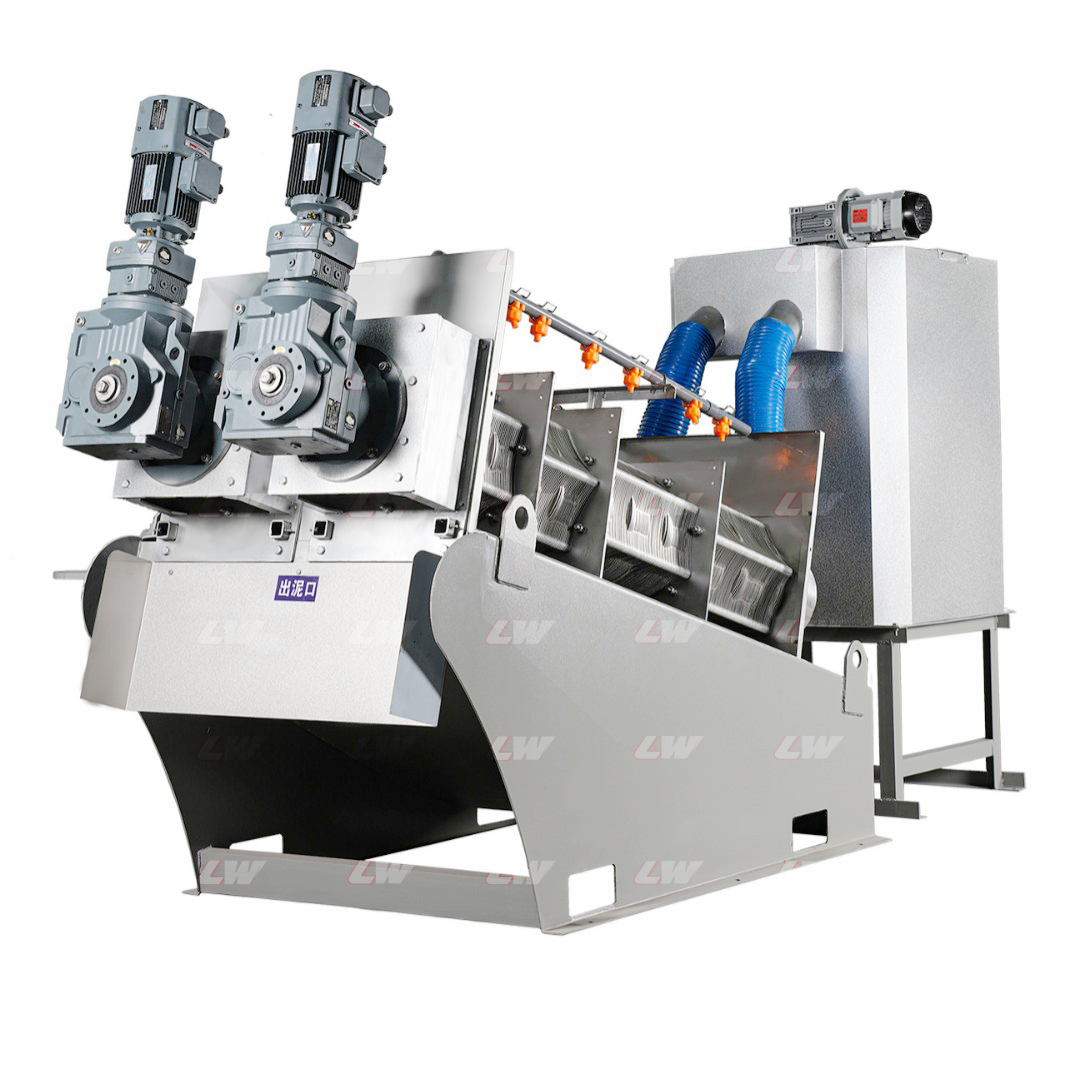
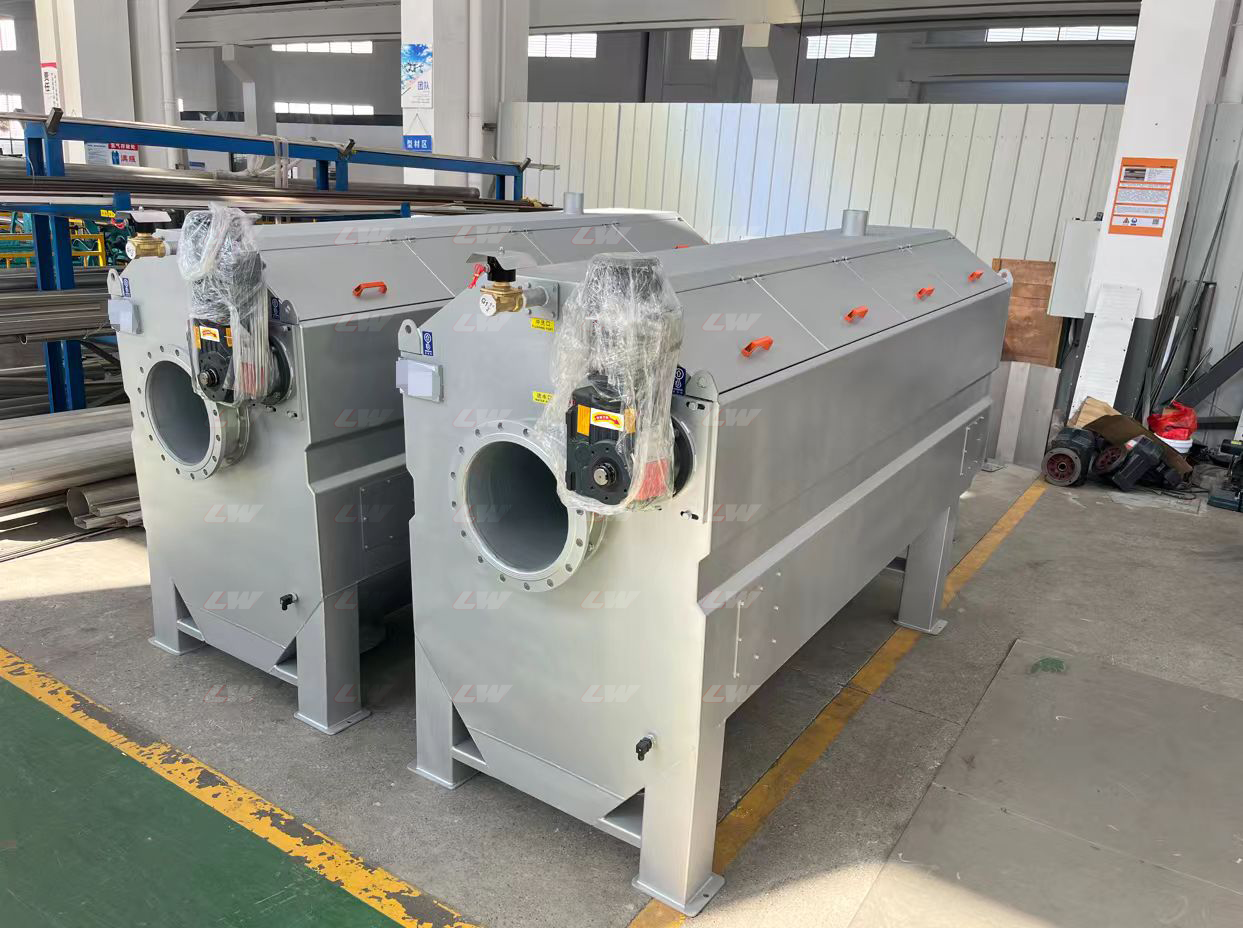
When a multi-disc screw press starts producing muddy filtrate, the sludge cake remains too wet, and polymer consumption keeps increasing, it is tempting to blame the operating conditions.

But before changing the settings again, it is worth taking a closer look at the equipment itself and the entire dewatering process.

Cloudy filtrate, low cake solids content, and steadily increasing PAM consumption often occur together. Operators may have been changed and operating parameters adjusted several times. Performance improves for a few days, only for the same problems to return.

So, where does the real problem lie?

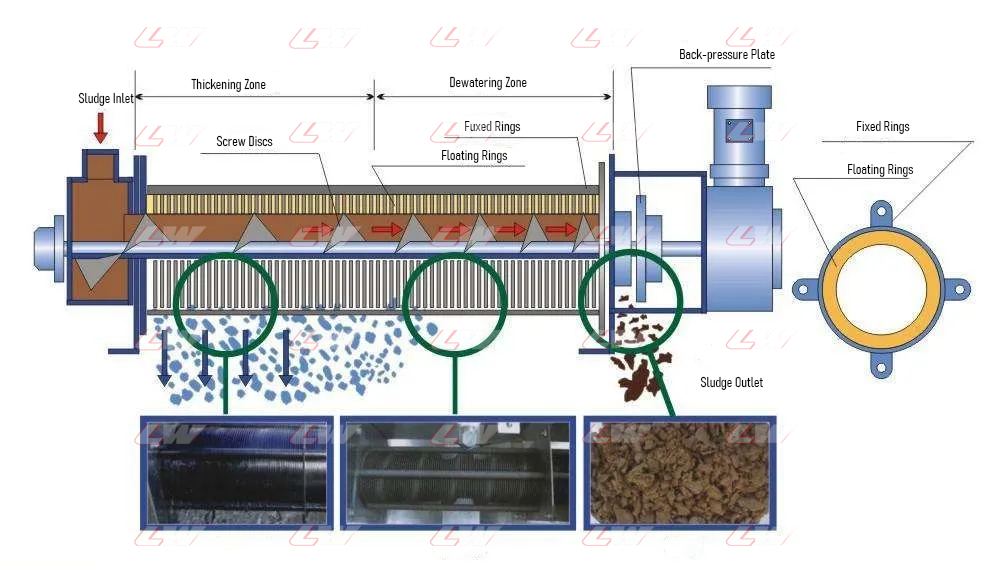
A multi-disc screw press relies on several stages working together. Sludge is first mixed with a flocculant to form larger, stronger flocs. It then enters the main dewatering section, where gravity thickening takes place before the rotating screw shaft gradually conveys and compresses the sludge against the back-pressure plate.

Water drains through the narrow gaps between the fixed and moving rings, while the solids are retained and conveyed toward the discharge end.

A problem at any stage can affect the final results. Ring plate manufacturing accuracy is one important factor, but it is certainly not the only one. Understanding this distinction is essential before starting any troubleshooting work.

Three Symptoms, Three Different Possible Causes

Mud carryover in the filtrate, wet sludge cake, and rising polymer consumption may appear to be related, but they do not necessarily have the same root cause.

1. Solids carryover in the filtrate

This is often associated with poor flocculation, excessive feed loading, uneven clearances between ring plates, or wear along the ring edges.

2. Low sludge cake solids content

Cake dryness is more directly affected by back-pressure, screw speed, and sludge characteristics. Ring plate accuracy may play a role, but it is generally less directly related to cake dryness than these operating and process conditions. For a detailed breakdown of wet-cake causes and corrective actions, see Screw Press High Moisture Content: Root Causes & Proven Fixes.

3. Increasing polymer consumption

Before looking at the equipment, check whether the polymer type is still suitable and whether the sludge characteristics have changed. Uneven ring clearances may contribute to the problem, but they are only one possible factor. Increasing chemical consumption should not automatically be attributed to equipment quality.

A practical troubleshooting sequence is straightforward:

Start by checking whether the sludge characteristics have changed, whether the PAM type and dosage are appropriate, and whether the feed rate and back-pressure are within the recommended operating range.

If these factors are all under control but performance remains unstable despite repeated adjustments, it is time to inspect the ring clearances and the flatness of the ring plates.

This approach helps identify process-related issues without overlooking equipment-related causes or blaming the machine prematurely.

What Role Do Ring Plates Actually Play?

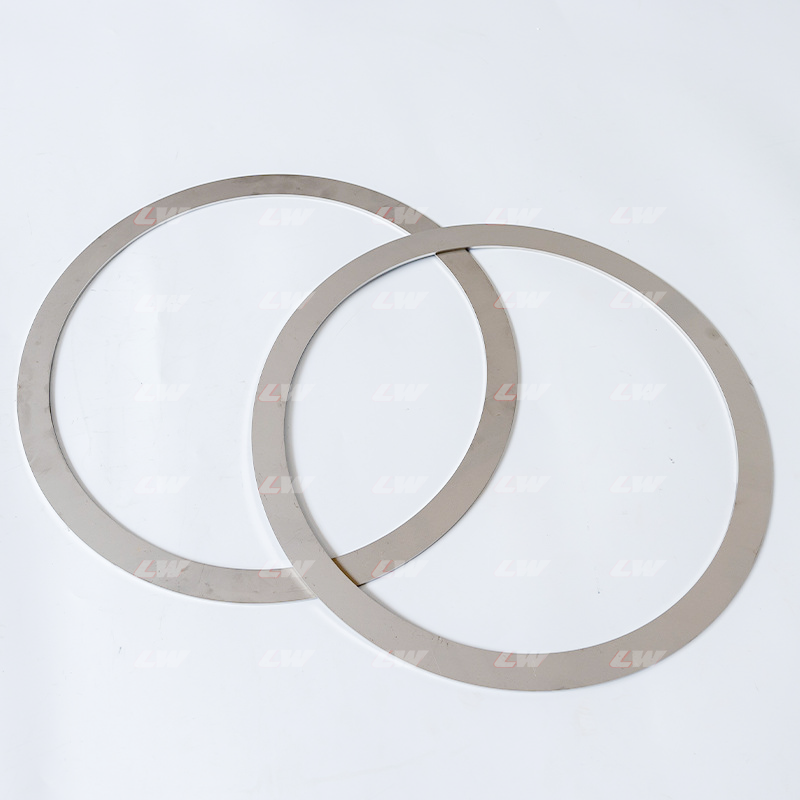
The primary function of the ring plates is to maintain the drainage channels through which water leaves the dewatering chamber while retaining the sludge solids.

When the gaps are uniform, water can drain consistently while the solids remain inside the chamber. If the gaps vary significantly, wider sections may allow fine solids to escape with the filtrate.

The actual clearance between the rings is determined by three factors:

  • Initial clearance: The gap specified in the original equipment design.
  • Manufacturing and assembly accuracy: How accurately the individual rings are produced and assembled.
  • Wear during operation: How the ring edges and screw shaft deteriorate over time.

Manufacturing accuracy determines the consistency of the clearances when the equipment leaves the factory.

However, even precisely manufactured ring plates cannot compensate for sudden changes in sludge characteristics, poor flocculation, or incorrect back-pressure settings. Any of these can still result in cloudy filtrate and poor dewatering performance.

On the other hand, when the operating conditions are properly controlled, ring plate accuracy can make a significant difference to filtrate clarity and long-term operating stability.

There is another point worth considering: ring plates and screw shafts are wear parts. As the machine operates, the edges gradually wear down, potentially increasing the clearances and allowing more solids to escape.

This is a common reason why a machine that initially performs well may start experiencing solids carryover after an extended period of operation.

Manufacturing accuracy establishes the initial condition. Proper maintenance helps preserve it.

Four Key Manufacturing Steps Behind Consistent Ring Plate Quality

Producing a precision ring plate involves several manufacturing processes. Four steps are particularly important.

Each contributes to dimensional consistency and uniform clearances after assembly. None of them alone guarantees good dewatering performance, but together they help ensure that individual rings are as consistent as possible.

1. Stress Relief Before Machining

Steel plates retain internal stresses from rolling, cutting, and other manufacturing processes.

If these stresses are not properly relieved, a plate may appear flat during initial machining but gradually deform after assembly, under operating loads, or with temperature changes.

Stress relief helps stabilize the material before further processing, providing a more reliable foundation for subsequent precision work.

2. Nitrogen-Assisted Laser Cutting

Using nitrogen as the assist gas during laser cutting helps reduce oxidation and slag formation along the cut edges, while minimizing unwanted edge contamination.

By comparison, cutting processes that leave more oxidation and slag can result in rougher edges and additional work during deburring and subsequent finishing.

This difference can have a noticeable impact on manufacturing costs, even though it may not be obvious from a visual inspection of the finished ring plate.

3. Deburring Every Individual Ring

Small burrs on individual ring plates can create much larger problems once the rings are stacked together.

Burrs may prevent adjacent rings from sitting properly, resulting in inconsistent clearances. They can also trap sludge, allowing deposits to build up during operation and further interfere with the drainage channels.

Removing burrs from every ring requires additional labor and processing time, which makes it an easy step to overlook when manufacturing costs are being reduced.

4. Four-Pass Leveling

Achieving consistent flatness requires more than a single pass through a leveling machine.

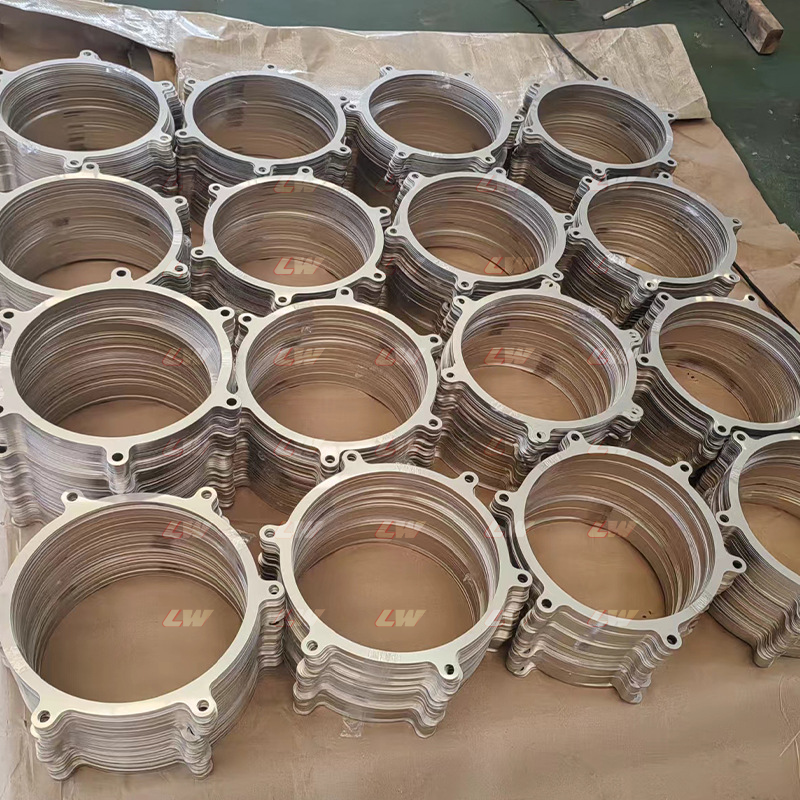
In our workshop, each ring plate goes through four leveling passes before assembly. Multiple passes gradually correct plate deformation, and the flatness of the finished rings directly determines how uniformly the clearances are distributed along the stack.

Note that flatness here is a dimensional property of the individual ring plate. It should not be confused with a guaranteed sludge cake moisture content or a promise of specific dewatering results under all operating conditions.

When these four processes are properly carried out, the ring plates fit together more consistently, helping maintain uniform clearances.

This can reduce the risk of solids carryover, improve filtrate clarity, and support more stable sludge dewatering without relying on progressively higher polymer dosages.

However, the actual results still depend on correct equipment selection and stable operating conditions.

What Should You Ask a Supplier Before Purchasing?

If you want to verify whether a manufacturer actually carries out these processes, start with three straightforward questions:

  1. Do you carry out stress relief treatment on the steel plates before machining?
  2. Do you use nitrogen-assisted cutting?
  3. What flatness tolerance can you achieve, and what equipment or process do you use to verify it?

A manufacturer that can provide specific measurements, explain the manufacturing process, and identify the equipment used is in a better position to demonstrate its production capabilities.

A general statement such as “our ring plates are highly precise” is not enough. It does not necessarily mean the manufacturer cannot achieve good quality, but it offers little technical evidence to support the claim.

Two additional questions can reveal much more:

Ask for flatness inspection records.

Actual inspection data are more useful than general claims about manufacturing accuracy.

Ask about the service life of wear parts.

Find out how frequently ring plates and screw shafts typically need replacement, how wear is monitored, and how the original clearances are restored after wear occurs.

You can also request a sludge test using your own material.

Using the same sludge batch, polymer type, and operating parameters, compare the performance of different machines. Filtrate clarity and cake condition provide useful points of comparison.

Keep in mind, however, that a short-term test mainly reflects the equipment’s initial condition. It cannot fully predict long-term performance under continuous operation, where wear and maintenance also become important factors.

Look Beyond the Purchase Price: Selection and Maintenance Matter Too

A few practical considerations are worth keeping in mind when evaluating a multi-disc screw press.

Do not compare equipment prices alone.

Savings made by reducing manufacturing costs for ring plates may eventually be offset by higher polymer consumption, increased sludge disposal costs, unplanned downtime, and additional maintenance.

That said, not every application requires the tightest possible manufacturing tolerances. For relatively straightforward sludge applications with stable operating conditions, a well-designed and reliable machine that meets the process requirements may offer better overall value.

Ask for measurable flatness specifications, not general descriptions.

Terms such as “high precision” and “excellent workmanship” are not technical specifications. Ask for actual tolerance values and the inspection methods used to verify them.

Provide complete process data when requesting equipment selection.

At a minimum, the supplier should understand:

  • Dry solids throughput (kg DS/h or kg DS/day)
  • Sludge type and characteristics
  • Feed sludge solids concentration or moisture content
  • Required cake solids content or target cake moisture content
  • Daily operating hours

The more accurate the process information, the more reliable the equipment selection and sizing will be.

Do not overlook routine maintenance.

Ring plates and screw shafts are in direct contact with the sludge and are among the components most exposed to wear. They should be treated as consumable parts.

Regular clearance inspections, wear monitoring, and timely replacement are essential to maintaining stable performance over the long term.

Even the best manufacturing accuracy cannot compensate for worn components that have exceeded their service life.

Final Thoughts

Ring plate manufacturing deserves attention because it determines how consistently the drainage clearances are maintained when a multi-disc screw press leaves the factory.

But it is only one part of the overall picture.

Sludge characteristics, polymer selection, equipment sizing, operating conditions, maintenance, and manufacturing quality all influence dewatering performance.

For engineers, equipment buyers, and project managers, the best way to evaluate a screw press is to look beyond general claims and focus on measurable specifications, verifiable manufacturing processes, and actual performance with the sludge being treated.

Good equipment starts with good manufacturing. Consistent performance comes from getting the entire process right.

Loway Equipment the Ring Segments for muti-disc Screw Press Dewatering Equipment

Need Help Diagnosing Your Screw Press?

If your multi-disc screw press is showing muddy filtrate, wet cake, or rising polymer consumption, send us your sludge parameters and current operating settings. Our engineers can review the data and help you separate process issues from equipment issues before you spend on parts or chemicals.

Automatic washing filter press equipment for solid liquid separation Industry application Loway factory China

Specializing in industrial-grade solid-liquid separation, Loway Equipment serves a broad spectrum of global sectors, including mining, chemicals, food processing, petrochemical, pharmaceuticals, and municipal wastewater treatment.

Need a Proposal for Your Dewatering Project?

Our engineers reply with a sizing recommendation and quotation within 24–48 hours.

Need detailed specs?