

Home · Solutions · Complete Dewatering Systems
Complete Dewatering Systems
Complete Sludge Dewatering Systems — One Line, One Supplier
A turnkey sludge dewatering system is more than a dewatering machine: screening protects it, thickening feeds it, polymer conditions the sludge, conveying takes the cake away. Loway engineers, builds and commissions every stage of that line — so when throughput or sludge changes, one team owns the answer.
The six stages
What a Complete Dewatering Line Includes
Stage by stage, from the channel to the cake hopper. Every stage below is a Loway product line — or a package we integrate from partners we have used for years.
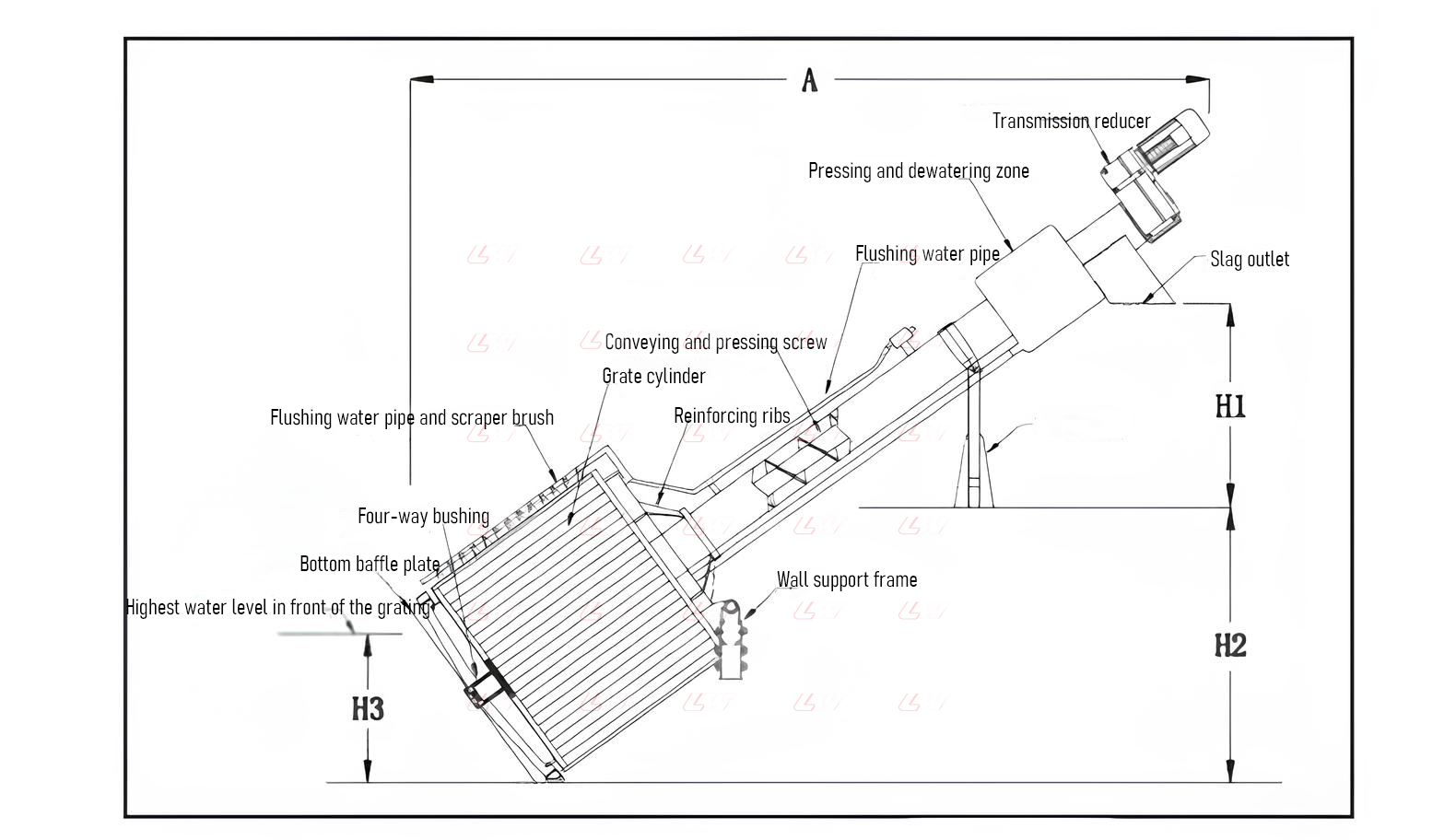
Screening & Grinding
Rags, plastics and coarse solids are screened or macerated before they can rag a pump or score a screw. This stage decides whether the rest of the line runs quietly or in maintenance mode.
Pumping & Flow Control
Progressive-cavity feed pumps, flow metering and buffer capacity that keep the dewatering stage fed at a steady rate — because a starving or surging feed wastes polymer and dries the cake unevenly.
Pre-Thickening
Drum or gravity thickening lifts feed solids before dewatering — halving the machine size you need in most municipal and organic-industrial duties. The cheapest dryness you will ever buy is the dryness you get for free.
Polymer Dosing
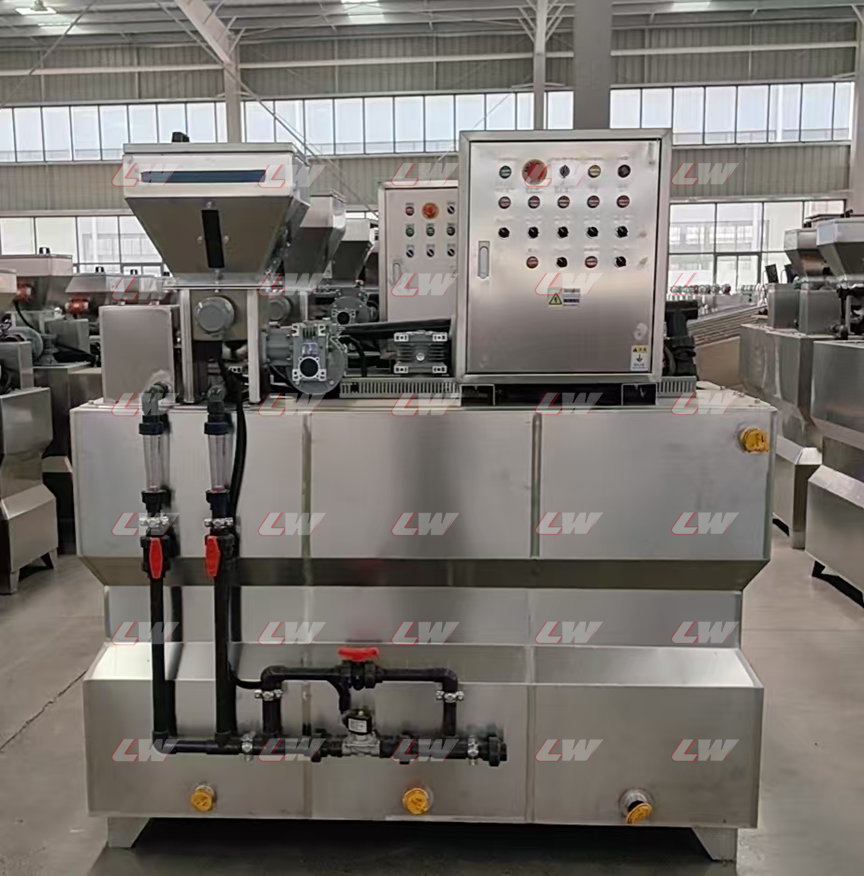
PAM make-up and dosing units metered to the measured dose from your bench test — with the inline mixing that turns a polymer budget from a guess into a number.
Dewatering — the Core
Filter press, belt press or screw press: the technology is chosen on your feed and dryness target, not on what we happen to overstock. The comparison table below shows how the three cores trade off.

Conveying & Loading
Screw conveyors and discharge handling move cake to the skip, bagging station or truck — the stage everyone forgets until the cake lands on the floor.

Electrical & control run across all six stages — one PLC, one HMI, one control philosophy. Operators learn one interface; your maintenance team calls one number. See how each machine is tested before it joins the line.
Choosing the core
Filter Press, Belt Press or Screw Press?
Three dewatering cores, three honest positions. Typical values below — your bench test decides which row applies to your sludge.
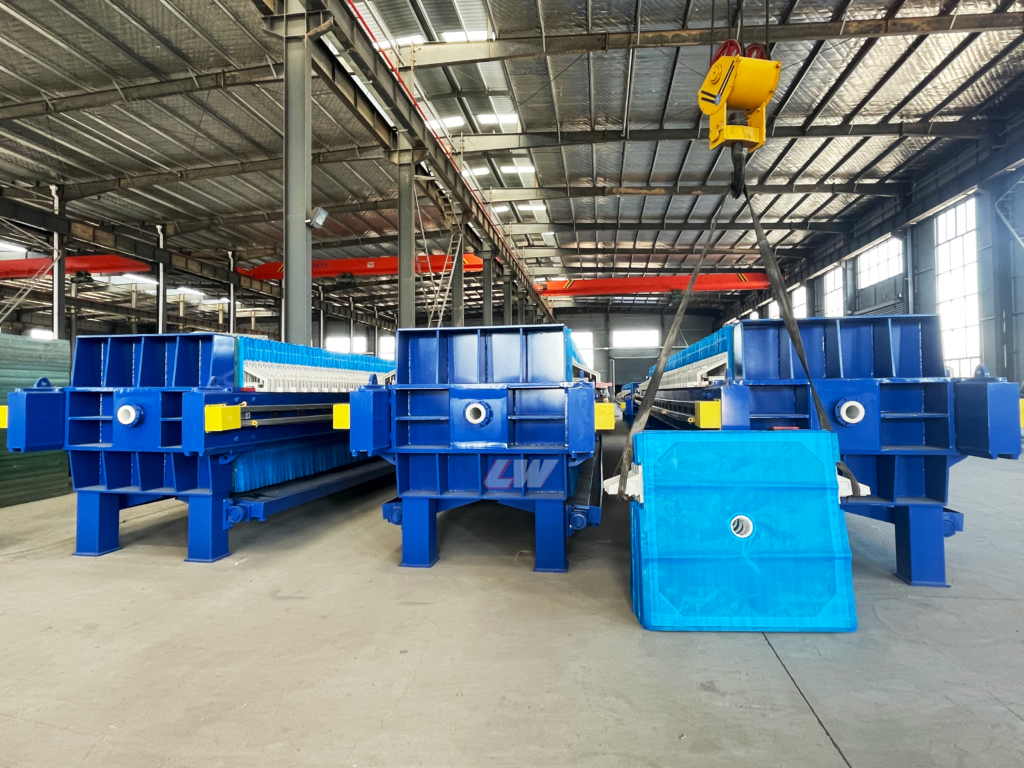
Filter Press
1.5–40% DS · driest cake (30–60% DS) for high-value or hard-to-dispose-casile streams.
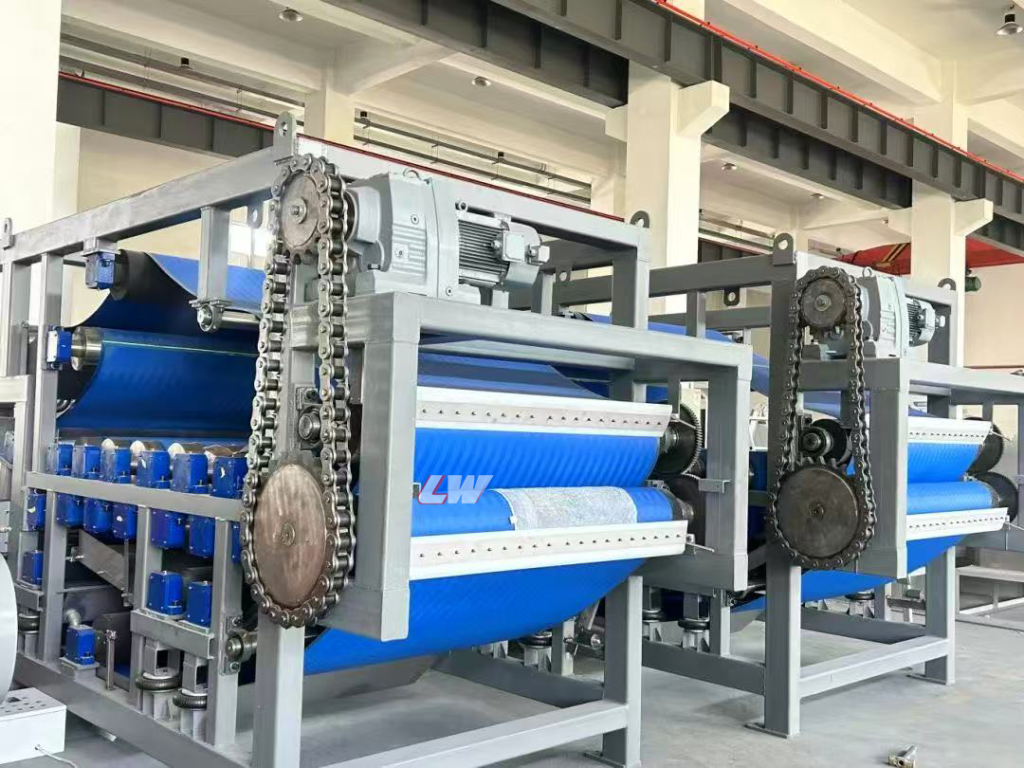
Belt Filter Press
2–5% DS · continuous duty, ideal for steady municipal flows and 24-hour shifts.
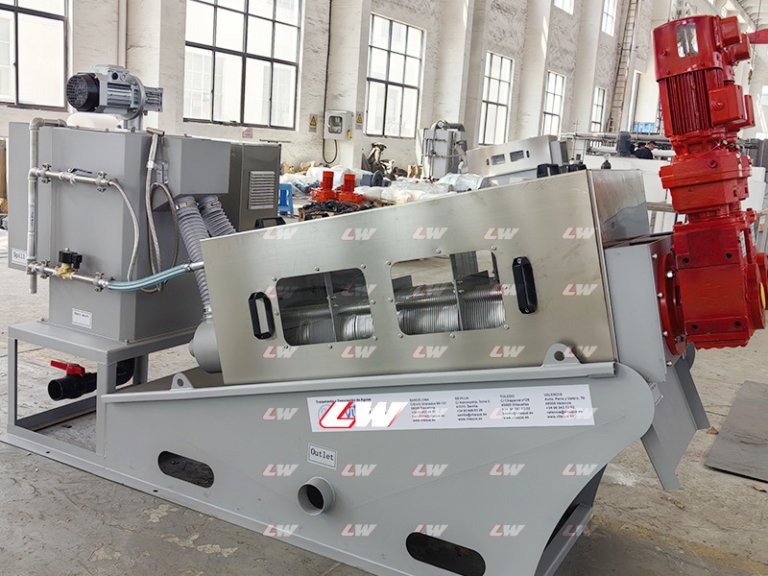
Multi-Disc Screw Press
2–6% DS · fully automatic, most compact, self-cleaning rings for unattended plants.
| Filter Press | Belt Filter Press | Multi-Disc Screw Press | |
|---|---|---|---|
| Typical feed solids | 1.5–40% DS (very tolerant) | 2–5% DS, thickened feed preferred | 2–6% DS after screening |
| Achievable cake | 30–60% DS, driest cake | 18–28% DS, continuous | 18–25% DS, continuous |
| Duty pattern | Batch cycles (30–120 min) | Continuous, 24 h shifts | Continuous, fully automatic |
| Footprint & civil | Largest; needs plate-shift headroom | Medium; gravity drainage zone | Most compact; skid-mounted |
| Operator attention | Medium — cycle supervision, cloth wash | Medium — belt tracking, wash water | Lowest — self-cleaning rings |
| Best fit | Dry cake has value or disposal is costly | Steady municipal flows, long shifts | Small plants, unattended operation |
Cannot decide? The technology selection guide walks the decision in detail, and a bench test on your sample ends the debate with numbers.
Scope of supply
What Loway Delivers — and What We Ask of You

- Process design & P&ID — line layout, hydraulics and motor list, issued for your review before anything is built.
- Equipment manufacture — every machine built, pressure-tested and dry-run in our Zhenjiang plant before container loading.
- PLC & instrumentation — one control system covering all stages, programmed to your operating philosophy.
- Commissioning & training — engineers on site for start-up, performance run and operator handover.
- Spares & documentation — CE file, manuals in your language, and a spares list agreed before shipment.
- From you — civil works, power, water and sludge data (or a sample we test together). We tell you exactly what each stage needs.
Why one supplier
One Line, One Contract, One Number to Call
Multi-vendor lines fail at the interfaces — the pump nobody sized for the press, the conveyor that arrived 40 mm too high. A single-manufacturer line puts every interface inside one engineering office.
Complete system FAQ
Turnkey Line Questions, Answered
Do I have to buy the whole line from Loway?
What information do you need to quote a complete system?
How is a multi-machine line shipped and installed?
Can you match our existing PLC and control room?
What about spares for a six-stage line?
Next step
Send the Numbers — Get a Line Layout
Flow, solids and cake target are enough for a first layout, equipment list and budget range. An engineer replies within 24 hours — or start with a bench test and size the line on your sludge, not on assumptions.