

Non-Woven Filter Cloth
Non-woven filter cloth does not filter through a woven pore. Needle-punched fibres form a tortuous path, so particles are captured through the thickness of the medium rather than on a single surface. That is how it holds particles down to about 1 µm — and why pressure drop rises faster than with a woven cloth.
- Pore size1–20 µm
- FibrePET · PP
- Weight200–800 g/m²
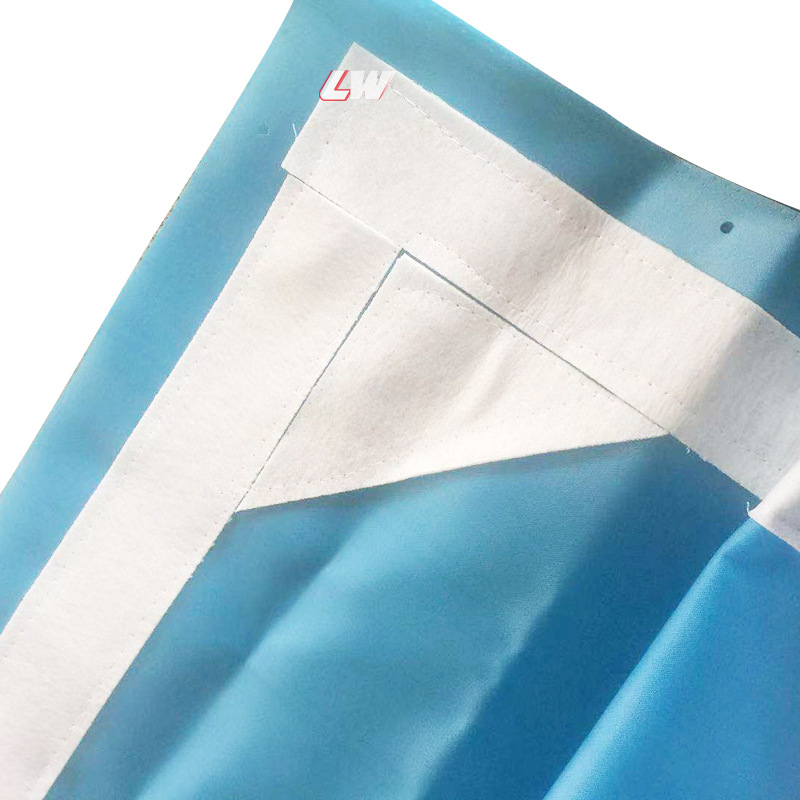
Depth filtration, explained plainly
A woven cloth has a defined opening: what passes is decided at the surface. A non-woven has a distribution of paths, so it captures progressively — coarser particles near the surface, finer ones deeper in. The result is high retention and a long filtration path, which is good for clarity and harder on flow.
That trade-off sets where the cloth belongs: fine polishing, recovery of valuable fines, and duty where the filtrate must be clean and the cycle can absorb a higher pressure drop.
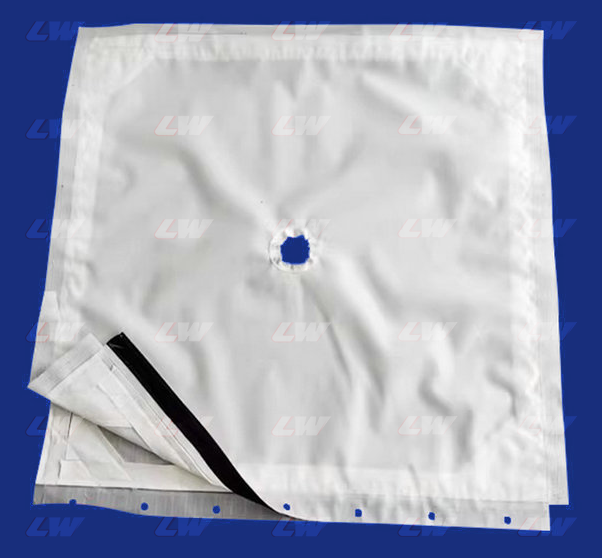
How needle-punched media are made
Fibre is carded into a loose web, then punched with thousands of barbed needles per pass. The barbs carry fibres through the web and entangle them into a self-coherent sheet — no yarn, no weave, no binder. Weight and thickness are set by the web layers and the punching density, which is why non-woven is specified by g/m² rather than by mesh.
A calendering pass can smooth the surface and tighten the apparent pore, and a scrim — a thin woven grid laminated inside the medium — adds the tensile strength needed for membrane press duty or for clamping systems that load the cloth hard. Which of those options applies is decided by the press, not by the slurry alone.
Where non-woven fits
- Fine chemical polishing — where the filtrate must be clear and the solids load is low
- Valuable fines recovery — capturing product that a woven cloth would pass
- Oil and solvent pre-filtration — before finer cartridges or membranes
- Pigment and dyestuff — depth capture of agglomerated colour bodies
Where it does not fit
Do not specify non-woven for high-solids tailings or for sticky cake: the same depth structure that captures fines also holds them, and cleaning becomes the limiting cost. Where cycle time dominates, a monofilament woven cloth will outperform it.
Cleaning and life
Wash at low pressure, in the reverse direction if the installation allows, and avoid high-pressure jets that drive solids deeper into the medium. Non-woven cloths are usually replaced rather than restored once the pressure drop at constant flow has risen beyond the point where the cycle can absorb it.

Specification Range
| Parameter | Range |
|---|---|
| Fibre | Polyester or polypropylene |
| Construction | Needle-punched, calendered surface available |
| Pore size | 1–20 µm |
| Weight | 200–800 g/m² |
| Thickness | 0.5–5.0 mm |
| Air permeability | 25–1000 L/m²/s (approx. 5–200 cfm/ft²) |
| Continuous temperature | PET 130 °C · PP 90 °C |
| pH window | 2–13 depending on fibre |
Air permeability is given in both metric and cfm because buyers specify in different units; the pressure at which it is measured must be stated for the number to mean anything.
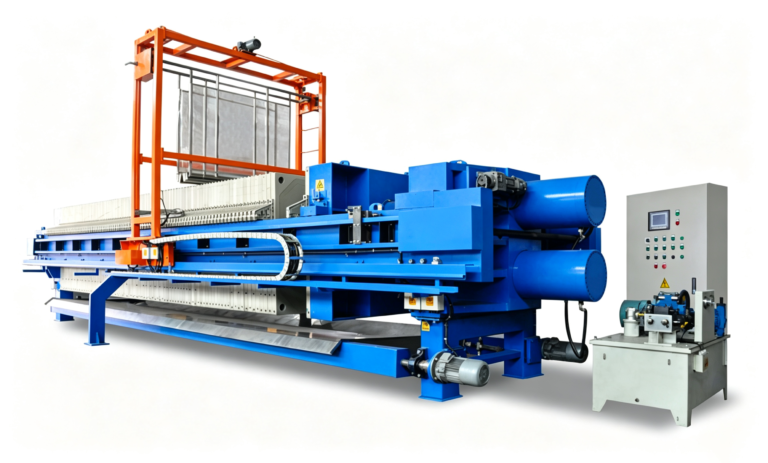
Ranges are common weaving ranges for this cloth family. The final specification is confirmed against your slurry data and plate drawing.
Cloth Finishing at Loway
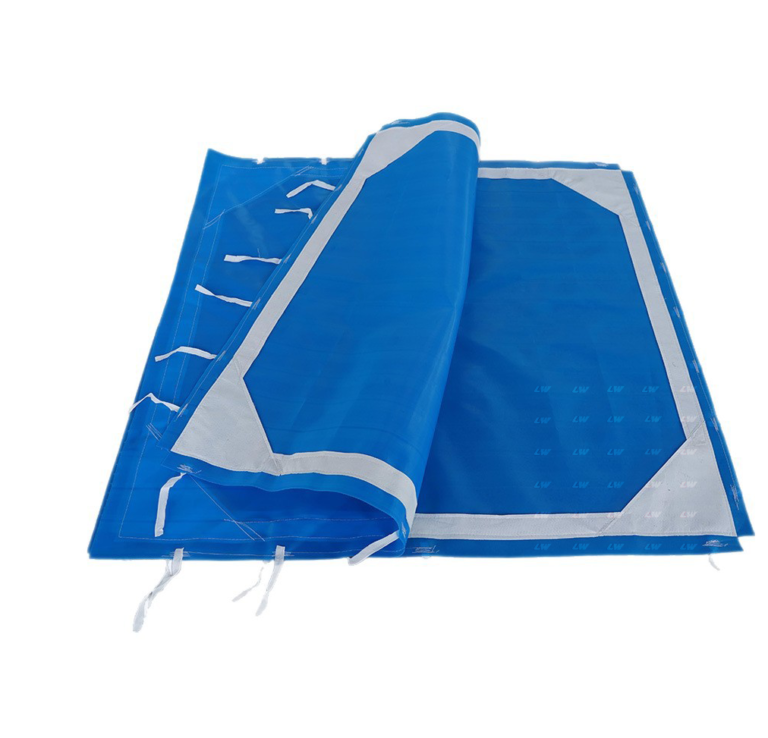
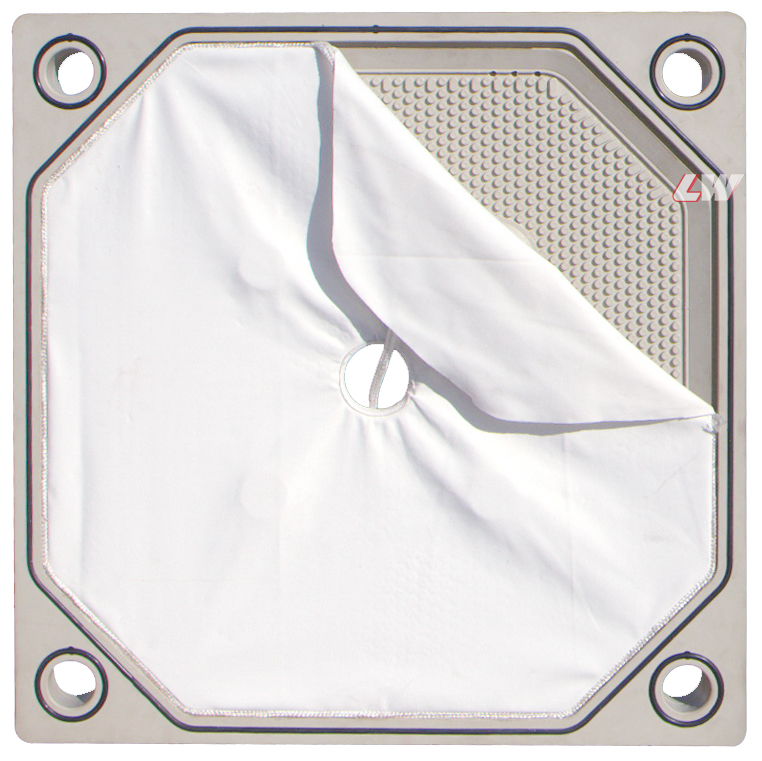
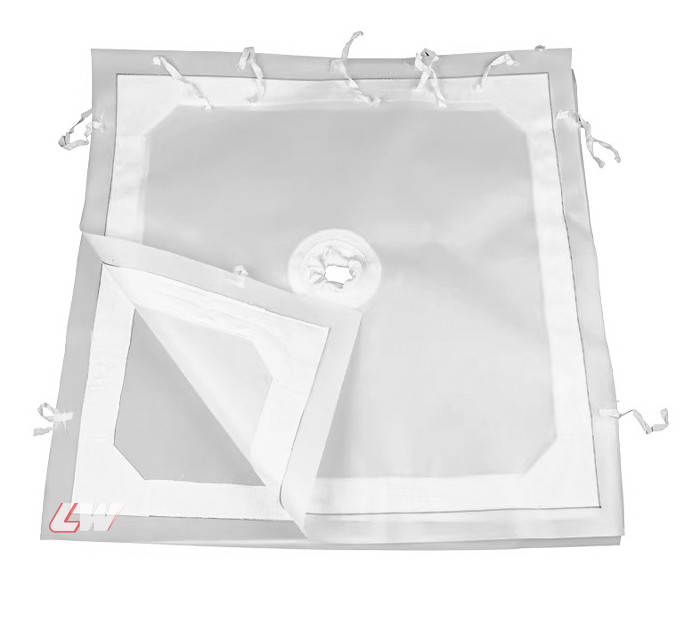
Weaving, finishing and cutting are handled in our own workshop, so replacement cloth is cut to your plate drawing rather than to a catalogue size.
Request a Quote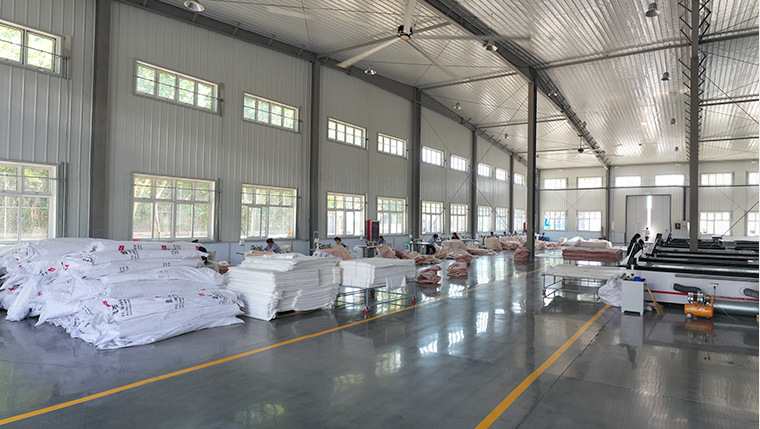
Frequently Asked Questions
Can non-woven cloth really reach 1 micron?
Yes, in the finer needle-punched grades, measured by bubble point on the finished medium. The number describes retention, not absolute sterility — for absolute ratings a membrane is the correct product.
Polyester or polypropylene non-woven?
Polyester for temperature to 130 °C and acidic duty; polypropylene where alkali resistance matters and the duty stays below 90 °C.
Why does my pressure drop rise so fast?
Depth media hold solids inside the structure. If the solids load is high, the medium loads up quickly. A pre-filter or a coarser surface layer extends the interval between changes.
Can it be used on a membrane press?
Yes, with the cloth cut for the membrane recess. Squeeze pressure compresses the medium slightly, which tightens retention and raises pressure drop — allow for it in the cycle.
How is air permeability quoted?
In L/m²/s at a stated pressure, or in cfm/ft² in North America. We quote both when the buyer's specification uses cfm.
What is a scrim, and does my cloth need one?
A scrim is a light woven grid locked inside the non-woven to carry tensile load. It matters where the cloth is clamped hard, pulled around a feed eye, or squeezed on a membrane plate. On gentle polishing duty without squeeze, an unpunched-surface scrim-free medium filters slightly finer and costs less.

Get a Cloth Specification
Send your plate drawing and slurry data — pH, temperature and particle size — and we will confirm the structure and polymer.