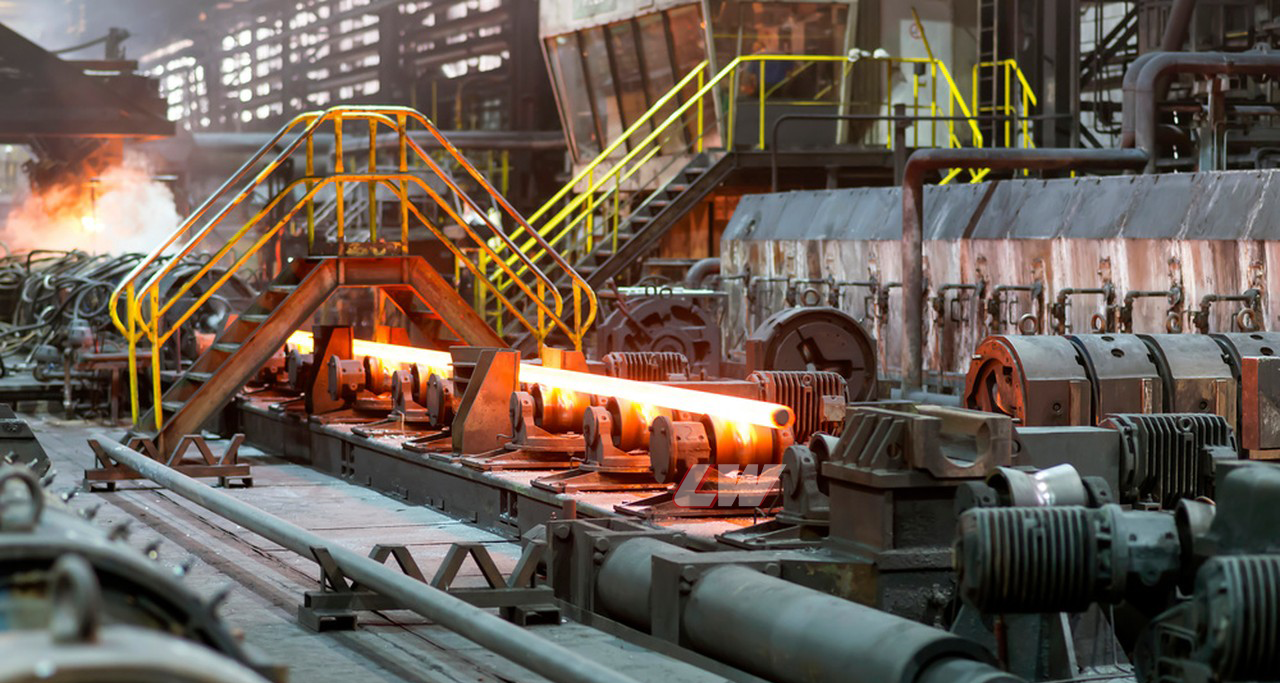
Industry Applications · Nonferrous Metallurgy
Two Dewatering Lines Inside a Nonferrous Metallurgy Plant
One line carries metal. Leach residue, red mud and refinery slime arrive with pregnant liquor in their moisture, and that liquor is value walking out of the gate. The other line carries water. Neutralised effluent and plant sludge have to leave site as a cake, at a volume the plant actually produces every day. They are sized on different numbers, and only one of them is a belt press duty.
The split
The value line and the water line are not the same job
One is measured in metal recovered. The other is measured in what leaves site and what the discharge permit allows. A machine sized for one of those targets is the wrong size for the other, which is why the split comes first and the equipment comes later.
The value line
Fine, compressible residue holding pregnant liquor. The cake has to be washed, the filtrate has to come back clean, and the cycle has to include a squeeze. This is batch pressure filtration on a hydrometallurgy filter press, run against a recovery target rather than a discharge limit.
Leach residue · Red mud · Refinery slime · Concentrate
The water line
Neutralised acid effluent and plant sludge. Flow is continuous, volume is large, and the cake has to leave site without dripping. Two of these sludges still land on a hydrometallurgy filter press; the dilute plant effluent is where a belt press belongs.
Sulphide sludge · Neutralisation sludge · Gypsum · Plant effluent
Most plants need both, and they are usually bought years apart. The hydrometallurgy filter press is sized on the residue; the belt press is sized on the flow.
The value line
Leach, thicken, wash, dewater
A hydrometallurgy circuit moves metal from solid into liquor, then has to move it back out of the residue before the residue leaves. The order of those steps is fixed. What changes between plants is how many wash stages the target asks for, and a hydrometallurgy filter press is the station where that number is settled.
Leach
Acid or caustic dissolves the value. What is left still holds liquor in its moisture.
Thicken
Solids are concentrated so the separation step receives a feed it can pump and fill.
Wash & dewater
A hydrometallurgy filter press fills, squeezes, pushes wash water through the cake and blows the core clear.
Filtrate
Pregnant liquor and wash water return to leach, to solvent extraction or to electrowinning.
Residue
A cake that can be hauled to a stack, or carried on to a smelter.
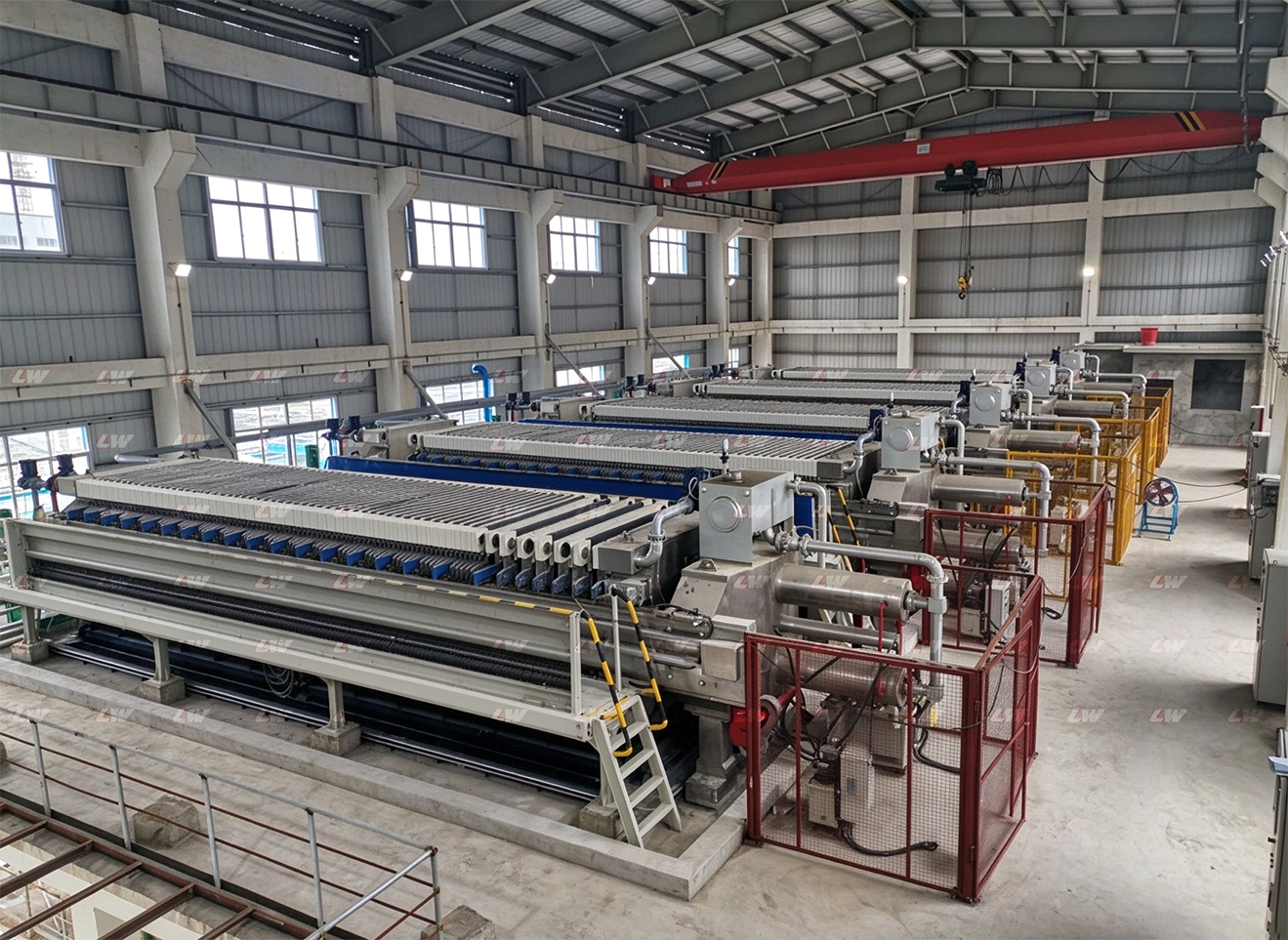
Everything ahead of a hydrometallurgy filter press prepares the feed. Everything behind it lives with the number it produced.
The duties
Four residues that have to be pressed
Each one reaches a hydrometallurgy filter press for a different reason, and each is sized from a different number. A single plant can hold all four at once.
01Acid leach residue
Copper, zinc, nickel and cobalt circuits each leave one. The moisture in the cake is pregnant liquor, so a litre left in the residue is dissolved metal going to the stack. Filtration is judged on how dry the cake leaves and how much of the value reports back to the circuit, and on a hydrometallurgy filter press it is the wash rather than the squeeze that moves that second number.
02Bayer red mud
Alumina refining leaves a caustic, very fine residue at the largest tonnage of the four. Most particles sit below ten microns, so resistance to flow is high and the cake has to be built under pressure. The target is a stackable residue with the caustic kept out of the drainage. Units run in parallel with a spare on the line, because this hydrometallurgy filter press duty runs every shift.
03Precious metal slime
Gold and silver precipitate from refining arrives in small volumes at high value per tonne. The hydrometallurgy filter press cycle is tuned for capture rather than throughput: cloth that holds the fines, a wash that strips the mother liquor, and a cake that leaves the press whole instead of cracked on the way to the refinery.
04Concentrate
Where the dewatered solid is the product, moisture is shipped weight. Concentrate filtration is the plainest duty on this page: press it, dry it, load it. The hydrometallurgy filter press is still bought on cake moisture, just with a freight bill behind the number.
The water line
One neutralisation plant, three different sludges
Lime neutralisation of acid effluent does not produce one sludge. Sulphide precipitate, metal hydroxide and gypsum settle differently, thicken to different densities and each asks a hydrometallurgy filter press or a belt press for something different.
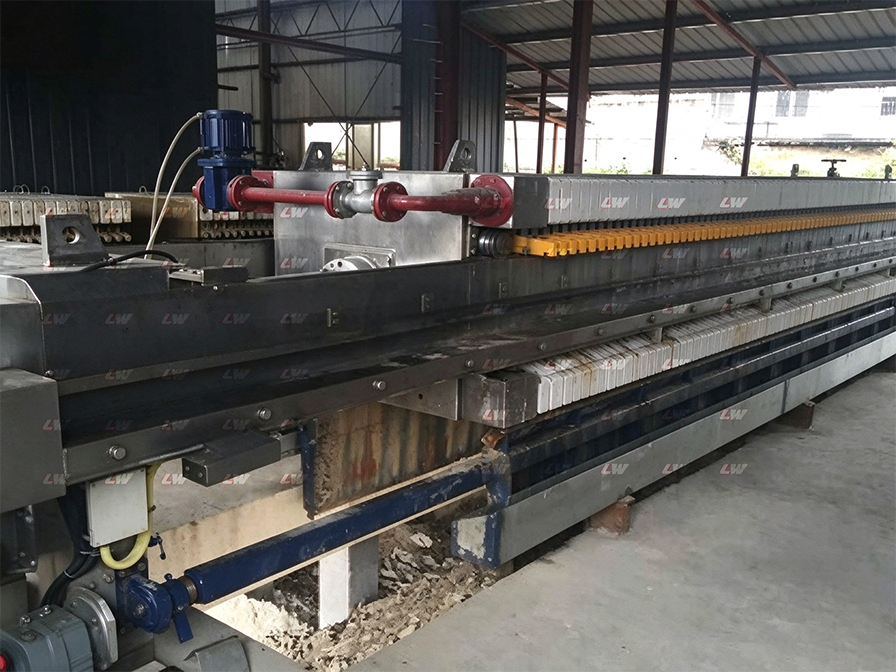
Sulphide sludge
Metal sulphide from a sulphide dosing step. It thickens to a thin slurry, so the hydrometallurgy filter press sees a large volume for a small dry tonnage. The cake has to be handleable and the filtrate goes back into the water circuit.
Neutralisation sludge
Metal hydroxide from lime dosing, and the largest sludge volume on the site. Without flocculant ahead of the press the cake comes out firm enough to haul; with it, the same press runs faster but the cake carries more water.
Gypsum sludge
Calcium sulphate is the one sludge here that several machines can take: a chamber press, a centrifuge or a vacuum belt. It releases water more readily than the hydroxide sludge, which is why the choice widens for this one.
Which of the three a plant produces is decided by the effluent, not by the press. Two of them normally end up on a chamber filter press.
Selection
Follow the duty, not the catalogue
Read down the first column. The machine follows from three things: how fine the solids are, whether the cake has to be washed, and how much water has to leave before the cake can be moved.
Eight duties, five machine types, and one row that belongs to a belt press. The hydrometallurgy filter press takes the other seven, in different builds. That is why one site can run two kinds of press and be correctly equipped.
The presses
Three press types carry the value line
All three are hydrometallurgy filter press builds running batch cycles. What separates them is whether the cycle includes a squeeze and a wash, how large the pack is, and how much of the discharge happens without an operator.
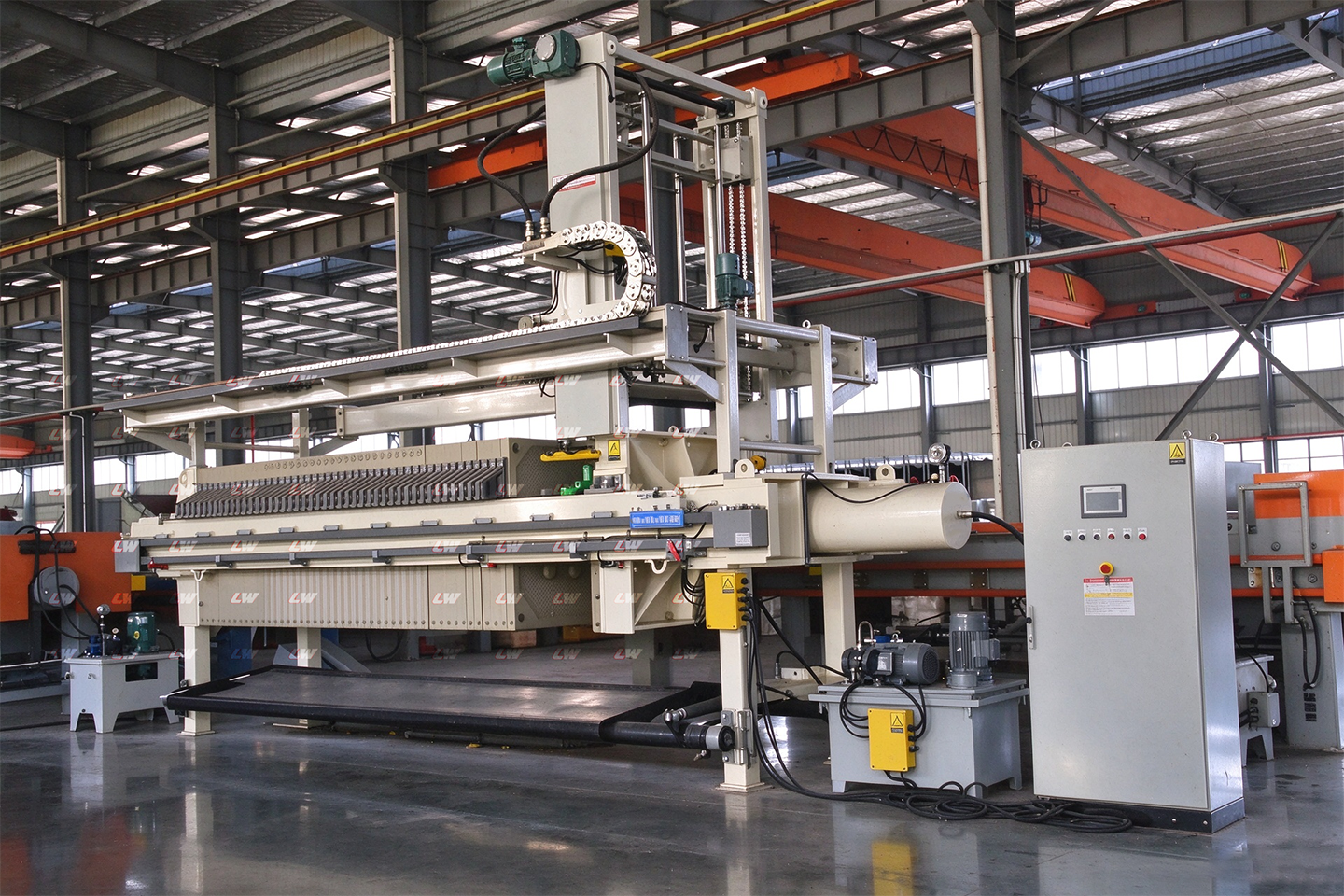
Membrane filter press
Chambers fill, membranes squeeze, wash water displaces the liquor, air clears the core. On leach residue and refinery slime this is the step that recovers the metal. Membrane filter press →
Recessed chamber filter press
For caustic tonnage rather than dissolved value: red mud and neutralisation sludge on a polypropylene pack, with wearing parts that sit flat and come out singly. Recessed chamber filter press →
Automatic filter press
High-cycle circuits. Plate shifting and cake discharge run on a programme, so one operator covers the shift instead of standing at the pack. Automated filter press →
Where the belt fits
One duty on this site belongs to a belt press
A belt filter press is continuous. It wants a dilute, flocculated feed and a steady flow, and it returns a cake that is wetter than a press cake. Those conditions do exist in a metallurgical plant. They just are not where the metal is, and where the metal is, the duty stays on a hydrometallurgy filter press.
What it takes
- Plant effluent and circulation water blowdown
- Sanitary and storm water sludge
- A feed between 0.5 and 5% dry solids, flocculated ahead of the belt
What stays on pressure filtration
- Acid leach residue
- Bayer red mud
- Refinery slime
These three are fine, compressible and often hot or caustic. The cake has to be washed, and a belt can only apply atmospheric pressure, so the cake leaves wetter and the wash step is not there.

A vacuum belt press standing in our workshop, on the same continuous frame the water line runs on.
A coarser tailing or concentrate that has to be washed counter-current is a different case again. That is where a vacuum belt sits, not the standard belt press.
The wash
Displacement, not dilution
Diluting a cake and re-thickening it gives back most of what it gains. Pushing wash water through the cake in one pass moves the liquor out and puts the water in its place, and inside a hydrometallurgy filter press that happens in the same cycle as the dewatering.
Single displacement
One measured volume of wash water follows the feed. It suits residues with little value left in the mother liquor, where one pass reaches the target.
Counter-current
Stages run in series, and the filtrate from one becomes the wash for the one before it. Same cleanliness on less water than dosing each stage fresh.
Water balance
Every litre of wash through a hydrometallurgy filter press reports to the filtrate. If the circuit takes it back to leach the wash is nearly free; if it goes to treatment, the wash rate becomes part of the effluent load.
Delivery & support
What arrives with the machine
Four items agreed before the order decide how the hydrometallurgy filter press behaves once it reaches your plant.
Layout drawings
General arrangement and interface drawings come first, so civil and piping work starts while the press is still in our workshop. Refinery sites are tight, and early drawings keep the installation free of rework.
Spares set
Cloths, plates and feed pump wear parts are listed at order, so the first shutdown is planned rather than improvised.
Commissioning
Our engineers fill the press, run the first wash and open the first cake with your operators. The crew that starts it with us runs it without us afterwards.
Cloth stock
Fines and precipitates blind cloths quickly. A spare set on the shelf turns a lost shift into a twenty-minute change.
FAQ
Questions from metallurgical projects
Why does a metallurgical plant need two kinds of dewatering machine?
Because it produces two kinds of stream. The value line is fine, compressible residue that has to be washed, which means batch pressure filtration. The water line is mostly continuous sludge at large volume, where throughput and uptime decide the machine. A single machine type serves one of those targets well and the other poorly, so plants with a full circuit usually run both, with a hydrometallurgy filter press on the residue and a belt press on the plant effluent.
Can a belt filter press dewater leach residue?
It is built for a different feed. Leach residue arrives fine, compressible and often hot, and the cake has to be washed to recover the liquor. A belt can only apply atmospheric pressure and has no wash stage, so the cake leaves wetter and the metal leaves with it. That duty stays on a hydrometallurgy filter press.
Can a press replace counter-current decantation?
For many tonnages, yes. Each wash stage inside a hydrometallurgy filter press is a full displacement rather than a dilution and re-settle, so the same recovery is reached with fewer stages and less water. The number of stages the target asks for is what decides it, and the lab run on the actual slurry settles that.
How do you size a press for red mud?
On tonnage first, because red mud volume is large and the machine count follows it. Then on cake target, since the residue has to reach a stackable form. Solids below ten microns set the cloth and the fill time. A hydrometallurgy filter press for red mud normally runs as several units in parallel with a spare, so one wash cycle does not stop the line.
Where does the wash water go?
Every litre added reports to the filtrate. If the circuit takes it back to leach or extraction the wash is nearly free, and if it goes to effluent treatment the wash rate becomes part of that load. The figure is fixed at sizing, so the water balance is known before the hydrometallurgy filter press starts.
What do you need to quote one?
Solids per hour, the liquor analysis and pH, feed temperature, the wash target and where the cake has to go. A sample of the actual residue is worth more than a flowsheet, because cloth and wash rate are read from it before the hydrometallurgy filter press is priced.
Send the residue and the tonnage
On the value line that means solids per hour, liquor analysis and the wash target. On the water line it means flow and the solids in it. Either one is enough to start.