

Mobile Filter Press for Skid-Mounted On-Site Dewatering
A complete batch dewatering station built onto one transportable frame: press, feed pump, conditioning tank, hydraulics and controls. Truck it in, set it on a hardstand, connect slurry and power, and run the first cycle the same day.
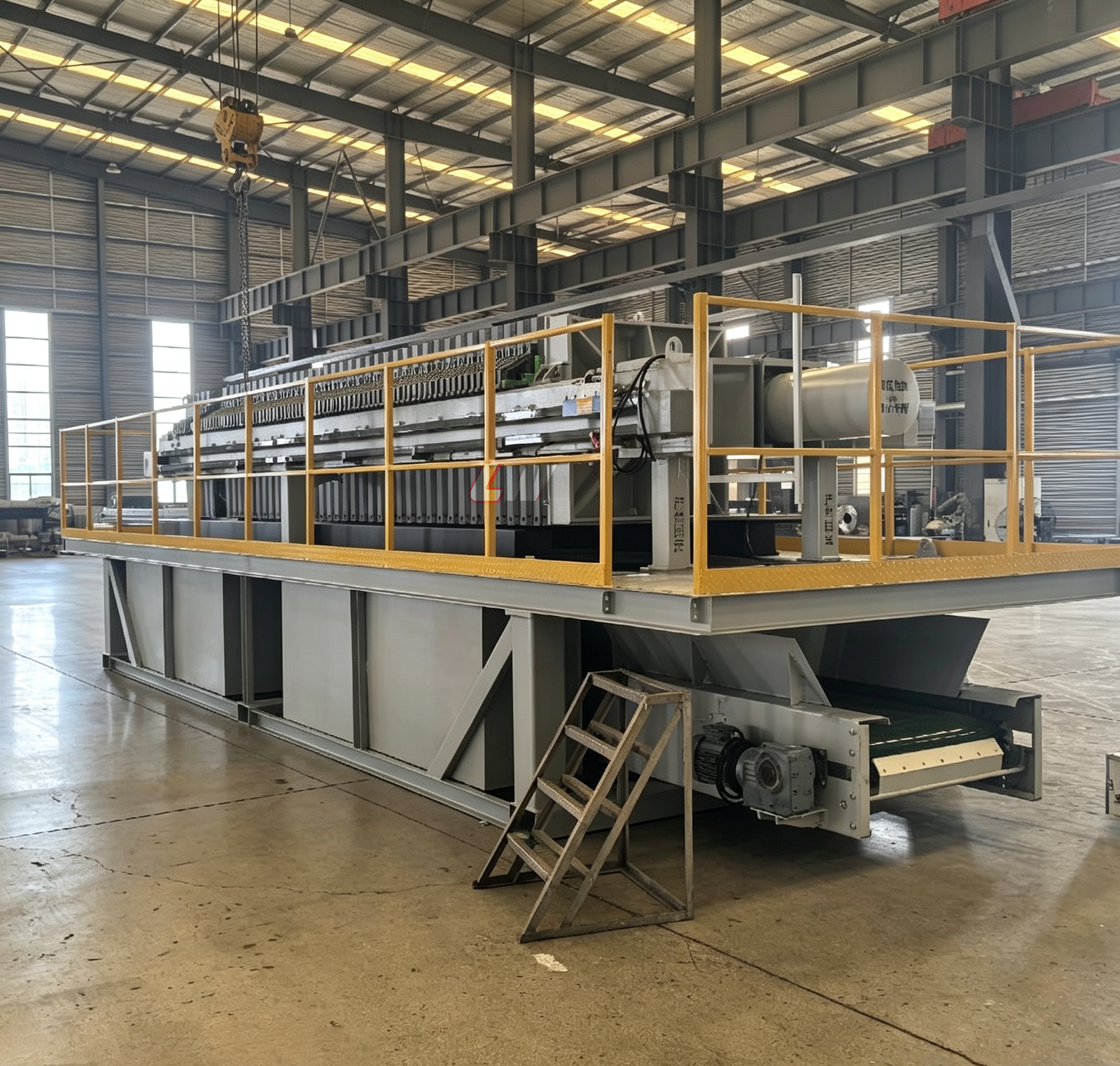
What Ships on One SkidOne truck, one lift, one power connection
The point of a mobile unit is that nothing has to be sourced on site. These eight items leave the factory piped, wired and wet-tested on the same frame.
- Filter press with clothed plate pack Chamber plates in the 500–1000 mm series, 10–30 plates, clothed for the slurry you declare at order stage.
- Feed pump with flow control Progressive-cavity or air-diaphragm pump with VFD or air regulator, so feed rate and pressure are set from the panel.
- Agitated conditioning tank Slurry tank with mixer on the skid, sized for one full batch, so conditioning happens where the press is.
- Hydraulic power pack Compact unit closes the pack and holds closing pressure through the feed and squeeze phases.
- Control panel — push-button or PLC/HMI Cycle timers, pressure readout, pump interlocks and alarm outputs as standard; touch-screen HMI optional.
- Filtrate and drip collection tray Stainless or polypropylene tray channels filtrate to a single drain connection and keeps the hardstand clean at discharge.
- Pipework, valves and gauges Slurry, filtrate, air-blow and wash manifolds pre-installed, with pressure gauges where an operator needs to read them.
- Forklift pockets, lifting lugs and adjustable feet The frame is built for truck loading and crane lifting, and levelled on uneven ground without shims.
From Truck to First CakeA realistic start-up schedule, and what the site has to provide
Mobilisation is a half-day job for a standard skid. The table below is the sequence we plan against, and the last column is the checklist sent before delivery.
| Phase | Time on site | What happens | What the site provides |
|---|---|---|---|
| Position & level | 0–1 h | Skid is craned or forked onto the hardstand, feet are adjusted, walkway and handrails unfolded. | Level load-bearing hardstand, crane or forklift access, clear space per model |
| Connect services | 1–2 h | Slurry line, power, wash water and drain are connected; hydraulic oil level and panel I/O checked. | Power supply per model, slurry feed point, drain, optional wash water |
| Commissioning run | 2–3 h | Dry cycle test, then a clean-water run, then the first slurry batch at reduced pressure. | Operator present, sludge available, cake skip or bags in place |
| First cake & handover | 3–4 h | Full-pressure cycle, cake discharged, cloths inspected, basic operator training given. | Cake handling: skip, conveyor or big-bag station |
Fixed Plant or Mobile Skid?Match the format to how the sludge and the site behave
| Your situation | Why a skid earns its keep | Typical build |
|---|---|---|
| The sludge source moves — pits, dredge berths, pipeline routes | The press follows the job instead of the sludge being hauled to a fixed plant | 630 or 800 series on an open skid or trailer |
| Short campaign, seasonal peak or pilot window | Capacity is deployed only for the weeks it is needed, then returned or moved on | 500 or 630 series, rental-friendly specification |
| No fixed building and no civil budget yet | No foundation and no building; a level hardstand is enough to start | 630 series with canopy and generator option |
| Emergency cover during outage or plant upset | Factory wet-tested skid mobilises in days rather than months | 500 or 630 series with container enclosure |
| Steady duty at one site, year round | A fixed chamber or membrane press gives the lowest cost per cycle in continuous service | Chamber or membrane platform |
Pick the Skid SizeFour plate series, chosen from batch size and transport envelope
Start from the cake you need per cycle and the truck or container you plan to move it on. Both are fixed early, because they set the skid length.
500 series
630 series
800 series
1000 series
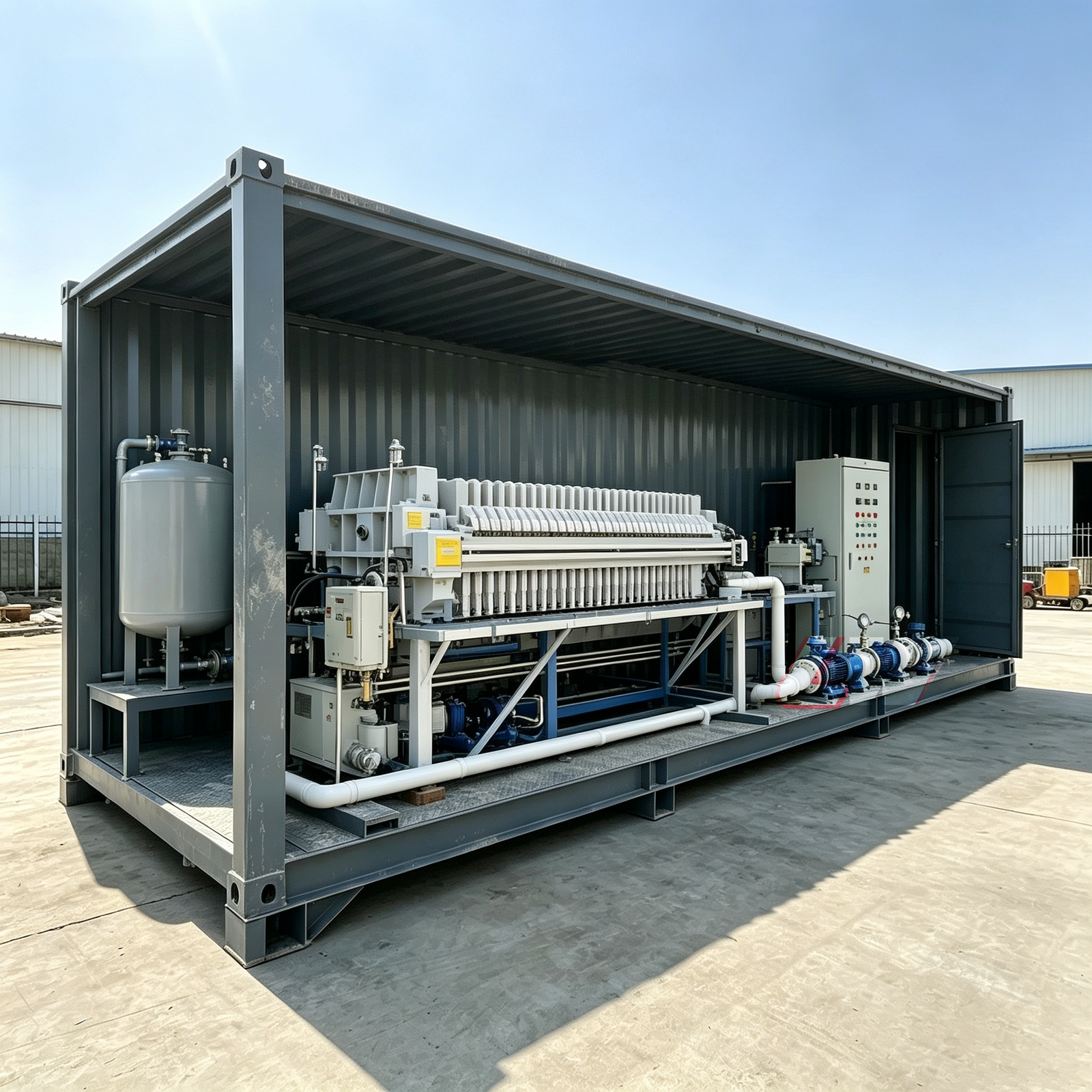
Mobile Series SpecificationsPlate data, installed power and the transport envelope
Mobile units are built on the 500–1000 mm plate series with 10–30 plates, which keeps the skid inside a normal truck or container envelope while still covering most on-site duties.
Plate Size, Filtration Area and Cake Volume
| Plate size (mm) | Filtration area per plate (m²) | Plate count range | Total filtration area (m²) | Cake volume per frame (L) | Feed pressure (MPa) |
|---|---|---|---|---|---|
| 500 | 0.25 | 10–20 | 2.5–5 | 8–16 | ≤0.6 |
| 630 | 0.5 | 12–26 | 6–13 | 15–32 | ≤0.6 |
| 800 | 0.9 | 14–30 | 12.5–27 | 28–60 | ≤0.6 |
| 1000 | 1.4 | 16–30 | 22–42 | 50–95 | ≤0.6 |
Skid Dimensions, Weight and Installed Power
| Model series | Plates | Skid length (mm) | Skid width (mm) | Height (mm) | Empty weight (kg) | Feed pump (kW) | Hydraulic (kW) |
|---|---|---|---|---|---|---|---|
| MYZ 500/10-U | 10 | 3,200 | 1,600 | 2,100 | 1,800 | 2.2 | 3.0 |
| MYZ 630/18-U | 18 | 4,400 | 1,800 | 2,300 | 3,200 | 3.0 | 4.0 |
| MYZ 800/24-U | 24 | 5,200 | 2,000 | 2,400 | 4,800 | 4.0 | 5.5 |
| MYZ 1000/30-U | 30 | 6,000 | 2,200 | 2,500 | 6,500 | 5.5 | 5.5 |
Transport Envelope and Site Services
| Model series | Shipping | Total installed power | Wash water | Compressed air | Hardstand needed |
|---|---|---|---|---|---|
| MYZ 500/10-U | 20 ft container or flatbed | ≈6 kW | 0.5 m³/h | 0.3 m³/min | 4 × 2.5 m |
| MYZ 630/18-U | 20 ft container or flatbed | ≈8 kW | 0.8 m³/h | 0.4 m³/min | 5 × 3 m |
| MYZ 800/24-U | 40 ft container or flatbed | ≈11 kW | 1.0 m³/h | 0.5 m³/min | 6 × 3.5 m |
| MYZ 1000/30-U | 40 ft container or flatbed | ≈13 kW | 1.2 m³/h | 0.6 m³/min | 7 × 4 m |
Standard Build and Optional Add-OnsWhat is in the base skid, and what you can specify on top
Every skid leaves the factory after a wet-run acceptance test. These lists separate the base machine from the options that change price, lead time or transport envelope.
In the base skid
- Skid frame with forklift pockets, lifting lugs and adjustable feet
- Filter press with clothed chamber plates in PP or stainless steel
- Feed pump with flow control and agitated conditioning tank
- Hydraulic power pack with closing-pressure hold
- Control panel: push-button as standard, PLC/HMI optional
- Filtrate and drip tray with a single drain connection
- Interconnecting pipework, valves and pressure gauges
- Factory wet-run acceptance test and test video before shipment
Specified on top
- Container enclosure, side-curtain canopy or full weatherproof housing
- Automated plate shifter for single-operator cake discharge
- High-pressure cloth wash system with water and air manifolds
- Polymer make-up and dosing skid for conditioned slurries
- Cake conveyor, skip station or big-bag discharge frame
- 4G remote monitoring for fleet status, alarms and run hours
- Diesel generator set for sites without grid power
- Spare cloth set, spare plates and commissioning spares kit
Where Skids WorkOn-site duties where the press has to travel
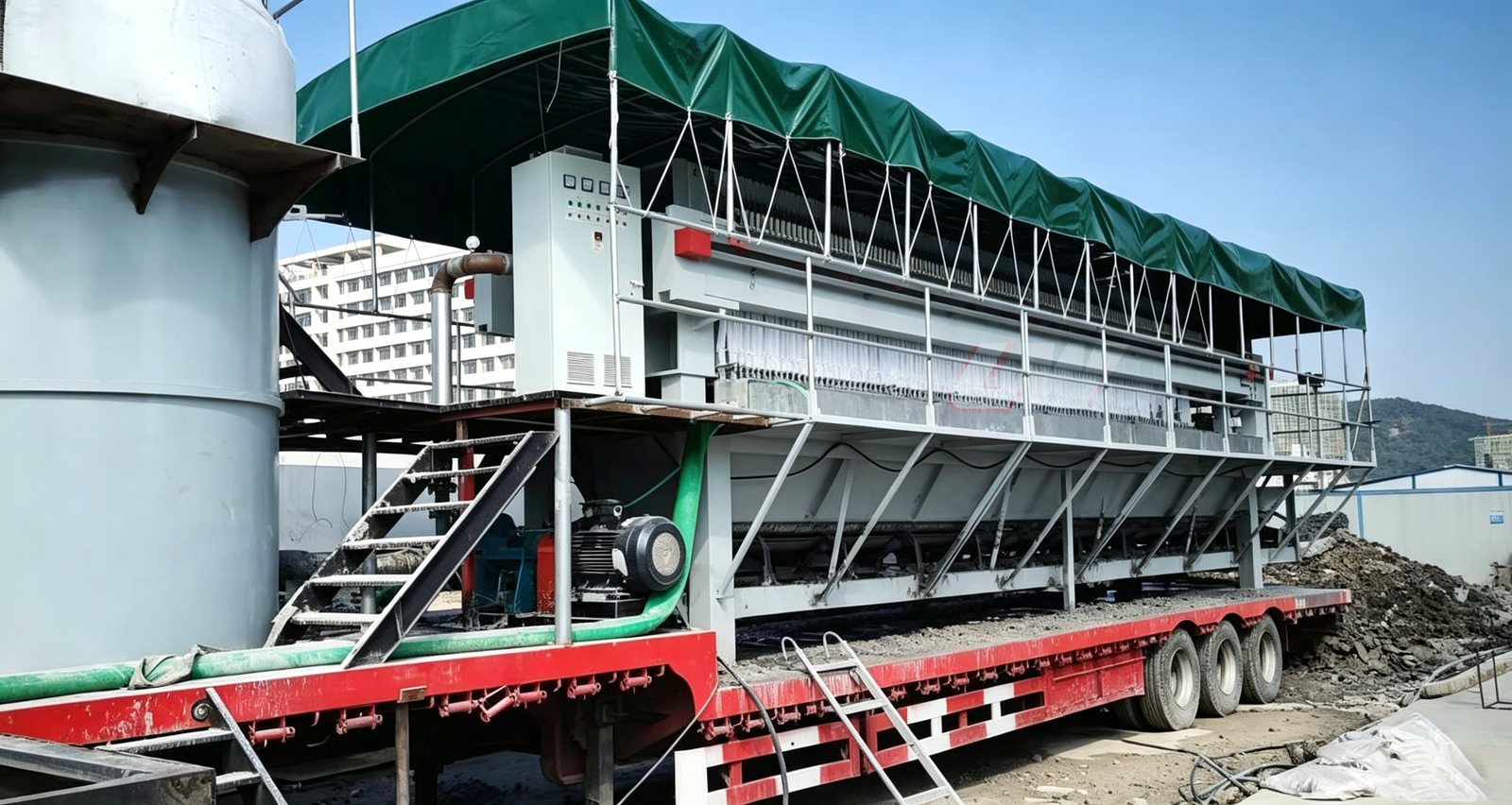
Pilot Plants & Small WWTPs
Compact skids give small stations and pilot trials full-scale dewatering data without permanent civil works.
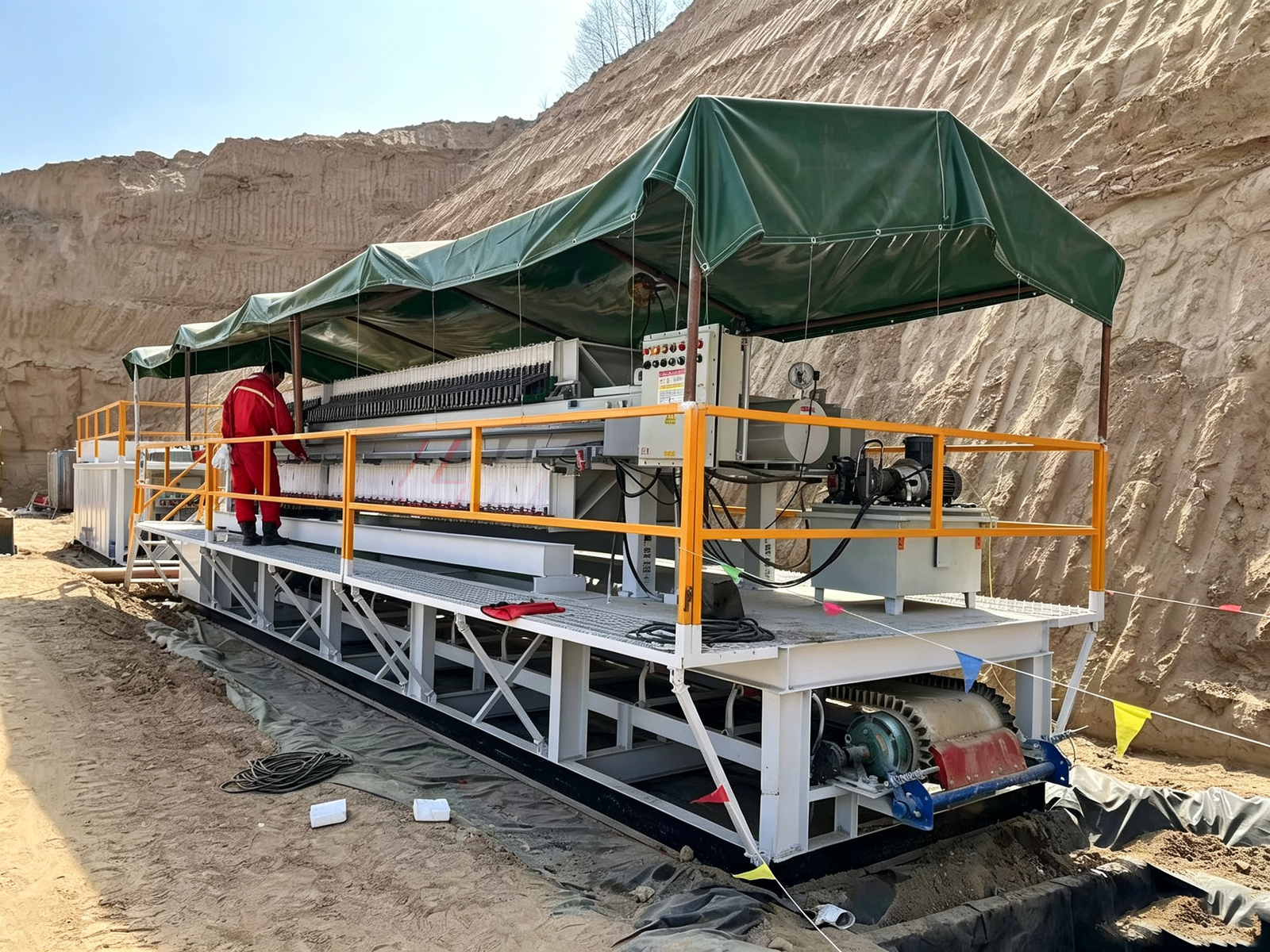
Mining & Aggregate Dewatering
Skids travel between pits and tailings areas, dewatering mineral slurries and quarry wash water as the deposit moves.
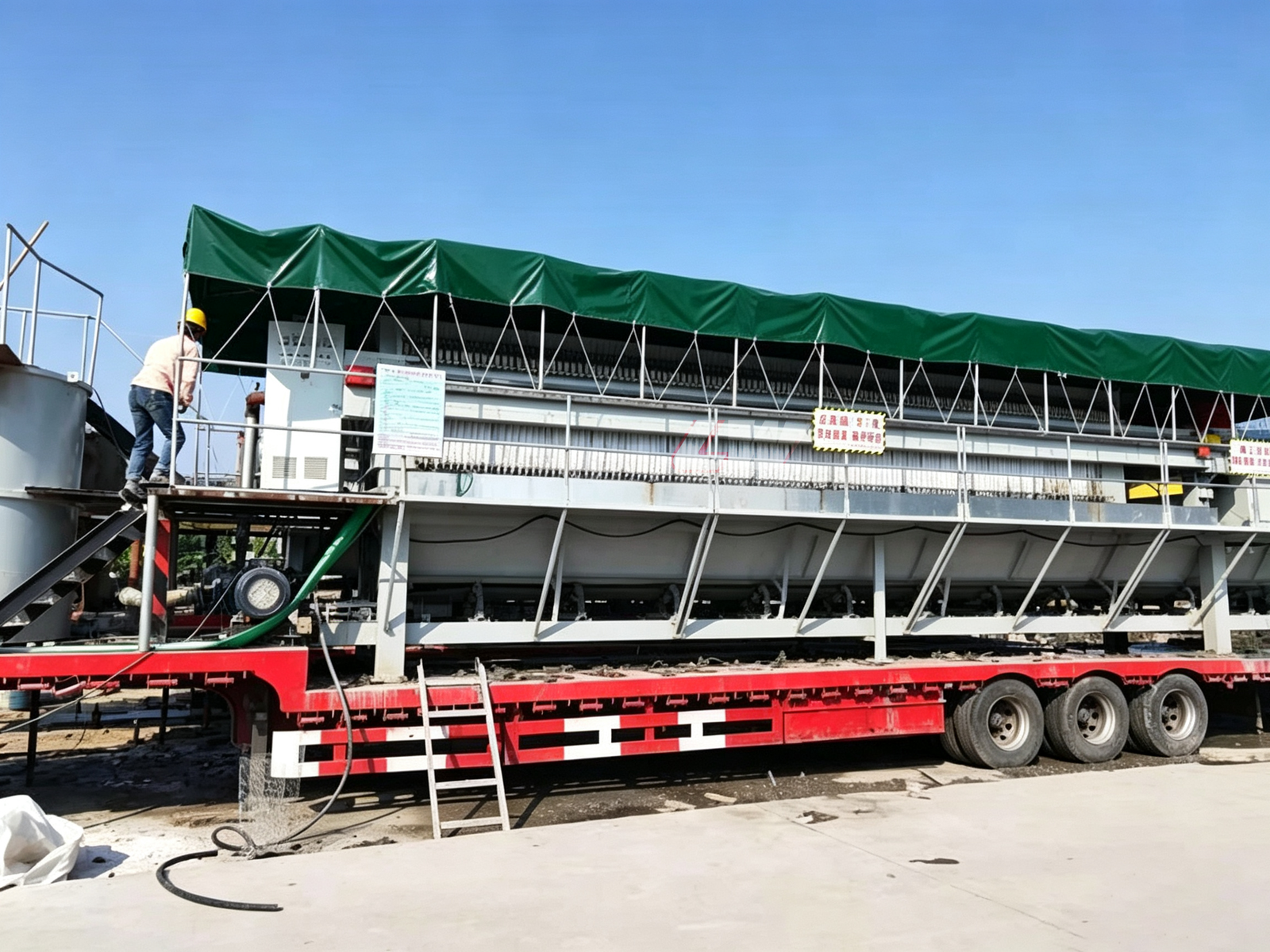
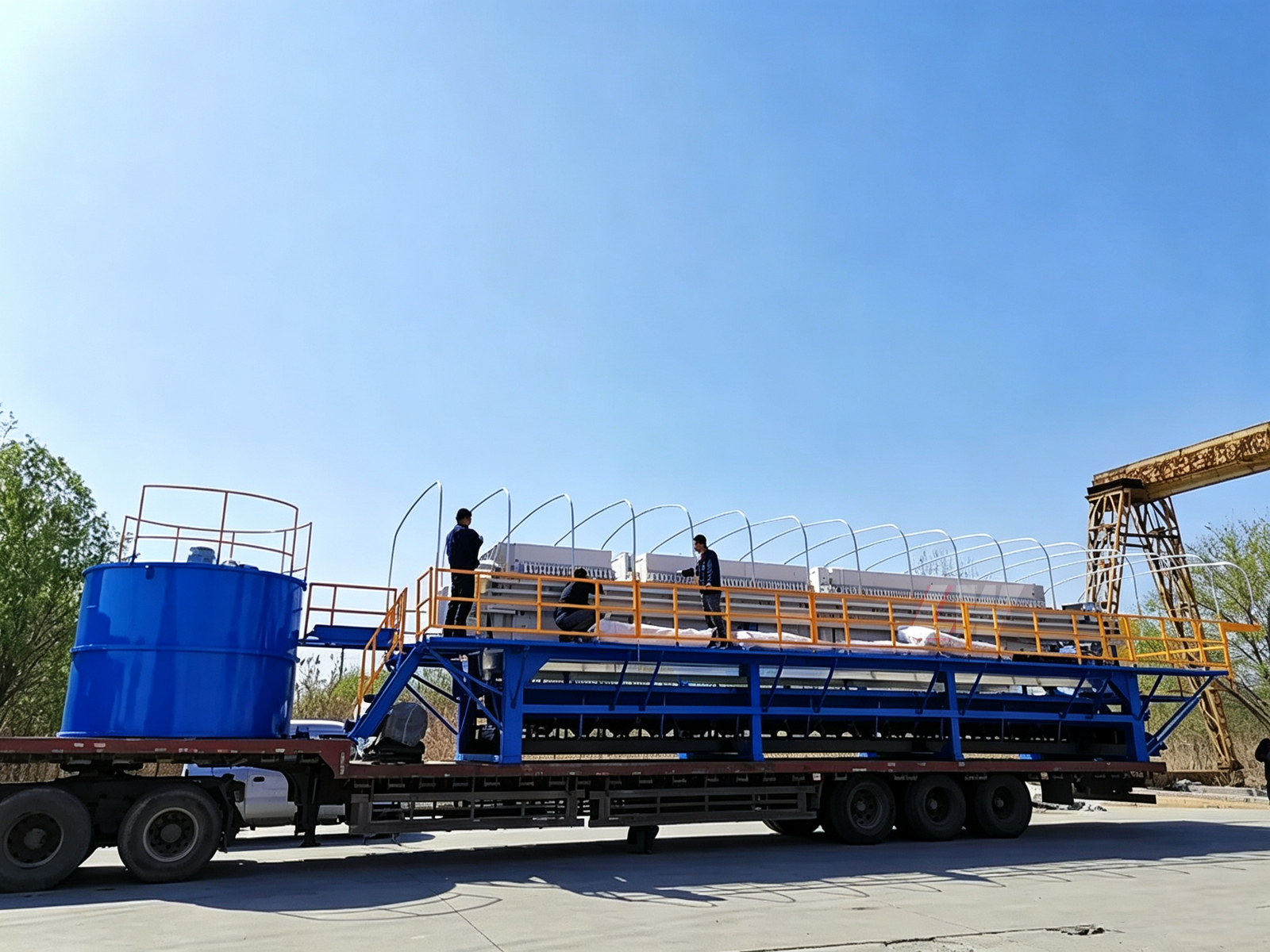
Construction, Dredging & Remediation
Trailer-mounted units move along pipeline routes, dredge berths and remediation sites, turning wet spoil into stackable cake.
Industrial On-Site Dewatering
Chemical, food and general industry sites rent or own mobile presses for outage work, emergency recovery and temporary capacity.
Frequently Asked Questions
Q1. How long does mobilisation actually take?
A standard skid is positioned and connected in half a day, and first cake is typically produced 2–4 hours after power and slurry are available. Trailer-mounted units cut handling further — the unit is towed into position and levelled.
Q2. Does a mobile filter press need a foundation?
No permanent foundation is required. A level, load-bearing hardstand with drainage is enough; the skid sits on adjustable feet. Larger units may be placed on a compacted gravel or concrete pad for stability during hydraulic closing.
Q3. What does the site have to provide?
Power at the rating in the services table, a slurry feed connection, a drain for filtrate, wash water if the cloth-wash option is fitted, and a way to take cake away — skip, conveyor or big-bag station. Where grid power is missing, a generator set can be added.
Q4. Can a mobile press run unattended?
PLC/HMI skids run feed, press, squeeze and alarm sequences without an operator present. Cake discharge still normally needs local oversight, unless an automated plate shifter and cake conveyor are specified.
Q5. Open skid, canopy or full container?
Open skids suit temperate sites with an existing building or shelter. A canopy handles sun and rain at low cost. A full container enclosure is specified for cold, dusty, high-security or unattended sites where panels and hydraulics need protection.
Q6. Is a mobile press as efficient as a permanent one?
Yes on a per-cycle basis — the same plates, cloths and hydraulics are used. The difference is footprint and transportability, not dewatering performance. Continuous duty at one site favours a fixed chamber or membrane press on cost per cycle.
Q7. Can I rent instead of buying?
Loway supports rental and lease-to-own programmes for mobile filter presses in many regions. Rental is common for emergency response, pilot testing and seasonal campaigns. Send the duty and duration for a rental quotation.
Get a Sized Mobile Skid Quotation
Send your sludge volume, solids concentration, site power and how often the unit will move. Loway will propose a plate series, plate count, enclosure and options, then quote the complete skid ready for transport.
Related PlatformsWhere the duty points when the sludge stops moving
A mobile skid solves a moving or temporary duty. When the same sludge is dewatered in one place, these platforms take over.
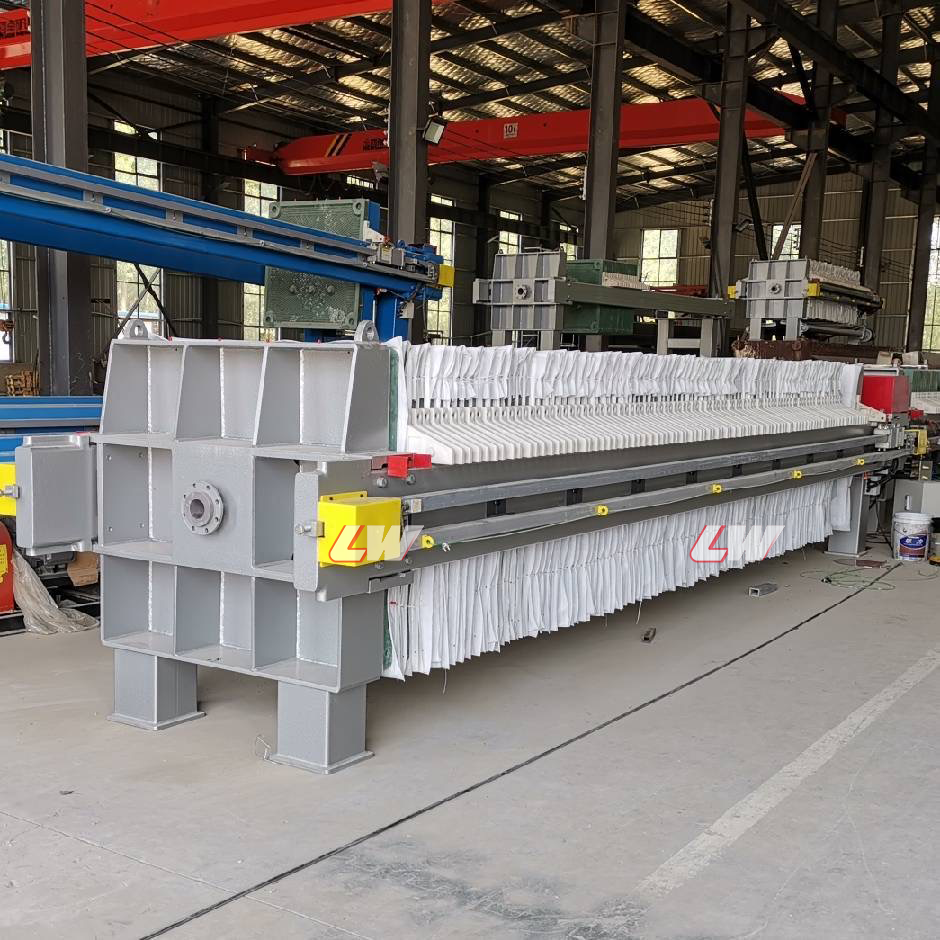
Chamber Filter Press
Recessed-plate dewatering on cloth — the workhorse for mining tailings and chemical slurries.
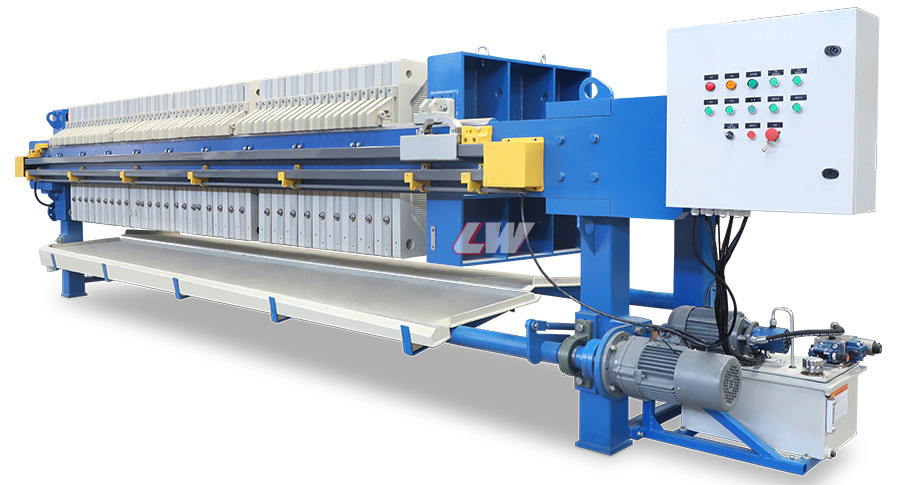
Membrane Filter Press
Secondary squeeze for the driest cake in the filter press family.
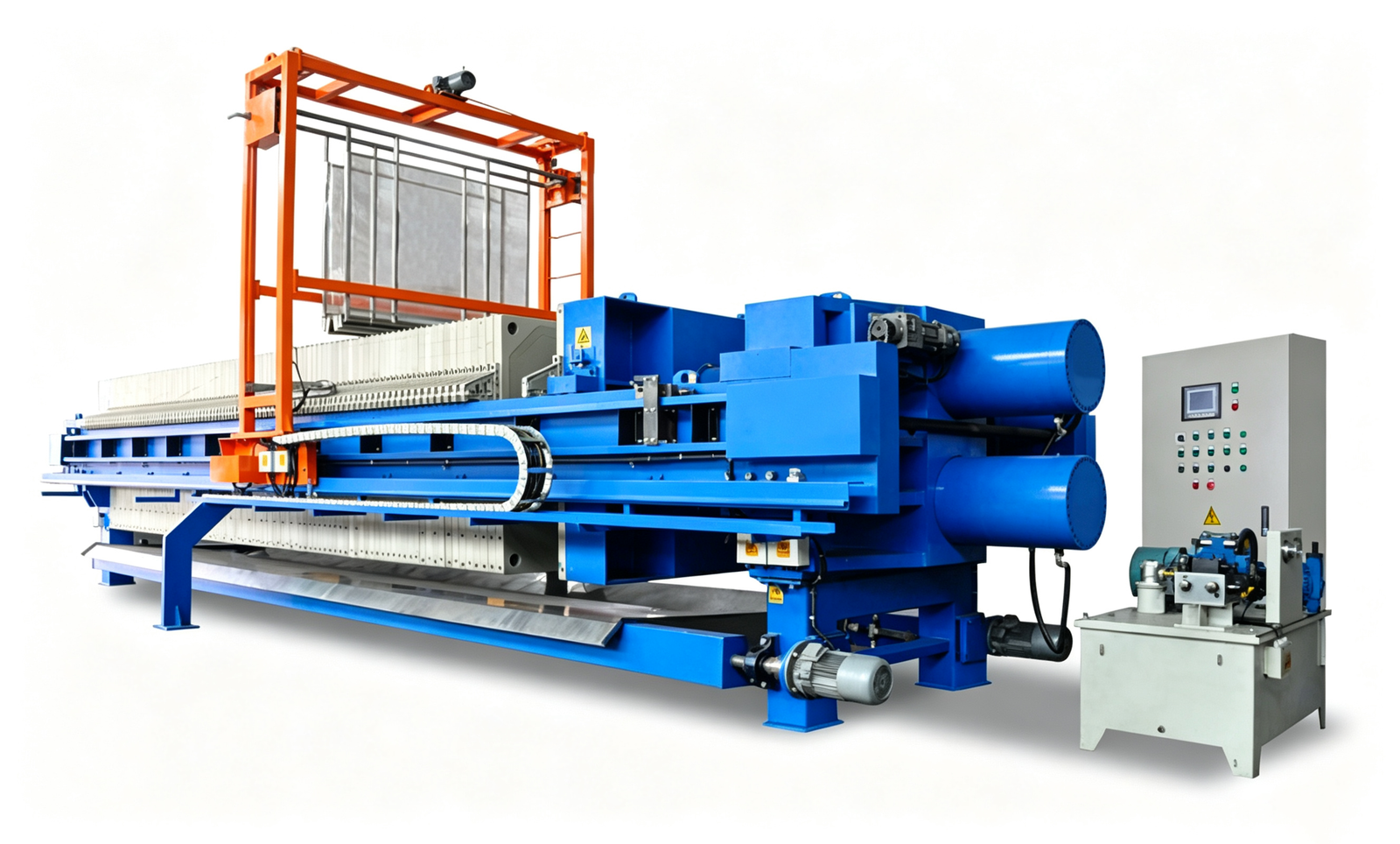
Automated Filter Press
Fully automatic batch dewatering with plate shifter, cloth wash and cake conveyor.
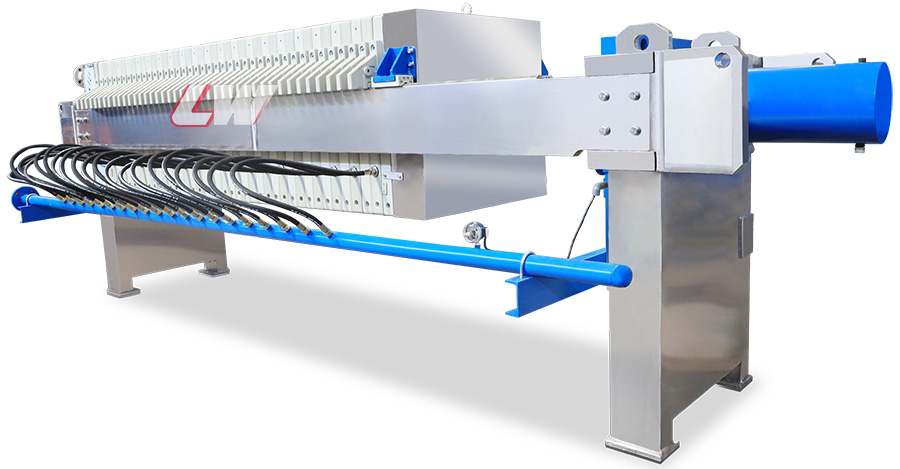
Lab & Pilot Filter Press
Bench trials that produce the cake moisture and cycle data a skid is sized from.