Screening Equipment · LWZG Series
Rotary Drum Screen
The LWZG rotary drum screen combines fine screening, spray washing and screw-press dewatering in one channel-mounted unit — raw wastewater in, compacted dry screenings out.
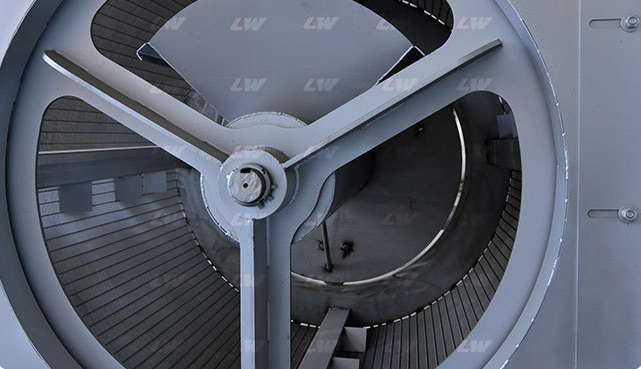
Product overview
One unit for screening, washing and dewatering
The LWZG rotary drum screen is a channel-mounted mechanical screen for municipal and industrial wastewater. Wastewater flows by gravity into the inclined drum; solids larger than the selected screen gap are caught on the wedge-wire surface, washed clean by an internal spray bar, and carried away by an integrated screw press.
The rotary drum screen does two jobs at once. It delivers screened water to the downstream treatment stages — pumps, fine equipment and membranes protected from debris, hair and fibers. And it discharges compacted, dewatered screenings that go straight into a skip instead of dripping into the channel.
The drum is built in SS304 stainless steel (SS316L for corrosive duty), installs directly into the channel at 35° or in a supplied tank, and runs automatically on a liquid-level signal — no operator on duty.
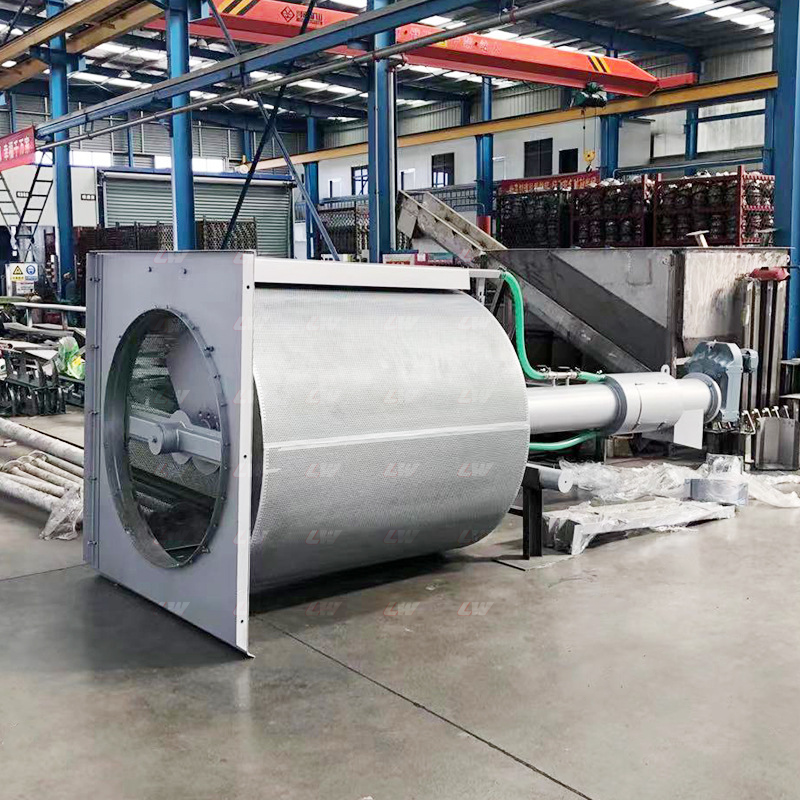
Working principle
A continuous three-stage cycle
Water flows by gravity; drum rotation, spray washing and the screw press are the only powered duties. The rotary drum screen runs unattended around the clock.
Screening
Wastewater enters the channel and flows into the drum interior. Water passes outward through the wedge-wire basket; solids larger than the selected gap are held on the inside surface.
Washing & transport
Drum rotation lifts the captured solids to the top, where a high-pressure spray bar (0.3–0.6 MPa) and a nylon brush strip organics and fibers off the screen surface and flush them into the central screw trough. The internal screw conveyor carries the debris up to the press zone.
Compaction & discharge
In the press zone of the rotary drum screen, the screw compacts the screenings to 25–45% dry solids and pushes them out through the discharge pipe. Pressed-out water drains back into the channel.
Wash water for the rotary drum screen is taken from filtered plant water, and the spray runs only while the drum turns — consumption stays proportional to the actual load.
Construction
Six assemblies inside the LWZG
Every part of the rotary drum screen is built around one wear decision: what the basket catches and how cleanly it lets go.
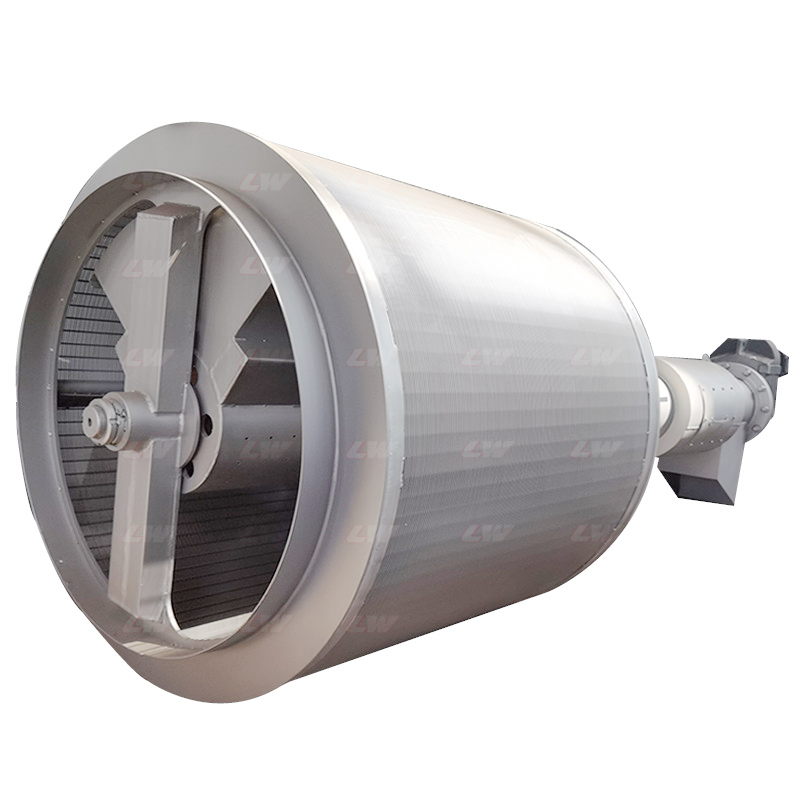
Drum basket
The screening surface: wedge-wire in SS304, SS316L for corrosive duty. The gap sets the cut point; the basket is the part your duty is built around.
Drive unit
Geared motor rotates the drum at 4–6 r/min. Slow rotation is deliberate — it gives the spray bar and brush time to clean each band of the surface.
Spray bar & brush
Wash water at 0.3–0.6 MPa and a nylon brush strip organics and fibers off the rotary drum screen surface — the screen cleans itself at every turn. The spray runs only when the drum runs.
Screw conveyor press
The transport and compaction element. It moves screenings out of the trough and squeezes free water back into the channel before discharge.
Frame & mounting
The rotary drum screen frame sets directly into the channel at 35°, or arrives pre-mounted in a stainless steel tank where no channel exists. Frame in SS or epoxy-coated carbon steel.
Control panel
PLC starts and stops the drum and spray on liquid-level differential or a timer, whichever your load pattern suits. Overload protection with auto-reverse is built in.
Technical data
LWZG series specifications
Eleven standard drum diameters from Ø600 to Ø2600. Flow figures are clean-water estimates at each gap; actual throughput on sewage follows your suspended-solids load, so we size the rotary drum screen against your water analysis.
| Model | LWZG-600 | LWZG-800 | LWZG-1000 | LWZG-1200 | LWZG-1400 | LWZG-1600 | LWZG-1800 | LWZG-2000 | LWZG-2200 | LWZG-2400 | LWZG-2600 |
|---|---|---|---|---|---|---|---|---|---|---|---|
| Drum diameter (mm) | Ø600 | Ø800 | Ø1000 | Ø1200 | Ø1400 | Ø1600 | Ø1800 | Ø2000 | Ø2200 | Ø2400 | Ø2600 |
| Drum length L1 (mm) | 650 | 800 | 1000 | 1200 | 1400 | 1600 | 1800 | 2000 | 2200 | 2400 | 2600 |
| Highest water level in front of screen H3 (mm) | 400 | 500 | 670 | 800 | 930 | 1100 | 1200 | 1300 | 1500 | 1680 | 1800 |
| Motor power, standard config (kW) | 0.75 | 0.75 | 0.75 | 0.75 | 1.5 | 1.5 | 1.5 | 1.5 | 2.2 | 2.2 | 2.2 |
| Motor power, heavy-duty config (kW) | 1.1 | 1.1 | 1.1 | 1.1 | 1.5 | 1.5 | 2.2 | 2.2 | 3.0 | 3.0 | 3.0 |
Estimated flow by gap size (m³/h, clean water, 0.5 m/s approach velocity)
| Gap | LWZG-600 | LWZG-800 | LWZG-1000 | LWZG-1200 | LWZG-1400 | LWZG-1600 | LWZG-1800 | LWZG-2000 | LWZG-2200 | LWZG-2400 | LWZG-2600 |
|---|---|---|---|---|---|---|---|---|---|---|---|
| 1 mm | 80 | 135 | 240 | 310 | 450 | 585 | 745 | 920 | 1130 | 1380 | 2080 |
| 2 mm | 125 | 220 | 370 | 510 | 720 | 955 | 1210 | 1495 | 1800 | 2150 | 3280 |
| 3 mm | 190 | 330 | 560 | 765 | 1100 | 1440 | 1830 | 2260 | 2730 | 3250 | 4530 |
| 4 mm | 230 | 400 | 685 | 935 | 1340 | 1760 | 2235 | 2760 | 3330 | 3970 | 5450 |
| 5 mm | 240 | 430 | 795 | 1110 | 1570 | 2000 | 2935 | 3600 | 4360 | 5220 | 6750 |
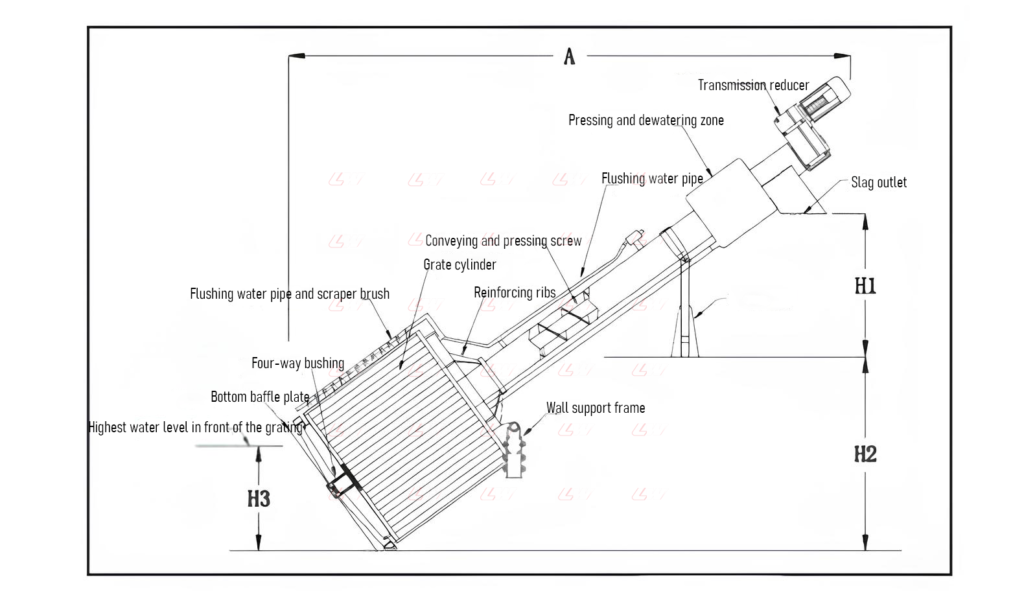
- Material: SS304 standard; SS316L optional for seawater or corrosive effluent; frame available in epoxy-coated carbon steel.
- Installation: fixed 35° inclination, directly in the channel or in a stainless steel tank; screen gaps 0.5–5 mm selectable; drum speed 4–6 r/min.
- Installation dimensions: overall height H is the sum of channel depth, discharge height and drive arrangement, finalized on the layout drawing for each order; installed length A = 1.43H − 0.48D; overall length L = 1.74H − 0.75D. Channel depth 600–3000 mm and discharge height are built to suit the site.
- Drum diameters beyond Ø2600 and non-standard drum lengths are quoted against your flow and channel survey.
Selection
Choosing the screen gap
The gap is the one decision that shapes the rotary drum screen — it sets what you catch, the wash-water demand and the hydraulic capacity. Everything else follows your channel.
| Gap | Typical duty | Notes |
|---|---|---|
| 0.5–1 mm | MBR (membrane bioreactor) protection, fine fiber recovery in paper and textile effluents | Finest gaps; highest wash-water demand |
| 2–3 mm | Municipal headworks, slaughterhouse pretreatment | The most common specification for sewage works |
| 4–5 mm | Food processing waste, fruit and vegetable solids | High organic load; pair with frequent spray cycles |
The choice between this screen and the rotary drum microfilter is made by the output, not by the gap: raw wastewater in, compacted screenings out is the drum screen; dilute water in, clear polished water with no screenings to handle is the microfilter. Flow figures above are clean-water values at 0.5 m/s; on sewage the actual capacity follows your suspended-solids load.
Core advantages
What the LWZG design buys you
One machine, three duties
Screening, spray washing and screw-press compaction in a single channel unit. No separate washer, no separate press, no intermediate handling of wet waste.
Gravity does the work
No pumps in the process stream. The only powered duties are drum rotation, the spray bar and the screw — low energy use and few wear points.
Dry, easy-to-handle screenings
Discharge at 25–45% dry solids instead of dripping waste: smaller skips, fewer collections and lower disposal cost from day one.
Stainless where it matters
Wedge-wire basket and wetted parts in SS304, SS316L for seawater and corrosive effluent, with an epoxy-coated frame option.
Runs unattended
The PLC cycles the rotary drum screen and spray on liquid level or time, with overload auto-reverse built in. No operator on duty.
Drops into your channel
Standard 35° channel installation or a pre-mounted tank. Minimum civil work — the channel is the structure, which makes retrofit simple.
Applications
Where the LWZG rotary drum screen works
The rotary drum screen fits anywhere raw wastewater carries solids that downstream equipment cannot handle — and the solids themselves are worth compacting before disposal.
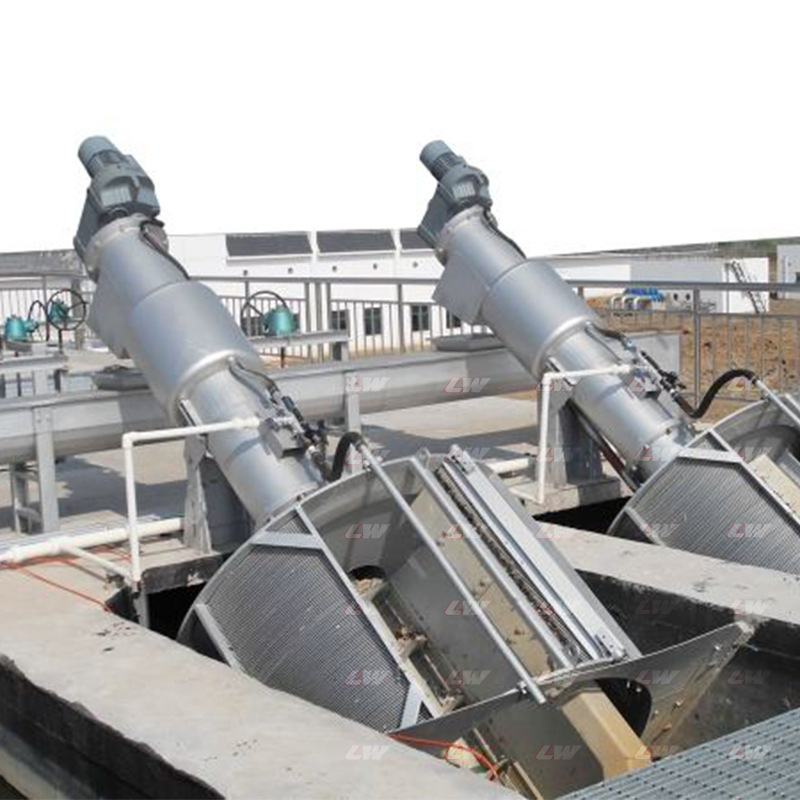
Municipal headworks
Catches, washes and compacts debris, rags and organics ahead of the works — downstream pumps see screened water, the skip sees compacted screenings.
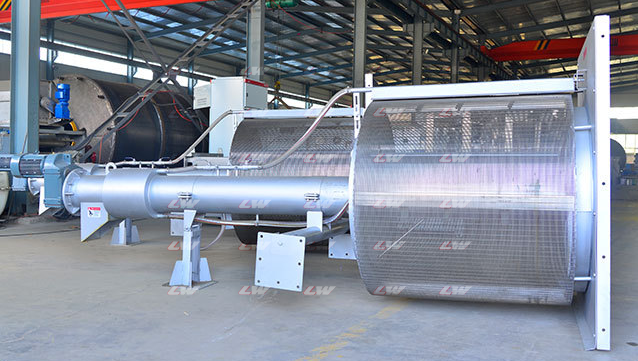
MBR & membrane protection
At 0.5–1 mm the rotary drum screen strips the hair and fibers that blind membrane modules — the failure mode that costs the most downtime in MBR plants.
Pulp & paper
Recovers longer carry-over fiber from white water at fine gaps; the recovered fiber returns to the process.
Food & slaughterhouse
Fruit peels, meat scraps and fat caught at 4–5 mm; greasy loads simply run a more frequent spray cycle.
Textile & dyeing
Lint and fabric remnants intercepted at the head of the effluent line, before they foul pumps and aerators.
Storm tank & overflow
Rough screening at 4–5 mm on high transient flows ahead of the treatment works.
FAQ
Frequently asked questions
Can the screen be installed in my existing channel, or do I need a tank?
Either way works. The standard installation sets the frame directly into a concrete channel at a fixed 35° inclination; channel depth, discharge height and layout are finalized against your channel survey. Where no channel exists — or for above-ground and retrofit positions — the rotary drum screen is supplied pre-mounted in a stainless steel tank, ready for pipe connections.
How do I choose the right gap size?
Gaps run from 0.5 mm to 5 mm. Around 0.5–1 mm suits MBR protection and fine fiber recovery; 2–3 mm is the common specification for municipal headworks and slaughterhouse pretreatment; 4–5 mm covers food-processing solids and rough screening. The choice between this screen and the rotary drum microfilter is made by the output you want — compacted screenings to dispose of, or clear polished water with none.
Does the screen need a wash-water source?
Yes. The spray bar needs wash water at 0.3–0.6 MPa to strip fibers and solids off the screen surface and flush them into the screw conveyor. Filtered plant water is normally used; the spray only runs while the drum runs.
How does it handle greasy or sticky wastewater?
The rotating drum plus continuous spray keeps clogging down by design. On high-grease loads such as food processing, the spray cycle simply runs more often, and the screw press squeezes water and grease out so the discharged material stays easy to handle.
What about stones or metal parts in the flow?
Keep them out. The rotary drum screen is built for suspended solids, fibers and organic debris; hard objects damage the basket. Where the catchment makes that a real risk, we recommend a coarse rotary bar screen upstream.
What does a rotary drum screen not remove?
Dissolved pollution passes straight through. The screen removes suspended solids, fibers and debris; dissolved COD, ammonia and salts stay in the water and are handled by the downstream biological or chemical stage. It is a physical screen, nothing more — and it is not a sludge dewatering press either: for sludge, the line continues with a screw press or belt filter press.
What does routine maintenance involve?
Three habits cover it: check the spray-water pressure so cleaning stays effective, keep an eye on the discharge outlet for blockages, and test the control panel and overload protection periodically. The basket surface is the main wear item and is inspected during scheduled maintenance.
Drum screen or rotary drum microfilter — which one do I need?
Decide by the output you want. If you are screening raw wastewater and want the solids to leave as compacted, dewatered screenings, the rotary drum screen is the fit. If your water is already dilute and you want clear polished water with no cake and no screenings handling, the rotary drum microfilter is the fit. Send us the water analysis and we will recommend one.
How dry are the discharged screenings?
The screw press compacts screenings to 25–45% dry solids before discharge. That is the difference between a dripping waste stream and material you can handle with a shovel — and it directly cuts skip collections and hauling cost.
Send us the flow and the water analysis
We size the rotary drum screen against your actual load and reply with a layout proposal, wash-water and electrical data alongside the quotation. To speed up selection, send your channel width and depth, screen gap, discharge height and material preference (SS304 / SS316L).
Related equipment
The rest of the line
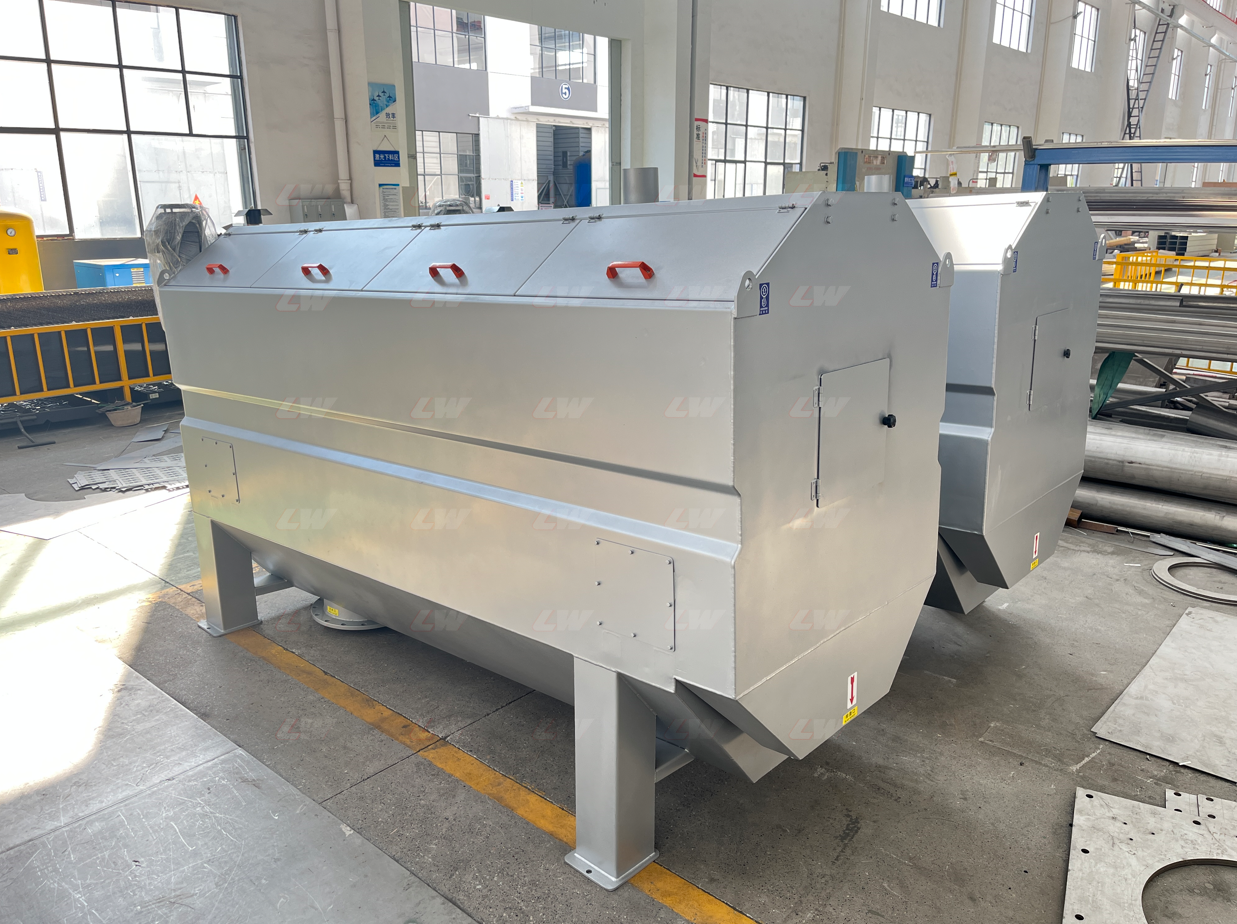
Rotary Drum Microfilter
Clear polished water, 10 µm–2.5 mm, no screenings
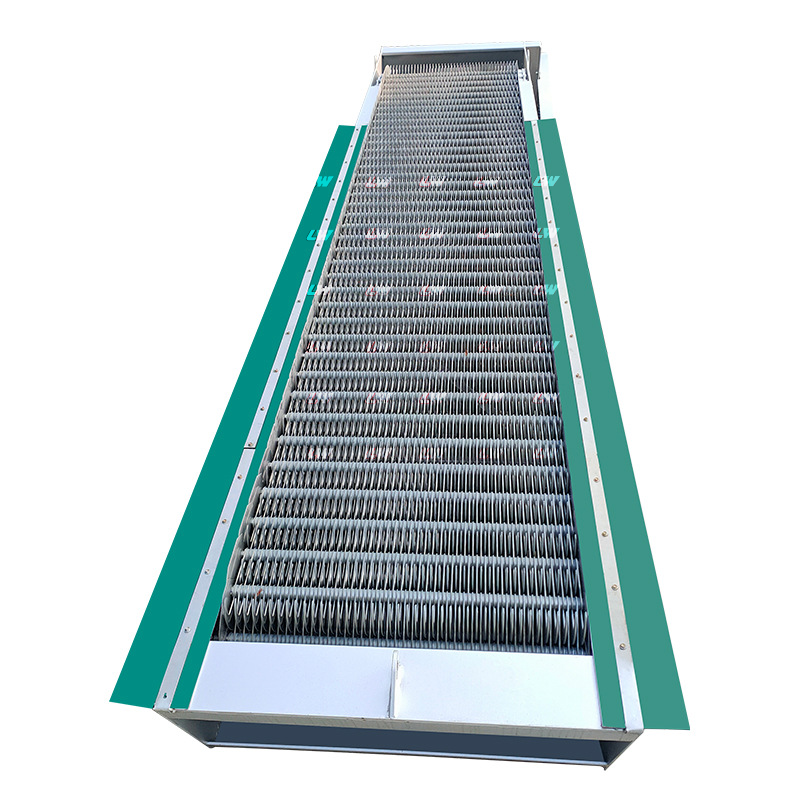
Rotary Bar Screen
Coarse solids and rags ahead of the works
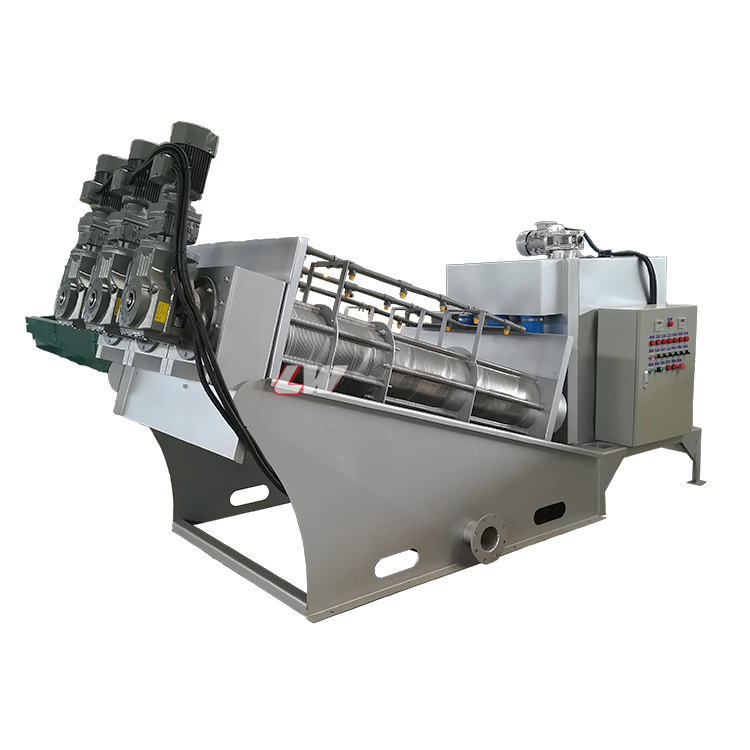
Dewatering Screw Press
Continuous sludge dewatering, high solids
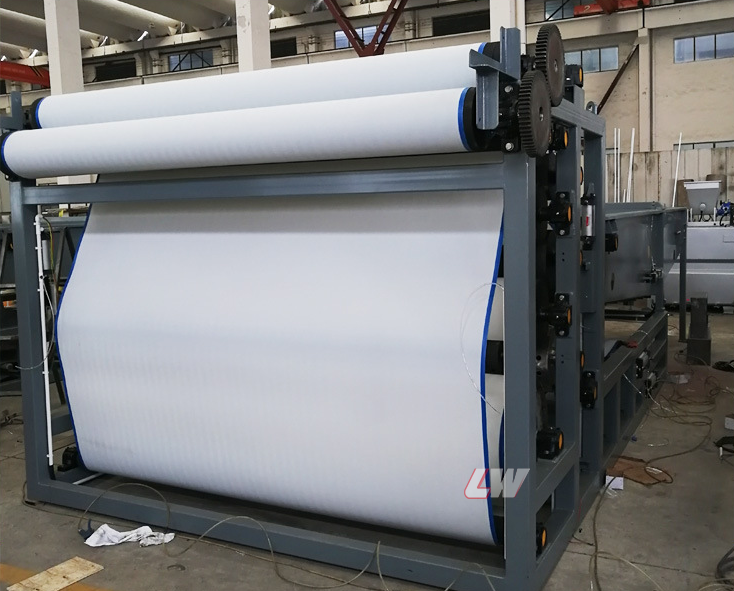
Belt Filter Press
Continuous sludge dewatering for large flows

Membrane Filter Press
Squeezed plates for the driest cake
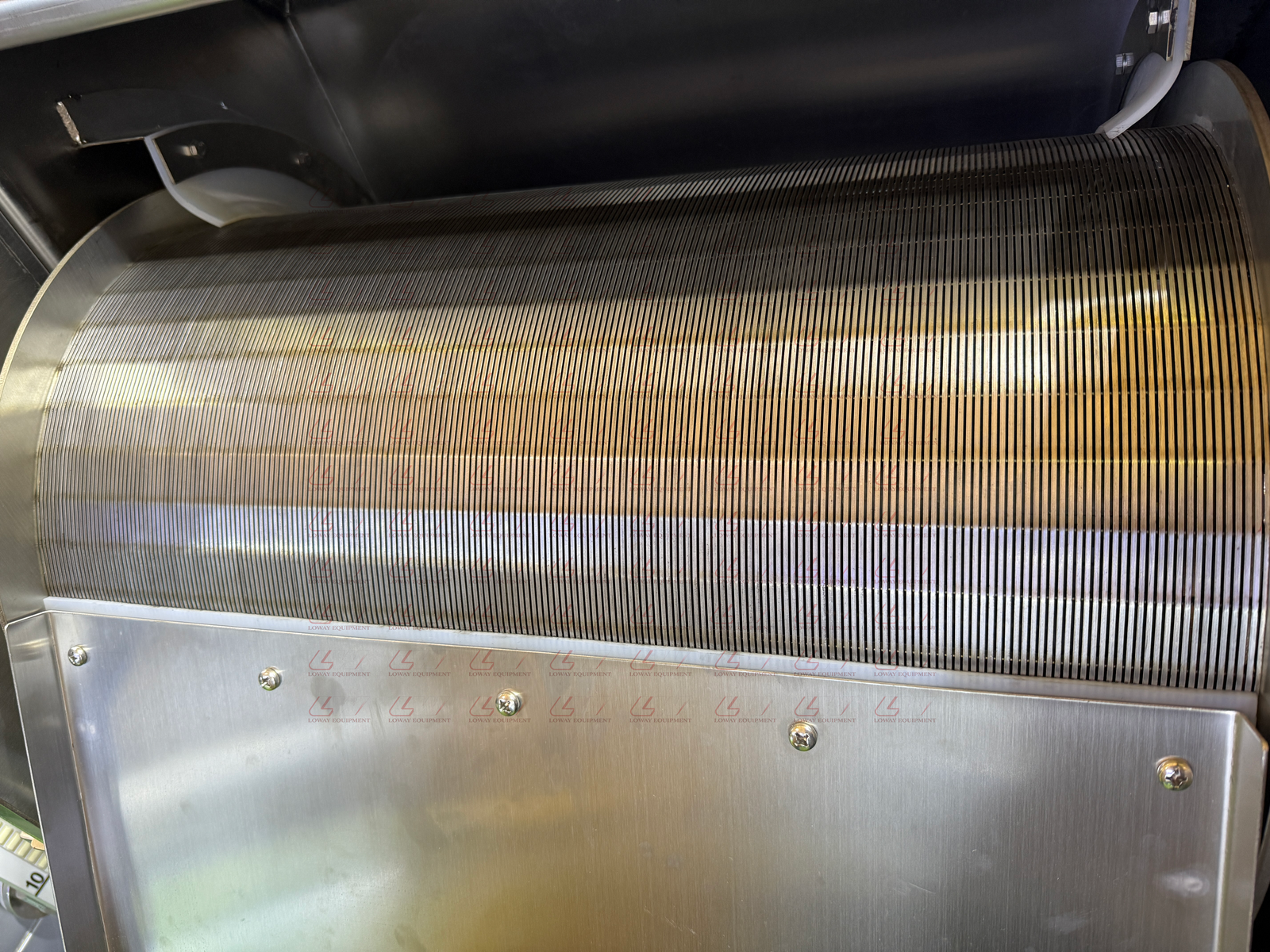
Spare Parts & Accessories
Baskets, spray nozzles, wear parts and seals