

In the plant
Nine industries that use our dewatering equipment
Mining, sewage treatment, coal washing and food processing look different, but industrial dewatering applications in each of them reach the same point in the process: a stream of solids carrying too much water to move, store or dispose of economically. That common thread runs through the nine sectors below. Our equipment is placed at that point — after screening or thickening, before the final disposal — to take the water out and leave a stackable, transportable cake. Each card explains why the industry needs dewatering, where the machine sits, and what the plant gets back from industrial dewatering applications in that sector.

Mining & mineral processing
Why it is needed hereTailings leave the plant as a slurry and are stored behind a dam. Every cubic metre held in the pond is water out of circulation and storage the site has to pay for.
Where it is usedOn tailings and concentrator slurry, after the thickener and ahead of the dam or the dry stack.
What the plant getsLess water going to the dam and more of it back into the process, a cake that can be stacked or trucked instead of pumped, and a haulage bill set by a drier cake rather than a wetter one.
See the mining & mineral processing page
Municipal & domestic sewage
Why it is needed hereSludge is produced every day of the year, the works has a fixed number of operators, and disposal is billed on the tonnage that leaves the gate.
Where it is usedOn the sludge line of a sewage works, from primary and activated sludge through to digested sludge.
What the plant getsFewer tonnes leaving the gate, a cake that goes out on an ordinary tipper, and a dewatering step that runs its own cycle instead of taking an operator off the rest of the works.
See the municipal & domestic sewage page
Oil & petroleum
Why it is needed hereOily sludge and drill cuttings are handled as controlled waste, and the cost of shipping them is set by the volume and by the hazard class it ships under.
Where it is usedOn tank bottoms, oily sludge and drill cuttings, after oil, water and solids have been separated.
What the plant getsA smaller volume to consign, in a form that is classified and handled as a solid rather than a liquid, dewatered where it arises instead of after it has been trucked.
See the oil & petroleum page
Coal preparation
Why it is needed hereA washing plant moves a large tonnage of fine coal every shift, and what reports to the tailings with the fines is product, not waste.
Where it is usedOn coal washing slurry and fines, downstream of the thickener.
What the plant getsFines recovered as saleable material instead of lost to the tailings, water returned to the washing circuit, and a cycle short enough to keep pace with the plant.
See the coal preparation page
Fine chemicals
Why it is needed hereGrades change between campaigns, residues are frequently corrosive, and disposal is licensed — so a machine that will not clean down, or that will not survive the chemistry, shows up as a problem on the second campaign.
Where it is usedOn process sludge, catalyst and pigment residue, on plants that run by campaign.
What the plant getsWetted parts specified from your process chemistry rather than from a catalogue, a machine that cleans down between grades, and nothing carried over into the next campaign.
See the fine chemicals page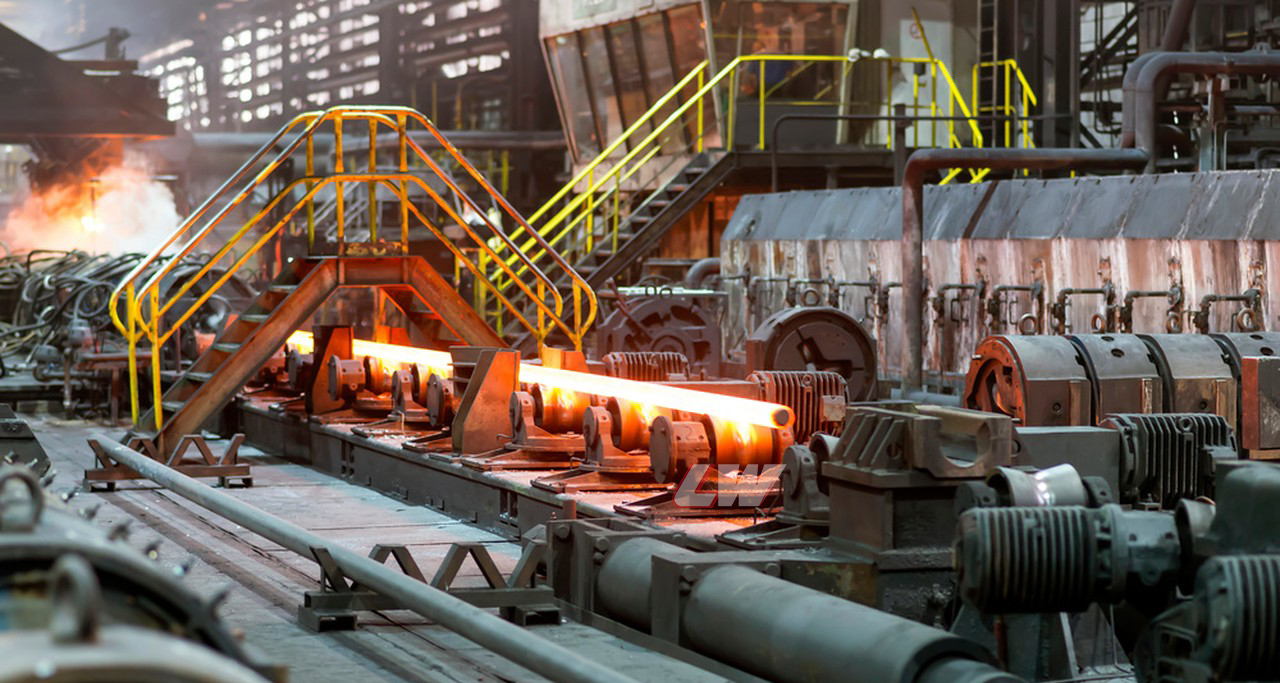
Nonferrous metallurgy
Why it is needed hereMetal hydroxide and smelter scrubber sludge hold recoverable metal, and the liquor around it is acidic and often chloride-bearing.
Where it is usedOn metal hydroxide and scrubber sludge, ahead of recovery or disposal.
What the plant getsThe metal-bearing fraction as a solid that can go on for recovery, and wetted parts selected for acid and chloride so the machine is not what fails first.
See the nonferrous metallurgy page
Food, beverage & pharmaceutical
Why it is needed hereEvery product-contact surface is governed by hygiene rules, and the residue is either a disposal cost or a by-product with a buyer.
Where it is usedOn dairy, brewery and fermentation residue, where solids leave the process line.
What the plant getsStainless, washable surfaces that stand up to the cleaning regime, an enclosed machine that keeps the packing area clean, and residue in a form a by-product buyer will collect.
See the food, beverage & pharmaceutical page
New energy
Why it is needed hereBattery, PV and rare-earth lines are being built now, the water balance is still being settled, and the duty can change before the plant is two years old.
Where it is usedOn battery, PV and rare-earth process water, on new lines and on extensions to existing ones.
What the plant getsA unit sized to the duty you actually have rather than pulled off a standard model, and an arrangement that can be revisited once the line settles into its real throughput.
See the new energy page
Printing & dyeing, textiles
Why it is needed hereDyeing effluent carries colour, COD and fibre, discharge consent is tight, and the water is worth putting back into the process.
Where it is usedOn dyeing effluent and desizing sludge, after screening has taken the fibrous solids out of the stream.
What the plant getsFibre removed before it reaches the pumps, colour-bearing sludge as a cake instead of a liquid, and water available for reuse where the process allows it.
See the printing & dyeing, textiles pageThose nine are the industries we are asked about most, not the limit of what we build for. Quarry and aggregate washing, landfill leachate, tanneries, pulp and paper and general industrial effluent are industrial dewatering applications too, and we assess them from the same three things: what the material is, how much arrives, and where the cake goes.
The machines doing the work
Five dewatering technologies, and where each one is used
One works builds all five — presses, drum filters and screens — so the machine follows the duty rather than the limits of a catalogue. Between them they cover the industrial dewatering applications set out above, and most plants run two of them together.
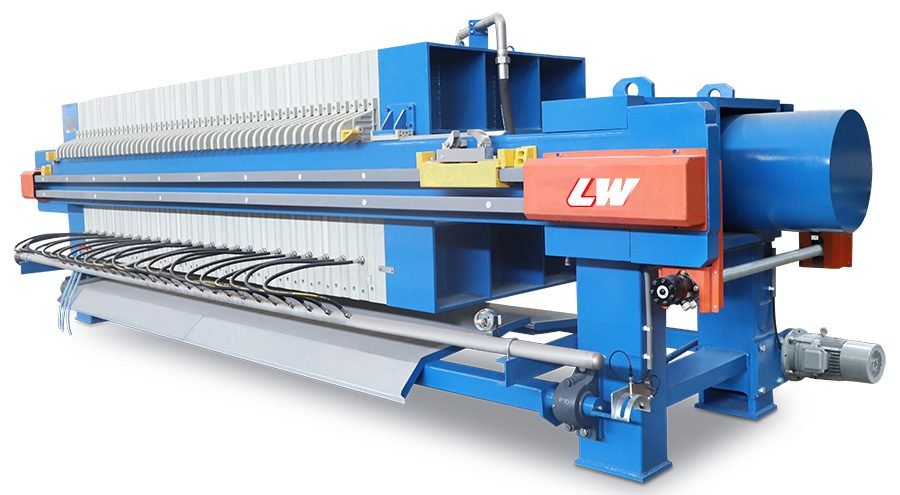
Filter press
Used where the driest practical cake matters and the feed changes — landfill, incineration and haulage duty, and on industrial dewatering applications where the material is not consistent from batch to batch. Chamber and membrane designs.
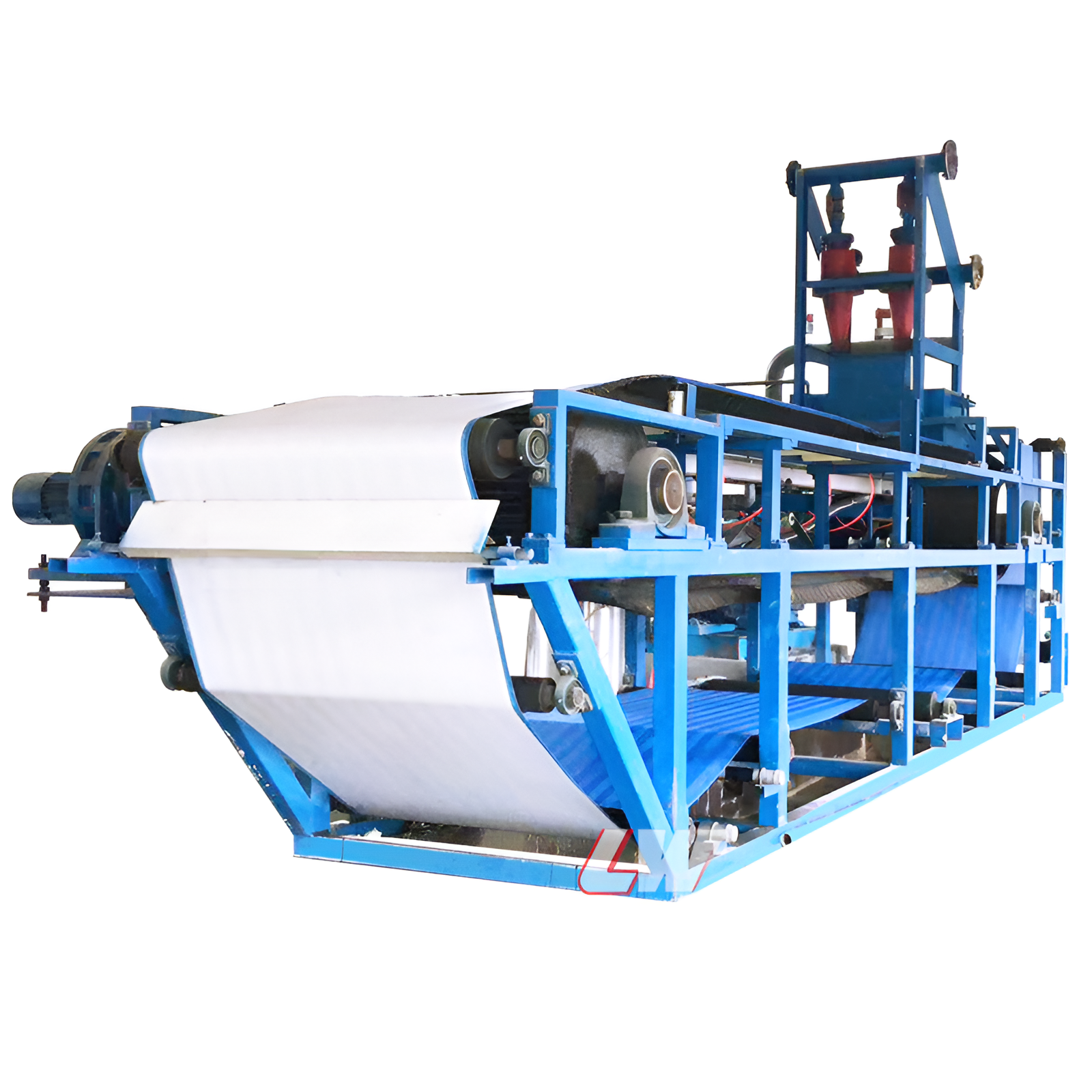
Belt filter press
Used for continuous, high-volume duty where a plant runs around the clock and the feed arrives without stopping.
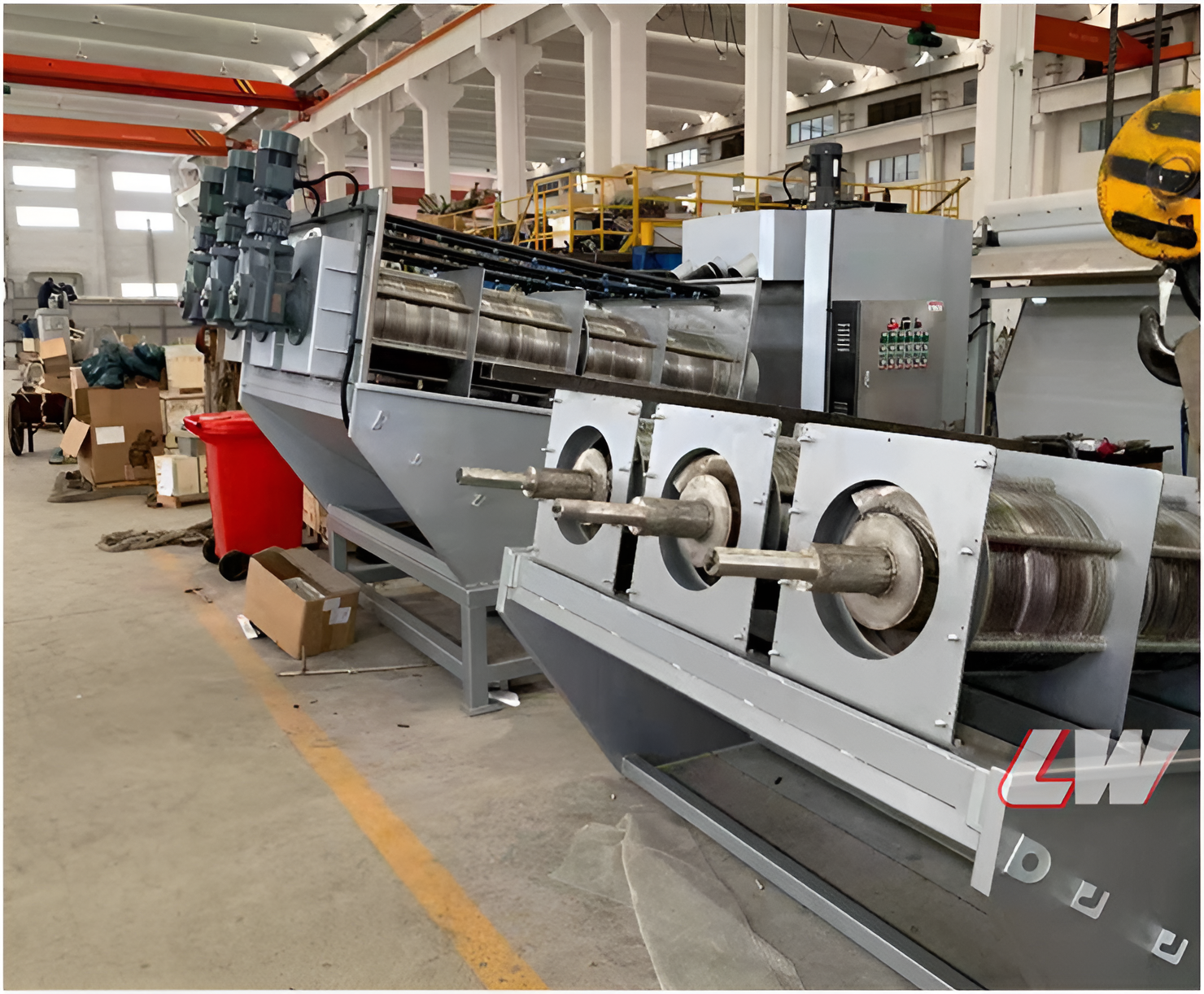
Screw press
Used for low-attendance, enclosed dewatering on organic sludge and smaller works, on a small footprint.
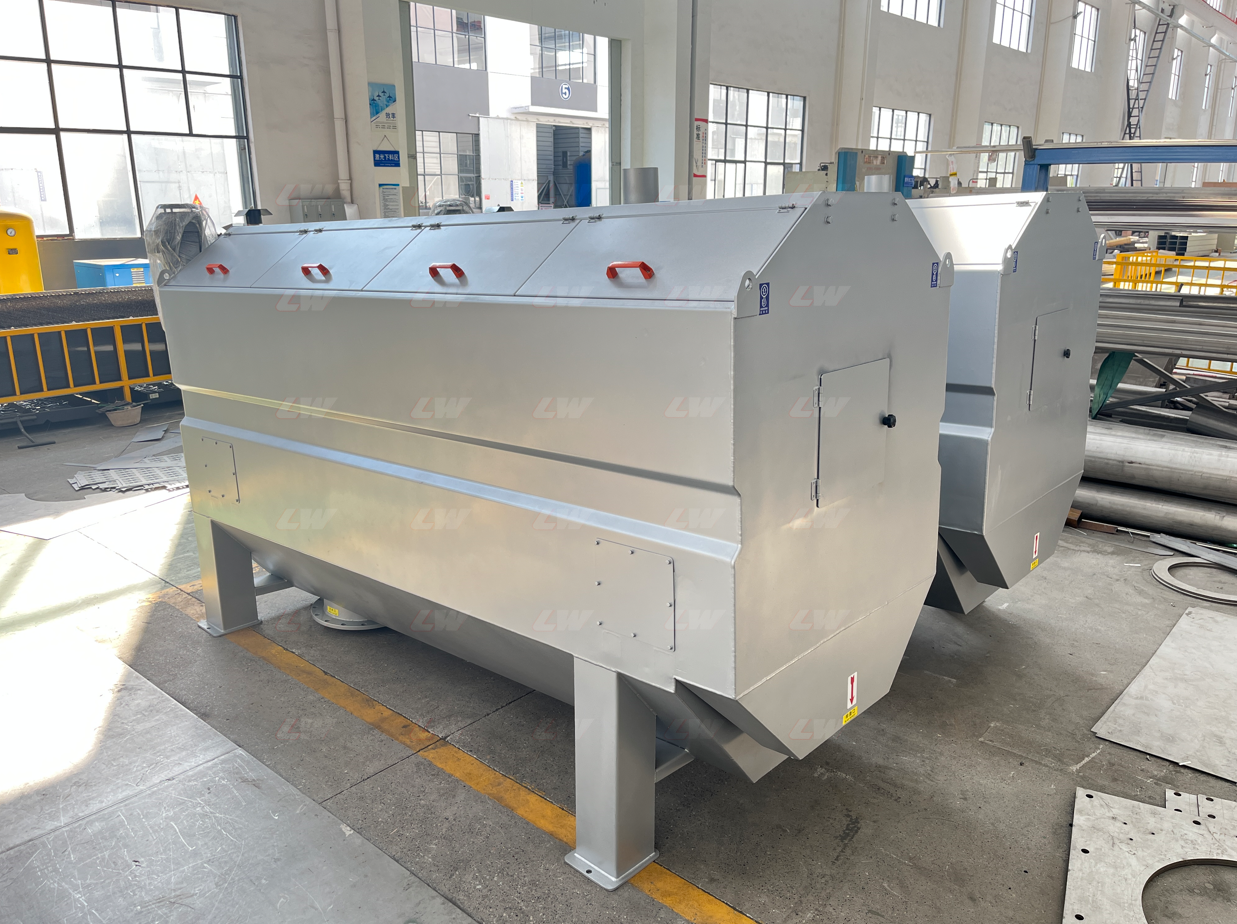
Rotary drum filter
Used on high-solids flows directly, and ahead of the dewatering stage to take fine solids and fibre out of the stream.
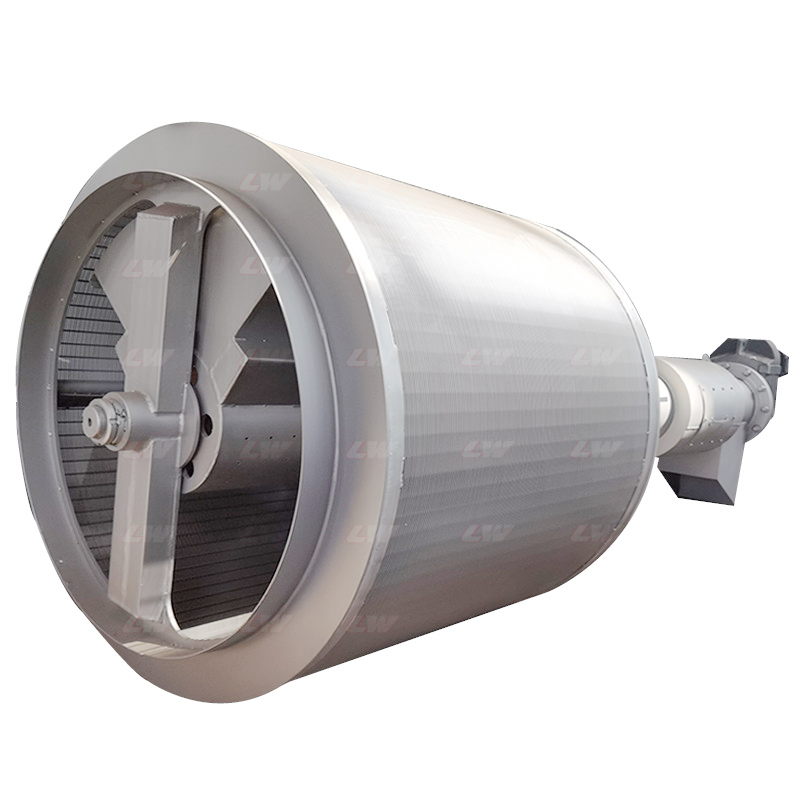
Screening equipment
Placed at the front of the train, so rags, grit and fibrous solids are removed before they reach the pumps or the press. On industrial dewatering applications carrying fibre, the screen is what keeps the rest of the train running.
Two stages is the usual arrangement: screening or thickening ahead of the dewatering machine. Both come from the same works, so the interface is designed once instead of being argued over on site — the arrangement behind most of the industrial dewatering applications we ship.
Sizing it
What we need before we can size: the material, the volume, the route out
Two plants in the same industry rarely need the same machine. For industrial dewatering applications, three things come first: what the material is, how much of it arrives, and where the cake has to go. Ask them in that order and the shortlist usually narrows to one or two machines.
What the material is
Particle size, abrasiveness, organic content and chemistry decide both the dewatering mechanism and what the wetted parts are made of. A coarse mineral slurry and a biological sludge at the same solids content drain in opposite ways, so we work from your analysis rather than from the industry name — which is how we specify wetted parts for industrial dewatering applications.
How much arrives, and how often
A feed that runs without stopping suits a machine that runs unattended around the clock; a batch that lands twice a shift suits a press that fills, squeezes and discharges on a cycle. Throughput and operating pattern together point to a filter press, a belt press or a screw press, and they divide industrial dewatering applications more sharply than the industry name does.
Where the cake goes afterwards
Landfill and incineration pull towards the driest cake the material will give; land spreading or a drying bed will take a wetter one. We settle the disposal route before the machine is sized, because it is the answer that most often decides the class of machine on industrial dewatering applications.
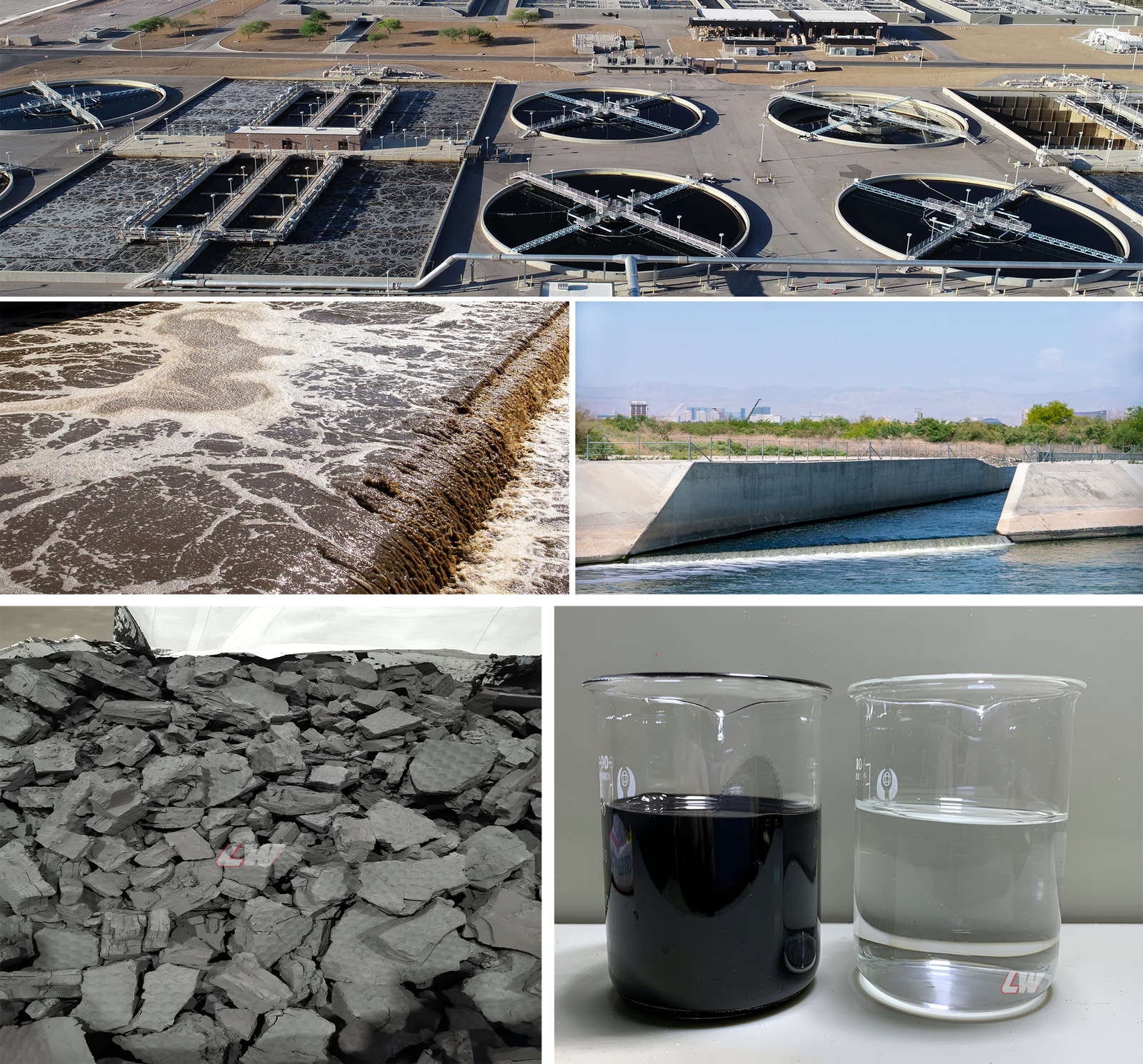
What we ask for
Flow rate or daily sludge volume, a sludge analysis with solids content, and the disposal route — the three answers behind most industrial dewatering applications. With those three, the shortlist usually narrows to one or two machines.
Where the material is new to us, we say so and propose a trial run on your own sludge rather than estimate around the gap.
Why Loway
Built and documented to keep working in your plant
The machine is the start of it. What decides how it performs over ten years is how it was built, detailed and documented. We build for industrial dewatering applications in mining, sewage, chemicals and food processing, and in every one of them the machine is bought for those years of running — not for the week of commissioning.
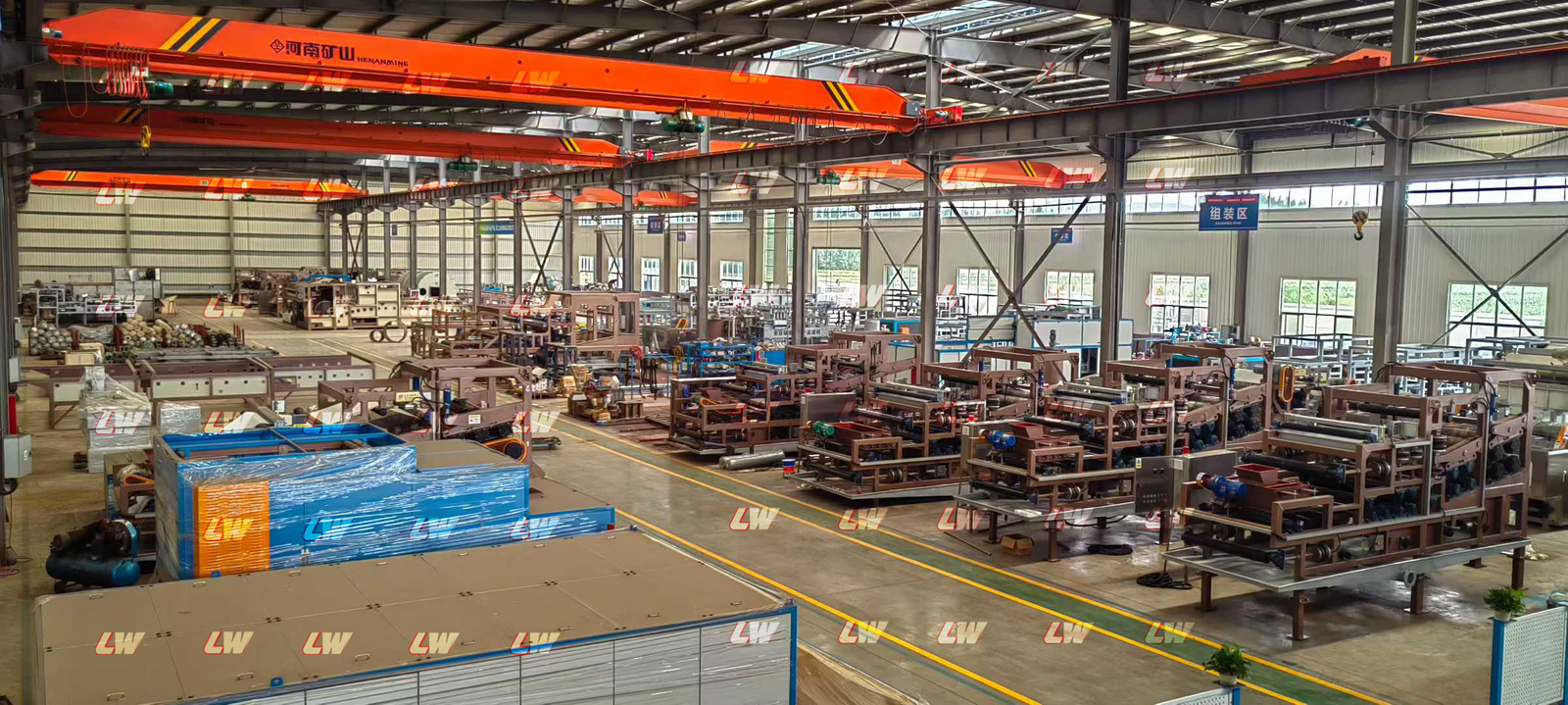
One point of responsibility for the whole train
Most industrial dewatering applications need more than one machine: a screen or thickener ahead of the press, pumps and piping in between. When those come from different suppliers, the interfaces are where the time goes — mismatched flanges, duplicated controls, and no clear answer on who is responsible. We build the whole train in one works and hand it over with one project engineer, so every interface is settled before the equipment ships. If something needs attention later, there is one number to call.
Fittings chosen from your water analysis
Wetted-part material, enclosure and wear protection follow from the sludge and the water in front of the machine. On industrial dewatering applications where the liquor is acidic or chloride-bearing, those parts are specified for that duty rather than pulled off a catalogue shelf, and wearing items are arranged so they can be changed without dismantling the machine.
Documentation by the engineers who detail the build
GA drawings and tender documents are produced by the engineers who detail the fabrication, each stage is checked against the drawing under our quality control procedure, and spares ship against the unit and drawing number, so a press stopped for a cloth change is not stopped waiting for parts. Units are built to your site layout; where an existing channel or slab can be reused, it is. Industrial dewatering applications on retrofit sites usually start from that drawing.