Industry Applications · Mining
Mine Tailings Dewatering for Mineral Processing Plants
Tailings slurry, concentrator discharge and mine water all reach the same point in the flow sheet: a stream carrying more water than the site can afford to store, pump or lose. We build the machines that take that water out — presses for mine tailings dewatering, belt units for the high-flow end, and the thickening and conveying around them — so the solids leave as a stackable cake and the water goes back to work. Send the data and we will tell you which of the two belongs at the front of your train.
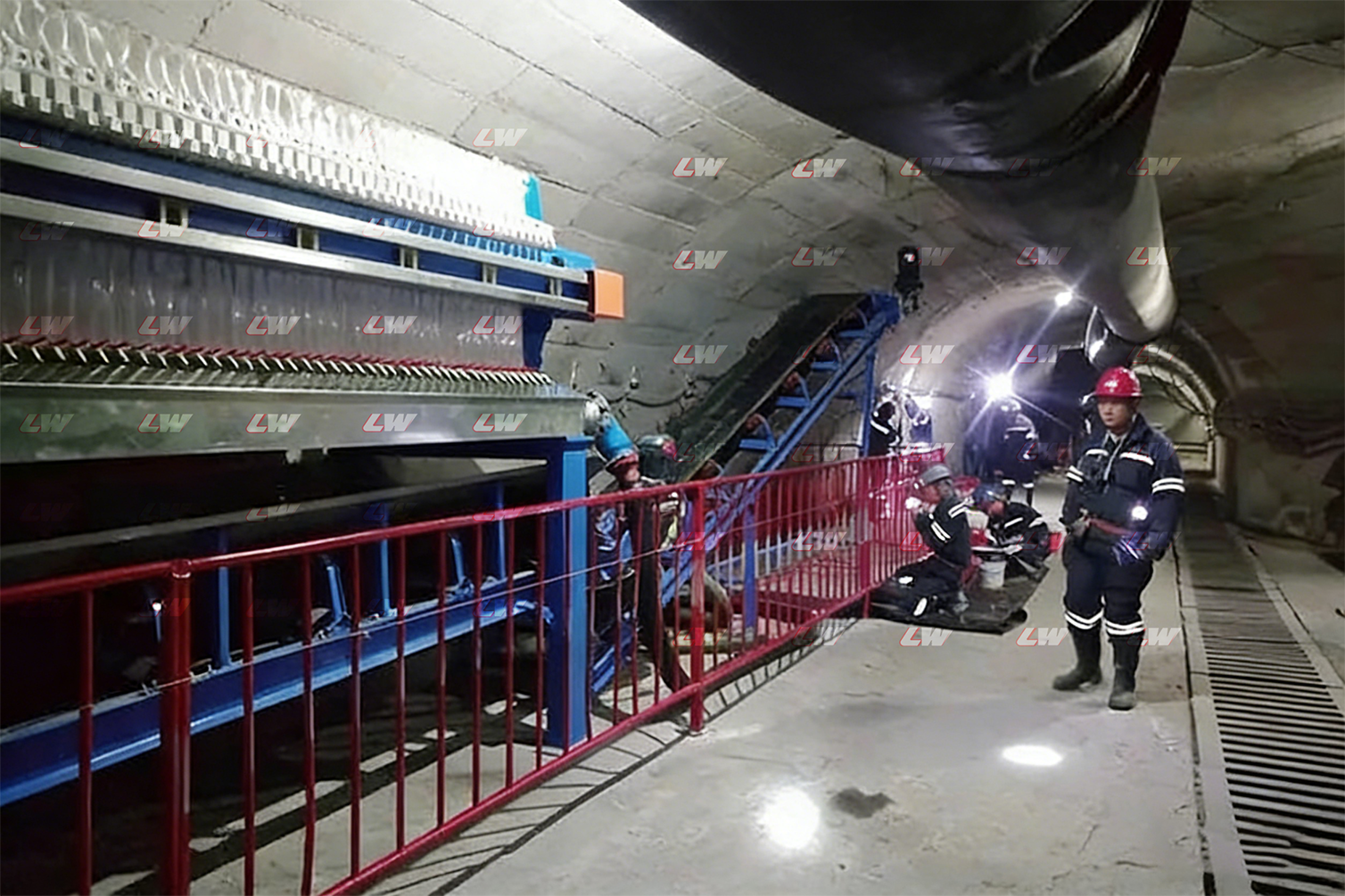
The material first
What your tailings and mine water are actually like
Before anything is sized, the slurry is read. A tailings stream at a given solids content does not behave like a sewage sludge at the same number, and that difference decides the filter, the cloth and the cycle. Four properties do most of the work in mine tailings dewatering.
Abrasive fines
Silica, iron ore and copper concentrates wear through whatever they touch. On hard-rock duty the feed entry, the cloth and the discharge are the parts that go first, and they set your maintenance calendar far more than the frame does. We specify them as replaceable items and agree the spares set when the machine is ordered.
Solids that swing
A crushing and grinding circuit does not deliver a steady feed. Grade changes, stormwater and mill stoppages all move the solids content, so the press has to hold capacity across a band rather than sit at one design point. That tolerance is built into how we size the machine.
Settling behaviour
Coarse tailings drain freely; cyclone overflow carrying clays and slimes stays in suspension and blinds a cloth. The same mill can produce both, which is why thickening sits inside the train rather than being bought separately ahead of it. Where the fines fraction is high, the thickener does more of the work.
Water chemistry
pH, residual flotation reagents and dissolved metals decide what the wetted parts are made of and which cloth survives. That comes from your water analysis. Where the liquor is aggressive, we specify SS316L and a compatible cloth before the cycle is fixed.
Those four are measured on a sample of your own slurry, and they are the numbers the proposal is written against. Mine tailings dewatering is sized from the material rather than from the mill name, and mining wastewater treatment decisions upstream — pH control, reagent dosing — show up in these numbers.
Operating pressures
Four things a tailings operation has to absorb
A mine site judges its dewatering plant on four fronts at once. A machine that handles one of them well and the rest badly does not last, and few mine tailings dewatering duties are bought for a single metric.
- 01
Wear and the maintenance calendar
Abrasive duty is not solved with a heavier frame. It is managed with replaceable wear parts, cycle times you can plan around, and a spares set matched to the slurry — agreed at sizing, not discovered at the first shutdown. Wear budgets are a standing line in mine tailings dewatering for this reason, and they are easier to plan than to recover from. We also tell you which parts to hold on site and which can wait for the next order.
- 02
The site water balance
Water recovery is usually the reason the machine is bought. Every point of moisture left in the cake is water the site has to replace from somewhere else, so cake dryness and recovery are the same conversation in mine tailings dewatering. A site short of make-up water usually finds the payback here first.
- 03
From wet ponds to dry stacking
A wet tailings facility takes land, water and a closure liability that outlives the mine. Dry stacking takes a cake firm enough to place and compact. Most mine tailings dewatering projects exist to make that switch possible, so the conveying and stockpiling are checked with the press rather than after it. Cake that is too wet to place has to be rehandled, and that cost lands twice.
- 04
Closure obligations
Moving to a drier, more stable stack reduces what the site owes once it closes. The case for it is normally made with geotechnical input on the actual cake rather than with a figure from a brochure, so we test your material before anyone commits to a number — and that test is what the sizing rests on. Mining wastewater treatment plans built on a brochure figure tend to be reworked once the geotechnical review lands.
Equipment
Where a filter press fits in mining — and where it does not
We build the full dewatering range in one works, so the recommendation is made against your slurry rather than against what is on the shelf. That includes naming the better option when it is not ours, which happens more often in mine tailings dewatering than most suppliers admit. You get the answer in writing, with the reason.
Membrane filter press — the tailings workhorse
Fill, membrane squeeze and blow-down in one cycle, giving the driest cake in the range and a filtrate clear enough to pump straight back to the plant. Most mine tailings dewatering duties are built around this machine — see the membrane filter press for the unit itself. For dry stacking and haulage it is usually the only machine in the range that reaches the cake you need, and it is the one we test first on a new slurry.
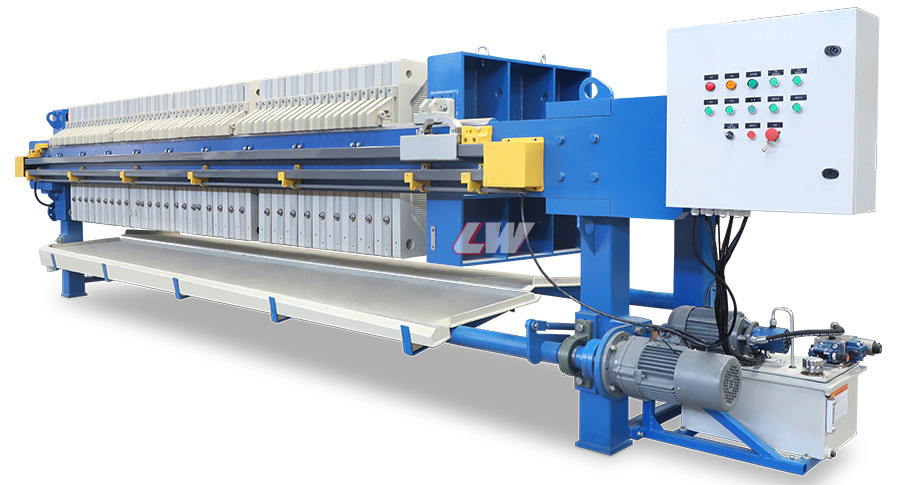
Quick-opening and automated presses — high-cycle duty
Where tonnage is high and cycles are short, plate-shifting speed and cloth condition decide capacity. Quick-opening designs and automated cloth washing keep the cycle tight without adding an operator — the usual route where mine tailings dewatering runs at high tonnage. Cloth washing is what keeps the cycle honest over a shift. See quick-opening and automated filter presses.
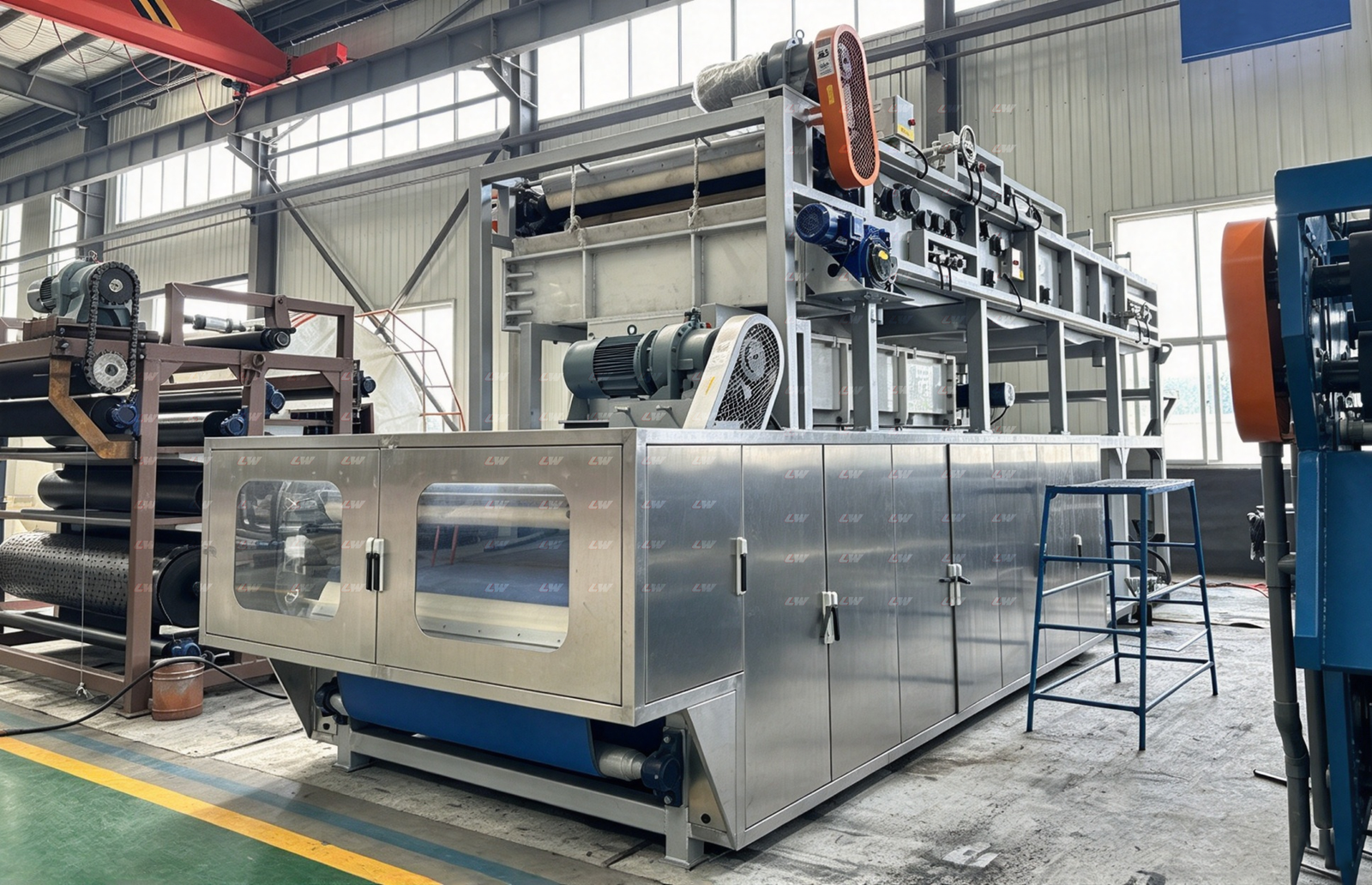
Belt filter press — high-flow pretreatment
For large continuous flows, a belt filter press takes the bulk of the water at low cost per tonne and the press polishes what is left into a stackable cake. That two-step layout is how we handle mine tailings dewatering at the high-volume end, and it lets a plant start treating water before the press is installed.
When we do not recommend a filter press
If the slurry settles and drains readily and the site has room, a thickener plus a simpler machine is often the better engineering answer. If the duty runs continuously at very high flow with no dry-cake requirement, centrifuges or vacuum equipment may serve it better. We say so at the selection stage; the selection method we work to is published, and it is applied to mine tailings dewatering the same way, and we would rather lose an order than ship a machine that will not hold the duty.
Applications in a mine
Where mine dewatering equipment is used
A mine does not have one stream that needs water taken out of it. It has several, at different points in the flow sheet, and they are not the same duty. Six places mine tailings dewatering equipment goes are set out below.
Tailings going to a dry stack
Between the thickener underflow and the stack
A membrane press turns the underflow into a cake firm enough to place and compact, so the plant gets a stack that stands without a pond behind it, and the water comes back to the mill instead of being lost to evaporation. Cake that is too wet to place has to be rehandled, which is why the moisture figure is agreed from a test on your slurry rather than quoted in advance. It is the duty most mine tailings dewatering projects are built for.
Paste backfill for underground stopes
Tailings mixed with binder, pumped back underground
Filter cake or thickened tailings go back into the mined-out stopes, which takes volume off the surface facility and stabilises the ground above it. The drier the feed entering the mixer, the less cement the mix needs for the same strength — so mine tailings dewatering decides the cement bill on a backfill plant as much as the press price does.
Mine water and pit dewatering
At the sump, the pit and the underground drainage
Suspended solids are removed before the water is discharged or reused for dust suppression and processing. The duty swings with rainfall and pumping rates, so the equipment is sized for the range rather than for one flow.
Tailings reprocessing and old-pond recovery
A historic tailings facility being re-mined
Older ponds often hold values the original plant could not recover. Dewatering the reclaimed slurry lets the recovered fraction be processed and the residue placed dry, so the site is cleared for closure at the same time. That residue is what makes a reprocessing project economic on the back end.
Tailings facility closure
On an existing pond, during closure and rehabilitation
Dewatering the remaining slurry leaves a drier, more stable landform with less water moving through it. That reduces what the site owes for seepage and long-term care once the mine stops operating, and it is usually the stage where mine tailings dewatering is brought in to treat what the pond can no longer hold.
Concentrate before it ships
After separation, ahead of the stockpile
Lower cake moisture means less water in every tonne that leaves by road, rail or ship, and it keeps the product inside the moisture limit the buyer sets. That is the difference between a load accepted and a load penalised on arrival.
The dewatering train
From slurry to dry stack, in three steps
The cake that reaches the stack is the product of all three steps, so they are designed together rather than bought one at a time. A mine tailings dewatering plant works as a train, not as a machine, and the interfaces between the steps are where the schedule is won or lost.
- 01
Thicken
A thickener brings the slurry to a consistency the filter can work with and recovers the easy water first. Underflow behaviour here decides how steadily the press is fed, and it is the first thing we check on retrofit work, because it sets the feed the press will actually see. If the thickener is undersized, no press downstream will win that capacity back.
- 02
Filter
The membrane press turns thickened slurry into cake and clear filtrate. Cycle time, squeeze pressure and cloth selection come from your slurry test rather than from a recipe carried over from another site. Mine tailings dewatering cycles are set per material, and the test report goes out with the proposal.
- 03
Stack and recover
Cake is conveyed to the stack and placed; filtrate and press water return to the process. This is where the water balance closes, and it is where most of the operating saving sits. We size the return line with the press so the water gets back without a second pump station.
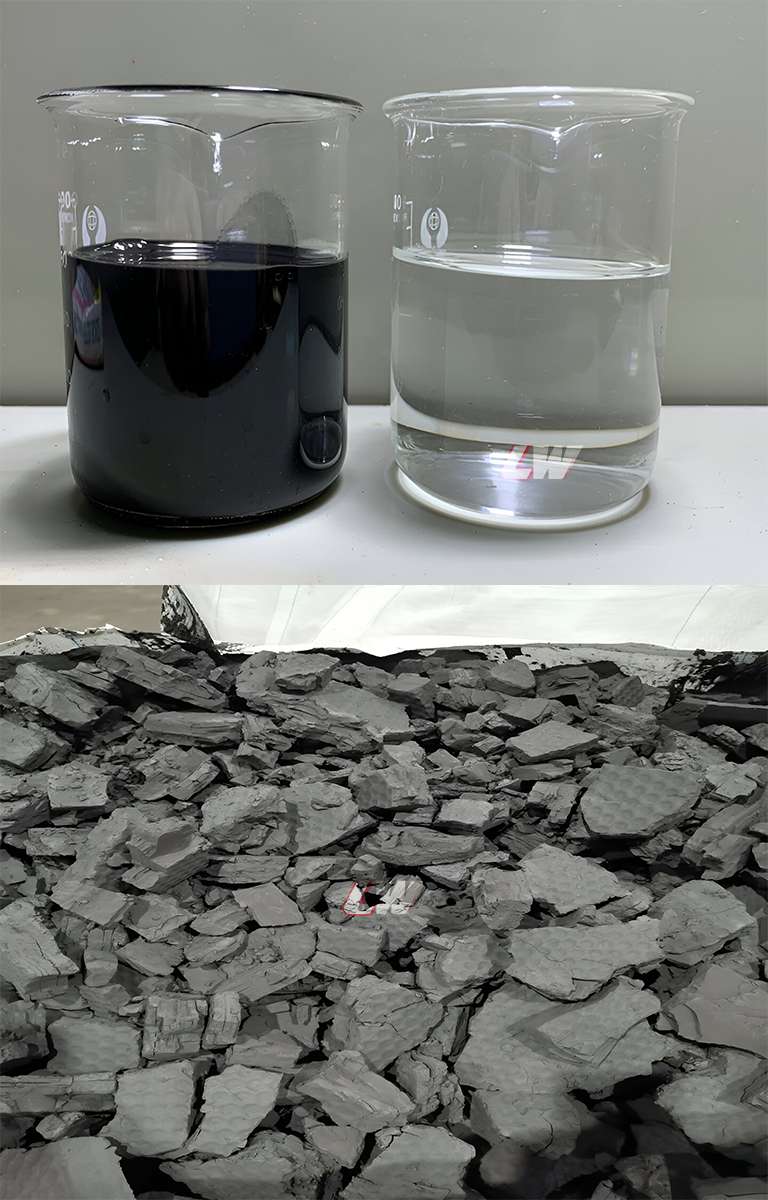
Cake and filtrate from a mineral duty: the cake is what leaves the process, the water is what comes back. Both are confirmed on your own slurry during sizing, because mine tailings dewatering is sold on what the cake actually does on the stack — we would rather run the test than quote a recovery figure we are not prepared to stand behind.
Projects & support
A package, not just a press
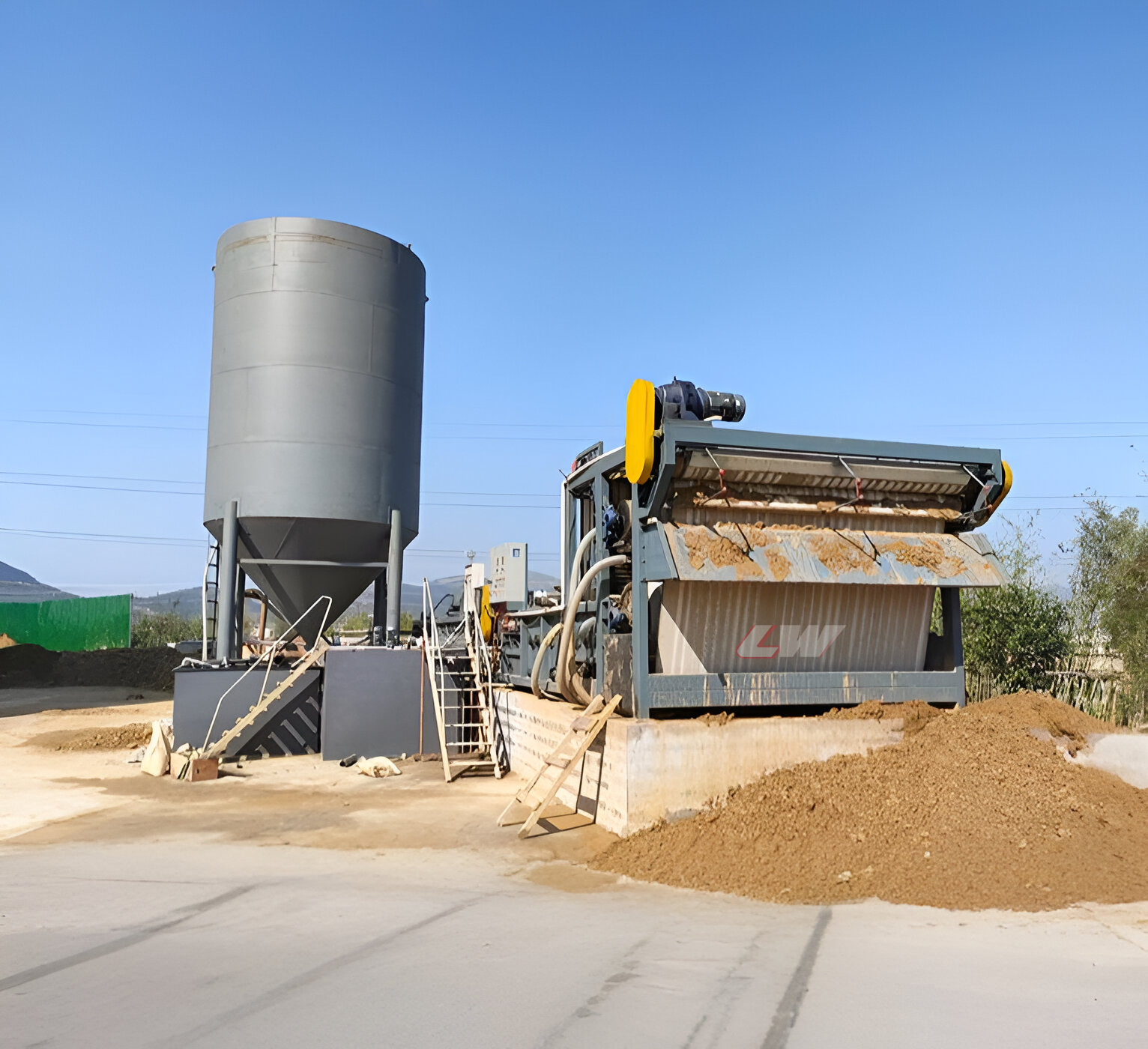
A mine tailings dewatering line rarely stops at the press. It needs a thickener ahead, a conveyor to take the cake away, dosing for flocculation, and filtrate handling back to the circuit. When these come from different suppliers, the site spends weeks matching interfaces instead of running ore. We detail the whole package in one set of drawings and confirm every interface before anything ships.
The same drawing number follows the unit through its life. Spare parts and filter cloths ship against that number, so a cloth change does not turn into a hunt for the right part. That is what keeps the line running through planned shutdowns and unexpected stops.
If the scope calls for equipment we do not build ourselves, we still check the interface drawings and take responsibility for making it fit. This is the stage where mine tailings dewatering projects usually lose their schedule, so we ask for the interface drawings early. Factory capability is set out on the company and factory page.
FAQ
Mine tailings dewatering questions we are asked most
Why a filter press for mine tailings dewatering instead of a centrifuge or vacuum filter?
Because the duty usually asks for the driest practical cake and a clear filtrate, and that is what a membrane press does best. A centrifuge wins on footprint and continuous flow but leaves a wetter cake; vacuum filtration struggles with fine, blinding slurries. The choice follows what the cake has to do afterwards — be stacked, be hauled, release water — and the press is usually the machine that meets that test. Where it is not, we say so at selection, and the test report is the evidence either way.
What cake dryness should we plan the dry stack around?
From your slurry, not from a brochure. Cake moisture depends on particle size distribution, clay content and the squeeze cycle, and it moves between concentrates from the same region. We run the sizing on your material and give you a design figure with the test data behind it, so the geotechnical work on the stack is done on real numbers. It is the figure the plant is judged on once it is running, and mine tailings dewatering is specified around it.
Can one machine serve both concentrate and tailings duty?
Often yes, with a cloth and cycle change. Concentrates are usually finer and more valuable to recover; tailings are coarser and higher in volume. The same press frame can serve both if the cloth programme and cycle are set per stream — that is part of what we confirm at sizing, and it is a common arrangement where a smaller plant runs mine tailings dewatering and concentrate filtration on shared equipment.
How is wear handled on abrasive mine slurries?
By design and by plan, not by luck. Feed entry, cloth, plates and discharge are treated as wear items with defined inspection intervals, and the spares set is agreed when the machine is ordered so the first shutdown does not turn into a procurement exercise. On the most abrasive duties we help set the interval from your slurry test rather than guessing at it. Mining wastewater treatment sites running several circuits usually standardise the spares set across them.
What do you need to size a mine dewatering package?
The slurry — solids content, particle size distribution and water chemistry. The duty — tonnes per day or flow rate, and the hours the plant runs. And the destination — dry stack, pond, backfill or haulage. With those three, mine tailings dewatering is sized against your material, and where a number is missing it is quoted as an assumption rather than filled in silently.
Can you work with the thickener and conveyors we already have?
Yes, and retrofit is most of what we see. We need the underflow consistency and the conveyor duty, and we will tell you honestly whether the existing kit limits the cake you can reach. If it does, the proposal says so and prices the change rather than leaving it to be found on site during commissioning.
What does commissioning need from our side?
A feed, a water connection and somewhere to put the cake. We set the cycle on your slurry during start-up and hand over the settings with the machine, so your operators are not left guessing at the parameters weeks later. If the slurry changes later, those settings are the starting point for the new cycle. Mine tailings dewatering settings are handed over in writing rather than left in a commissioning notebook.
Send the slurry data, get the machine
Solids content, particle size distribution and where the cake has to go. We will come back with the mine tailings dewatering train, the test data behind it, and a layout proposal alongside the quotation.
Related
Next steps around this application
Coal preparation
High-tonnage coal slurry and quick-cycle dewatering
Coal industry pageNonferrous metallurgy
Metal-bearing sludge and acidic streams
Nonferrous metallurgy pageNew energy
Battery, PV and rare-earth process water
New energy pageAll industries
The full comparison across nine sectors
Industry applications hub