Non-Ferrous Metallurgy: Advanced Filtration
Maximize Recovery. Withstand Acid.
High-pressure diaphragm filter presses engineered for Hydrometallurgy and Precious Metal Recovery.
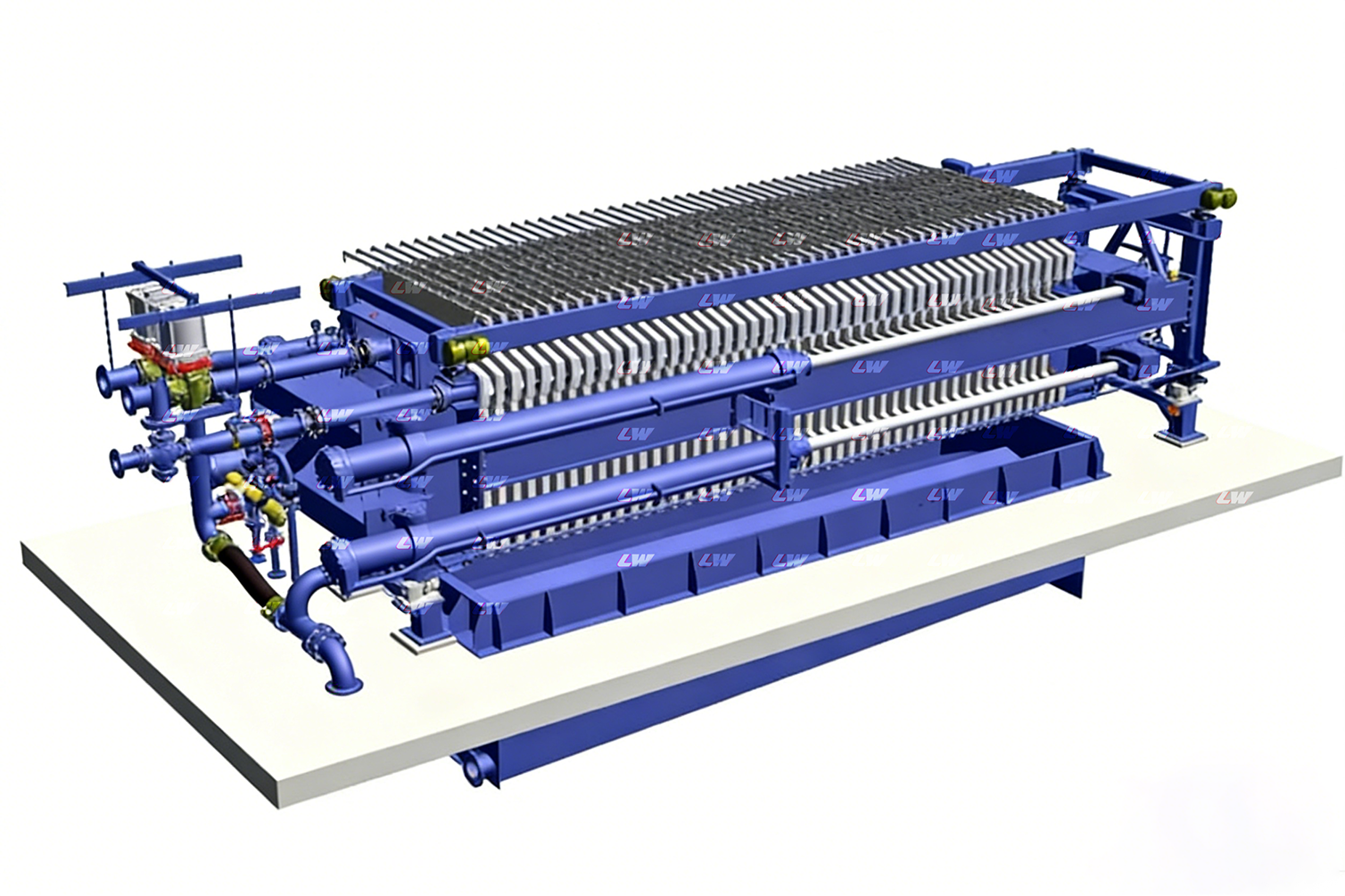
At Loway Equipment, we engineer filtration systems specifically for the corrosive, high-value, and high-temperature environments of non-ferrous processing. From Copper/Zinc Leaching to Lithium/Cobalt Refining, our solutions are designed to squeeze out every drop of valuable Pregnant Leach Solution (PLS) while producing a dry, stackable residue.

86 189 5282 5752
The Core Challenge: Corrosion & Recovery

Inefficiency in metallurgy means throwing money away.
- Valuable Metal Loss: Incomplete separation leaves dissolved metals (Cu, Au, Li) trapped in the waste residue.
- Aggressive Corrosion: Hot acids (H₂SO₄, HCl) and alkalis (NaOH) destroy standard equipment rapidly.
- High Temperature: Leaching processes often operate at 80°C - 95°C, requiring specialized thermal-resistant materials.
- Tailings Liability: Wet residues are expensive to manage. Dry stacking is the only sustainable future.
For metallurgy, standard dewatering is not enough. You need High-Efficiency Cake Washing.
Why Our Presses Fit Smelters:
- 1. Maximize Recovery (The Money Maker): Our multi-stage Counter-Current Washing capability recovers >99% of dissolved metals from the filter cake, directly boosting plant revenue.
- 2. High-Pressure Squeeze: Operating up to 25 bar (2.5 MPa), our membrane technology produces a significantly drier cake than vacuum filters, reducing acid consumption and transport costs.
- 3. Built for Heat & Acid: We use PVDF plates and Glass-Fiber Reinforced PP to withstand temperatures up to 95°C and extreme acidity (pH < 1).
Technology Selection: Why Filter Press?
In hydrometallurgy, vacuum belt filters were the old standard. Filter Presses are the modern upgrade.
Feature | ||
Metal Recovery | Superior. High-pressure squeeze + thorough displacement washing recovers more PLS. | Moderate. Vacuum power is limited; it leaves more liquid (and money) in the cake. |
Cake Moisture | Lowest (15-20%).Produces a hard, dry cake ideal for dry stacking. | High (30-40%).Produces a wet sludge that is hard to stack and costly to haul. |
Water Usage | Efficient. Uses less wash water to achieve the same washing result. | High Consumption. Requires massive volumes of water to wash the belt and cake. |
(Note: We do not recommend Screw Presses for metallurgical applications due to rapid abrasion wear.)

Key Applications in Metallurgy
Application: Acid Leach Residue(Cu, Zn, Ni, Co)
The Goal: Recover PLS. Separate metal-rich liquid from waste residue.
The Loway Solution: Washing Membrane Press. Ensures maximum recovery of soluble metals and produces dry tailings.
Lithium Carbonate(Battery Materials)
The Goal: Product Purity. Wash the final salt product to remove impurities (Na, Ca).
The Loway Solution: Automatic Washing. Programmable washing cycles ensure battery-grade purity (>99.5%).
Gold / Silver Slimes (Merrill-Crowe)
The Goal: Zero Loss. Capture high-value precious metal precipitates.
The Loway Solution: CGR Sealed Press. Zero-leakage design prevents any loss of gold-bearing solids.
Red Mud (Alumina)
The Goal: Dry Stacking. Handle high-volume, alkaline bauxite residue.
The Loway Solution: High-Throughput Press. Processes massive volumes of caustic slurry for safer dry disposal.
At Loway Equipment, we’re committed to helping you optimize your processes with reliable and efficient filter press solutions.
Contact us today to learn more about how our filter presses can help improve your operations’ efficiency, productivity, and sustainability.
The Manufacturer Advantage: Patented Performance
- Patented Flow Design:
Our specialized feed ports increase filtration speed by 20% compared to standard plates.
- TPE Diaphragms:
Our specialized feed ports increase filtration speed by 20% compared to standard plates.
- Material Customization:
From SS316L cladding to Titanium wetted parts, we build to your corrosion specs.
- DCS Integration:
Fully PLC-automated with Profibus/Modbus connectivity for seamless control room integration.
FAQ: Metallurgical Filtration
Have More Questions? Our technical team is ready to provide detailed, personalized guidance.
Q1: Can your press handle hot acid (90°C+)?
Yes. For high temperatures, we upgrade from standard PP to Glass-Fiber Reinforced PP (R-PP) or PVDF plates. We also use special high-temp hydraulic oil and EPDM seals to ensure reliability.
Q2: What is the typical metal recovery rate?
With our optimal washing cycle (2-3 displacement washes), clients typically achieve >99% recovery of soluble metals from the filter cake, significantly outperforming vacuum filters.
Q3: Do you offer explosion-proof models?
Yes. For solvent extraction (SX-EW) areas where organic vapors exist, we provide fully ATEX-certified systems.
Q4: How do you optimize the washing efficiency to recover more metal?
We use Displacement Washing (plug-flow washing) rather than simple dilution. Wash water enters uniformly across the plate face, pushing the pregnant solution out of the cake pores. We can also configure Counter-Current Washing (using lean solution first, then fresh water) to maximize recovery while minimizing fresh water consumption.
Q5: Mining slurries are abrasive. How long do your filter cloths last?
In metallurgical applications, cloth life typically ranges from 1,500 to 3,000 cycles, depending on the ore abrasiveness and acid concentration. We use specialized Calendered (heat-treated) monofilament cloths that have a smooth surface for easy cake release and high resistance to blinding and abrasion.
Q6: Can you prevent the filter cake from sticking to the plates?
Sticky cakes are common with certain leaching residues (like silica gel). Our presses feature an Automatic Shifter with Shaker system. During discharge, the mechanism vibrates the plate pack to dislodge any stubborn cakes, ensuring the press is fully empty before the next cycle begins.
Loway Equipment Applications Across Industries
We are proud to have worked with clients from diverse industries, providing tailored filtration solutions that improve efficiency, reduce costs, and enhance operational performance.