Screening Equipment · Product Range
Mechanical Screening Equipment
Loway builds the complete mechanical screening equipment range for wastewater pretreatment — sewage screening equipment and bar screens for coarse debris, wedge-wire drum screens for fine capture, step screens for low-consumption fine duty, and twin-shaft channel grinders where solids stay in the flow instead of being taken out.
Why screening comes first
The first line of defense in the treatment train
Mechanical screening equipment is the first unit operation in a wastewater plant. It removes rags, plastics, wipes and other gross solids before they reach pumps, valves, diffusers and membranes. A screened plant runs to its design duty; an unscreened one pays for blocked pumps, blinded membranes and unplanned downtime. Self-cleaning designs — spray bars, brushes or moving steps — hold that performance without an operator standing at the channel.
The right machine is set by three things: what the water carries, the most sensitive equipment downstream, and where the captured solids have to go. Loway supplies the whole wastewater screening equipment range — from coarse sewage screening equipment at the headworks to fine drum screens ahead of a membrane bioreactor — so the recommendation is matched to your duty and every mechanical screening equipment selection is confirmed against your flow and water analysis.
The range
Four types of mechanical screening equipment, one range
Each family of mechanical screening equipment answers a different combination of load, opening and disposal route. Match the machine to your duty, then confirm the opening against your water analysis.
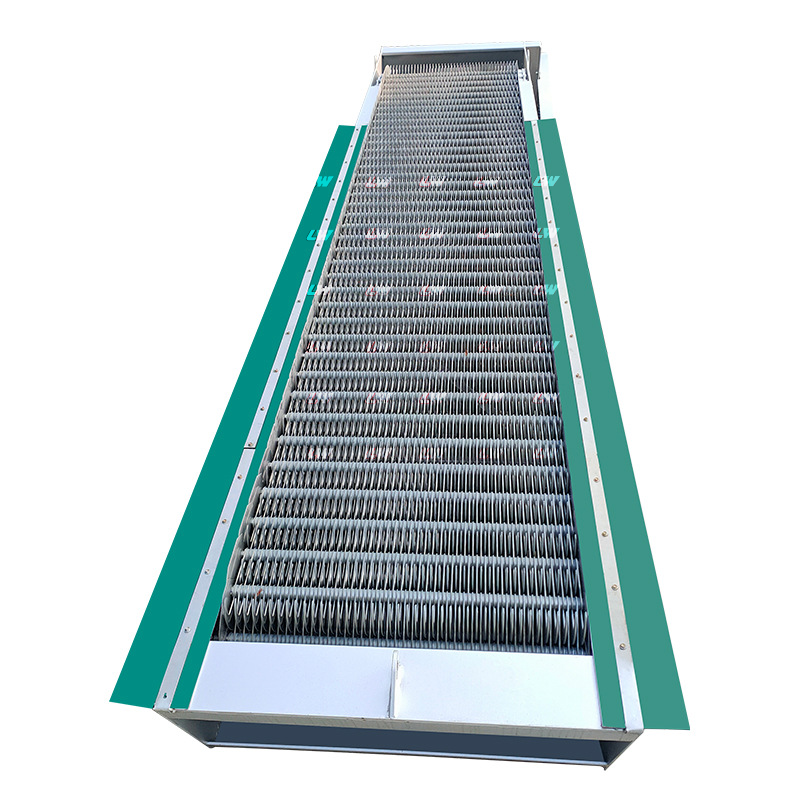
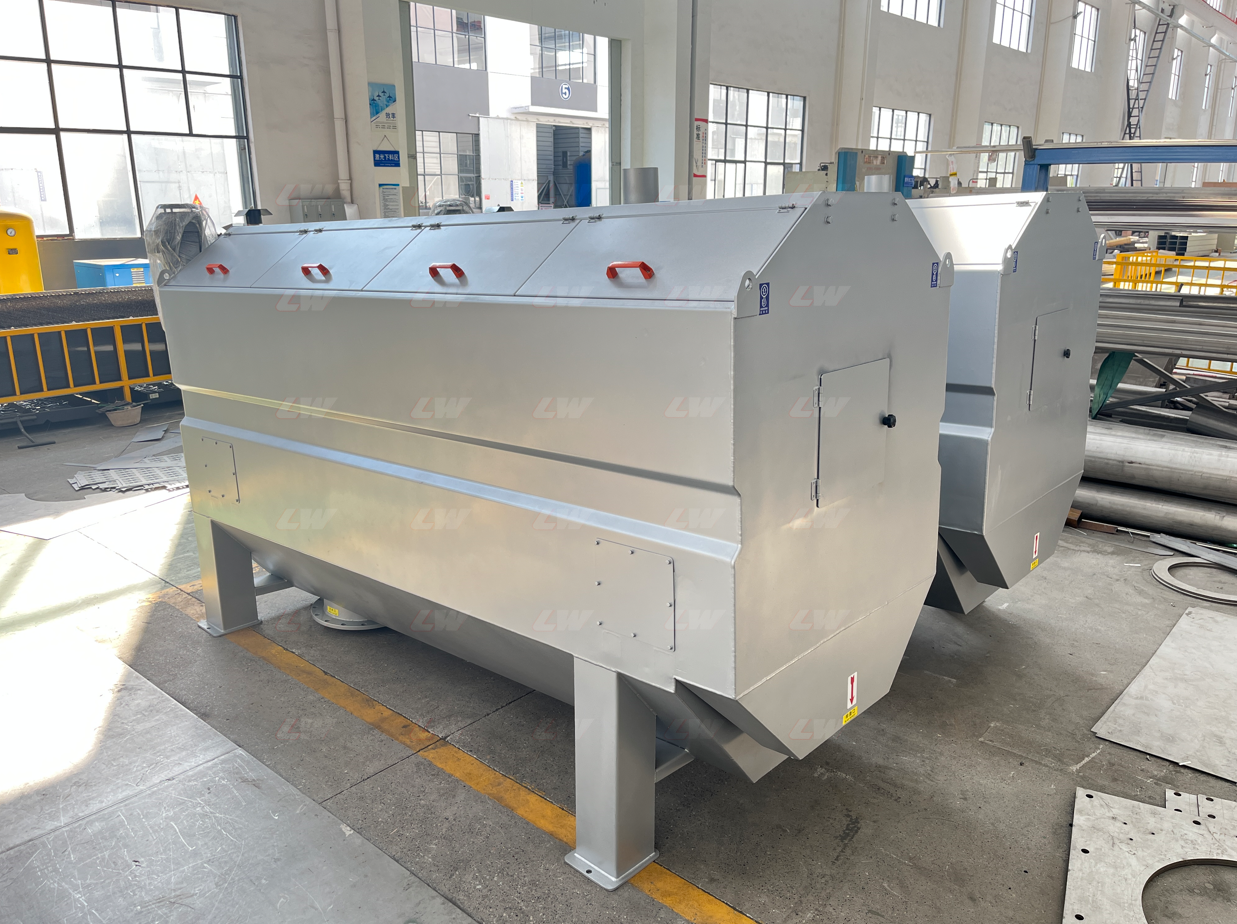
Rotary Bar Screen
A continuous multi-rake mechanism lifts coarse solids out of deep channels and high loads. The standard primary screen at headworks and lift stations, on openings of 5–50 mm.
Coarse duty · solids removed and conveyed out
Explore the rotary bar screen
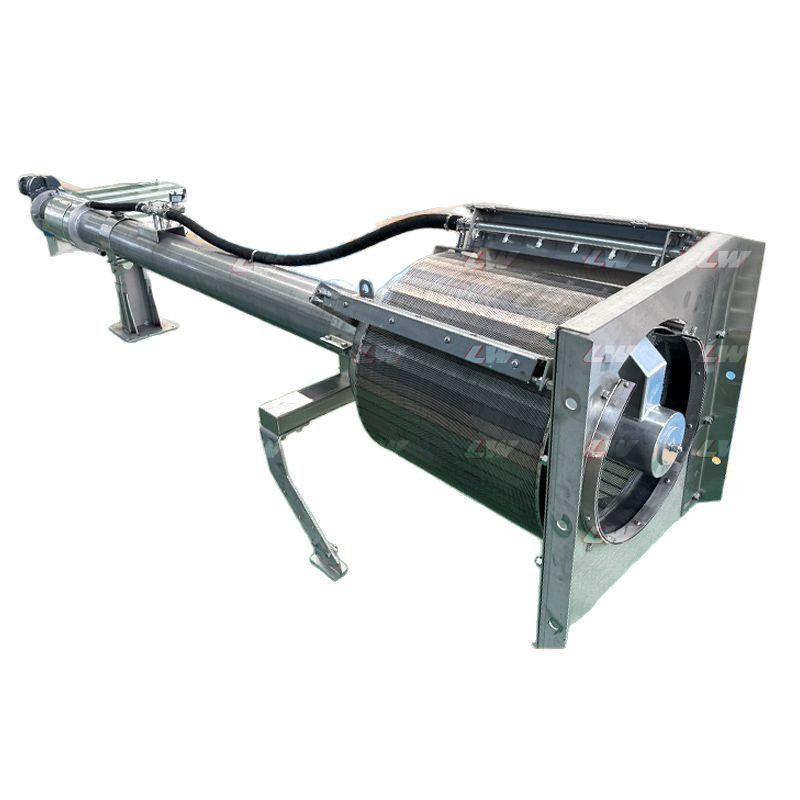
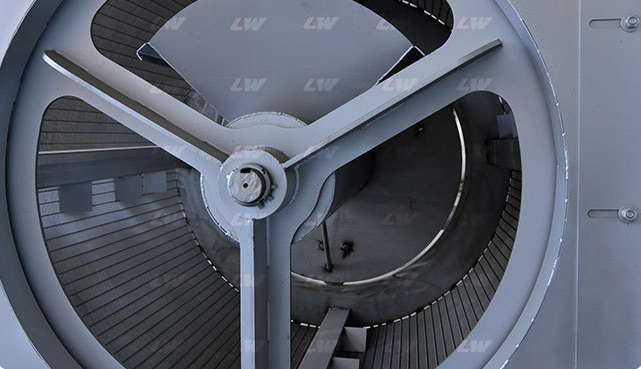
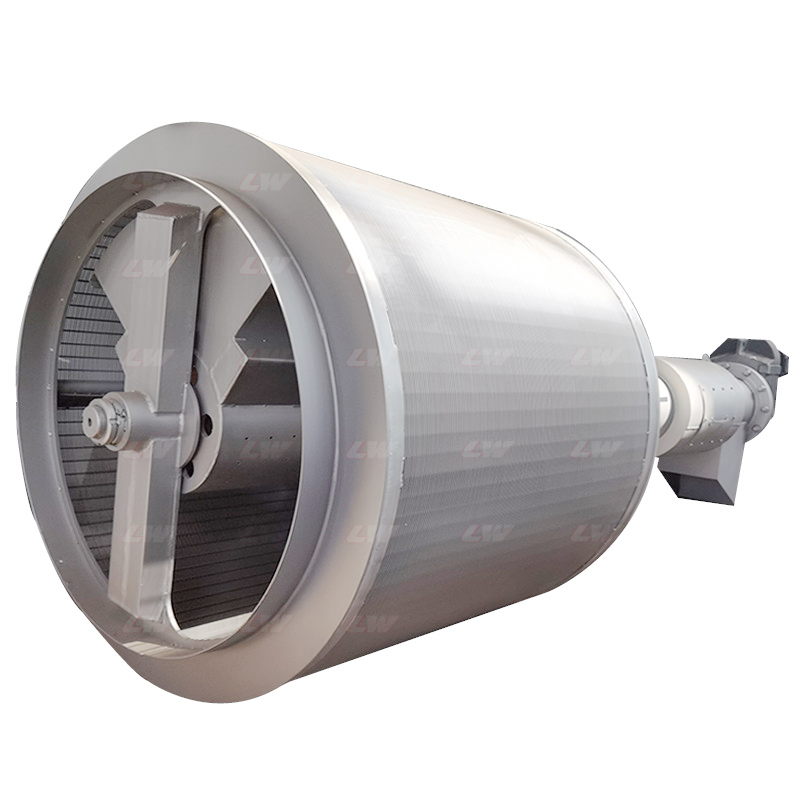
Rotary Drum Screen
Screening, spray washing and screw-press compaction in one channel unit, on wedge-wire openings from 0.5 to 5 mm. Built for fine capture and MBR protection.
0.5–5 mm · compacted screenings out
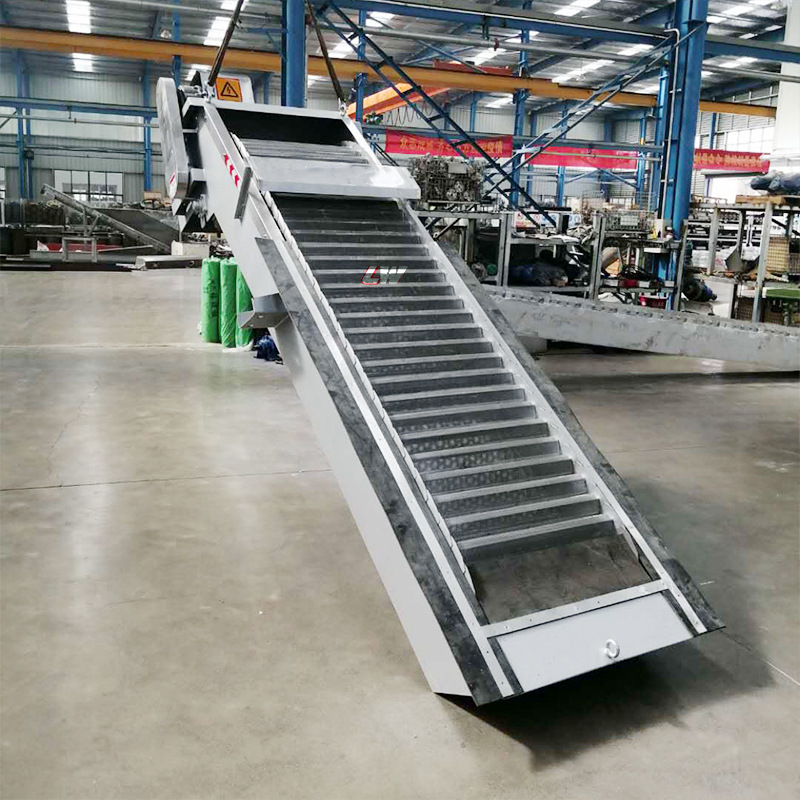
Explore the rotary drum screenStep Screen
Moving steps lift fine solids out of the channel with no wash water and no brushes. A low-consumption option for fine duty at 3–6 mm.
3–6 mm · self-cleaning, no wash water
Quoted per project — talk to our engineers
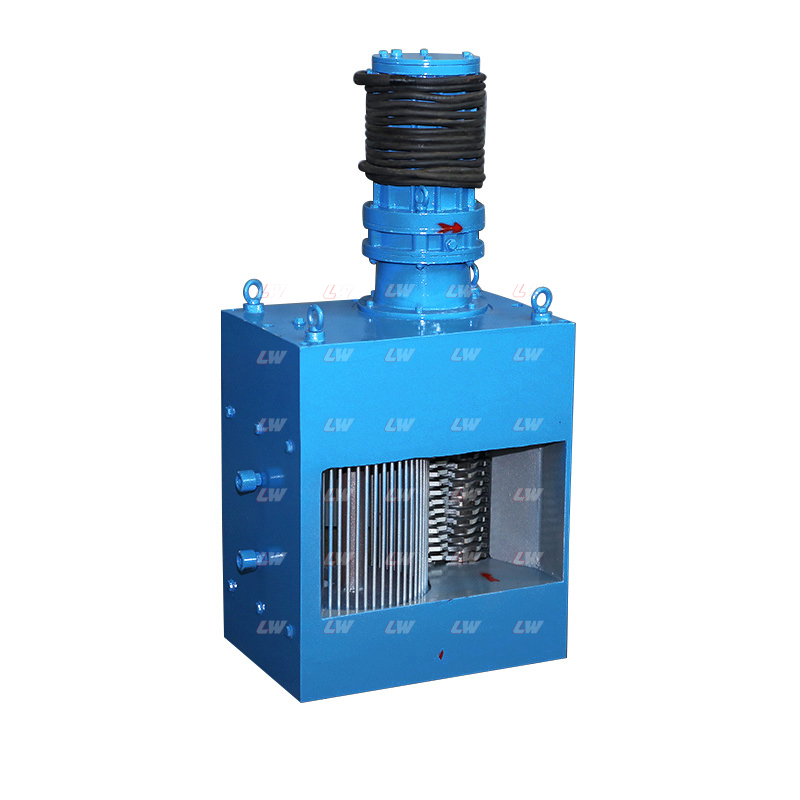
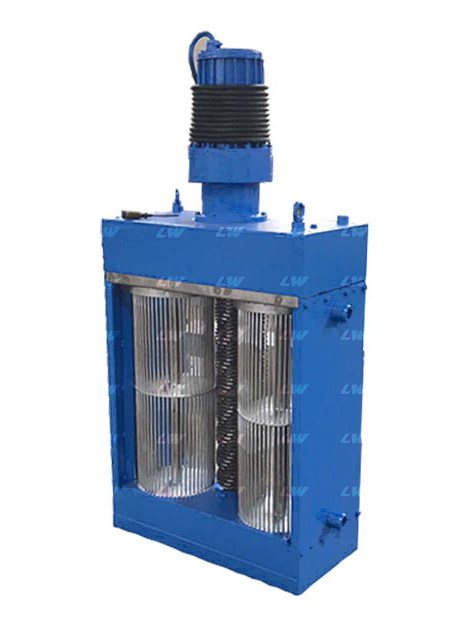
Twin-Shaft Channel Grinder (Sewage Macerator)
Twin-shaft cutters shred rags, plastics and wood into 6–10 mm particles that stay in the flow. Specified as a sewage macerator for pump stations where there is nowhere to put removed waste.
Particle reduction · nothing removed from flow
Explore the twin-shaft channel grinderSelection
How to select a wastewater screen in four steps
Selecting mechanical screening equipment is governed by hydraulics and by what happens to the captured material. Whether a project is written as sewage screening equipment, inlet works screening or headworks screening, the same logic decides the wastewater screening equipment that gets specified. The sequence below reflects that.
Set the opening from what you must protect
Choose the aperture from the most sensitive equipment downstream, not from a preference for cleaner water. Conventional pumps and open channels are usually served by coarse openings; a membrane bioreactor needs fine screening, because rags that pass a coarse screen braid onto membrane fibers.
Check channel hydraulics at both extremes
A channel fails at both ends of the flow range. At peak flow the approach velocity must carry solids to the screen face without extruding them through it — 0.6–1.2 m/s is the usual design band; at low flow it must stay high enough to keep grit moving rather than settling ahead of the screen. Channel width follows from the flow and the depth available: W = Q / (V · D).
Work the headloss for a blinded screen
A clean screen is not the design case. Once the rack blinds, the open area falls and headloss rises several-fold. The channel has to absorb the loaded-screen case — commonly designed under 0.15 m — without backing water into upstream structures.
Decide how the solids leave
Removal, compaction or shredding-in-place decides the mechanical screening equipment as much as the opening does — a site with no disposal route points to a channel grinder, not a screen.
Final opening, materials and dimensions of the mechanical screening equipment are confirmed against your flow, water analysis and channel survey before the order is released.
Compare
Bar screen, step screen or drum screen — which fits your process?
Compare the four families of mechanical screening equipment on function, opening range and what happens to the solids.
| Feature | Rotary Bar Screen | Step Screen | Rotary Drum Screen | Channel Grinder |
|---|---|---|---|---|
| Primary function | Coarse debris removal | Fine filtration | Fine screening + dewatering | Inline shredding |
| Opening range | 5–50 mm | 3–6 mm | 0.5–5 mm wedge wire | Particle reduction |
| How solids leave | Rake lifts to conveyor or bin | Steps carry to discharge | Integrated screw press, 25–45% DS | Stay in the flow, shredded |
| Typical duty | WWTP headworks, lift stations | Municipal & textile fine screening | MBR protection, food & paper, fiber recovery | Pump stations, deep wells |
| Solids disposal needed | Yes | Yes | Yes, compacted | No |
Across mechanical screening equipment, bar screen versus fine screen is decided by the same question: what must be protected downstream. Coarse duty runs 5–50 mm, fine duty 3–6 mm, and wedge-wire drum screens cover 0.5–5 mm, selected per duty.
Opening range
From 0.5 mm to coarse duty
Across the mechanical screening equipment range, the four technologies cover different bands of the opening. The band sets what is captured; the machine sets how the solids leave. Fine drum openings serve membrane protection; the coarse band is what inlet works screening normally works to.
Bands give the typical range for each technology; on mechanical screening equipment the final opening is selected per duty and confirmed against your flow and water analysis. Openings below 1 mm belong to micro-screening, not to a bar screen.
Screenings handling
Screenings handling: washing, compaction and disposal
Mechanical screening equipment solves half the problem — the captured material still has to leave the site. The handling chain is sized together with the screen, not after it.
- 01
Convey
A shaftless screw conveyor takes screenings from the discharge point to the next stage, horizontal or inclined, in a closed trough that keeps the odor in and the floor clear.
- 02
Compact
A screw compactor presses the screenings to 25–45% dry solids, so skips are lighter and collections less frequent. Pressed-out water drains back to the channel.
- 03
Contain or return
Lidded skip, bagging station or a covered container for haulage — and on pulp, paper and textile duties the fiber fraction can go back into the process instead.
Odour and enclosure
A headworks screening room is the odor source of the plant. Channels can be supplied with covers and lids, and the unit with extraction connection points, so the room is ducted rather than left open.
Bypass and maintenance access
Channel layout allows a bypass or overflow weir so flow keeps moving while a screen is stopped, and platforms, handrails and lifting points are agreed at drawing stage with the people who will maintain the unit.
Why Loway
Why specify Loway for headworks screening
The range is the starting point. What decides a mechanical screening equipment project is the production behind it — how the equipment is fabricated, documented and supported over its working life.
- 01
One production line for the whole train
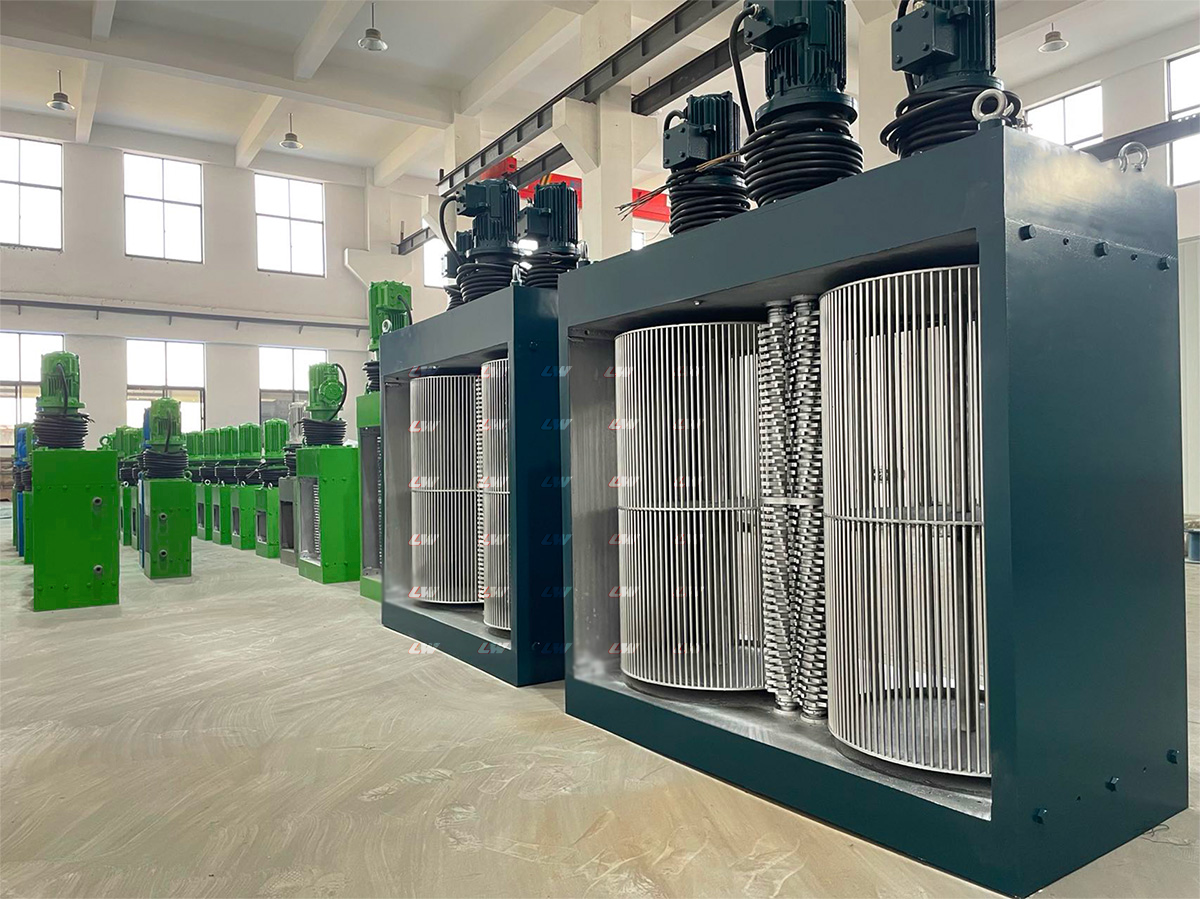
Screens, screenings handling and the downstream sludge dewatering equipment are built on one production line, so the train is matched by design rather than assembled from different vendors.
- 02
In-house fabrication, controlled lead times
Fabrication stays inside one plant, so orders are not queued behind subcontractors: lead times are planned against our own shop schedule, and urgent replacements can be expedited — see the company and factory.
- 03
Built around your channel
Each unit of mechanical screening equipment is fabricated to your channel width, depth and discharge height. The channel stays the structure, so a retrofit avoids new civil works.
- 04
Tender-ready documentation
GA drawings and tender documents are prepared by the same engineering team that details the fabrication — what is drawn is what gets built.
- 05
Spares and service worldwide
Wear parts and spares shipped fast for distributors and end users, so a screen back in service stays in service.
- 06
Checked at every fabrication stage
On mechanical screening equipment, incoming material, welding, machining and final assembly are each verified against the drawing under our quality control procedure before a unit is released for dispatch.
Applications
Where mechanical screening equipment is used
Loway mechanical screening equipment runs on municipal and industrial duties alike — wastewater screening equipment on city networks, sewage screening equipment on industrial effluent.
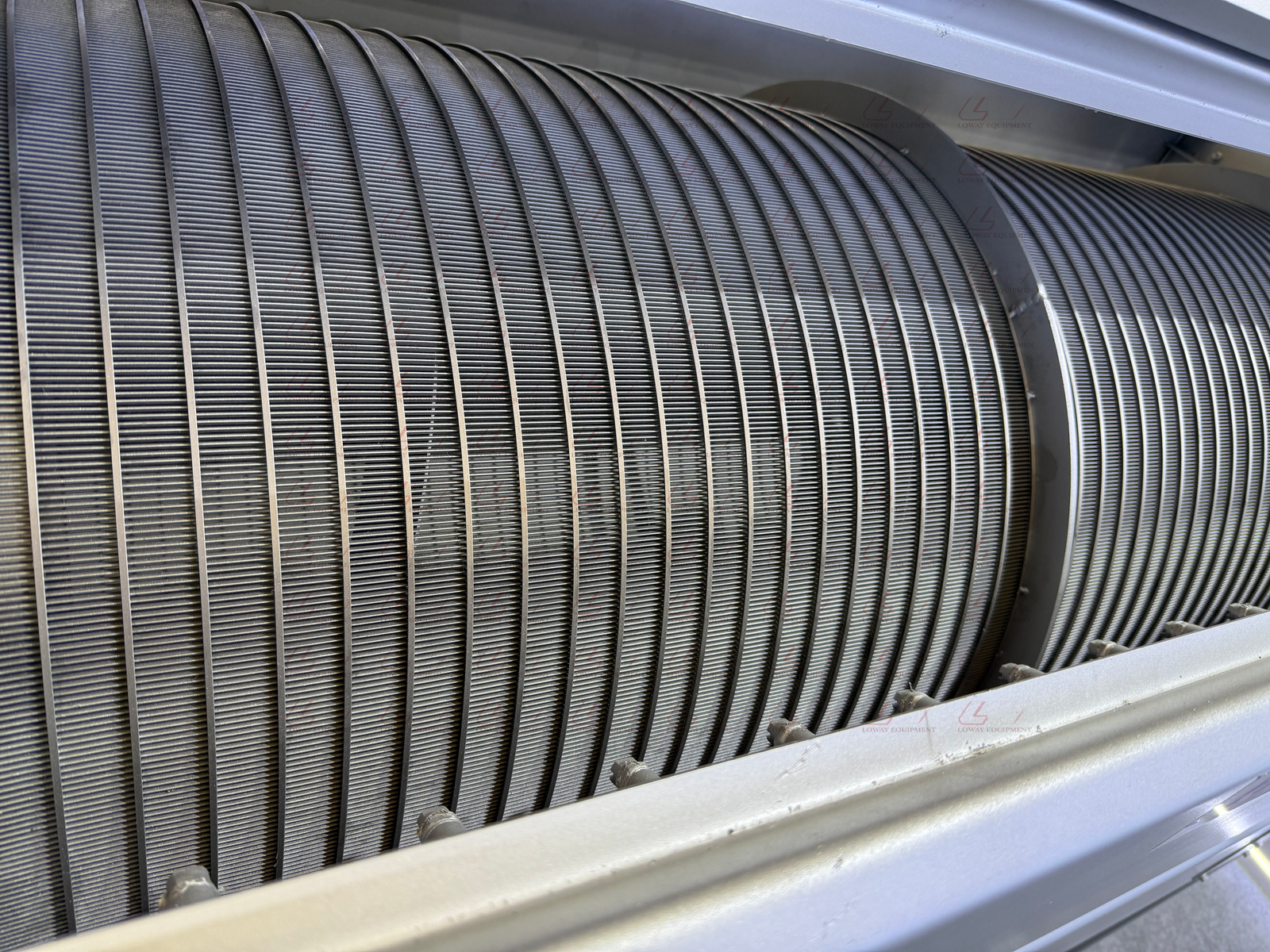
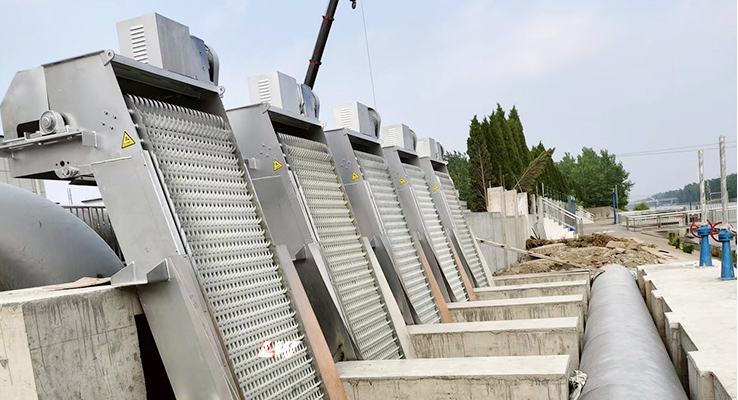
Municipal wastewater
Headworks screening and lift-station protection for city networks — rags and debris out before they reach pumps.
Industrial effluent
Chemical, textile and tannery streams screened to the opening your process needs, in SS316L where the water attacks.
Food & beverage
Organic solids and packaging captured at fine openings; drum screens compact the waste before it leaves the site.
Pulp & paper
Carry-over fiber recovered at fine openings and returned to the process; rejects separated at the head of the line.
Solid waste & leachate
Leachate treatment and sludge processing protected by coarse screening ahead of sensitive equipment.
Engineering & delivery
Materials, controls and documentation
Every unit in the mechanical screening equipment range ships with the materials, controls and documentation your project needs.
- Materials that match the water
- Wetted parts in SS304 as standard, SS316L for seawater, chemical effluent and acidic streams, with an epoxy-coated frame option for budget-sensitive duties.
- Automation without operators
- Each unit runs on a PLC, started and stopped by level differential or timer, with a manual mode for maintenance. Control panels are IP55 as standard and IP65 for outdoor or wash-down locations, and can report status to your SCADA system.
- Overload protection built in
- Mechanical and electrical overload protection stops the drive on a blockage and raises an alarm, so a hard object does not damage the screen.
- Custom build, minimal civil work
- Every unit of mechanical screening equipment is built to the channel: width, discharge height and installation angle are tailored to your existing works, so the channel itself stays the structure.
FAQ
Frequently asked questions
The questions our engineers are asked most often when specifying a screen.
Should I choose a bar screen or a channel grinder?
Decide by what happens to the solids. If your site can handle and dispose of screened waste, the bar screen in our mechanical screening equipment range is the fit — it removes the organic load from the plant. If you run a remote or underground pump station with no way to dispose of debris, a channel grinder — a sewage macerator in most specifications — shreds solids where they are and protects the pumps without any removal step.
Bar screen vs step screen — how do I choose?
By the opening and the duty, not by brand preference. A bar screen is the coarse, high-load machine: 5–50 mm openings, deep channels, heavy debris, continuous raking. A step screen works at 3–6 mm with no wash water and no brushes, which suits fine screening where you want low power and low maintenance rather than the widest solids tolerance. If the target is coarse protection of pumps, the bar screen wins on load capacity; if the target is fine screening before biological treatment, the step screen is the lighter-running choice.
How do I determine the correct screen opening?
Start from the equipment you need to protect. Coarse openings of 5–50 mm protect raw sewage and storm pumps — the usual range for municipal sewage screening equipment. Fine openings of 3–6 mm protect biological treatment and sludge handling. For MBR protection and fiber recovery, the wedge-wire drum screens in our mechanical screening equipment range run from 0.5 to 5 mm, with the opening selected per duty. Send us your flow and water analysis and we will size it.
Can a screen be selected on flow alone?
No. Flow gives the channel size, but mechanical screening equipment is set by debris loading, opening, channel geometry, allowable headloss and maintenance access as well. A channel sized only for peak flow often settles grit at low flow, so both extremes have to be checked.
Do you supply screens for MBR protection?
Yes. Wedge-wire drum screens are the usual choice of wastewater screening equipment ahead of a membrane bioreactor, on openings from 0.5 to 5 mm. The opening is set by the membrane maker's requirement and confirmed against your flow, so the screen protects the membranes without over-screening the flow.
How much headloss should I allow for in the channel design?
On mechanical screening equipment, design for the blinded case, not the clean screen. A clean rack may add only a few centimetres of headloss; once it blinds, the open area falls and headloss rises several-fold. We work the loaded-screen case to a design headloss under 0.15 m and check that the approach velocity stays in the 0.6–1.2 m/s band, so solids are carried to the screen face instead of settling or being extruded through the bars. The final figure is confirmed against your full flow range at the sizing stage.
Can you match the equipment to our existing channel?
Matching mechanical screening equipment to your existing channel is the default, not an upgrade. We build to your channel width, depth and discharge height, with the installation angle confirmed against your site survey. For tenders we supply detailed GA drawings; for retrofits the channel itself remains the structure, so civil work stays minimal.
Where can I get spares and support after installation?
Spare parts, wear parts and service support for mechanical screening equipment are available worldwide. Share the unit and drawing number from your order and we will confirm the correct parts from stock.
Not sure which screen you need?
Send us the flow, the channel dimensions and the water analysis. We will match the right machine from the mechanical screening equipment range and reply with a layout proposal alongside the quotation.
Related equipment
Across the screening and dewatering line
More machines from the same mechanical screening equipment and dewatering range.