
Fine & Specialty Chemicals: Precision Filtration Solutions
Protect Purity. Maximize Yield. Ensure Safety. High-performance separation systems engineered for GMP compliance, solvent recovery, and catalyst filtration.
At Loway Equipment, we understand that in fine chemicals, filtration is a critical unit operation. Inefficient separation leads to lost product yield, cross-contamination, and safety risks. We engineer High-Pressure Filtration Systems designed to meet the exacting standards of the pharmaceutical, agrochemical, and specialty chemical sectors.
Our solutions address your most critical challenges: Product Isolation, Catalyst Recovery, and Solvent Handling.

86 189 5282 5752
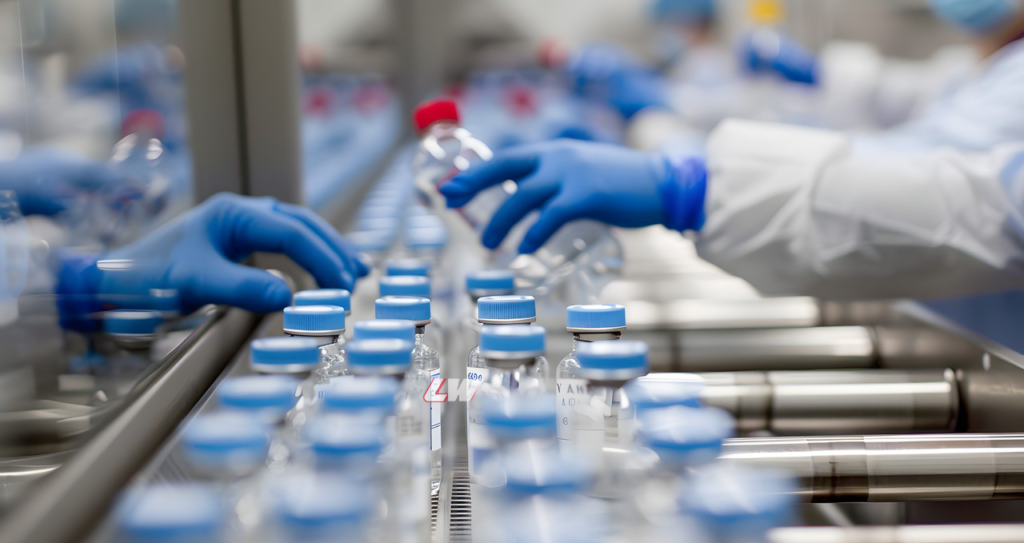
The Core Challenge: Precision in Harsh Environments
Fine chemical processes are defined by complexity and high value.
- Product Loss: Incomplete separation means losing high-value Active Ingredients (APIs) or Intermediates.
- Corrosion & Safety: Processes often involve aggressive solvents (Toluene, Acetone), strong acids, and toxic compounds requiring Zero Leakage.
- Purity Requirements: Cross-contamination is unacceptable. Equipment must be easy to clean (CIP) and chemically inert.
Key Technologies
The Loway Solution: Chemical-Grade Filter Presses
For applications where separation efficiency and safety are non-negotiable, Loway’s Membrane Filter Presses are the industry standard.
Key Deliverables:
- Maximize Yield & Purity: Our Membrane Squeeze technology (up to 30 bar) produces the driest possible cake, while our Cross-Washing capability ensures >99% removal of impurities from the product.
- Zero Leakage & Containment: We utilize CGR (Caulked, Gasketed, Recessed) plates. The filter cloth is sealed with an O-ring, creating a hermetically sealed chamber that prevents solvent drips and VOC emissions.
- Material Compatibility: Constructed from SS316L cladding or PVDF plates to withstand extreme corrosion and high temperatures.
Technology Selection: Why Filter Press is the Only Choice
In fine chemicals, “continuous” equipment like Belt Filter or Screw Presses is rarely suitable for production.
Membrane Filter Press (Loway)
-
Purity & Washing: Excellent. Allows for precise Displacement Washing to purify the crystal cake.
-
Containment: Superior (CGR). Fully enclosed, gas-tight plate pack prevents toxic exposure.
-
Process Control: Flexible Batch. Programmable recipes for different products and varying filtration times.
-
Verdict: Standard for Production.
Screw Filter / Belt Press
-
Purity & Washing: Poor. Cannot wash the cake effectively; risks product contamination.
-
Containment: Unacceptable. Open or semi-open designs allow hazardous vapors to escape.
-
Process Control: Rigid. Designed for steady-state sludge, not variable chemical batches.
-
Verdict: End-of-Pipe Wastewater Only.
Key Applications in Chemical Operations
Application | The Challenge | The Loway Solution & Outcome |
Catalyst Recovery (Pd/Pt/Rh on Carbon) | Recovering expensive heterogeneous catalysts without loss. | Precision Capture. Uses high-precision cloth to capture sub-micron fines. ROI is often measured in weeks due to the high value of recovered metal. |
API Isolation (Pharma Intermediates) | Isolation of crystals under strict cGMP/FDA guidelines. | Hygienic Design.SS316L construction with polished surfaces and CIP capabilities ensures no cross-contamination between batches. |
Solvent-Borne Sludge (Hazardous Waste) | Dewatering sludge containing volatile solvents (VOCs). | Closed-Loop Safety. Gas-tight CGR design allows for Nitrogen Purging, safely containing solvents while reducing waste volume by 80%. |
Agrochemicals (Pesticides) | Handling toxic organic compounds safely. | Leak-Free System. Automated drip trays and enclosed designs protect operators from exposure. |
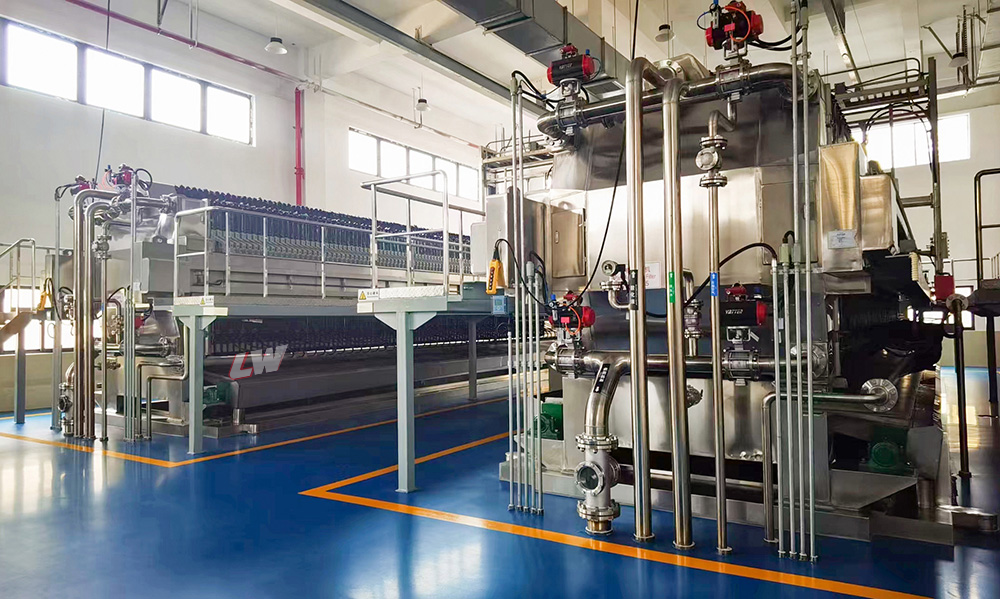
At Loway Equipment, we’re committed to helping you optimize your processes with reliable and efficient filter press solutions.
Contact us today to learn more about how our filter presses can help improve your operations’ efficiency, productivity, and sustainability.
The Manufacturer Advantage: Application-Led Engineering
We don’t just sell machines; we engineer process solutions.
- Material Science: From standard Polypropylene (PP) to PVDF (for oxidizers) and Glass-Filled PP (for high temp).
- Compliance Ready: We design for ATEX (Zone 1/2) explosive atmospheres and support GMP/GAMP validation documentation (DQ/IQ/OQ).
- Custom Skids: We build "Plug-and-Play" skid-mounted units including feed pumps, washing pumps, and PLC controls, pre-piped in Stainless Steel 316L.
FAQ: Fine Chemical Filtration
Have More Questions? Our technical team is ready to provide detailed, personalized guidance.
Q1: Can your presses handle sterile processes or provide sanitary design?
Yes. We offer Hygienic Designs with electropolished SS316L cladding and food-grade plates. We also support CIP (Clean-in-Place) system integration for pharmaceutical applications.
Q2: How do you ensure zero leakage?
We recommend CGR Plates. The filter cloth is installed into a groove with an O-ring seal, eliminating capillary leakage. Combined with our automated Drip Trays, the floor remains clean and dry.
Q3: What is the ROI for Catalyst Recovery?
For precious metal catalysts (Platinum/Palladium), the ROI is exceptionally fast—often less than 3 months. The filter press pays for itself by capturing valuable solids that would otherwise be lost in the waste stream.
Q4: Can the filter press operate in an explosive atmosphere (ATEX / Class 1 Div 1)?
Yes. We provide fully Explosion-Proof systems. This includes Ex-d or Ex-e certified motors, intrinsically safe sensors, and explosion-proof control cabinets. We also use anti-static filter cloths and ground connections to prevent static buildup, fully complying with ATEX Zone 1 or Zone 2 standards.
Q5: Do you offer automated "Cake Washing" to remove impurities?
Yes. This is standard for our chemical presses. Our PLC programs include a dedicated Washing Phase where solvent or water is pumped through the cake (displacement washing) to wash out mother liquor or salts. We can configure single-stage or multi-stage cross-washing to achieve the highest purity.
Q6: How do you handle high-temperature slurries (e.g., >80°C)?
Standard polypropylene plates can soften at high temperatures. For hot applications (up to 95°C), we use Glass-Fiber Reinforced Polypropylene (R-PP) plates. For extreme temperatures (>100°C), we offer PVDF or even Aluminum/Cast Iron plates. We also upgrade the hydraulic oil and seals to high-temp variants.
Q7: Are filter presses customizable for specific chemical plant needs?
Yes, our filter presses can be tailored to meet the specific needs of chemical plants, whether that involves varying filtration capacities, different solid-liquid content levels, or particular design configurations.
Loway Equipment Applications Across Industries
We are proud to have worked with clients from diverse industries, providing tailored filtration solutions that improve efficiency, reduce costs, and enhance operational performance.


