
Municipal Wastewater: Complete Sludge Solutions
Advanced Dewatering. Headworks Screening.
Tailored separation systems for Sewage Treatment Plants (WWTP)
At Loway Equipment, we understand that no two municipalities are the same. A small rural plant needs low-maintenance automation, while a mega-city facility needs massive throughput. And increasingly, plants facing high landfill fees need Deep Dewatering.
We don’t force one technology on you. We manufacture the complete range—Screw Presses, Belt Presses, and Filter Presses—to solve your specific volume and compliance challenges.

86 189 5282 5752
The Core Challenge: Volume vs. Compliance
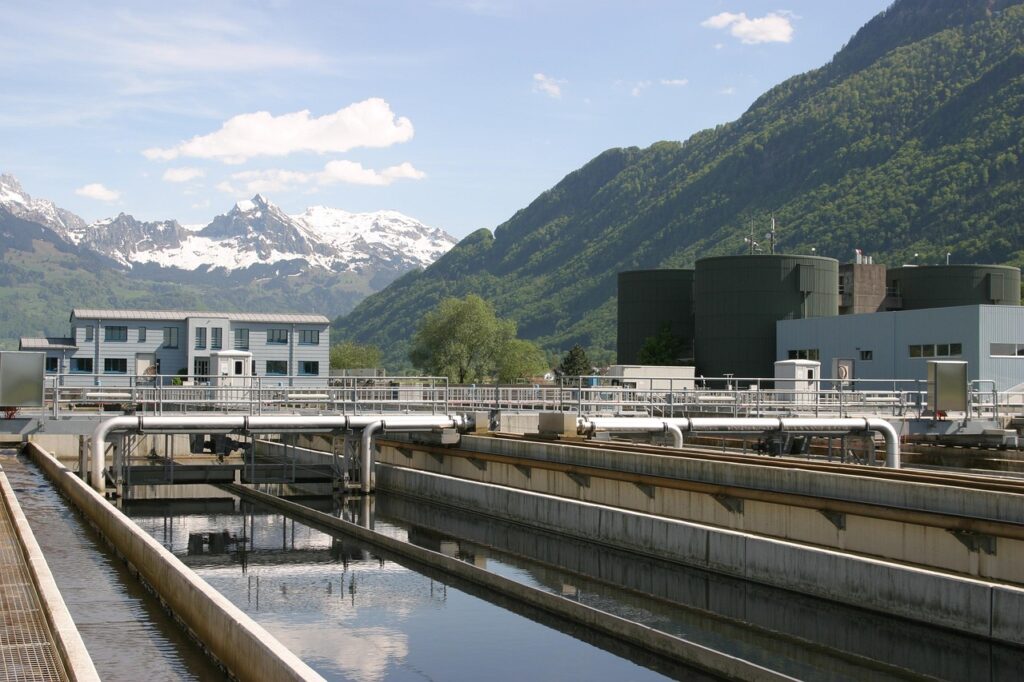
Municipal operators face a “Triple Threat” of challenges:
- Disposal Costs: Sludge disposal is often 40% of a plant's operating budget. Reducing volume is the only way to cut costs.
- Odor & Neighbors: Open equipment causes odor complaints. Modern plants demand enclosed, silent systems.
- Energy Efficiency: Reducing electricity consumption (kW/ton) is critical for sustainable operation.
The Loway Solution: Matching Tech to Goals
We deploy the right machine based on your Disposal Route (Landfill vs. Incineration vs. Agriculture).
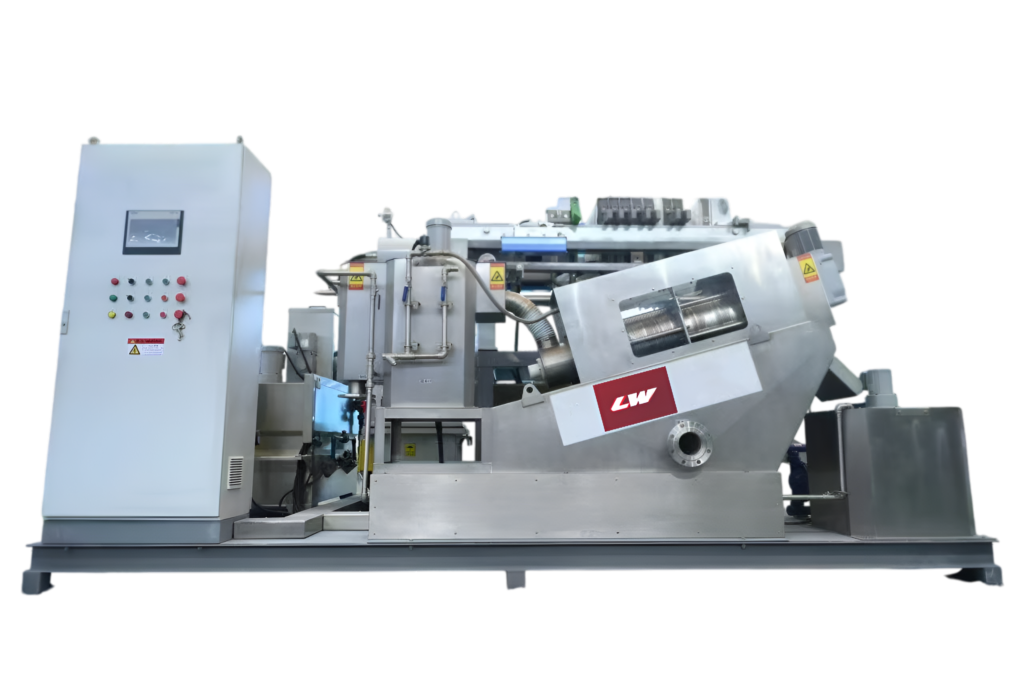
- Best For: Small to Medium WWTPs (Up to 50,000 PE).
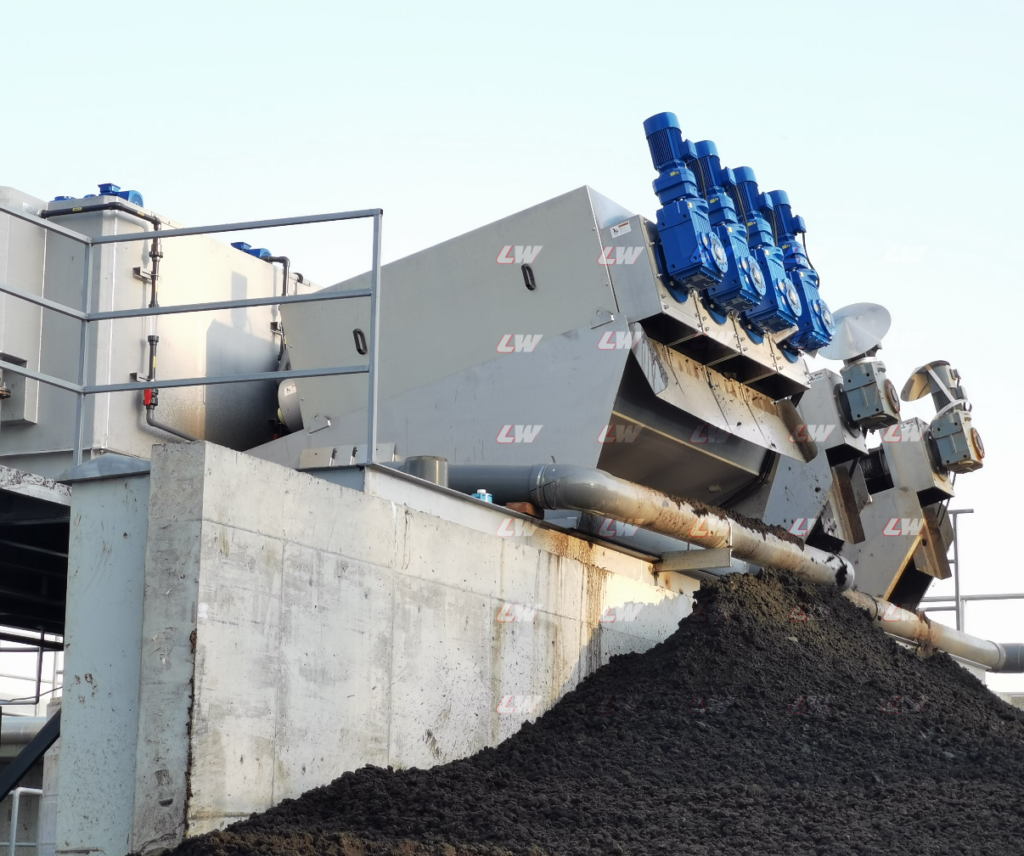
- Why: Low Energy & Odor Free. It runs 24/7 with minimal operator attention, uses 1/10th the power of a centrifuge, and its enclosed design keeps neighbors happy.
- Target: 75-80% Moisture Cake.
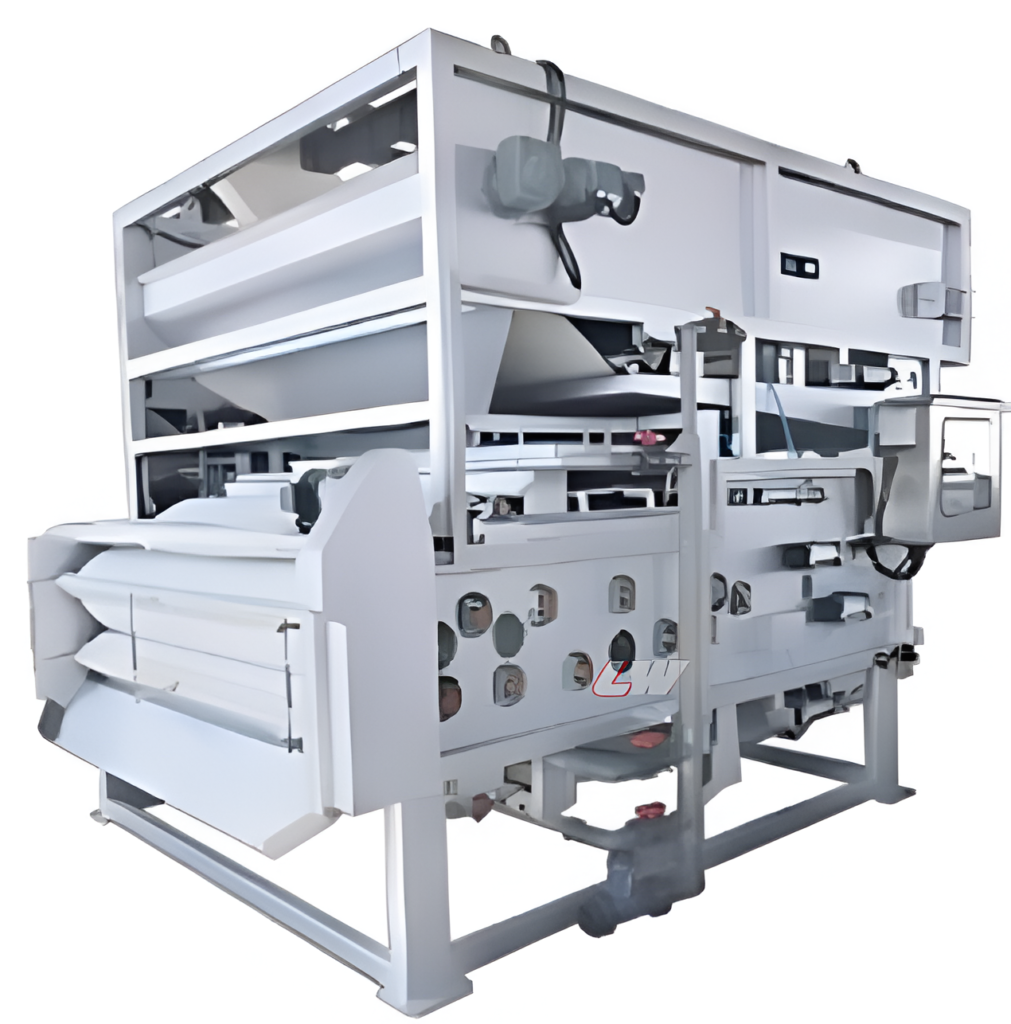
- Best For: Large Scale City Plants.
- Why: Massive Throughput. When you need to process millions of gallons per day continuously, the Belt Press offers the lowest Capex per ton of capacity.
- Target: 78-82% Moisture Cake.
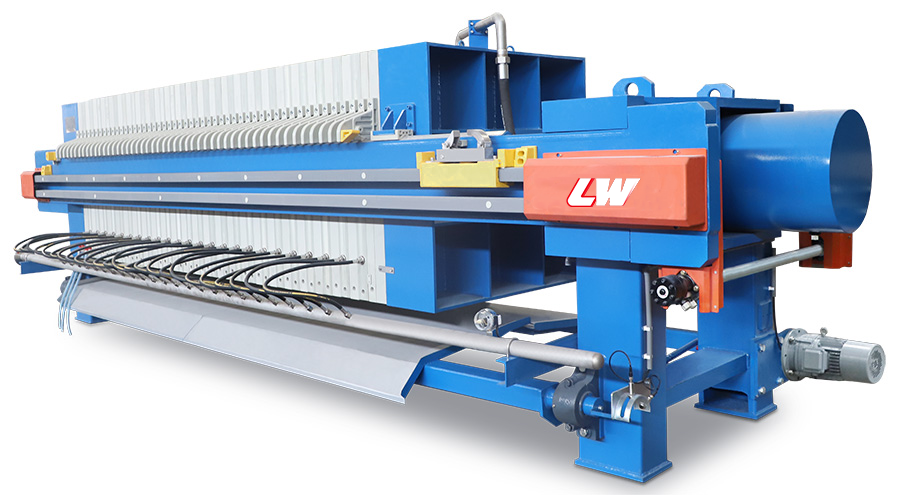
- Best For: Plants facing High Landfill Fees or Incineration.
- The “Killer App”: By adding a Secondary Diaphragm Squeeze (30 bar), we reduce moisture to 55-60%.
- Outcome: This cuts sludge volume by an additional 40% compared to belt presses, saving massive amounts on hauling and tipping fees. This is the ultimate solution for “Sludge Reduction” projects.
Technology Comparison
Screw Press
-
Operation Mode: Continuous (24/7)
-
Energy Cost: Lowest
-
Cake Dryness: Standard (20% DS)
-
Odor Control: Excellent (Enclosed)
-
Primary Use: New Standard for WWTPs
Belt Press
-
Operation Mode: Continuous (24/7)
-
Energy Cost: Low
-
Cake Dryness: Standard (18% DS)
-
Odor Control: Poor (Open)
-
Primary Use: Legacy Large Plants
Membrane Filter Press
-
Operation Mode: Batch (Intermittent)
-
Energy Cost: Medium
-
Cake Dryness: Ultimate (45% DS)
-
Odor Control: Good (Closed Cycle)
-
Primary Use: Deep Dewatering / Landfill
Key Applications in Municipal Water
Application | The Challenge | The Loway Solution |
Raw Sewage (Headworks) | Protecting pumps from rags and plastics. | Mechanical Bar Screens. Auto-cleaning screens remove debris to prevent downstream clogs. |
Biological Sludge (Activated Sludge) | Routine daily dewatering with minimal labor. | Screw Press. Self-cleaning, automated, and smell-free. Perfect for biological flocs. |
Drinking Water Sludge (Alum/Ferric) | Inorganic chemical sludge from water purification. | Chamber Filter Press. Inorganic sludge dewaters easily in a press. Produces a very dry, rock-hard cake for easy disposal. |
Sludge “Deep Dewatering”(Landfill Reduction) | Disposal cost is too high; need maximum dryness. | Membrane Press + Conditioning. Using lime/ferric conditioning + high pressure squeeze to achieve <60% moisture. |

At Loway Equipment, we’re committed to helping you optimize your processes with reliable and efficient filter press solutions.
Contact us today to learn more about how our filter presses can help improve your operations’ efficiency, productivity, and sustainability.
The Manufacturer Advantage: Turnkey Integration
- Skid-Mounted Systems: We build "Plug-and-Play" skids including the Screw Press/Filter Press, Polymer Dosing Unit, and Feed Pumps, pre-wired for instant startup.
- Automation: Our PLC systems (Siemens/Schneider) integrate with your SCADA for remote monitoring.
- Material Lifespan: We use SS304 for municipal sewage to resist H2S corrosion, and SS316L for coastal/saline plants.
FAQ: Municipal Dewatering
Have More Questions? Our technical team is ready to provide detailed, personalized guidance.
Q1: When should I choose a Filter Press over a Screw Press?
Choose a Filter Press only if you need Deep Dewatering (<60% moisture) to lower landfill costs or for Drinking Water Sludge. For standard sewage treatment where 80% moisture is acceptable, the Screw Press is preferred for its continuous, low-labor operation.
Q2: How does a diaphragm filter press work in sewage treatment?
The diaphragm filter press uses a high-pressure diaphragm to apply additional pressure on the sludge cake after the initial filtration, reducing the moisture content significantly. This secondary pressing improves sludge volume reduction, making it a highly efficient dewatering method.
Q3: Do your systems control odor effectively?
Yes. Both our Screw Presses and Filter Presses can be equipped with odor containment. The Screw Press is inherently semi-enclosed with covers. For Filter Presses, we offer Bomb Bay Enclosures and fume hoods that can be ducted directly to your plant’s biological scrubber or carbon filter system.
Q4: How often does the Screw Press require maintenance?
Very rarely. The Multi-Disc Screw Press runs at very low speeds (2-4 RPM), meaning wear is minimal compared to high-speed centrifuges (3000 RPM). Typically, the screw shaft rings only need inspection or replacement every 3,000 – 4,000 hours, and daily maintenance is limited to a visual check.
Q5: What is the polymer consumption compared to a centrifuge?
Polymer consumption is generally comparable or slightly lower. However, because our Screw Press operates gently without high-shear forces, the floc structure is preserved better, often requiring 10-15% less polymer per ton of dry solids compared to high-shear centrifuges.
Loway Equipment Applications Across Industries
We are proud to have worked with clients from diverse industries, providing tailored filtration solutions that improve efficiency, reduce costs, and enhance operational performance.


